
Resources
Explore a wide range of valuable resources on GCED to deepen your understanding and enhance your research, advocacy, teaching, and learning.
11 Results found
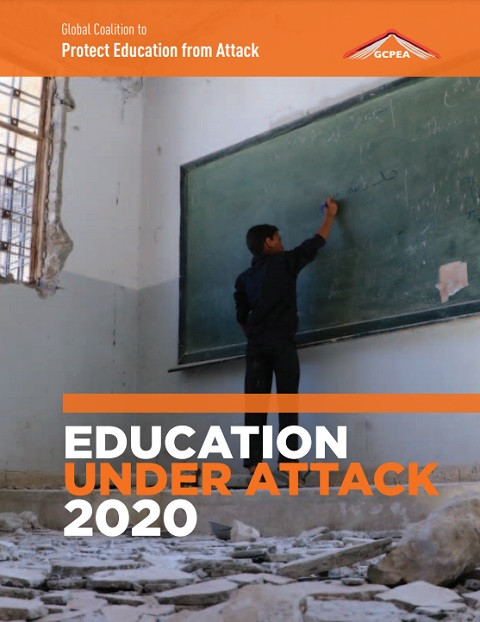 Education Under Attack 2020 Year of publication: 2020 Corporate author: Global Coalition to Protect Education from Attack (GCPEA) This study is published by the Global Coalition to Protect Education from Attack (GCPEA), which was formed in 2010 by organisations working in the fields of education in emergencies and conflict-affected contexts, higher education, protection, and international human rights and humanitarian law that were concerned about ongoing attacks on educational institutions, their students, and staff in countries affected by conflict and insecurity.GCPEA is a coalition of organizations that includes: co-chairs Human Rights Watch and Save the Children, the Council for At-Risk Academics (Cara), the Institute of International Education (IIE), the Office of the United Nations High Commissioner for Refugees (UNHCR), the Education Above All Foundation (EAA), Plan International, the United Nations Children’s Fund (UNICEF) and the United Nations Educational, Scientific and Cultural Organization (UNESCO). GCPEA is a project of the Tides Center, a non-profit 501(c)(3) organization. Education under Attack 2020 is the result of independent research conducted by GCPEA. It is independent of the individual member organizations of the Steering Committee of GCPEA and does not necessarily reflect the views of the Steering Committee member organizations.
  [Summary] Education Under Attack 2024 Year of publication: 2024 Author: Jerome Marston | Felicity Pearce Corporate author: Global Coalition to Protect Education from Attack (GCPEA) This study is published by the Global Coalition to Protect Education from Attack (GCPEA), formed in 2010 by organizations working in the areas of education in emergencies and conflict, higher education, protection, international human rights law and international humanitarian law, in response to the persistence of attacks on educational institutions, their students and staff in countries affected by conflict and insecurity. Attacks on Education 2024 was developed based on independent research conducted by GCPEA. The report was carried out separately from and does not necessarily reflect the views of the various member organizations that make up the GCPEA Steering Committee. [Resumen] Ataques a la educación 2024 Year of publication: 2024 Author: Jerome Marston | Felicity Pearce Corporate author: Global Coalition to Protect Education from Attack (GCPEA) Este estudio es publicado por la Coalición Global para Proteger la Educación de Ataques (Global Coalición to Protect Education from Attack, GCPEA), formada en 2010 por organizaciones dedicadas a las áreas de educación en emergencias y en contextos de conflicto, educación superior, protección, derecho internacional de los derechos humanos y derecho internacional humanitario, en respuesta ante la persistencia de los ataques contra instituciones educativas, sus estudiantes y su personal en países afectados por conflictos e inseguridad. Ataques a la educación 2024 se elaboró a partir de investigaciones independientes realizadas por GCPEA. El informe se llevó a cabo separadamente de las distintas organizaciones miembros que integran el Comité Directivo de GCPEA y no refleja necesariamente la opinión de estas.
 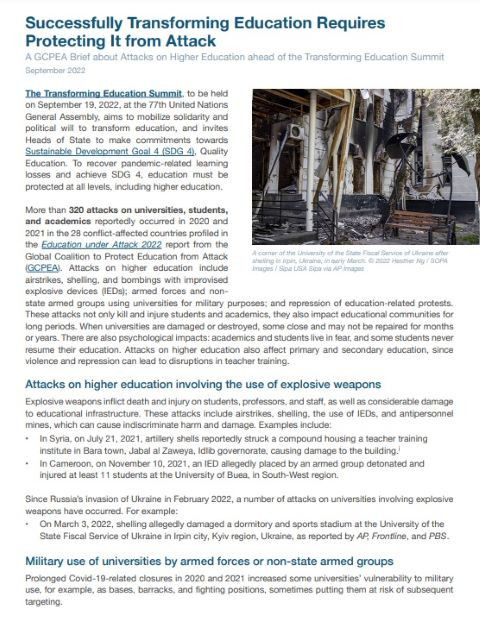 Successfully Transforming Education Requires Protecting It from Attack Year of publication: 2022 Corporate author: Global Coalition to Protect Education from Attack (GCPEA) The Transforming Education Summit, to be held on September 19, 2022, at the 77th United Nations General Assembly, aims to mobilize solidarity and political will to transform education, and invites Heads of State to make commitments towards Sustainable Development Goal 4 (SDG 4), Quality Education. To recover pandemic-related learning losses and achieve SDG 4, education must be protected at all levels, including higher education.
 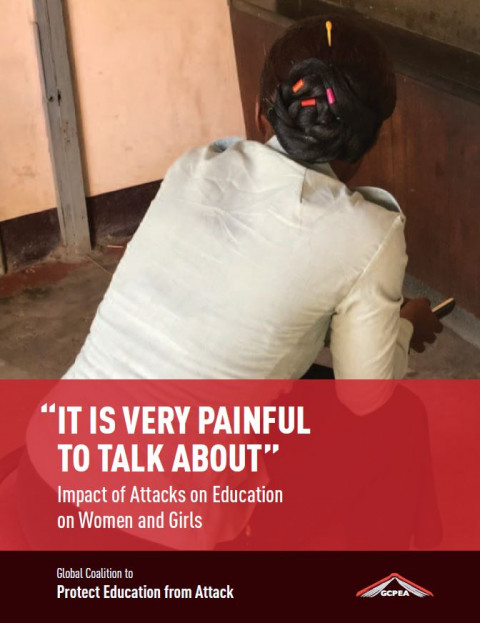 "It is Very Painful to Talk About”: The Impact of Attacks on Education on Women and Girls Year of publication: 2019 Author: Holly Cartner Corporate author: Global Coalition to Protect Education from Attack (GCPEA) This report presents the key findings of GCPEA’s multi-country study on the impact of attacks on education on women and girls.10 GCPEA’s research focuses on the types and causes of abuse most typically committed against female students in the context of attacks on education, and the long-term consequences that female students may face as a result of such attacks.11 GCPEA initiated this study to contribute to a better understanding of the implications for girls and women when education is attacked and to inform our advocacy for better strategies to protect girls and women, prevent attacks and abuse, and diminish harmful consequences against them.This report relies on previous GCPEA research, including Education Under Attack 2018 and 2014, and updates, and the organization’s field research in Nigeria and the Democratic Republic of Congo, which focused specifically on the experiences of women and girls when education is attacked. In addition, the report draws from interviews with numerous country and regional experts and an extensive review of secondary data sources, including reports by United Nations (UN) agencies, development and humanitarian non-governmental organizations (NGOs), human rights organizations, government bodies, and think tanks, including numerous contributions from GCPEA’s member organizations.
 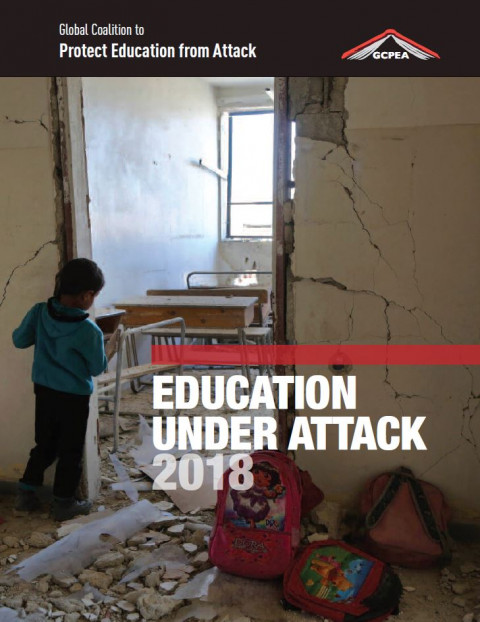 Education Under Attack 2018 Year of publication: 2018 Corporate author: Global Coalition to Protect Education from Attack (GCPEA) This report is the fourth edition of Education under Attack. It builds on the 2014 study published by the Global Coalition to Protect Education from Attack and the 2007 and 2010 publications by the United Nations Educational, Scientific and Cultural Organization (UNESCO). The present edition covers the five-year period from January 2013 to December 2017. The previous edition included profiles of 30 countries that had experienced at least five incidents of attacks on education in which students or education personnel were harmed, including at least one direct attack or one person killed, between 2009 and mid-2013. The current study includes profiles of 28 countries that experienced at least 20 attacks on education during the 2013-2017 reporting period, regardless of the severity of the incidents. Although significant data gaps remain and data quality varies, reporting of attacks on education has become more comprehensive and systematic over the last five years.Each country profile includes information on six categories of attacks on education, as relevant: Physical attacks or threats of attacks on schools Physical attacks or threats directed at students, teachers, and other education personnel Military use of schools and universities Child recruitment at, or en route to or from, school or university Sexual violence by armed parties at, or en route to or from, school or university Attacks on higher education
 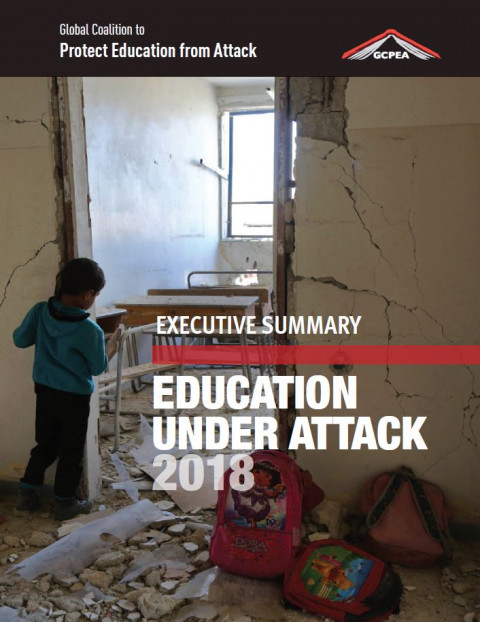 [Summary] Education Under Attack 2018; Executive Summary Year of publication: 2018 Corporate author: Global Coalition to Protect Education from Attack (GCPEA) A global study of threats or use of force, either deliberate or indiscriminate, against students, teachers, academics, education support and transport staff or education officials, and against schools, universities and other education institutions carried out for political military, ideological, sectarian, ethnic or religious reasons from 2013 to 2017. [Resumen] Ataques a la Educación 2018; Resumen Ejecutivo Year of publication: 2018 Corporate author: Global Coalition to Protect Education from Attack (GCPEA) Estudio global de las amenazas o instancias de uso deliberado o indiscriminado de la fuerza contra estudiantes, docentes, académicos, personal auxiliar educativo y de transporte o funcionarios de educación, y contra escuelas, universidades y otras instituciones educativas, perpetradas con fines políticos, militares, ideológicos, sectarios, étnicos o religiosos entre 2013 y 2017. [Résumé] L’education prise pour cible 2018; Un résumé de Year of publication: 2018 Corporate author: Global Coalition to Protect Education from Attack (GCPEA) Une étude globale des menaces ou de l'usage de la force, délibérée ou non, contre les élèves, les enseignants, les universitaires, le personnel scolaire et des transports ou les agents de l'éducation; et contre les écoles, les universités et autres institutions éducatives, menées pour des raisons politiques, militaires, idéologiques, sectaires, ethniques ou religieuses de 2013 à 2017.
  Safe Schools Declaration Year of publication: 2015 Corporate author: Global Coalition to Protect Education from Attack (GCPEA) The Safe Schools Declaration is an intergovernmental political commitment that was developed at an international conference held in Oslo, Norway, on 28-29 May 2015. The Declaration allows countries the opportunity to express their political support for the protection of students, teachers and schools during times of armed conflict; the importance of the continuation of education during armed conflict; and the implementation of the Guidelines for Protecting Schools and Universities from Military Use during Armed Conflict.