
Resources
Explore a wide range of valuable resources on GCED to deepen your understanding and enhance your research, advocacy, teaching, and learning.
30 Results found
 Способна ли политика толерантности быть эффективным инструментом по предотвращению конфликтов в Таджикистане? Year of publication: 2020 Author: Aziz Timurov Corporate author: Central Asian Bureau for Analytical Reporting (CABAR) | Institute for War and Peace Reporting (IWPR) Видимых конфликтов на почве этно-конфессиональной неприязни в Таджикистане нет. Однако, если проблема не видна, это не значит, что ее нет, считает участник Школы аналитики CABAR.asia Азиз Тимуров. По его мнению, правильно разработанная и применимая политика толерантности может смягчить потенциальные этно-конфессиональные и региональные конфликты и быть фактором экономического развития в Таджикистане.
  A Delicate Balance of Language Conflict in Uzbekistan Year of publication: 2020 Author: Eldar Asanov Corporate author: Central Asian Bureau for Analytical Reporting (CABAR) | Institute for War and Peace Reporting (IWPR) In an article for CABAR.asia, an Uzbek researcher Eldar Asanov discusses identity, nationalism, and historical memory in the realm of a rather vexed language issue in today’s Uzbekistan. Хрупкий баланс языковых споров в Узбекистане Year of publication: 2020 Author: Eldar Asanov Corporate author: Central Asian Bureau for Analytical Reporting (CABAR) | Institute for War and Peace Reporting (IWPR) Узбекистанский исследователь Эльдар Асанов в статье для CABAR.asia дискутирует об идентичности, национализме и исторической памяти в контексте довольно болезненного языкового вопроса в современном Узбекистане.
  Language Balance in Uzbekistan: An Acceptable Status Quo Year of publication: 2019 Author: Yuriy Sarukhanyan Corporate author: Central Asian Bureau for Analytical Reporting (CABAR) | Institute for War and Peace Reporting (IWPR) «It is incorrect to speak about the competition between the Uzbek and Russian languages in Uzbekistan. They both occupy a certain niche in public and state life, neither of them can threaten the positions of the other, since they develop in parallel and isolation from each other,» – notes an international relations specialist from Tashkent and a participant in the cabar.asia school of analytics, Yuri Sarukhanyan. Языковой баланс в Узбекистане: Приемлемый статус-кво Year of publication: 2019 Author: Yuriy Sarukhanyan Corporate author: Central Asian Bureau for Analytical Reporting (CABAR) | Institute for War and Peace Reporting (IWPR) «Говорить о конкуренции между узбекским и русским языками в Узбекистане некорректно. Оба занимают определённую нишу в общественной и государственной жизни, ни один из них не может угрожать позициям другого, так как развиваются параллельно, изолированно друг от друга», – отмечает Юрий Саруханян, специалист по международным отношениям из Ташкента и участник Школы аналитики cabar.asia.
 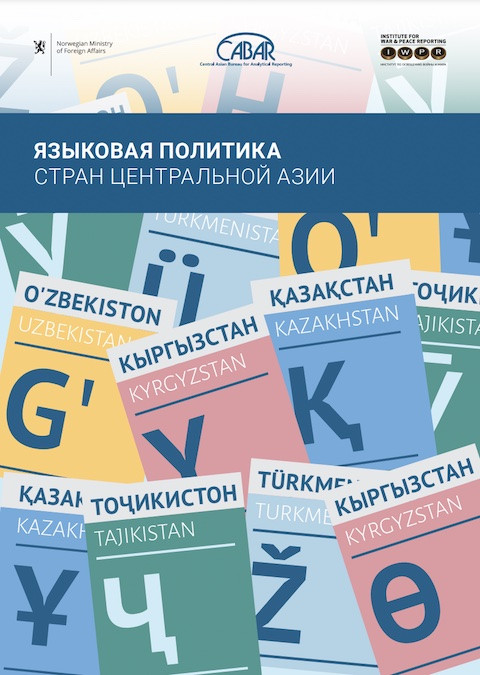 Language Policies of the Central Asian States Year of publication: 2020 Author: Nurbek Bekmurzayev Corporate author: Central Asian Bureau for Analytical Reporting (CABAR) | Institute for War and Peace Reporting (IWPR) The policy brief “Language Policy of the Central Asian States” is presented jointly by IWPR and CABAR.asia. The publication outlines the ways of the formation of state languages in the countries of Central Asia, analyzes their functioning along with the Russian language, draws conclusions and forecasts for the future, and provides recommendations for improving language policy.The publication is intended for young experts and consultants, researchers, management decision makers, and a wide range of readers. Языковая политика стран Центральной Азии Year of publication: 2020 Author: Nurbek Bekmurzayev Corporate author: Central Asian Bureau for Analytical Reporting (CABAR) | Institute for War and Peace Reporting (IWPR) Аналитическая записка “Языковая политика стран Центральной Азии” представлена совместно IWPR и CABAR.asia. В публикации изложены пути становления государственных языков в странах Центральной Азии, проанализировано их функционирование наряду с русским языком, сделаны выводы и прогнозы на будущее и предоставлены рекомендации для улучшения языковой политики.Публикация предназначена для молодых экспертов и консультантов, исследователей, лиц, принимающих управленческие решения, а также широкого круга читателей.
  Features of Countering Violent Extremism and Terrorism in Kazakhstan Year of publication: 2019 Author: Anna Gusarova Corporate author: Central Asian Bureau for Analytical Reporting (CABAR) | Institute for War and Peace Reporting (IWPR) «In Kazakhstan there is no term as “violent extremism” in the conceptual construct, and as a result at the legislative level. Too vague definition of the terms extremism and terrorism significantly complicates the work on prevention and counteraction», – said Anna Gusarova, an expert in international security, director of the Central Asian Institute for Strategic Studies, in her article written specifically for CABAR.asia. Особенности противодействия насильственному экстремизму и терроризму в Казахстане Year of publication: 2019 Author: Anna Gusarova Corporate author: Central Asian Bureau for Analytical Reporting (CABAR) | Institute for War and Peace Reporting (IWPR) «В Казахстане отсутствует термин «насильственный экстремизм» в понятийном аппарате и, как следствие, на законодательном уровне. Слишком размытое определение терминов экстремизм и терроризм заметно осложняет работу по предупреждению и противодействию», – отмечает Анна Гусарова, эксперт в области международной безопасности, директор Центральноазиатского института стратегических исследований, в статье написанной специально для CABAR.asia.
  Advantages and Risks of Introducing the “Multilingual and Multicultural Education” Program in Kyrgyzstan Year of publication: 2019 Author: Kanzada Zayirbekova Corporate author: Central Asian Bureau for Analytical Reporting (CABAR) | Institute for War and Peace Reporting (IWPR) «Multilingual education makes it possible to simultaneously master the state and official languages, along with one of the foreign ones. It also creates social cohesion, enhances the culture of interethnic communication, and all this in total strengthens interethnic relations,» notes Kanzada Zayirbekova, a participant of the CABAR.asia School of Analytics, in her article.