
Resources
Explore a wide range of valuable resources on GCED to deepen your understanding and enhance your research, advocacy, teaching, and learning.
38 Results found
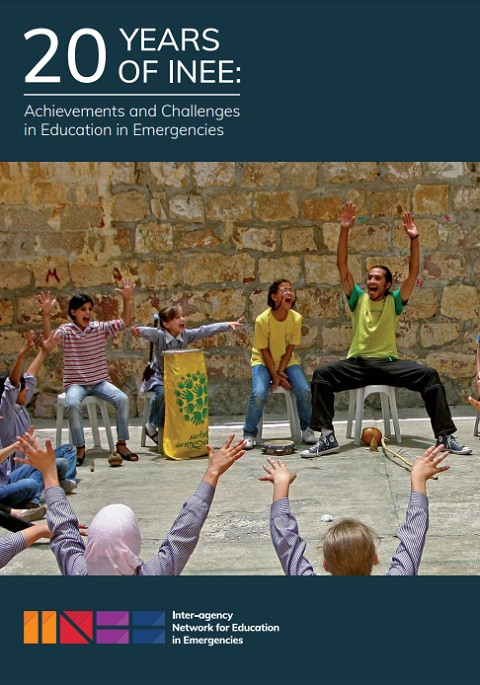 20 Years of INEE: Achievements and Challenges in Education in Emergencies Year of publication: 2020 Corporate author: Inter-agency Network for Education in Emergencies (INEE) This report highlights the continued relevance of INEE 20 years on. It presents new data that shows 127 million primary and secondary school-age children and young people living in crisis-affected countries were out of school in 2019. This is equivalent to almost half of the global out-of-school population, even though only around 29% of children and young people in this age group globally live in crisis-affected countries. These figures are based on new data provided by the UNESCO Institute for Statistics (UIS). The report also demonstrates the still urgent need to prioritize education and financing of education in emergencies, particularly in ‘forgotten’ crises. 20 ans de l’INEE : Réalisations et Défis dans l’Éducation en Situations d’Urgence Year of publication: 2020 Corporate author: Inter-agency Network for Education in Emergencies (INEE) Ce rapport, qui marque le 20e anniversaire de l’INEE, souligne les réalisations dans le domaine de l’ESU au cours des deux dernières décennies et identifie les défis permanents. Il retrace les changements qui ont amené l’ESU dans les programmes mondiaux de planification et d’action et note les étapes clés du développement de l’ESU en tant que domaine reconnu. Reconnaissant également les engagements énoncés dans l’Agenda 2030 pour le développement durable, notamment la promesse de veiller à ce que « personne ne soit laissé de côté » (ONU, 2015), ce rapport se tourne vers l’avenir en recommandant des actions immédiates et durables pour atteindre l’Objectif de Développement Durable 4 (ODD 4), une éducation de qualité et des possibilités de formations permanente inclusives et équitables pour tous - incluant les enfants et les jeunes dans les contextes de crise (ONU, 2015). 20º aniversario de la INEE: Logros y desafíos en la educación en situaciones de emergencia Year of publication: 2020 Corporate author: Inter-agency Network for Education in Emergencies (INEE) Este informe, con motivo del 20.º aniversario de la INEE, enfatiza los logros alcanzados en el ámbito de la EeE en las últimas dos décadas y señala los desafíos que siguen existiendo. Explora los cambios que facilitaron la inclusión de la EeE en los programas globales de planificación y acción, y señala los hitos principales en el desarrollo de la EeE como un campo reconocido. Asimismo, este informe reconoce los compromisos establecidos en la Agenda de Desarrollo Sostenible de 2030, incluido el compromiso de «no dejar a nadie atrás» (ONU, 2015), y enfrenta el futuro con la recomendación de acciones inmediatas y sostenidas para alcanzar el Objetivo de Desarrollo Sostenible 4 (ODS 4),una educación de calidad inclusiva y equitativa, y oportunidades de aprendizaje durante toda la vida para todos; incluidos los niños, niñas y jóvenes en contextos de crisis (UN, 2015).
 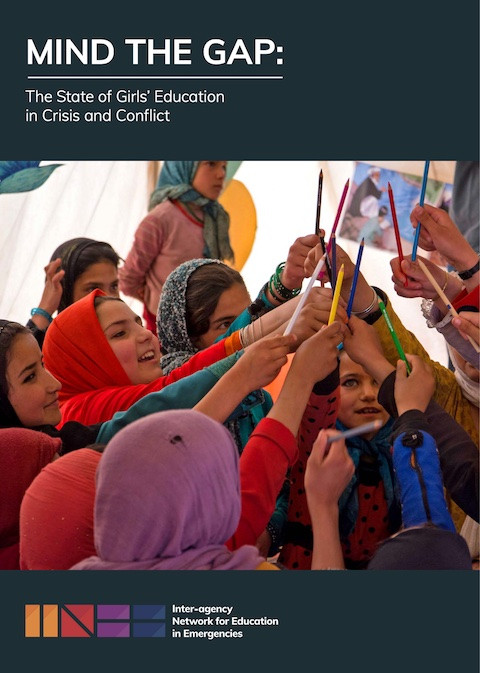 Mind the Gap: The State of Girls’ Education in Crisis and Conflict Year of publication: 2021 Corporate author: Inter-agency Network for Education in Emergencies (INEE) This report summarizes progress, gaps, challenges and opportunities in improving education and training for girls and women affected by conflict and crisis. The report aims to support the Charlevoix Declaration on Quality Education’s commitment to enhance the evidence base and monitor progress toward gender-equitable education in crises. The report draws from data on 44 crisis-affected countries, from recent research, and from a set of case studies of interventions in a range of crisis-affected contexts.
 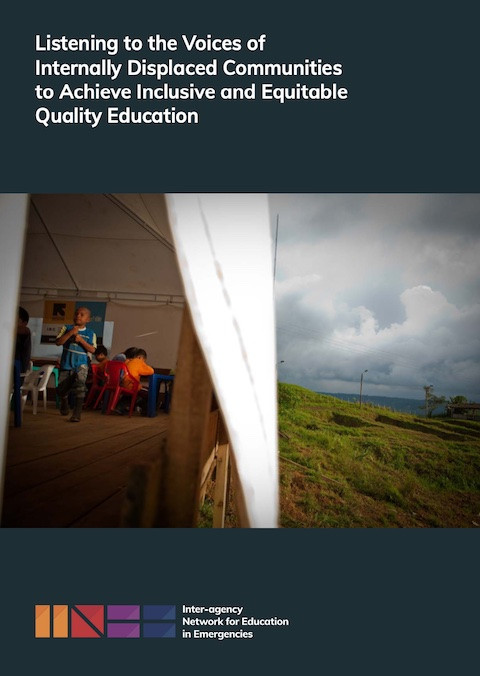 Listening to the Voices of Internally Displaced Communities to Achieve Inclusive and Equitable Quality Education Year of publication: 2021 Author: Caroline Keenan Corporate author: Inter-agency Network for Education in Emergencies (INEE) This paper outlines the real-life day-to-day challenges young IDPs experience when seeking access to quality education, which is fundamental to their healthy development and future life chances. It reflects the perspectives of teachers who have been displaced, and the challenges they have faced both personally and professionally in attempting to support the learning of children and young people in their communities. Young IDPs and internally displaced teachers shared these experiences in a series of five roundtable events hosted by the Inter-agency Network for Education in Emergencies (INEE) in March and April 2021. The paper also provides insights from other roundtable participants, including education in emergencies (EiE) practitioners, government representatives, United Nations (UN) staff, members of international non-governmental organizations (INGOs) and local civil so- ciety, and other stakeholders who are working to support access to education in displaced communities. They all are calling for taking urgent and concrete action to ensure access to quality education for internally displaced children and young people. The United Nations Secretary-General’s High-Level Panel has a unique opportunity to influence the changes needed to achieve this. The recommendations made in the panel’s final report to the Secretary-General and United Nations Member States will be critical to the future outcomes of millions of children and young people around the world.
 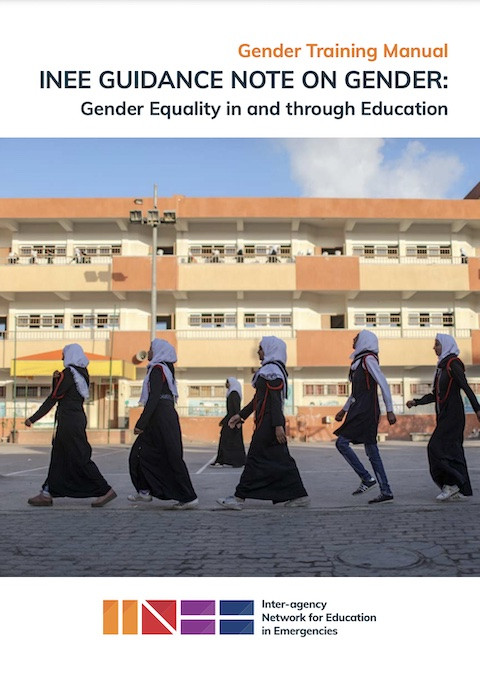 Gender Training Manual: INEE Guidance Note on Gender; Gender Equality in and Through Education Year of publication: 2021 Corporate author: Inter-agency Network for Education in Emergencies (INEE) This training manual outlines 4-8 hours of training activities and materials related to gender-responsive education in emergencies. These training materials include guidance for facilitators (including key concepts, activity instructions, and discussion guides), presentation slides, and activity handouts for participants. Facilitators are encouraged to first review the instructions prior to training, which provides guidance for contextualization of the training resources.
 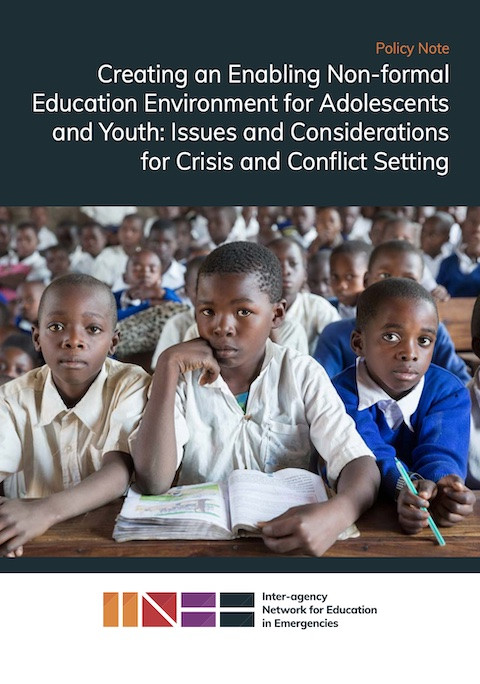 خلق بيئة تعليمية غير رسمية ترتكز على تمكين المراهقين والشباب: قضايا واعتبارات في سياقات الأزمات والصراع Year of publication: 2021 Corporate author: Inter-agency Network for Education in Emergencies (INEE) تقدم مذكرة السياسة هذه توصيات لكيفية تعزيز بيئة السياسات العامة التي يتم فيها تنفيذ التعليم غير الرسمي. تسلط الضوء على الاعتبارات الرئيسية بالنسبة لهؤلاء الذين يخططون ويصممون وينفذون برامج غير رسمية تسعى إلى مواجهة التحديات الأساسية في مجالي التعليم والمهارات الإنمائية التي يواجهها المراهقون والشباب خارج المدارس، ولا سيما المتأثرون بالنزاعات أو الأزمات أو التهجير القسري. Creating an Enabling Non-formal Education Environment for Adolescents and Youth: Issues and Considerations for Crisis and Conflict Setting Year of publication: 2021 Corporate author: Inter-agency Network for Education in Emergencies (INEE) This policy brief offers recommendations to strengthen the policy environment within which non-formal education is delivered and highlights key considerations for those planning, designing and implementing non-formal programmes that seek to meet the core education and skill development challenges faced by out-of-school adolescents and youth, particularly those affected by conflict, crisis, or forced displacement. Creación de un entorno de Educación No Formal favorable para adolescentes y jóvenes: Cuestiones y consideraciones para situaciones de crisis y conflictos Year of publication: 2021 Corporate author: Inter-agency Network for Education in Emergencies (INEE) Esta nota de política ofrece recomendaciones sobre cómo fortalecer el entorno de políticas en el que se imparte la ENF. Destaca las consideraciones clave para quienes planifican, diseñan e implementan programas no formales que buscan satisfacer los desafíos básicos de educación y desarrollo de habilidades que enfrentan los adolescentes y jóvenes no escolarizados, en particular los afectados por conflictos, crisis o desplazamiento forzado. Créer un environnement favorable à l’enseignement informel pour les adolescents et les jeunes: Considérations et problèmes liés aux contextes de crise et de conflit Year of publication: 2021 Corporate author: Inter-agency Network for Education in Emergencies (INEE) La présente note de politique propose des recommandations sur la manière de renforcer le cadre d’action publique dans lequel l’ENF est dispensée. Elle met en lumière des considérations clés à prendre en compte par ceux et celles qui planifient, conçoivent et mettent en œuvre des programmes non formels visant à relever les principaux défis auxquels sont confrontés les adolescents et les jeunes non scolarisés en matière d’éducation et de développement de compétences, en particulier ceux et celles qui sont touchés par un conflit, une crise ou un déplacement forcé.