
Resources
Explore a wide range of valuable resources on GCED to deepen your understanding and enhance your research, advocacy, teaching, and learning.
10 Results found
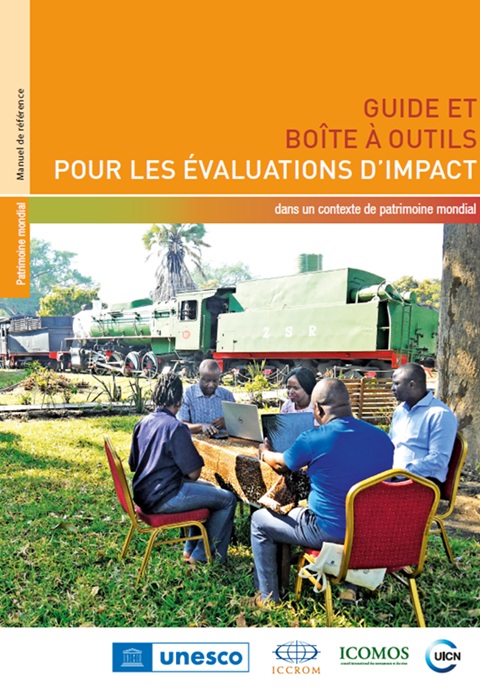 Guide et boîte à outils pour les évaluations d’impact dans un contexte de patrimoine mondial Year of publication: 2023 Author: Sarah Court | Eugene Jo | Richard Mackay | Mizuki Murai | Riki Therivel Corporate author: UNESCO | International Centre for the Study of the Preservation and Restoration of Cultural Property (ICCROM) | International Council on Monuments and Sites (ICOMOS) | International Union for Conservation of Nature (IUCN) Notre patrimoine mondial menacé : les évaluations d’impact offrent des solutionsLors du 50e anniversaire de la Convention du patrimoine mondial, en 2022, on dénombrait plus de 1 100 sites du patrimoine mondial de l’UNESCO. Ces sites sont si précieux pour l’humanité que leur conservation nous incombe à tous. Pourtant, nombre de ces lieux exceptionnels sont confrontés à la pression croissante qu’exercent les divers types de développement et des projets dans et autour des sites. L’évaluation des impacts de ces projets – avant toute décision de mise en œuvre – est essentielle pour éviter tout dommage causé au patrimoine mondial et identifier des choix durables.Le Guide et boîte à outils pour les évaluations d’impact dans un contexte de patrimoine mondial est la référence incontournable qui explique la démarche à suivre pour atteindre cet objectif. Grâce à des conseils et outils (dont des listes de contrôle et glossaire), il fournit un cadre permettant de réaliser des évaluations d’impact pour les sites du patrimoine culturel et naturel.Élaboré par l’UNESCO et les Organisations consultatives du Comité du patrimoine mondial – l’ICCROM, l’ICOMOS et l’UICN –, ce manuel constitue une base de collaboration intersectorielle et multidisciplinaire en vue de trouver des réponses permettant de protéger les sites du patrimoine mondial et de soutenir un développement qualitatif et approprié. Les États parties, les gestionnaires du patrimoine, les décideurs, les planificateurs et les aménageurs de la Convention du patrimoine mondial sont invités à l’utiliser pour contribuer à la réalisation de notre engagement collectif : la transmission de notre patrimoine inestimable aux générations futures.
 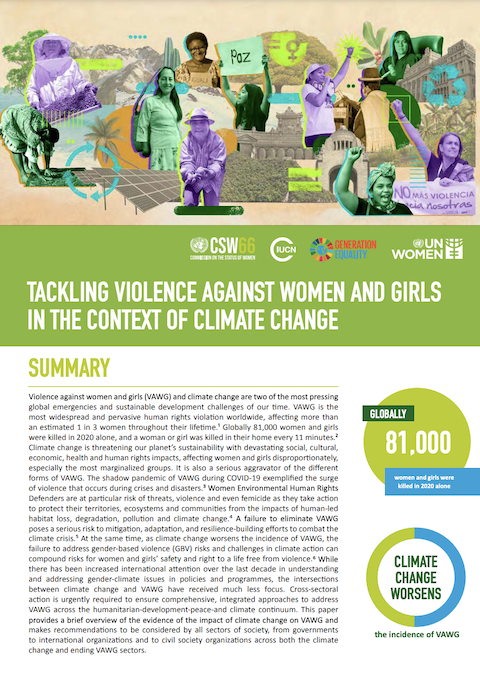 Tackling Violence Against Women and Girls in the Context of Climate Change Year of publication: 2022 Corporate author: United Nations Entity for Gender Equality and the Empowerment of Women (UN Women) | International Union for Conservation of Nature (IUCN) Violence against women and girls (VAWG) and climate change are two of the most pressing global emergencies and sustainable development challenges of our time.This paper provides a brief overview of the evidence of the impact of climate change on VAWG and makes recommendations to be considered by all sectors of society, from governments to international organizations and to civil society organizations across both the climate change and ending VAWG sectors.
  World Heritage Forests: Carbon Sinks Under Pressure Year of publication: 2021 Author: Tales Carvalho Resende | David Gibbs | Nancy Harris | Elena Osipova Corporate author: UNESCO | International Union for Conservation of Nature (IUCN) | World Resources Institute This report provides the first global scientific assessment of greenhouse gas emissions and sequestration in forests found in UNESCO World Heritage sites.World Heritage forests, whose combined area of 69 million hectares is roughly twice the size of Germany, are some of the most biodiversity-rich habitats on Earth and play a crucial role in climate regulation by absorbing carbon dioxide (CO2) from the atmosphere. However, these forests are under increasing anthropogenic pressures, including climate change.By combining remote sensing data with site-level monitoring, this report has quantified the climate benefits of World Heritage forests for the first time, assessed the impacts on carbon of common threats to World Heritage forests and identified sites that are net carbon sources. It therefore provides information to facilitate dialogues between policymakers and local stakeholders for the development of effective solutions aimed at maintaining the continuing role of World Heritage forests as sinks and stable carbon stores for future generations.
 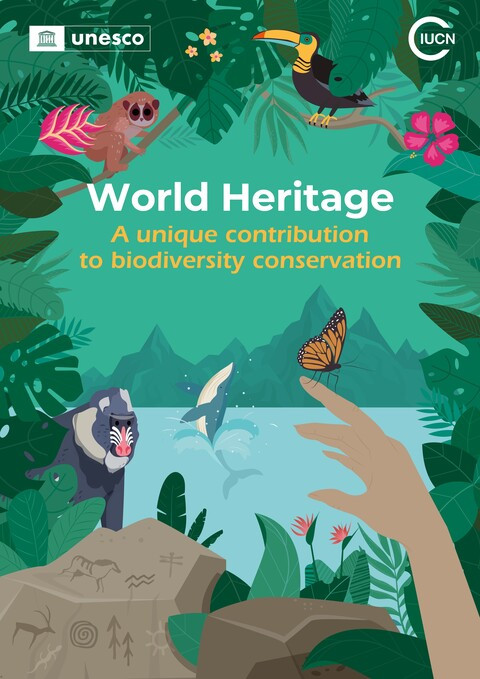 World Heritage: A Unique Contribution to Biodiversity Conservation Year of publication: 2023 Corporate author: UNESCO | International Union for Conservation of Nature (IUCN) The UNESCO World Heritage Convention is unique among international agreements as it deals with both natural and cultural heritage. By conferring one of the highest levels of protection recognized by 195 countries, it ensures a truly global commitment to safeguarding exceptional places. UNESCO natural World Heritage sites are critical for the conservation of ecosystem integrity and biodiversity. While they make up less than 1% of the Earth’s surface, they harbor more than 1/5 of mapped global species richness. This includes over 75,000 species of plants, and over 30,000 species of mammals, birds, fishes, reptiles and amphibians. Cultural World Heritage sites in particular can be an important ally in biodiversity conservation since around 20% of them are located in Key Biodiversity Areas (KBAs). UNESCO World Heritage sites also represent a safe haven for some of the most threatened species on Earth. They are estimated to protect over 20,000 globally threatened species, and are home to some of the last individuals of many iconic species. Today, up to 1/3 of remaining elephants, tigers and pandas can be found in these sites, as well as at least 1 in 10 great apes, giraffes, lions and rhinos. However, even these highly protected sites are today threatened by global climate change and human pressures, including agricultural expansion, infrastructure development, poaching, overexploitation of resources and the proliferation of invasive species. Every 1°C increase in temperature could double the number of species exposed to dangerous climate conditions. Ensuring effective and sustained protection of UNESCO World Heritage sites and surrounding landscapes is crucial for maximizing their value as a solution to tackle the current biodiversity and climate crisis. One way of achieving this is by supporting countries to integrate World Heritage into their National Biodiversity Strategies and Action Plans (NBSAPs), as they are key to implementing the Kunming-Montreal Global Biodiversity Framework (GBF). Patrimonio mundial: Una contribución única a la conservación de la biodiversidad Year of publication: 2023 Corporate author: UNESCO | International Union for Conservation of Nature (IUCN) La Convention du patrimoine mondial de l’UNESCO est un instrument unique parmi les accords internationaux, car elle traite à la fois du patrimoine naturel et culturel. En conférant l’un des plus hauts niveaux de protection reconnu par 195 pays, elle garantit un engagement véritablement mondial en faveur de la sauvegarde de lieux exceptionnels. Les sites naturels du patrimoine mondial de l’UNESCO sont essentiels à la conservation de l’intégrité des écosystèmes et de la biodiversité. Alors qu’ils représentent moins de 1 % de la surface terrestre, ils abritent plus d’un cinquième de la richesse mondiale des espèces cartographiées, soit plus de 75 000 espèces de plantes et plus de 30 000 espèces de mammifères, d’oiseaux, de poissons, de reptiles et d’amphibiens. Les sites culturels du patrimoine mondial, en particulier, peuvent être des alliés importants pour la conservation de la biodiversité, car près de 20 % d’entre eux sont situés dans des zones clés pour la biodiversité (ZCB). Les sites du patrimoine mondial de l’UNESCO représentent également un refuge pour certaines espèces parmi les plus menacées de la planète. On estime qu’ils protègent plus de 20 000 espèces menacées à l’échelle mondiale et qu’ils abritent certains des derniers individus de nombreuses espèces emblématiques. Aujourd’hui, jusqu’à un tiers des éléphants, tigres et pandas restants se trouvent dans ces sites, ainsi qu’au moins un grand singe, une girafe, un lion et un rhinocéros sur dix. Cependant, même ces sites hautement protégés sont aujourd’hui menacés par le dérèglement climatique mondial et les pressions humaines, notamment l’expansion de l’agriculture, le développement des infrastructures, le braconnage, la surexploitation des ressources et la prolifération d’espèces envahissantes. Chaque augmentation de température de 1°C pourrait doubler le nombre d’espèces exposées à des conditions climatiques dangereuses. Il est essentiel d’assurer une protection effcace et durable des sites du patrimoine mondial de l’UNESCO et des paysages environnants pour maximiser leur valeur en tant que solution à la crise actuelle de la biodiversité et du climat. L’un des moyens d’y parvenir est d’aider les pays à intégrer le patrimoine mondial dans leurs stratégies et plans d’action nationaux pour la biodiversité (SPANB), car ils sont essentiels à la mise en œuvre du Cadre mondial pour la biodiversité (CMB) de Kunming-Montréal. Patrimoine mondial: Une contribution unique à la conservation de la biodiversité Year of publication: 2023 Corporate author: Organisation des Nations Unies pour l'éducation, la science et la culture (UNESCO) | International Union for Conservation of Nature (IUCN) La Convention du patrimoine mondial de l’UNESCO est un instrument unique parmi les accords internationaux, car elle traite à la fois du patrimoine naturel et culturel. En conférant l’un des plus hauts niveaux de protection reconnu par 195 pays, elle garantit un engagement véritablement mondial en faveur de la sauvegarde de lieux exceptionnels. Les sites naturels du patrimoine mondial de l’UNESCO sont essentiels à la conservation de l’intégrité des écosystèmes et de la biodiversité. Alors qu’ils représentent moins de 1 % de la surface terrestre, ils abritent plus d’un cinquième de la richesse mondiale des espèces cartographiées, soit plus de 75 000 espèces de plantes et plus de 30 000 espèces de mammifères, d’oiseaux, de poissons, de reptiles et d’amphibiens. Les sites culturels du patrimoine mondial, en particulier, peuvent être des alliés importants pour la conservation de la biodiversité, car près de 20 % d’entre eux sont situés dans des zones clés pour la biodiversité (ZCB). Les sites du patrimoine mondial de l’UNESCO représentent également un refuge pour certaines espèces parmi les plus menacées de la planète. On estime qu’ils protègent plus de 20 000 espèces menacées à l’échelle mondiale et qu’ils abritent certains des derniers individus de nombreuses espèces emblématiques. Aujourd’hui, jusqu’à un tiers des éléphants, tigres et pandas restants se trouvent dans ces sites, ainsi qu’au moins un grand singe, une girafe, un lion et un rhinocéros sur dix. Cependant, même ces sites hautement protégés sont aujourd’hui menacés par le dérèglement climatique mondial et les pressions humaines, notamment l’expansion de l’agriculture, le développement des infrastructures, le braconnage, la surexploitation des ressources et la prolifération d’espèces envahissantes. Chaque augmentation de température de 1°C pourrait doubler le nombre d’espèces exposées à des conditions climatiques dangereuses. Il est essentiel d’assurer une protection effcace et durable des sites du patrimoine mondial de l’UNESCO et des paysages environnants pour maximiser leur valeur en tant que solution à la crise actuelle de la biodiversité et du climat. L’un des moyens d’y parvenir est d’aider les pays à intégrer le patrimoine mondial dans leurs stratégies et plans d’action nationaux pour la biodiversité (SPANB), car ils sont essentiels à la mise en œuvre du Cadre mondial pour la biodiversité (CMB) de Kunming-Montréal.
 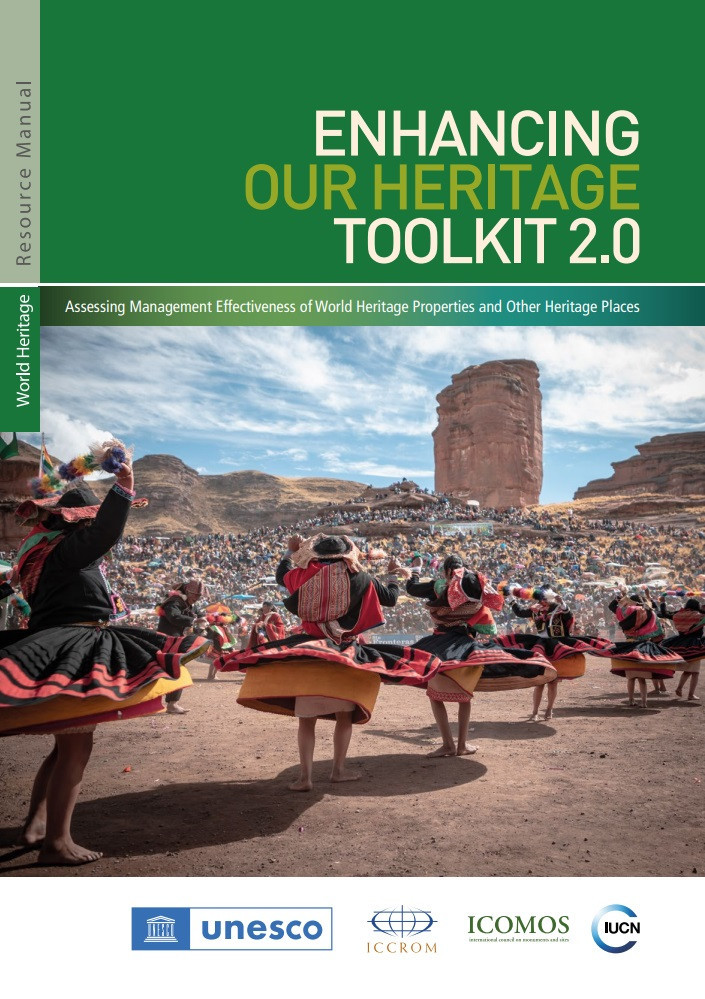 Enhancing our heritage toolkit 2.0: assessing management effectiveness of World Heritage properties and other heritage places Year of publication: 2023 Corporate author: UNESCO | International Centre for the Study of the Preservation and Restoration of Cultural Property (ICCROM) | International Council on Monuments and Sites (ICOMOS) | International Union for Conservation of Nature (IUCN) <Short summary>EoH 2.0 toolkit helps assess management effectiveness in World Heritage places World Heritage properties are internationally recognized as places of Outstanding Universal Value that should benefit from the highest level of management effectiveness. Despite the best efforts to conserve these places for present and future generations, many are under threat from a range of factors. These include inappropriate development, mass tourism, pollution, resource extraction or climate change, to name but a few.What can be done to better respond to factors negatively affecting World Heritage places? Do management processes influence conservation results? If so, how can critical management weaknesses be identified and improved?The Enhancing Our Heritage Toolkit 2.0 offers a self-assessment methodology to evaluate management effectiveness in a World Heritage property or other heritage place. It contains 12 tools that can be used separately or collectively to understand in detail what is working well and what can be done better. To facilitate their use, the tools are accompanied by worksheets, in the form of either a template to help compile information in a systematic way or a questionnaire, both of which can be adapted to the specific needs of each heritage place.The Toolkit supports managers in identifying ways to improve conservation practices, management processes and resource allocation – particularly if used before reviewing or updating management plans. While there is a focus on World Heritage, it can be applied to all heritage places, whether natural, cultural or combinations of both.
 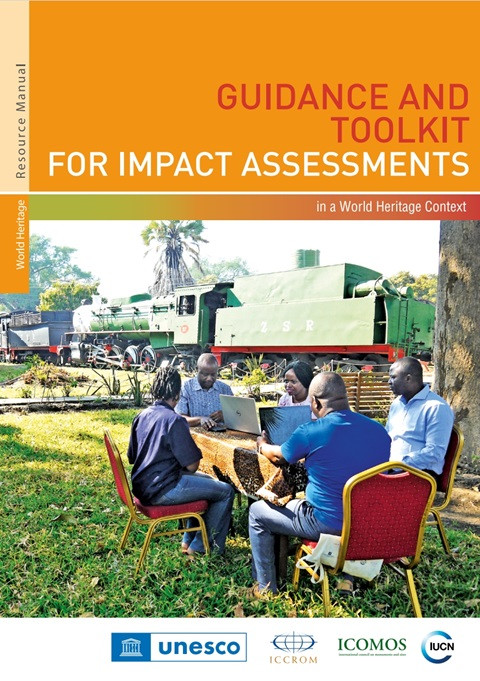 Guidance and Toolkit for Impact Assessments in a World Heritage Context Year of publication: 2022 Author: Sarah Court | Eugene Jo | Richard Mackay | Mizuki Murai | Riki Therivel Corporate author: UNESCO | International Centre for the Study of the Preservation and Restoration of Cultural Property (ICCROM) | International Council on Monuments and Sites (ICOMOS) | International Union for Conservation of Nature (IUCN) | Korea R. Cultural Heritage Administration As the World Heritage Convention celebrates its 50th anniversary in 2022, over 1100 sites around the world are recognized as World Heritage - places that are so valuable to humanity that there conservation has been deemed our collective responsibility. Yet many of these exceptional places face increasing pressure from diverse types of development projects within and around the sites. Assessing the impacts of such projects – before deciding to proceed with their implementation – is essential to both prevent damage to World Heritage and identify sustainable options.The Guidance and Toolkit for Impact Assessments in a World Heritage Context is the go-to reference that explains the process for achieving these goals. Offering practical tips and tools including checklists and a glossary, it provides a framework for conducting impact assessments for cultural and natural heritage sites.Developed by UNESCO and the Advisory Bodies to the World Heritage Committee, ICCROM, ICOMOS and IUCN, this Guidance and Toolkit fosters cross-sectoral, multidisciplinary collaboration to identify solutions for both protecting World Heritage sites and supporting good quality and appropriate development . States Parties to the World Heritage Convention, heritage managers, decision-makers, planners and developers are invited to use it to help realise our collective commitment to passing on our precious heritage to future generations. 세계유산 영향평가 지침서 Year of publication: 2023 Author: Sarah Court | Eugene Jo | Richard Mackay | Mizuki Murai | Riki Therivel Corporate author: 유네스코 | International Centre for the Study of the Preservation and Restoration of Cultural Property (ICCROM) | International Council on Monuments and Sites (ICOMOS) | International Union for Conservation of Nature (IUCN) | Korea R. Cultural Heritage Administration 2022년 '세계유산협약'이 탄생 50주년을 맞았다. 그동안 전 세계적으로 1,100건이 넘는 곳이 세계유산으로 공인되어 그 가치를 보존하는 것이 인류 전체의 의무로 인식되고 있다. 그러나 많은 세계유산이 유산 안팎의 다양한 개발행위로 인해 위협받고 있다. 그러한 개발행위로 인한 유산의 훼손을 예방하고 지속가능한 대안을 찾기 위해서는 개발행위를 실행하기로 결정하기에 앞서 유산에 미칠 영향을 평가해야한다. 이러한 목적을 위해 편리하게 활용할 수 있도록 나온 안내서가 바로 본 '세계유산 영향평가 지침서(이하 '지침서')이다. 지침서는 실무에 바로 쓸 수 있도록 용어정의, 점검목록 등을 제안하며 문화유산과 자연유산의 영향평가에 모두 사용할 수 있다. UNESCO와 세계유산위원회의 자문기구인 ICCROM, ICOMOS와 ICUN이 개발한 이 지침서는 다양한 분야를 넘나드는 학제적 협력을 통해 세계유산보호와 고품질의 적절한 개발이라는 일석이조의 목적을 달성하는 대안을 찾기 위한 안내서이다. 세계유산협약의 당사국, 유산관리자, 계획정책 당국과 개발 사업자까지 본 지침서를 활용하여, 인류의 공동 사명인 소중한 유산을 후세에 전승하는데 기여해 주길 바란다.
 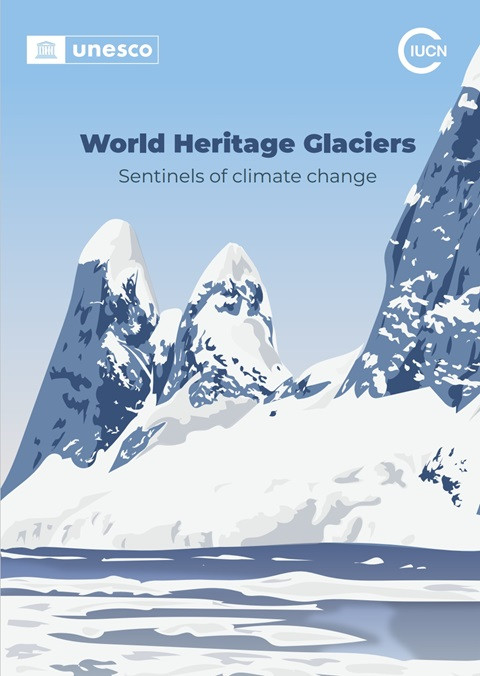 World Heritage Glaciers: Sentinels of Climate Change Year of publication: 2022 Corporate author: UNESCO | International Union for Conservation of Nature (IUCN) It outlines the importance of glaciers for sustaining life, their role as indicators of climate change, and their accelerated retreat due to global warming. The report emphasizes the urgent need to drastically reduce greenhouse gas emissions to limit global warming to 1.5°C, which could save glaciers in two-thirds of World Heritage sites. Additionally, it underscores the importance of adaptive measures like improved monitoring networks, early warning systems, and targeted policies to address the inevitable changes in glacierized areas. It also advocates for inclusive stakeholder engagement, particularly involving Indigenous Peoples and local communities, to develop effective responses to the challenges posed by climate change. The document serves as a call to action for international cooperation and collaboration to protect the Outstanding Universal Value of World Heritage glaciers and ensure their continued benefits for humanity.