
Resources
Explore a wide range of valuable resources on GCED to deepen your understanding and enhance your research, advocacy, teaching, and learning.
3 Results found
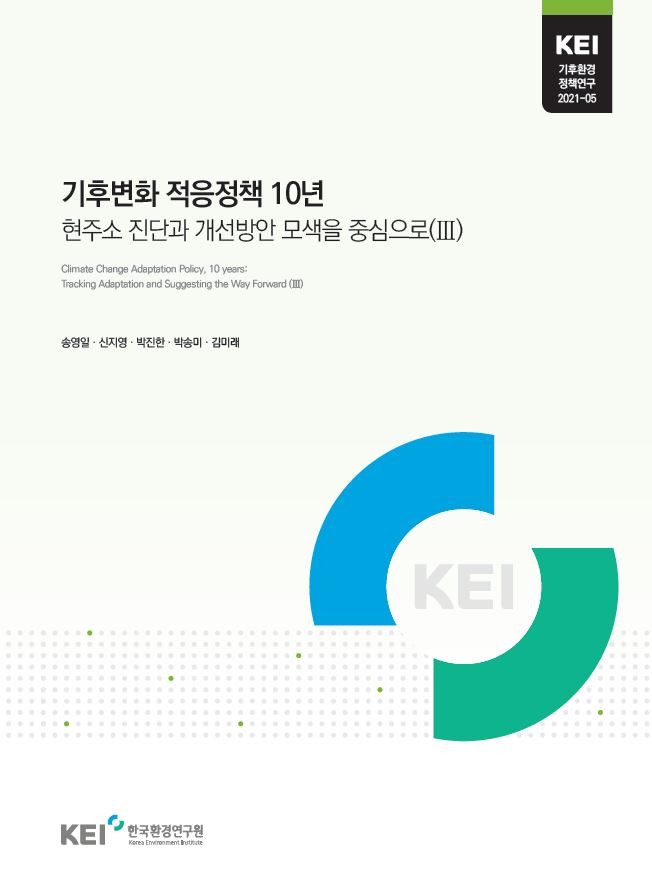 Climate Change Adaptation Policy, 10 years: Tracking Adaptation and Suggesting the Way Forward (Ⅲ) Year of publication: 2021 Author: YoungiI Song | Jiyoung Shin | Jinhan Park | Songmi Park | Mirae Kim Corporate author: Korea Environment Institute (KEI) This study suggested the direction of preparing and wrote the climate change adaptation gap report by sector. This study defined the adaptation gap as the degree of implementation compared to the adaptation goal and evaluated the effect of reducing climate change risk.This study prepared a climate change adaptation gap report through the process of selecting representative indicators, setting adaptation goals, and analyzing national climate change adaptation policies for five sectors: forest/ecosystem, agriculture and fisheries, water, health, and territory/coast.Through the writing of the climate change adaptation gap report, We identified the insufficient climate change adaptation measures and suggested the policy directions to effectively reduce climate change risk and ensure the effectiveness of future climate change adaptation policies.As a result, we emphasized the climate change adaptation efforts are needed, such as establishing climate change adaptation policies directly related to climate change risk, building the data to understand the effectiveness of climate change adaptation measures, and setting goals for climate change adaptation.
 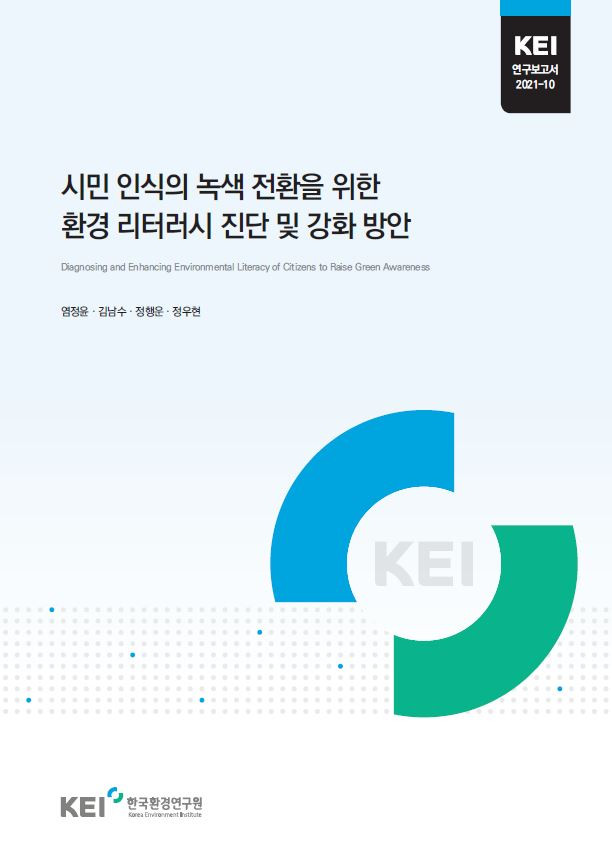 Diagnosing and Enhancing Environmental Literacy of Citizens to Raise Green Awareness Year of publication: 2021 Author: Jeongyoon Yeom | Namsoo Kim | Haengwoon Jeong | Woohyeon Jeong Corporate author: Korea Environment Institute (KEI) 1. Research purposeA nationwide consensus on the understanding on and necessity of the environmental policy is needed in order to successfully achieve the policy objectives.The necessity of environmental education is being highlighted but in reality, there is a lack of objectives and specific indicators to verify its effect.The goal of environmental education should be the expansion of environmental literacy and indicators to measure this should be developed. 2. Research scopeSummarize the concept of environmental literacy and develop the scales for adultsMeasure the level of environmental literacy of citizensConfirm the predictors and consequences of environmental literacyUnderstand citizen types via cluster analysis
 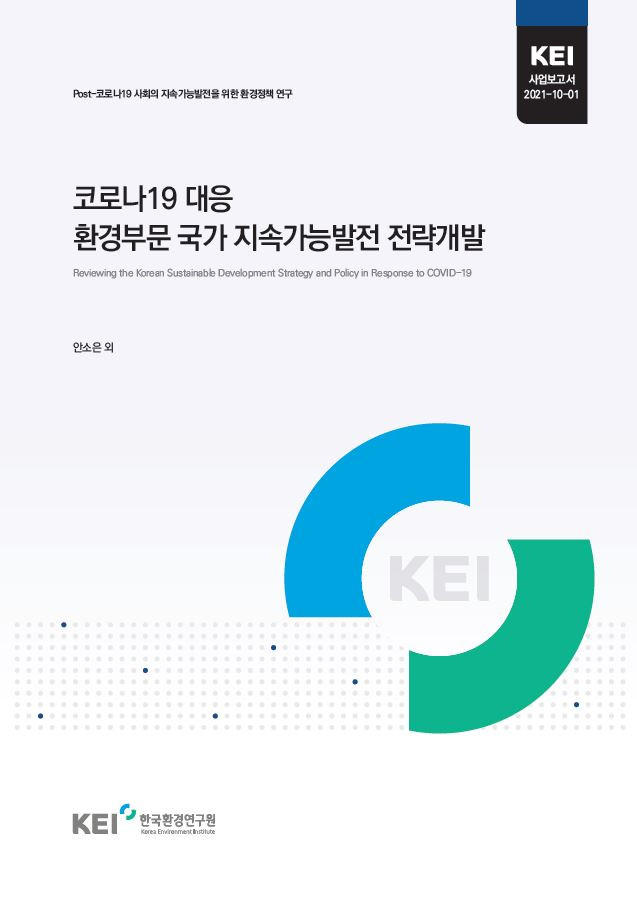 Reviewing the Korean Sustainable Development Strategy and Policy in Response to COVID-19 Year of publication: 2021 Author: Soeun Ahn | Dokyun Kim | Hongrim Lee | Yoonseon Park | Jaehyuk Lee | Jungseok Lee | Hanwoom Hong | Woohyun Jung | Baeseok Jeon | Garim Jeon Corporate author: Korea Environment Institute (KEI) Through the ‘Sustainable Development Goals (SDGs)’, the United Nations (UN) has established tasks, including 17 policy goals and 169 targets, that civilization must resolve by 2030. It is recommended that each country build its own implementation mechanism, which sets its own policy goals and targets, tailored to its respective national context. South Korea established the ‘National Sustainable Development Goals (K-SDGs)’ in 2018, consisting of 17 policy goals and 122 targets. In 2020, the country prepared the Fourth Basic Plan for Sustainable Development (2021-2040). The K-SDGs were revised and supplemented in consideration of recent changes in conditions.This study aims to develop a national K-SDGs strategy by examining factors that threaten sustainable development, with a focus on the COVID-19 pandemic.