
Resources
Explore a wide range of valuable resources on GCED to deepen your understanding and enhance your research, advocacy, teaching, and learning.
7 Results found
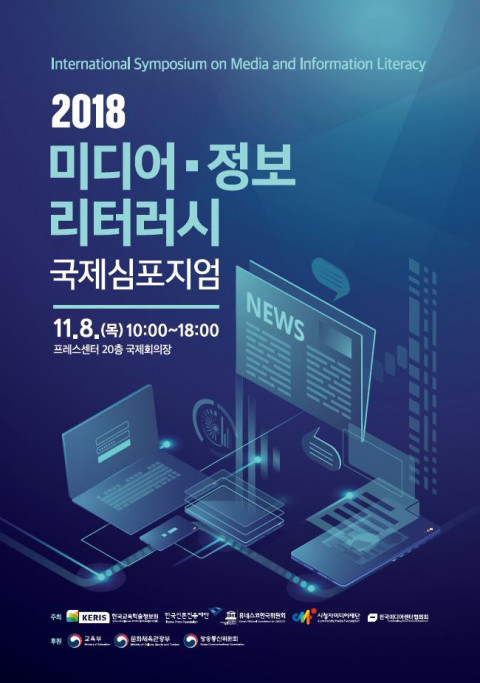 2018 International Symposium on Media and Information Literacy Year of publication: 2018 Corporate author: Korean National Commission for UNESCO | Community Media Foundation | National Association of Community Mediacenters | Korea Education and Research Information Service (KERIS) | Korea Press Foundation (KPF) This book is a conference report of 2018 International Symposium on Media and Information Literacy. The Symposium on MIL is hosted by the Korea Press Foundation (KPF), the Korea Education and Research Information Service (KERIS), and the Korean National Commission for UNESCO (KNCU), in cooperation with the Community Media Foundation, the National Association of Community Mediacenters.
  Bridge Zambia Project Report Year of publication: 2019 Corporate author: Korean National Commission for UNESCO | Zambia National Commission for UNESCO The Bridge Zambia Project (the Project) has been implemented jointly between the Korean National Commission for UNESCO (KNCU) and its partners in Zambia since October 2010. In March 2019, KNCU’s involvement in the Project will come to an end and Zambia will take over full responsibility for the Project as it goes forward. The Project has supported grassroots activities through the establishment of a Community Learning Centre (CLC), which acts as a hub of community-led development activities in non-formal education. The Project has mobilized and empowered communities and local leadership to take charge of non-formal education programmes with the aim of assisting Zambia to attain UNESCO’s Education for All goals and UN Sustainable Development Goal 4 (SDG 4), concerning education quality.
  Embracing Peace through UNESCO World Heritage Year of publication: 2024 Author: 장정아 | 김민성 | 김수진 | 김원호 | 안치영 | 오성희 | 오창현 | 이성영 | 이현경 | 전원희 Corporate author: Korean National Commission for UNESCO This resource kit is the product of long labor by 10 researchers consisting of scholars on UNESCO heritage and teachers working in schools that belong to the UNESCO Associated Schools Network (ASPnet). It is distinct from existing educational resources in several ways. First, this kit goes beyond introducing the variously inscribed World Heritage properties one after another, to explain the rich significance of the heritage properties through keywords such as peace, cultural diversity, and sustainability. We also sought to overcome misconceptions about World Heritage and presented the content through various interesting cases for easy, hands-on application in classroom settings. In 2024, KNCU has pilot-tested the teaching materials presented in this resource kit in Korean middle and high schools belonging to UNESCO ASPnet. An online teacher training course based on this book has also been provided in June this year.
  SDG 4 Midterm Review: Monitoring Implementation of SDG 4 Target 4.1. ~ 4.c. in Rep. of Korea Year of publication: 2023 Author: Hunwoo Joo | Mikyung Kim | Mugyeong Moon | Jeongwon Hwang | Kirak Ryu | Hyeseung Cho | Yunjeong Choi | Hyosook Shin | Kyungsook Kang | Minseon Park | Eunju Lee | Nayoung Kim | Hwanbo Park | Hannah Kim | Jonghun Kim Corporate author: National Consultative Group on Education 2030 | Korean National Commission for UNESCO This report presents the compiled work from the National Consultative Group and Working Groups on Education 2030 of the Republic of Korea regarding the midterm review on the implementation of SDG 4.
  SDG4 이행 촉진을 위한 지표 연구 Year of publication: 2025 Author: 박근영 | 주형미 | 문무경 | 오예진 | 류기락 | 조혜승 | 변종임 | Sunmi Ji | 이슬비 | 박기웅 | 안해정 | 서무계 Corporate author: Korean National Commission for UNESCO 지속가능발전목표(SDGs) 이행의 전환점을 맞아 국내 교육의 현황과 과제를 SDG4 지표를 통해 진단하고 향후 방향을 탐색한 연구 보고서 <목차> 발간사 ‘SDG4 이행 촉진을 위한 지표 연구’ 보고서를 발간하며 서론 현 시점의 SDG4 이행 수준 점검과 개선 방향 탐색의 당위성 SDG 4.1 공평하고 양질의 초·중등 교육 이수 보장에 대한 한국 현황 및 향후 과제 SDG 4.2 영유아 교육과 보육 지표 검토와 향후 과제 SDG 4.3 고등교육의 수월성과 형평성 논의 및 향후 과제 SDG 4.4 고용을 위한 스킬: SDG 4.4의 이행 현황과 과제 SDG 4.5 교육 형평성 실현을 위한 SDG 4.5 지표 검토와 이행 현황 분석 SDG 4.6 한국의 SDG 4.6 이행 현행과 과제: 성인 문해력 SDG 4.7 더불어 살기 위한 학습을 향하여: 세계시민교육 및 지속가능발전교육 이행 현황과 모니터링 개선 방안 탐색 SDG 4.a SDG 4.a.1과 한국 디지털 교육 이행 현황: 접근성, 사용도, 스킬 SDG 4.b 공적개발원조(ODA) 장학금 확대 SDG 4.c 자격을 갖춘 교사의 공급 관련 이행 현황 및 개선 방안 결론 엄격한 현실 인식에 기반한 다음 목표로의 이행 준비
  The Role of UNESCO in the Search for Peace Year of publication: 2019 Author: Inuk Kang | Sunghae Kim | Jihon KIM | Jieun Seong | Seongsang YOO | Dongjoon Jo | Dongju Choi | Kyungkoo Han Corporate author: Korean National Commission for UNESCO UNESCO's international intellectual cooperation for peace has achieved substantive tangible results in education and culture. Though some problems have been politicized and have produced limitations along the way, UNESCO has played a leading role in education and culture while setting the direction of international cooperation and activities in this regard.UNESCO has regretfully not played an active role in fostering broader, more diverse, and more extensive new research and practices related to peace, even with the international Cold War realities. While UNESCO was an international organization created explicitly for peace, it has neither led to momentous peace-related academic discourse nor does it lead to theoretical development in this regard. The concept of a "Culture of Peace," for example, was first mentioned in the Ivory Coast (Cote d'Ivoire) in 1989. However, it was not until 1997 that UNESCO started its "Toward a Culture of Peace Program" and the U.N. General Assembly declaring 2000 as the "Year of Peace."UNESCO's situation provides an opportunity for South Korea to play a more active role. South Korea needs to break with its history of taking a passive stance focused on short-term national interests and its preoccupation with "situational tracking" responses aimed at fostering national prestige when such opportunities present themselves. Instead, while prioritizing a "global community" founded on world peace and the well-being of humanity-as long-term shared benefits to all nations-and by sharing the financial burdens involved, the country can increase its international status and become a moral leader raising a "global citizenship power."
  Implementation of the Sustainable Development Goal 4 in Korea Year of publication: 2019 Corporate author: Korean National Commission for UNESCO | Korean Educational Development Institute (KEDI) This report takes stock of progress made in Korea towards achieving SDGs and sheds light on major policy implications for its further implementation. The first chapter will touch on the background and objectives, the second on the monitoring of SDG4-Education 2030 at the global level, the third on the implementation structure of SDG4-Education 2030 in Korea, the fourth on the progress made toward meeting SDG4, and the fifth on the conclusion.