
Resources
Explore a wide range of valuable resources on GCED to deepen your understanding and enhance your research, advocacy, teaching, and learning.
6 Results found
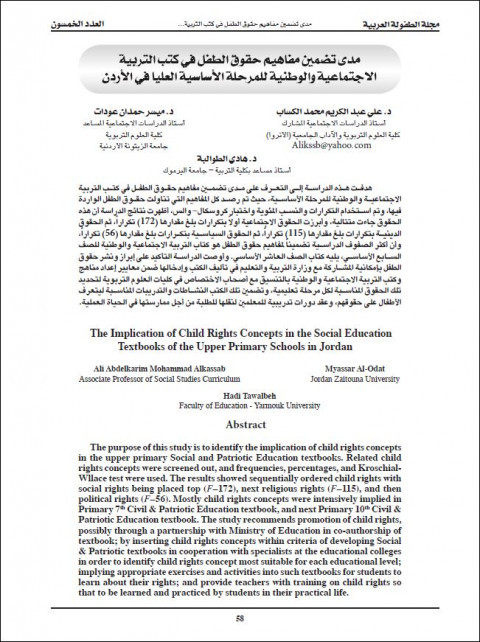 مدى تضمين مفاهيم حقوق الطفل في كتب التربية الاجتماعية والوطنية للمرحلة الأساسية العليا في الأردن Year of publication: 2012 Author: الكساب، علي عبد الكريم محم Corporate author: Kuwait Society for the Advancement of Arab Children (KSAAC) هدفت هذه الدراسة إلى التعرف على مدى تضمين مفاهيم حقوق الطفل في كتب التربية الاجتماعية والوطنية للمرحلة الأساسية حيث تم رصد كل المفاهيم التي تناولت حقوق الطفل الواردة فيها. وتم استخدام التكرارات والنسب المئوية واختبار كروسكال-والس. أظهرت نتائج الدراسة أن هذه الحقوق جاءت متتالية، وأبرزت الحقوق الاجتماعية أولا بتكرارات بلغ مقدارها (172) تكرارا، ثم الحقوق الدينية بتكرارات بلغ مقدارها (115) تكرارا، ثم الحقوق السياسية بتكرارات بلغ مقدارها (56) تكرارا، وأن أكثر الصفوف الدراسية تضمينا لمفاهيم حقوق الطفل هو كتاب التربية الاجتماعية والوطنية للصف السابع الأساسي، يليه كتاب الصف العاشر الأساسي. وأوصت الدراسة التأكيد على إبراز ونشر حقوق الطفل بإمكانية المشاركة مع وزارة التربية والتعليم في تأليف الكتب وإدخالها ضمن معايير إعداد مناهج وكتب التربية الاجتماعية والوطنية بالتنسيق مع أصحاب الاختصاص في كليات العلوم التربوية لتحديد تلك الحقوق المناسبة لكل مرحلة تعليمية، وتضمين تلك الكتب النشاطات والتدريبات المناسبة ليتعرف الأطفال على حقوقهم، وعقد دورات تدريبية للمعلمين لنقلها للطلبة من أجل ممارستها في الحياة العملية. The Implication of Child Rights Concepts in the Social Education Textbooks of the Upper Primary Schools in Jordan Year of publication: 2012 Author: الكساب، علي عبد الكريم محم Corporate author: Kuwait Society for the Advancement of Arab Children (KSAAC) The purpose of this study is to identify how far are the concepts of child rights included in the Social and National Education textbooks of the the basic education classes. Relevant child rights concepts were monitored and frequencies, percentages, and KroschialWllace test were used. The results showed that child rights came in a sequence of order. Social rights came on top (F=172), followed by religious rights (F=115) and political rights (F=56). The text books with most referencies to child rights concepts were the Civic and National education books of class Basic Education 10.The study recommends promoting child rights by writing relevant books and adding child rehigts concepts to the criteria of authoring civic and national education curriculla and textbooks, possibly in partnership with the Ministry of Education and in cooperation with specialists at the faculties of sciences of education, in order to identify child rights concepts, most suitable for each educational level, with appropriete activities and excercises for children to lern about their implying appropriate into such textbooks for students to learn about their rights. Teachers should be provided with training in order to help children parctice them in reality.
 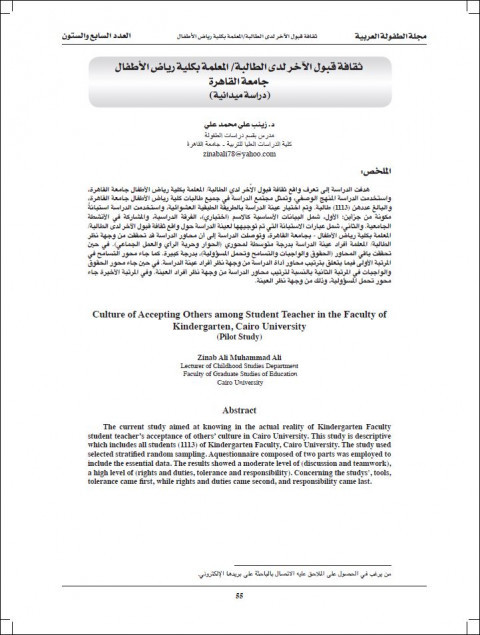 ثقافة قبول الآخر لدى الطالبة/ المعلمة بكلية رياض الأطفال - جامعة القاهرة: دراسة ميدانية Year of publication: 2016 Author: علي، زينب علي محمد Corporate author: Kuwait Society for the Advancement of Arab Children (KSAAC) هدفت الدراسة إلى تعرف واقع ثقافة قبول الاًخر لدي الطالبة/ المعلمة بكلية رياض الأطفال - جامعة القاهرة. استخدمت الدراسة المنهج الوصفي، وتمثل مجتمع الدراسة في جميع طالبات كلية رياض الأطفال جامعة القاهرة، والبالغ عددهن (1113) طالبة. تم اختيار عينة الدراسة بالطريقة الطبقية العشوائية، واستخدمت الدراسة استبانةً مكونة من جزأين: الأول، شمل البيانات الأساسية كالاسم (اختياري)، الفرقة الدراسية، والمشاركة في الأنشطة الجامعية. والثاني، شمل عبارات الاستبانة التي تم توجيهها لعينة الدراسة حول واقع ثقافة قبول الآخر لدى الطالبة/ المعلمة بكلية رياض الأطفال. توصلت الدراسة إلى أن محاور) بدرجة كبير. كما جاء محور التسامح في المرتبة الأولى فيما يتعلق بترتيب محاور أداة الدراسة من وجهة نظر أفراد عينة الدراس. في حين جاء محور الحقوق والواجبات في المرتبة الثانية بالنسبة لترتيب محاور الدراسة من وجهة نظر أفراد العينة. وفي المرتبة الأخيرة جاء محور تحمل المسؤولية، وذلك من وجهة نظر العينة. Culture of Accepting Others among Student Teacher in the Faculty of Kindergarten, Cairo University: Pilot Study Year of publication: 2016 Author: علي، زينب علي محمد Corporate author: Kuwait Society for the Advancement of Arab Children (KSAAC) The study aimed at knowing in the actual reality of accepting the others’ culture by the students/ teachers of the Kindergarten Faculty at Cairo University. This study is descriptive and includes all students (1113) of the Kindergarten Faculty. The study used selected stratified random sampling. A questionnaire composed of two parts was employed to include the essential data. The results showed a moderate level of 'discussion and teamwork', a high level of 'rights and duties, tolerance and responsibility'. Concerning the study’s tools, tolerance came first, while rights and duties came second, and responsibility came last.
 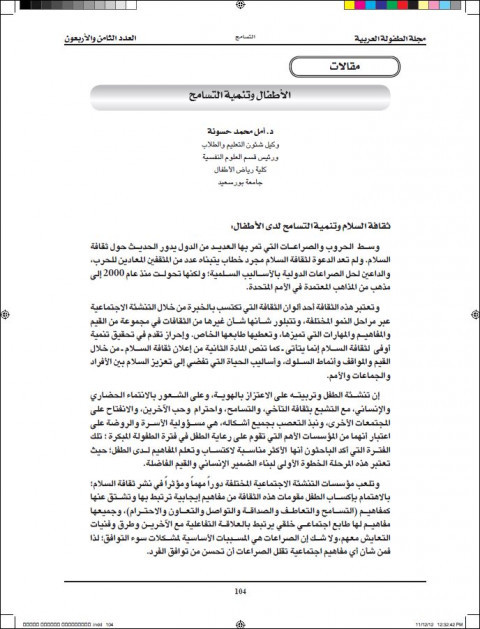 الأطفال وتنمية التسامح Year of publication: 2011 Author: حسونة، أمل محمد Corporate author: Kuwait Society for the Advancement of Arab Children (KSAAC) تناولت هذه الورقة موضوع ثقافة السلام وتنمية التسامح لدى الأطفال انطلاقا من فكرة أن هذه الثقافة تكتسب من خلال التنشئة الاجتماعية عبر مراحل النمو المختلفة. وقد تمّ التطرق إلى مجموعة من القيم والمفاهيم والمهارات التي تميز هذه الثقافة وتعطيها طابعها الخاص. كما تمّ التركيز على أهمية إكساب الأطفال في سن مبكر ثقافة السلام التي تعتبر حلا وقائيا يحميهم من الصراعات المستقبلية ويكسبهم مهارات التعايش الإيجابي في المجتمع ويجنبهم العنف والعدوان. ومن جهة أخرى تمّ التركيز على أهمية التسامح بحيث يجب على السياسات والبرامج التربوية الإسهام في تنمية التفاهم، والتضامن، والتسامح بين الأفراد. كل ذلك بهدف تكوين مواطنين متضامنين ومسؤولين، ومنفتحين على الثقافات الأخرى، وقادرين على اتقاء النزاعات أو حلّها بوسائل سلمية. Children and Developing Tolerance Year of publication: 2011 Author: حسونة، أمل محمد Corporate author: Kuwait Society for the Advancement of Arab Children (KSAAC) This paper dealt with the issue of peace education and the nurturing of toleration among children proceeding from the idea that this culture is acquired through social nurturing along the different stages of development. It covered a group of values, concepts and skills that distinguish this culture and give it it’s special character.The paper also focuses on the importance of children acquiring peace culture at an early age since it is considered a preventive solution that protects them from future conflicts and provides them with positive coexistence skills in society and saves them from violence and aggression. On the other side, the paper concentrates on the importance of tolerance which makes it must for education policies and programs to contribute to developing understanding, solidarity and toleration among individuals. All of this aims at creating responsible and interdependent citizens, open to other cultures and capable of preventing conflicts or solving them peacefully.