
Resources
Explore a wide range of valuable resources on GCED to deepen your understanding and enhance your research, advocacy, teaching, and learning.
16 Results found
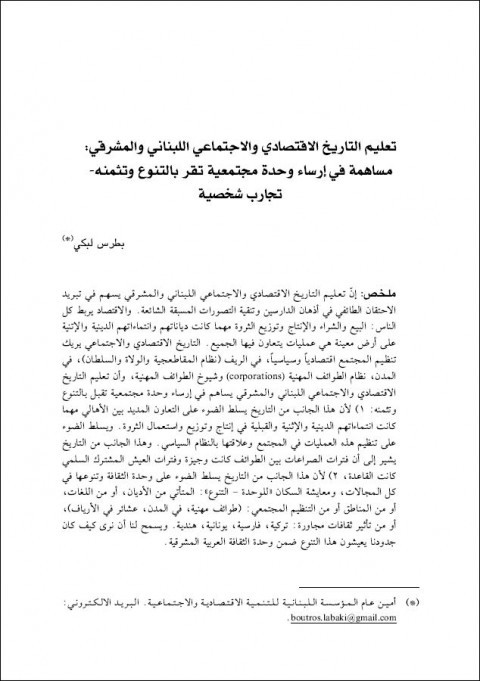 تعليم التاريخ الاقتصادي والاجتماعي اللبناني والمشرقي : مساهمة في إرساء وحدة مجتمعية تقر بالتنوع وتثمنه: تجارب شخصية Year of publication: 2012 Author: لبكي، بطرس Corporate author: Lebanese Association for Educational Studies (LAES) إنّ تعليم التاريخ الاقتصادي والاجتماعي اللبناني والمشرقي يسهم في تبريد الاحتقان الطائفي في أذهان الدارسين وتنقية التصورات المسبقة الشائعة. والاقتصاد يربط كل الناس: البيع والشراء والإنتاج وتوزيع الثروة مهما كانت دياناتهم وانتماءاتهم الدينية والإتنية على ارض معينة هي عمليات يتعاون فيها الجميع. التاريخ الاقتصادي والاجتماعي: يريك تنظيم المجتمع اقتصادياً وسياسياً، في الريف (نظام المقاطعجية والولاة والسلطان)، في المدن: نظام الطوائف المهنية (corporations) وشيوخ الطوائف المهنية وأن تعليم التاريخ الاقتصادي والاجتماعي اللبناني والمشرقي يساهم في إرساء وحدة مجتمعية تقبل بالتنوع وتثمنه: 1) لأن هذا الجانب من التاريخ يسلط الضوء على التعاون المديد بين الأهالي مهما كانت انتماءاتهم الدينية والإثنية والقبلية في إنتاج وتوزيع واستعمال الثروة. ويسلط الضوء على تنظيم هذه العمليات في المجتمع وعلاقتها بالنظام السياسي. وهذا الجانب من التاريخ يشير إلى أن فترات الصراعات بين الطوائف كانت وجيزة وفترات العيش المشترك السلمي كانت القاعدة، 2) لأن هذا الجانب من التاريخ يسلط الضوء على وحدة الثقافة وتنوعها في كل المجالات، ومعايشة السكان "للوحدة - التنوع": المتأتي من الأديان، أو من اللغات، أو من المناطق أو من التنظيم المجتمعي: (طوائف مهنية، في المدن، عشائر في الأرياف)، أو من تأثير ثقافات مجاورة: تركية، فارسية، يونانية، هندية. ويسمح لنا أن نرى كيف كان جدودنا يعيشون هذا التنوع ضمن وحدة الثقافة العربية المشرقية. Teaching Lebanese-Oriental Economic and Social History: Promoting a Societal Unity Which Acknowledges and Values Diversity Year of publication: 2012 Author: لبكي، بطرس Corporate author: Lebanese Association for Educational Studies (LAES) Teaching the economic and social history of the Lebanon and the Orient contributes towards the cooling down of sectarian tensions in the minds of learners and clears up common prejudices. Economic transactions connect everyone within a given area: Buying and selling, production and distribution of resources are operations in which everyone cooperates, regardless what their religious, confessional or ethnic affiliation might be. Economic and social history informs about the economic and political organization of society: in rural areas taxed farmers, governors and the Sultan; in the cities guilds (corporations) and the sheikhs of the guilds/corporations. Indeed, teaching the economic and social history of Lebanon and the Orient contributes to a societal unity which acknowledges and values diversity because this aspect of history highlights the longstanding cooperation among the people in the production, distribution or use of resources, no matter what their religious, ethnic or tribal affiliation might be. It also highlights the organization of these activities in society and their relation to the political system. This aspect of history also points to the fact that the intervals of conflict between the sectarian communities were short, whereas the intervals of peacefully living together were the rule. Besides, this aspect of history highlights the cultural unity and its diversity in all domains and the fact that all are shaped in their lives by this same experience of unity in diversity which comes from: religions, languages, regions, societal organization (guilds/corporations in the cities, clans in rural areas) or adjacent cultures: Turkish, Persian, Greek and Indian. It allows us to see how our ancestors lived this diversity within the unity of the Arab-Oriental culture.
 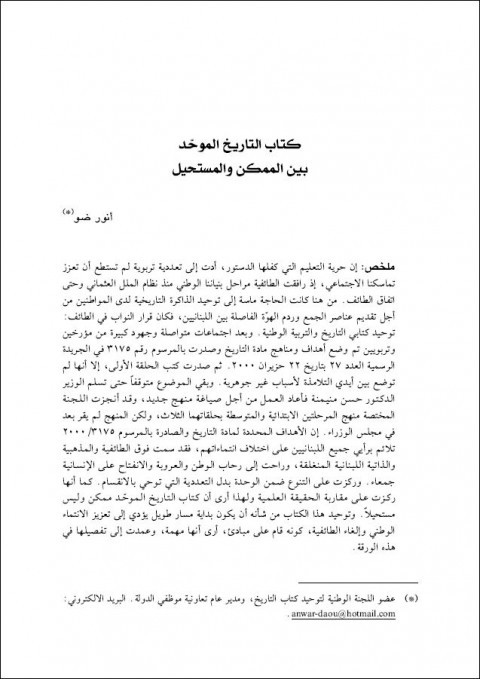 كتاب التاريخ الموحد بين الممكن والمستحيل Year of publication: 2012 Author: ضو، أنور Corporate author: Lebanese Association for Educational Studies (LAES) إن حرية التعليم التي كفلها الدستور، أدت إلى تعددية تربوية لم تستطع أن تعزز تماسكنا الاجتماعي، إذ قد رافقت الطائفية مراحل بنياننا الوطني منذ نظام الملل العثماني وحتى اتفاق الطائف. من هنا كانت الحاجة ماسة الى توحيد الذاكرة التاريخية لدى المواطنين من اجل تقديم عناصر الجمع وردم الهوّة الفاصلة بين اللبنانيين، فكان قرار النواب في الطائف: توحيد كتابي التاريخ والتربية الوطنية. بعد اجتماعات متواصلة وجهود كبيرة من مؤرخين وتربويين تم وضع أهداف ومناهج مادة التاريخ وصدرت بالمرسوم رقم 3175 في الجريدة الرسمية العدد 27 بتاريخ 22 حزيران 2000. ثم صدرت كتب الحلقة الأولى، إلا أنها لم توضع بين أيدي التلامذة لأسباب غير جوهرية. وبقي الموضوع متوقفاً حتى تسلم الوزير الدكتور حسن منيمنة فأعاد العمل من اجل صياغة منهج جديد، وقد أنجزت اللجنة المختصة منهج المرحلتين الابتدائية والمتوسطة بحلقاتهما الثلاث، ولكن المنهج لم يقر بعد في مجلس الوزراء. ان الأهداف المحددة لمادة التاريخ والصادرة بالمرسوم 3175/2000 تلائم برأيي جميع اللبنانيين على اختلاف انتماءاتهم، فقد سمت فوق الطائفية والمذهبية والذاتية اللبنانية المنغلقة، وراحت إلى رحاب الوطن والعروبة والانفتاح على الإنسانية جمعاء. وركزت على التنوع ضمن الوحدة بدل التعددية التي توحي بالانقسام. كما أنها ركزت على مقاربة الحقيقة العلمية ولهذا أرى ان كتاب التاريخ الموحّد ممكن وليس مستحيلاً. وتوحيد هذا الكتاب من شأنه أن يكون بداية مسار طويل يؤدي إلى تعزيز الانتماء الوطني وإلغاء الطائفية، كونه قام على مبادئ، أرى أنها مهمة، وعمدت إلى تفصيلها في هذه الورقة. The Unified History Textbook: The Possible and the Impossible Year of publication: 2012 Author: ضو، أنور Corporate author: Lebanese Association for Educational Studies (LAES) The freedom to educate, guaranteed by the (Lebanese) constitution, has led to an educational pluralism which has not helped in promoting our social cohesion. Indeed, sectarianism has permeated our efforts for nation building ever since the Millet system of the Ottomans and until the Taef Accord. There was thus an urgent necessity to unite the historical memory of the citizenry in order to advance the elements which join together and fill in the chasm separating the Lebanese.The members of parliament meeting in Taef took the decision: Both the textbooks of history and civics must be unified! Following continual meetings and great efforts of historians and educators, the aims and curricula of the history program were set and were published as decree number 3175 in the Official Gazette number 27 dated June 22, 2000. The books for the first cycle were subsequently published, but they were not implemented, though the reasons for that were not substantial. The matter remained stalled until Dr. Hasan Mneimneh became minister of national education and restarted the work on the new curriculum.The committee charged with the task completed the curriculum for the elementary and intermediate levels but this has not yet been adopted by the council of ministers. The aims set for the history school program and published in decree number 3175/2000 are appropriate, in my opinion, for all the Lebanese, whatever their affiliation.They remained above sectarianism and confessionalism and Lebanese chauvinism, and were at home in the wide expanses of the Lebanese and Arab perspectives, as well as open to all humanity. They emphasized diversity in unity rather than pluralism which suggested division.They also emphasized seeking historical accuracy, and that is why I believe that the unified history textbook is possible and not impossible. Unifying this book will be the start of a long process which will lead to strengthening the sense of belonging to one state, and will eliminate sectarianism. This is because it was established on principles which I believe are important, and which I have detailed in this paper.
 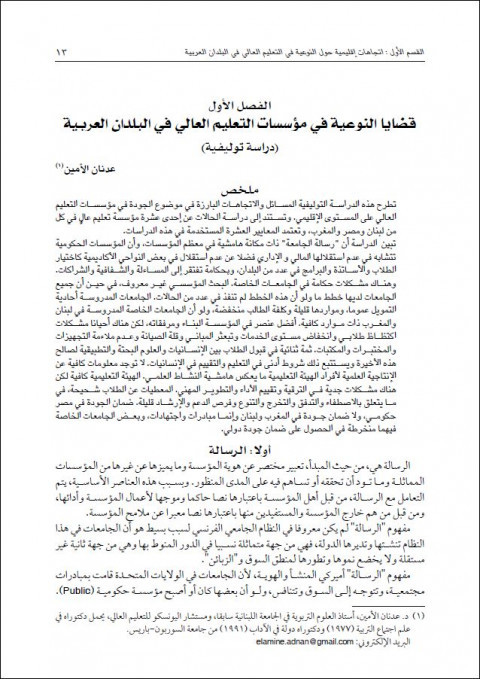 اتجاهات إقليمية حول النوعية في التعليم العالي في البلدان العربية: قضايا النوعية في مؤسسات التعليم العالي في البلدان العربية Year of publication: 2014 Author: الأمين،عدنان Corporate author: Lebanese Association for Educational Studies (LAES) تطرح هذه الدراسة التوليفية المسائل والاتجاهات البارزة في موضوع الجودة في مؤسسات التعليم العالي على المستوى الإقليمي. وتستند إلى دراسة الحالات عن إحدى عشرة مؤسسة تعليم عالٍ في كل من لبنان ومصر والمغرب، وتعتمد المعايير العشرة المستخدمة في هذه الدراسات. تبين الدراسة أن "رسالة الجامعة" ذات مكانة هامشية في معظم المؤسسات، وأن المؤسسات الحكومية تتشابه في عدم استقلالها المالي والإداري فضلا عن عدم استقلال في بعض النواحي الأكاديمية كاختيار الطلاب والأساتذة والبرامج في عدد من البلدان، وبحكامة تفتقر إلى المساءلة والشفافية والشراكات. وهناك مشكلات حكامة في الجامعات الخاصة. البحث المؤسسي غير معروف، في حين أن جميع الجامعات لديها خطط ما ولو أن هذه الخطط لم تنفذ في عدد من الحالات. الجامعات المدروسة أحادية التمويل عموما، ومواردها قليلة وكلفة الطالب منخفضة، ولو أن الجامعات الخاصة المدروسة في لبنان والمغرب ذات موارد كافية. أفضل عنصر في المؤسسة البناء ومرفقاته، لكن هناك أحيانا مشكلات اكتظاظ طلابي وانخفاض مستوى الخدمات وتبعثر المباني وقلة الصيانة وعدم ملاءمة التجهيزات والمختبرات والمكتبات. ثمة ثنائية في قبول الطلاب بين الإنسانيات والعلوم البحتة والتطبيقية لصالح هذه الأخيرة ويستتبع ذلك شروط أدنى في التعليم والتقييم في الإنسانيات. لا توجد معلومات كافية عن الإنتاجية العلمية لأفراد الهيئة التعليمية ما يعكس هامشية النشاط العلمي. الهيئة التعليمية كافية لكن هناك مشكلات جدية في الترقية وتقييم الأداء والتطوير المهني. المعطيات عن الطلاب شحيحة، في ما يتعلق بالاصطفاء والتدفق والتخرج والتنوع وفرص الدعم والإرشاد قليلة. ضمان الجودة في مصر حكومي، ولا ضمان جودة في المغرب ولبنان وإنما مبادرات واجتهادات، وبعض الجامعات الخاصة فيهما منخرطة في الحصول على ضمان جودة دولي. Quality Issues in Higher Education Institutions in Arab Countries: Synthesis Study Year of publication: 2014 Author: الأمين،عدنان Corporate author: Lebanese Association for Educational Studies (LAES) This synthesis study addresses outstanding issues and trends concerning quality in higher education institutions at the regional level. It is based on case studies from eleven higher education institutions in Lebanon, Egypt and Morocco and on the ten standards used in these studies.The study shows that "the mission of the university" has a marginal position in most institutions; that government institutions are similar in their lack of financial and administrative independence; that there is a lack of independence in some academic respects such as the selection of students, faculty and programs in a number of countries; and that governance is lacking accountability, transparency and partnerships. Indeed, there are governance problems in private universities. Institutional research is not evidently known while all universities have some relevant plans even though these plans have not been implemented in a number of cases.The universities that are under study are generally unilaterally funded, their resources are scarce and the cost per student is low, however; private universities that were subject to this study in Lebanon and Morocco have sufficient resources. The most satisfactory element of the institution is the buildings and annexes thereto.However, at times, there are problems in terms of student overpopulation, poor level of services, scattered buildings, lack of maintenance and inadequate equipment, laboratories and libraries. There is a duality in student admission between Humanities and the Physical and Applied Sciences disciplines in favor of the latter which causes lower conditions in the education and assessment of the Humanities discipline.There is not enough information about the scientific productivity of faculty members, which reflects the marginality of scientific activity. The number of faculty staff is sufficient but there are serious problems regarding their promotion, performance assessment and professional development. Data on students are scarce in terms of students’ selection, influx, graduation and diversity; and support and guidance opportunities remain scarce.Quality assurance in Egypt is a governmental responsibility and there is no such thing in Morocco and Lebanon instead there are some initiatives and attempts. Some private universities in Morocco and Lebanon are engaged in obtaining quality assurance from international bodies.