
Resources
Explore a wide range of valuable resources on GCED to deepen your understanding and enhance your research, advocacy, teaching, and learning.
25 Results found
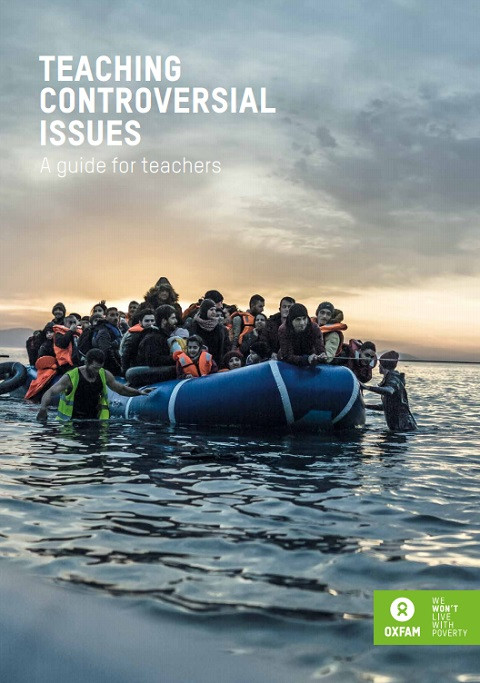 Teaching Controversial Issues: A Guide for Teachers Year of publication: 2018 Corporate author: Oxfam GB This revised and updated version of Oxfam’s popular guide recognises the changes in social and political contexts in recent years and seeks to support educators in their discussions with young people in this complex environment. In increasingly divisive and polarised times, the need for young people to feel confident in tackling controversial issues is more pressing than ever. Advances in technology and the rise of social media mean that it is more important than ever for young people to think critically to become effective global citizens.This guide explores:• What controversial issues are.• Reasons for teaching controversial issues.• The value of a global citizenship education approach.• Guidance and classroom strategies for handling and exploring controversial issues.• Some practical activities for teaching controversial issues.
  Youth Participation and Global Citizenship: Challenges and Recommendations for Future Youth School Forums Year of publication: 2016 Author: Anna Jarkiewicz | Joanna Leek Corporate author: Oxfam GB | University of S odz (Poland) The overall purpose of this report is to identify the needs of the Future School Youth Forums on youth participation and global citizenship education. The study synthesizes information from Cyprus, Italy, Lithuania, Poland and the United Kingdom in order to understand similarities and differences, and compare them with wider European trends to understand transversal needs across Europe. It discusses in greater detail the current application of global citizenship youth forums and global citizenship/youth participation in each of the 5 countries – and therefore across 7 national systems (as Wales and Scotland have their own systems), and also transversally across Europe. The report will help Partners to better understand the project’s needs, so that they can design project outputs more effectively.
  Teaching Controversial Issues Year of publication: 2006 Corporate author: Oxfam GB Young people frequently face making decisions about a wide range of issues on which there are many different views. Issues like sexuality, religion, bullying, and war can evoke complicated emotions, both in and out of the classroom.Young people need to develop skills that allow them to discuss and come to their own views about these types of issues. Having a chance to engage with controversial topics in a constructive environment will help young people to develop as global citizens, and teachers have a key role to play in enabling this.This guide explores what controversial issues are, why they should be taught, and includes classroom strategies, existing guidance and practical teaching activities. Teaching Controversial Issues Year of publication: 2006 Corporate author: Oxfam GB Les jeunes sont souvent confrontés à des prises de décisions dans de nombreux domaines. Des sujets tels que la sexualité, la religion, le harcèlement scolaire et la guerre peuvent susciter des émotions compliquées, que ce soit au sein des salles de classe ou ailleurs.Il est nécessaire que les jeunes développent des compétences leur permettant d’échanger sur ces sujets et de se forger leur propre opinion. Avoir la possibilité d’échanger sur des sujets controversés dans un environnement constructif peut aider les jeunes à devenir des citoyens mondiaux ; les enseignants ont un rôle primordial à jouer dans ce processus.Ce guide s'interroge sur la nature des questions controversées et la nécessité d'en parler ; il comprend des conseils et des activités pratiques d'apprentissage.
 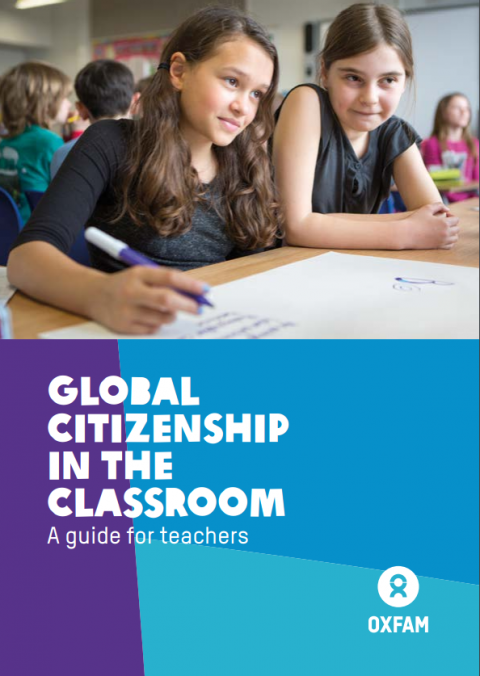 Global Citizenship in the Classroom: A guide for teachers Year of publication: 2015 Corporate author: Oxfam GB A practical and reflective guide full of practical tools and ideas that can be applied to almost any topic to develop learner participation and global learning.