
Resources
Explore a wide range of valuable resources on GCED to deepen your understanding and enhance your research, advocacy, teaching, and learning.
17 Results found
 I Don’t Want… War! Year of publication: 2024 Corporate author: Amnesty International | Entreculturas | Mundo Cooperante | Save the Children On the occasion of the International Day of the Girl Child, which is commemorated on October 11, the organizations Amnesty International, Entreculturas, Mundo Cooperante and Save the Children, under the framework of the joint alliance NO QUIERO, denounce the serious consequences that armed conflicts have on girls and their integral development. Today, more than ever, it is urgent to address the effects of wars that prevent millions of girls from living a future free of violence, such as child and forced marriage or sexual violence. ¡No Quiero… la guerra! Year of publication: 2024 Corporate author: Amnesty International | Entreculturas | Mundo Cooperante | Save the Children Con motivo del Día Internacional de la Niña, que se conmemora el 11 de octubre, las organizaciones Amnistía Internacional, Entreculturas, Mundo Cooperante y Save the Children, bajo el marco de la alianza conjunta NO QUIERO, denunciamos las graves consecuencias que los conflictos armados tienen sobre las niñas y su desarrollo integral. Hoy, más que nunca, es urgente abordar los efectos de las guerras que impiden que millones de niñas puedan vivir un futuro libre de violencias, como el matrimonio infantil y forzoso o la violencia sexual.
  Voices Against Violence Year of publication: 2006 Author: Benjamin Bond Corporate author: Save the Children Violence against children has become a crisis that affects every country in the world. In this document, Save the children makes an urgent call to governments to commit themselves to eradicating violence against children. Voces contra la violencia Year of publication: 2006 Author: Benjamin Bond Corporate author: Save the Children La violencia contra los niños y niñas se ha convertido en una crisis que afecta a todos los países del mundo. En este documento, Save the children hace un llamado urgente a los gobiernos para que se comprometan a erradicar la violencia contra los niños y las niñas.
  Sexual Violence Against Boys and Girls: Child Sexual Abuse and Exploitation; Guide to Basic Material for the Training of Professionals Year of publication: 2012 Author: Liliana Orjuela López | Virginia Rodríguez Bartolomé Corporate author: Save the Children This document highlights the importance of protecting children from sexual violence, such as abuse, sexual exploitation, child pornography and human trafficking. It presents the ways in which you can intervene with regard to child abuse and exploitation. Violencia sexual contra los niños y las niñas: Abuso y explotación sexual infantil; Guía de material básico para la formación de profesionales Year of publication: 2012 Author: Liliana Orjuela López | Virginia Rodríguez Bartolomé Corporate author: Save the Children Este documento pone de manifiesto la importancia de proteger a los niños y niñas de violencias sexuales, como el abuso, la explotación sexual, la pornografía infantil así como la trata de seres humanos. Posteriormente señala las maneras en las que se puede intervenir con respecto al abuso y la explotación infantil.
 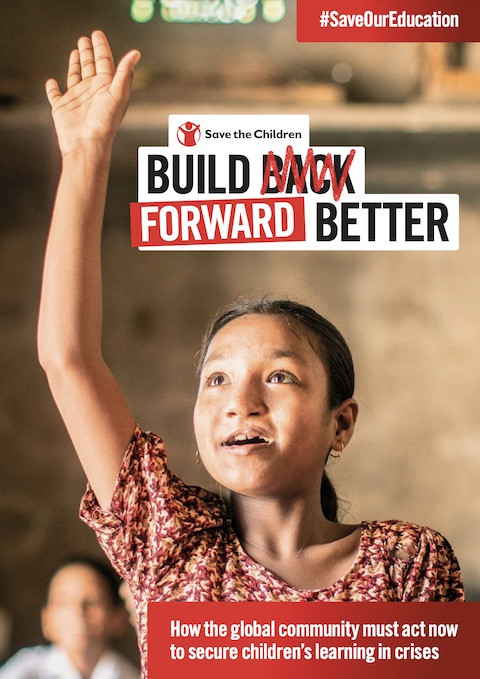 Build Forward Better: How the Global Community Must Act Now to Secure Children’s Learning in Crises Year of publication: 2021 Author: Emma Wagner Corporate author: Save the Children ‘Build back better’ has long been a rallying cry of crisis responses – and is being used frequently today. However, given the scale of the global learning crisis even before the Covid-19 pandemic – with one child in six denied their right to education – it’s vital we don’t limit our ambition to building ‘back’ to how things were. Now it’s imperative we build forward better – and differently.There’s no denying the scale of the challenge. But there’s also cause for hope. The global reach of the Covid-19 crisis has generated a shared understanding of the impact of crisis on children’s right to education. This understanding can be used to build forward better – and radically transform children’s chances.Build Forward Better presents new analysis on which countries’ school systems are most vulnerable to existing risks and future crises. And it sets out what the global community needs to do to support ministries of education in those countries to prepare now. So that, even during emergencies, education systems can provide all children with good-quality, safe and inclusive opportunities to learn.
 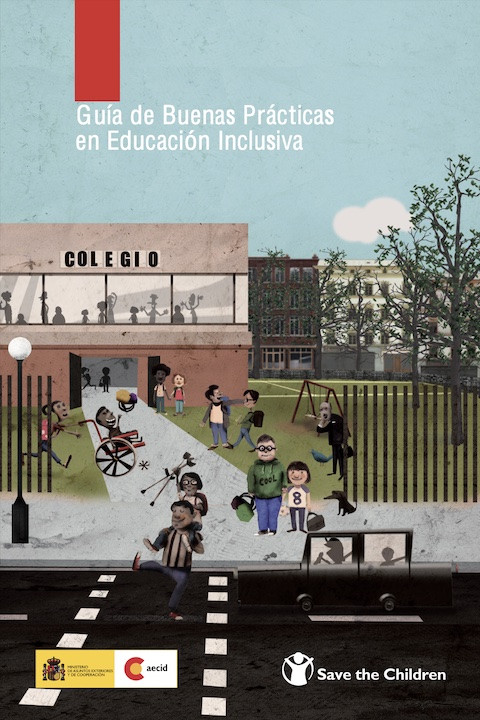 Guide of Good Practices in Inclusive Education Year of publication: 2013 Author: Carmen Solla Salvador Corporate author: Save the Children | Spanish Agency for International Development Cooperation (AECID) In this document, Save the Children expresses its commitment to an educational model in which all boys and girls learn together, regardless of their personal, social or cultural conditions; being able to opt for the same learning and development opportunities. To achieve this, the actors in the different educational fields (competent administrations, those responsible for the centers, other educational entities and the rest of the community), must establish the necessary conditions to identify the existing barriers to the participation and learning of children, girls and adolescents; and implement the necessary measures to overcome them. Guía de buenas prácticas en educación inclusiva Year of publication: 2013 Author: Carmen Solla Salvador Corporate author: Save the Children | Spanish Agency for International Development Cooperation (AECID) En este documento, Save the Children manifiesta su apuesta por un modelo educativo en el que todos los niños y las niñas aprendan juntos, independientemente de sus condiciones personales, sociales o culturales; pudiendo optar a las mismas oportunidades de aprendizaje y desarrollo. Para lograrlo, los actores en los distintos ámbitos educativos (administraciones competentes, responsables de los centros, de otras entidades educativas y resto de la comunidad), deben establecer las condiciones necesarias para identificar las barreras existentes para la participación y el aprendizaje de los niños, niñas y adolescentes; e implementar las medidas necesarias para superarlas.
 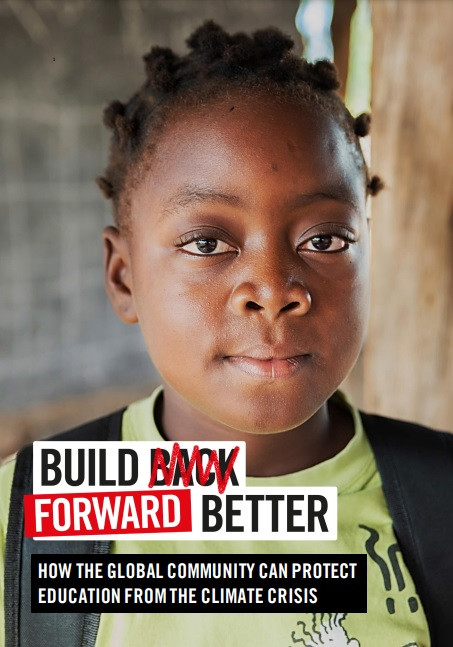 Build Forward Better: How the Global Community Can Protect Education from the Climate Crisis Year of publication: 2021 Author: Anya Cowley | Mathias Slettholm Corporate author: Save the Children Children’s increasing exposure to extreme weather events has serious implications for children’s access to quality education. 75 million children have their education disrupted each year – of which around half are due to environmental threats such as floods and drought. This briefing paper sets out how leaders can protect children’s learning from the impacts of the climate crisis, and the role that education can play in equipping the next generation with the tools they need to protect against its worst impacts.