
Resources
Explore a wide range of valuable resources on GCED to deepen your understanding and enhance your research, advocacy, teaching, and learning.
4 Results found
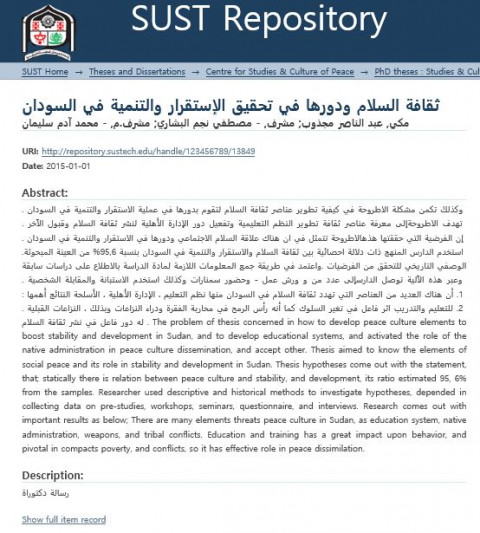 ثقافة السلام ودورها في تحقيق الإستقرار والتنمية في السودان Year of publication: 2015 Author: Abdel Nasser Majzoub Makki Corporate author: Sudan University of Science and Technology تكمن مشكلة الاطروحة في كيفية تطوير عناصر ثقافة السلام لتقوم بدورها في عملية الاستقرار والتنمية في السودان . وكذلك تطوير النظم التعليمية وتفعيل دور الإدارة الأهلية لنشر ثقافة السلام وقبول الآخر . تهدف الاطروحةإلى معرفة عناصر ثقافة السلام الاجتماعي ودورها في الاستقرار والتنمية في السودان . إن الفرضية التي حققتها هذهالاطروحة تتمثل في ان هناك علاقة ذات دلالة احصائية بين ثقافة السلام والاستقرار والتنمية في السودان بنسبة 95,6% من العينة المبحوثة. استخدم الدارس المنهج الوصفي التاريخي للتحقق من الفرضيات .واعتمد في طريقة جمع المعلومات اللازمة لمادة الدراسة بالاطلاع على دراسات سابقة و ورش عمل - وحضور سمنارات وكذلك استخدم الاستبانة والمقابلة الشخصية . وعبر هذه الآلية توصل الدارسإلى عدد من النتائج أهمها : 1. أن هناك العديد من العناصر التي تهدد ثقافة السلام في السودان منها نظم التعليم ، الإدارة الأهلية ، الأسلحة ، النزاعات القبلية . 2. للتعليم والتدريب اثر فاعل في تغير السلوك كما أنه رأس الرمح في محاربة الفقرة ودراء النزاعات وبذلك له دور فاعل في نشر ثقافة السلام . A Culture of Peace and Its Role in Achieving Stability and Development in Sudan Year of publication: 2015 Author: Abdel Nasser Majzoub Makki Corporate author: Sudan University of Science and Technology The problem of thesis concerned in how to develop peace culture elements to boost stability and development in Sudan, and to develop educational systems, and activated the role of the native administration in peace culture dissemination, and accept other. Thesis aimed to know the elements of social peace and its role in stability and development in Sudan. Thesis hypotheses come out with the statement, that; statically there is relation between peace culture and stability, and development, its ratio estimated 95, 6% from the samples. Researcher used descriptive and historical methods to investigate hypotheses, depended in collecting data on pre-studies, workshops, seminars, questionnaire, and interviews. Research comes out with important results as below; There are many elements threats peace culture in Sudan, as education system, native administration, weapons, and tribal conflicts. Education and training has a great impact upon behavior, and pivotal in compacts poverty, and conflicts, so it has effective role in peace dissimilation.
 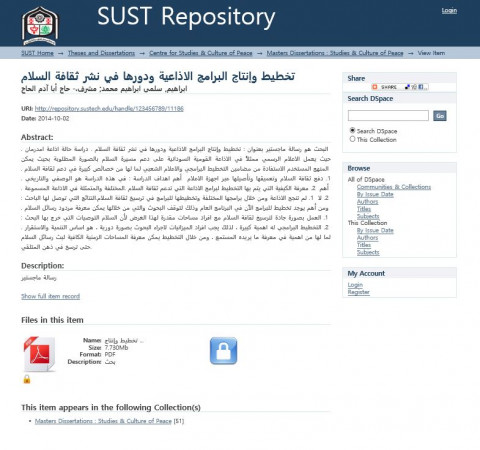 تخطيط وإنتاج البرامج الاذاعية ودورها في نشر ثقافة السلام Year of publication: 2014 Author: Ibrahim, Salma Ibrahim Corporate author: Sudan University of Science and Technology البحث هو رسالة ماجستير بعنوان : تخطيط وإنتاج البرامج الاذاعية ودورها في نشر ثقافة السلام . دراسة حالة اذاعة امدرمان . حيث يعمل الاعلام الرسمي ممثلاً في الاذاعة القومية السودانية على دعم مسيرة السلام بالصورة المطلوبة بحيث يمكن الاستفادة من مضامين التخطيط البرامجي والاعلام الشعبي لما لها من خصائص كبيرة في دعم ثقافة السلام . المنهج المستخدم في هذه الدراسة هو الوصفي والتاريخي . أهم اهداف الدراسة : 1. دفع ثقافة السلام وتعميقها وتأصيلها عبر اجهزة الاعلام المختلفة والمتمثلة في الاذاعة المسموعة . 2. معرفة الكيفية التي يتم بها التخطيط لبرامج الاذاعة التي تدعم ثقافة السلام . أهم النتائج التي توصل لها الباحث : 1. لم تنجح الاذاعة ومن خلال برامجها المختلفة وتخطيطها للبرامج في ترسيخ ثقافة السلام. 2. لا يوجد تخطيط للبرامج الآن في البرنامج العام وذلك لتوقف البحوث والتي من خلالها يمكن معرفة مردود رسائل السلام . ومن أهم التوصيات التي خرج بها البحث : 1. العمل بصورة جادة لترسيخ ثقافة السلام مع افراد مساحات مقدرة لهذا الغرض لأن السلام هو اساس التنمية والاستقرار . 2. التخطيط البرامجي له اهمية كبيرة ، لذلك يجب افراد الميزانيات لاجراء البحوث بصورة دورية ، لما لها من اهمية في معرفة ما يريده المستمع ، ومن خلال التخطيط يمكن معرفة المساحات الزمنية الكافية لبث رسائل السلام حتى ترسخ في ذهن المتلقي. Planning and Producing Radio Programs and Their Role in Spreading a Culture of Peace Year of publication: 2014 Author: Ibrahim, Salma Ibrahim Corporate author: Sudan University of Science and Technology The research is a master thesis entitled: Planning and producing radio programs and its role in spreading a culture of peace. Omdurman radio case study. Where the official media, represented by the Sudanese National Radio, works to support the peace process in the required manner so that the contents of program planning and popular media can be taken advantage of because of its great characteristics in supporting the culture of peace. The method used in this study is descriptive and historical.The most important objectives of the study: Promote, deepen and deepen the culture of peace through the various media outlets represented in the audio station. Know how to plan radio programs that support a culture of peace.The most important results that the researcher reached: The radio, through its various programs and its planning of programs, did not succeed in consolidating the culture of peace. There is no program planning now in the general program in order to stop researches, through which the outcome of peace messages can be known.Among the most important recommendations that came out of the research: Work in earnest to establish a culture of peace with individuals with appreciable spaces for this purpose, because peace is the foundation for development and stability. Program planning is of great importance. Therefore, budgets must be set up to conduct research periodically, because of its importance in knowing what the listener wants, and through planning it is possible to know enough time spaces to broadcast peace messages in order for the recipient to be entrenched in the mind of the recipient.