
Resources
Explore a wide range of valuable resources on GCED to deepen your understanding and enhance your research, advocacy, teaching, and learning.
3 Results found
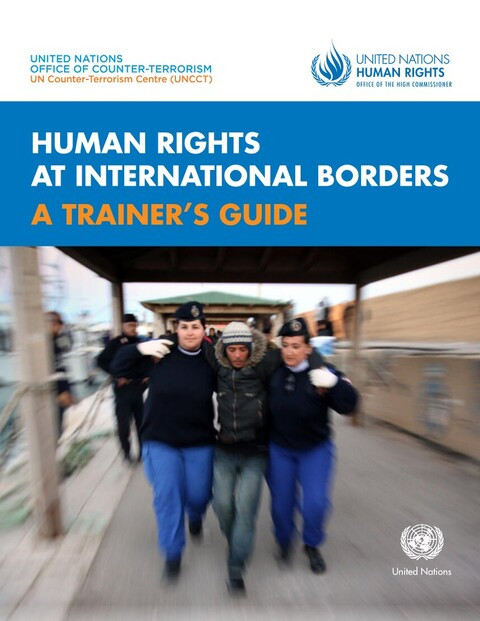 Human Rights at International Borders : A Trainer's Guide Year of publication: 2021 Corporate author: UN. Office of Counter-Terrorism (UNOCT) | UN. Office of the United Nations High Commissioner for Human Rights (UN. OHCHR) | United Nations (UN) International borders can be dangerous places for migrants, particularly for migrants in vulnerable situations. This capacity-building tool seeks to support States and particularly border officials in adopting a human rights-based and gender-responsive approach to border governance. Accompanying presentation slides and course materials have been developed for use in training courses or as a general information resource on the subject.
  Youth PVE: Preventing Violent Extremism Year of publication: 2020 Corporate author: UNESCO | UN. Office of Counter-Terrorism (UNOCT) Violent extremism threatens the security and fundamental rights of citizens all over the world, and undermines the attempts of many countries to achieve sustainable peace. Many violent extremist organizations work by recruiting disenfranchised youth and inciting them to commit acts of violence. This project focuses on meaningful youth engagement because we believe that enhancing the resilience of young people will prevent their involvement in violent extremism and instead transform them into agents of positive change. We provide a framework for action that mobilizes UNESCO at multiple levels to provide young people with opportunities, knowledge and capacities to foster dialogue and cooperation in furtherance of PVE.
  Do You Speak MIL?: Media and Information Literacy; A Handbook for Jordanian CSOs Year of publication: 2020 Author: Milica Pesic | Lucien Michael Steinberg | Anoud Al-Zou’bi Corporate author: Media Diversity Institute | UNESCO | UN. Office of Counter-Terrorism (UNOCT) This publication, “Do You Speak MIL?: Media and Information Literacy – A Handbook for Jordanian CSOs,” provides civil society organizations (CSOs) with practical tools to integrate Media and Information Literacy (MIL) into their training programs. Each chapter includes a technical introduction, thought-provoking questions, and real-life examples to guide trainers. Published in 2020, this handbook is a valuable resource for promoting MIL within Arab countries, intending to empower communities to navigate the evolving media landscape.