
Resources
Explore a wide range of valuable resources on GCED to deepen your understanding and enhance your research, advocacy, teaching, and learning.
804 Results found
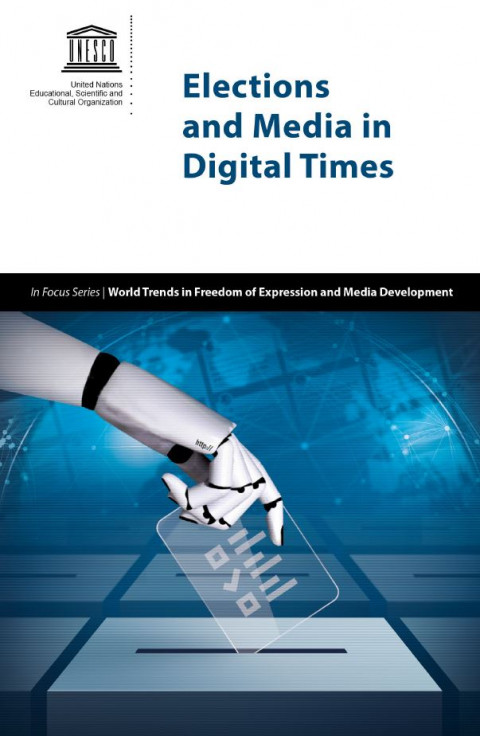 Elections and Media in Digital Times (In Focus Series: Global Trends in Freedom of Expression and Media Development) Year of publication: 2019 Author: Tarlach McGonagle | Maciek Bednarski | Mariana Francese Coutinho | Arthur Zimin Corporate author: UNESCO Digital companies are enabling politicians, political parties and voters to communicate in unprecedented ways, and expanding opportunities for seeking, receiving and imparting political information and ideas. Alongside positive developments, there also growing concerns about emerging and increasing threats to the integrity and credibility of elections, as well as the media's contribution to free, fair, transparent and peaceful electoral processes.This report highlights three converging trends in media and elections in digital times: the rise of disinformation, intensifying attacks on journalists, and disruptions linked to the use of information and communication technology in electoral arrangements. Offering possible responses to the challenges at hand, this study is a tool for governments, election practitioners, media organizations, journalists, civil society, the private sector, academia and individuals. Выборы и СМИ в цифровую эпоху (Серия в фокусе: Мировые тенденции в области свободы выражения мнений и развития СМИ) Year of publication: 2019 Author: Tarlach McGonagle | Maciek Bednarski | Mariana Francese Coutinho | Arthur Zimin Corporate author: UNESCO ИТ компании дают возможность политикам, политическим партиям и избирателям общаться беспрецедентными способами, расширяют возможности для поиска, получения и распространения политической информации и идей. Наряду с позитивными сторонами растет озабоченность по поводу вырисовывающихся и усиливающихся угроз целостности и авторитету выборов, а также вкладу средств массовой информации в свободные, справедливые, транспарентные и мирные избирательные процессы.В настоящем докладе освещаются три сходящиеся тенденции, связанные со СМИ и выборами в цифровую эпоху: рост дезинформации, усиление нападений на журналистов и перебои в предоставлении информационно-коммуникационных технологий в период выборов. Это исследование, предлагая возможные ответы на стоящие перед нами проблемы, является своего рода инструментом для правительств, специалистов по проведению выборов, организаций средств массовой информации, журналистов, гражданского общества, частного сектора, научных кругов и отдельных лиц.
 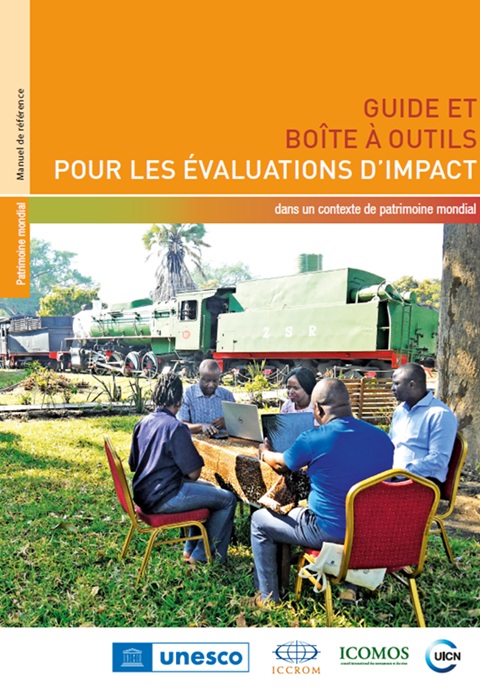 Guide et boîte à outils pour les évaluations d’impact dans un contexte de patrimoine mondial Year of publication: 2023 Author: Sarah Court | Eugene Jo | Richard Mackay | Mizuki Murai | Riki Therivel Corporate author: UNESCO | International Centre for the Study of the Preservation and Restoration of Cultural Property (ICCROM) | International Council on Monuments and Sites (ICOMOS) | International Union for Conservation of Nature (IUCN) Notre patrimoine mondial menacé : les évaluations d’impact offrent des solutionsLors du 50e anniversaire de la Convention du patrimoine mondial, en 2022, on dénombrait plus de 1 100 sites du patrimoine mondial de l’UNESCO. Ces sites sont si précieux pour l’humanité que leur conservation nous incombe à tous. Pourtant, nombre de ces lieux exceptionnels sont confrontés à la pression croissante qu’exercent les divers types de développement et des projets dans et autour des sites. L’évaluation des impacts de ces projets – avant toute décision de mise en œuvre – est essentielle pour éviter tout dommage causé au patrimoine mondial et identifier des choix durables.Le Guide et boîte à outils pour les évaluations d’impact dans un contexte de patrimoine mondial est la référence incontournable qui explique la démarche à suivre pour atteindre cet objectif. Grâce à des conseils et outils (dont des listes de contrôle et glossaire), il fournit un cadre permettant de réaliser des évaluations d’impact pour les sites du patrimoine culturel et naturel.Élaboré par l’UNESCO et les Organisations consultatives du Comité du patrimoine mondial – l’ICCROM, l’ICOMOS et l’UICN –, ce manuel constitue une base de collaboration intersectorielle et multidisciplinaire en vue de trouver des réponses permettant de protéger les sites du patrimoine mondial et de soutenir un développement qualitatif et approprié. Les États parties, les gestionnaires du patrimoine, les décideurs, les planificateurs et les aménageurs de la Convention du patrimoine mondial sont invités à l’utiliser pour contribuer à la réalisation de notre engagement collectif : la transmission de notre patrimoine inestimable aux générations futures.
  Élimination de la discrimination raciale, de la haine raciale et des crimes motivés par la haine raciale dans le monde (Conférence générale; 40e session) Year of publication: 2019 Corporate author: Organisation des Nations Unies pour l'éducation, la science et la culture (UNESCO) À sa 207e session, par sa décision 207 EX/49, le Conseil exécutif a décidé d’inscrire ce point à l’ordre du jour de la 40e session de la Conférence générale. Le document souligne le fait que la discrimination raciale, l’incitation à la haine raciale et les crimes motivés par la haine raciale constituent une menace pour tous les peuples et pour la communauté internationale. Dans cette perspective, la Directrice générale est appelée à renforcer la contribution réelle de l’UNESCO à la lutte contre le racisme, la discrimination raciale, la xénophobie et l’intolérance qui y est associée, et de faire rapport au Conseil exécutif, à sa 210e session, des progrès accomplis à cet égard.
  Education Kit on Combating Desertification: Learning to Combat Desertification; A Teacher’s Guide Year of publication: 2003 Corporate author: UNESCO The educational guide contained in this kit is addressed to teachers around the world living in areas affected by or under threat from desertification. For this reason, the guide should be seen as a general presentation to be adapted to the specific realities and preoccupations of each region or country. The guide begins with the different problems of desertification, which the teachers could integrate into lessons (fauna, flora, crop varieties or rearing, methods of land exploitation, socio-economic problems etc.). It presents the major objectives of the Convention and proposes several solutions to combat desertification. Kit pedagógico sobre la lucha contra la desertificación: Aprendiendo a luchar contra la desertificación; Guía educativa para el maestro Year of publication: 2003 Corporate author: Organización de las Naciones Unidas para la Educación, la Ciencia y la Cultura (UNESCO) La guía educativa contenida en este kit va dirigida a los maestros de todo el mundo que viven en zonas afectadas o amenazadas por la desertificación. Por tanto, ha de ser considerada como una presentación general que debe ser adaptada a las realidades y preocupaciones específicas de cada país o región. La guía comienza con la presentación de los diferentes problemas en torno a la desertificación (fauna, flora, tipos de cultivo, cría de animales, formas de explotación de la tierra, problemas socioeconómicos, etc.), los cuales pueden ser integrados en el transcurso de las clases. La guía presenta los principales objetivos de la Convención y propone una serie de soluciones para combatir la desertificación. Kit pédagogique sur la lutte contre la désertification: Apprendre à lutter contre la désertification; Guide éducatif pour l’enseignant Year of publication: 2003 Corporate author: Organisation des Nations Unies pour l'éducation, la science et la culture (UNESCO) Le guide éducatif contenu dans le kit s’adresse aux enseignants du monde entier vivant dans les zones affectées ou menacées par la désertification. Pour cette raison, le guide doit être perçu comme une présentation générale, à adapter aux réalités et aux préoccupations spécifiques de chaque pays ou région. L’ouvrage s’ouvre sur les différentes problématiques de la désertification, que les enseignants doivent intégrer (faune, flore, types de culture ou d’élevage, mode d’exploitation de la terre, problèmes socio-économiques, etc.) ; il présente ensuite les grands objectifs de la Convention et propose quelques solutions pour lutter contre la désertification.
 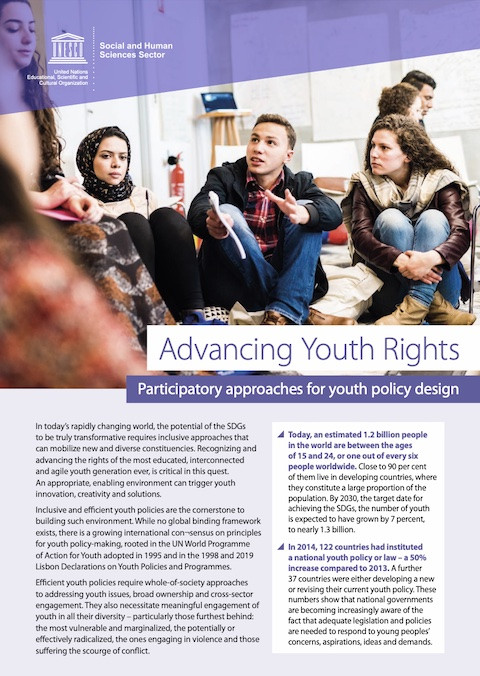 Advancing Youth Rights: Participatory Approaches for Youth Policy Design Year of publication: 2019 Corporate author: UNESCO Inclusive and efficient youth policies are the cornerstone to building such environment. While no global binding framework exists, there is a growing international con¬sensus on principles for youth policy-making, rooted in the UN World Programme of Action for Youth adopted in 1995 and in the 1998 and 2019 Lisbon Declarations on Youth Policies and Programmes. Efficient youth policies require whole-of-society approaches to addressing youth issues, broad ownership and cross-sector engagement. They also necessitate meaningful engagement of youth in all their diversity – particularly those furthest behind: the most vulnerable and marginalized, the potentially or effectively radicalized, the ones engaging in violence and those suffering the scourge of conflict.
  Making the Case For Inclusive Quality Physical Education Policy Development: A Policy Brief Year of publication: 2021 Author: Nancy McLennan Corporate author: UNESCO This evidence-based policy brief presents the benefits of investing in inclusive quality physical education (QPE) policy development. Content draws directly on findings from in-country interventions which demonstrate the value of inter-sectoral partnerships in QPE policy development and the delivery of low cost/high impact QPE programming which stands to accelerate post-COVID recovery efforts. A series of practical recommendations are included for public and private stakeholders in the sport-education ecosystem, alongside resources to support the implementation of recommendations. En defensa de un desarrollo inclusivo de políticas de educación física de calidad: Informe de políticas Year of publication: 2021 Author: Nancy McLennan Corporate author: Organización de las Naciones Unidas para la Educación, la Ciencia y la Cultura (UNESCO) Este informe presenta los beneficios de la inversión en el desarrollo de políticas inclusivas de educación física de calidad (EFC). Su contenido se funda directamente en evidencias observadas durante intervenciones en países que demuestran la importancia de las asociaciones intersectoriales en el desarrollo de políticas de EFC y en la ejecución de programas de EFC de bajo costo y alto impacto que ayudarán a agilizar los esfuerzos de recuperación tras la COVID. Se incluye una serie de recomendaciones para socios de los sectores público y privado en el ecosistema deportivo – educativo, así como también recursos para apoyar la aplicación de las recomendaciones.