
Resources
Explore a wide range of valuable resources on GCED to deepen your understanding and enhance your research, advocacy, teaching, and learning.
1,578 Results found
 打击校园暴力和欺凌行为:教科文组织的行动 Year of publication: 2017 Corporate author: UNESCO This item has been included in the provisional agenda of the 201st session of the Executive Board at the request of Morocco, with the support of Algeria, Cambodia, Côte d’Ivoire, Egypt, France, Italy, Lebanon, Qatar and Sudan.
  Conocimientos locales, objetivos globales Year of publication: 2017 Author: Douglas Nakashima | Jennifer Rubis | Peter Bates | Bárbara Ávila Corporate author: UNESCO Los conocimientos locales e indígenas se refieren a las concepciones, habilidades y filosofías que las sociedades han desarrollado a lo largo de generaciones y de una larga interacción con su entorno natural. Para los pueblos rurales e indígenas, los conocimientos locales orientan la toma de decisiones sobre aspectos fundamentales de la vida cotidiana. Estos conocimientos forman parte integrante de un complejo cultural que incluye el idioma, los sistemas de clasificación, las prácticas relacionadas con el uso de los recursos, las interacciones sociales, los rituales y la espiritualidad. Estas formas de conocimiento excepcionales son elementos importantes de la diversidad cultural mundial, y contribuyen a la ejecución de la Agenda 2030 y el Acuerdo de París. Savoirs locaux, objectifs globaux Year of publication: 2017 Author: Douglas Nakashima | Jennifer Rubis | Peter Bates | Bárbara Ávila Corporate author: UNESCO Les savoirs locaux et autochtones font référence aux connaissances, compétences et philosophies développées par des sociétés interagissant depuis de multiples générations avec leur environnement naturel. Pour les populations rurales et autochtones, les savoirs locaux aident à la prise de décision autour d’aspects fondamentaux de la vie quotidienne. Ces savoirs font partie intégrante d’un complexe culturel qui comprend la langue, des systèmes de classification, des pratiques liées à l’utilisation des ressources, des interactions sociales, des rituels et la spiritualité. Ces modes de savoirs uniques sont des composantes importantes de la diversité culturelle mondiale, et contribuent à la réalisation de l’Agenda 2030 et l’Accord de Paris. Combating Violence and Bullying in Schools: UNESCO's Action Year of publication: 2017 Corporate author: UNESCO This item has been included in the provisional agenda of the 201st session of the Executive Board at the request of Morocco, with the support of Algeria, Cambodia, Côte d’Ivoire, Egypt, France, Italy, Lebanon, Qatar and Sudan.
  UNESCO's Education Evaluation in 2016: A Review Year of publication: 2017 Corporate author: UNESCO UNESCO completed 12 education related evaluations in 2016. Part A of this review presents the key insights and lessons learned from those evaluations. These learnings are designed to help enhance UNESCO’s leadership and coordination of the SDG 4 – Education 2030 Agenda. Part B of the review provides an assessment of the quality and usefulness of these evaluations based on the UNEG and OECD quality standards for evaluation reports.
 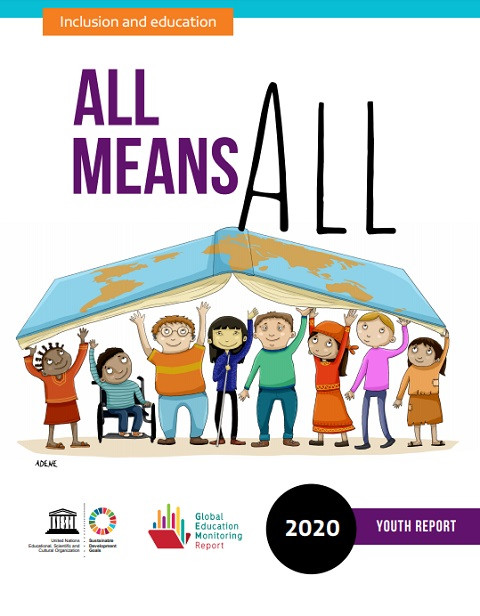 Youth Report 2020: Inclusion and Education; All Means All Year of publication: 2020 Corporate author: UNESCO | Global Education Monitoring Report Team This Youth Report is designed to help you learn about the social, economic and cultural factors that cause vulnerable children, youth and adults to be discriminated against and marginalized in education. It tells the stories of the people who fight to ensure that everyone is included in education, and of those who fought to uphold their own right to education. It brings to life the recommendations of the 2020 Global Education Monitoring Report: Inclusion and education: All means all and calls on youth and teachers to share and discuss the stories and messages, to use them in campaigns and as a teaching tool in class. An open letter to education ministers is included calling, for education systems to be built back more inclusive after the school closures during Covid-19. Local Knowledge, Global Goals Year of publication: 2017 Author: Douglas Nakashima | Jennifer Rubis | Peter Bates | Bárbara Ávila Corporate author: UNESCO Local and indigenous knowledge refers to the understandings, skills and philosophies developed by societies with long histories of interaction with their natural surroundings. For rural and indigenous peoples, local knowledge informs decision-making about fundamental aspects of day-to-day life. This knowledge is integral to a cultural complex that also encompasses language, systems of classification, resource use practices, social interactions, rituals and spirituality. These unique ways of knowing are important components of the world’s cultural diversity, and contribute to the achievement of Agenda 2030 and the Paris Agreement.
  UNESCO and Education Year of publication: 2017 Corporate author: UNESCO Education is a fundamental human right and
a public good and, as such, has been at the core of UNESCO’s work since its inception.Education is also the path to sustainability – to poverty alleviation, better health, environmental protection and gender equality.As the only United Nations agency with a mandate to cover all aspects of education, UNESCO was entrusted in 2015 to lead the coordination and monitoring of Sustainable Development Goal 4, as part of the new Global Education 2030 Agenda.Goal 4 aims to “ensure inclusive and equitable quality education and promote lifelong learning opportunities for all,” and renewed UNESCO’s and Member States’ commitment to a vision of education that is holistic, inspirational and which leaves no one behind.This commitment is reflected in the size and scope of the Education Sector, the largest in UNESCO, with staff working at its Paris Headquarters and spread across a global network of field offices and specialized institutes and centres. With its close links with education ministries and other partners, UNESCO is strongly placed to press for action and change.UNESCO’s Education Sector supports Member States in developing education systems that foster high-quality and inclusive lifelong learning for all, empowering learners to be creative and responsible global citizens while leading the debate to help shape the future international education agenda.There is no stronger, no more lasting, investment a country can make than educating its citizens. The Education Sector exists to further this collective vision worldwide by transforming lives one by one. L'UNESCO et l'éducation Year of publication: 2017 Corporate author: UNESCO Education is a fundamental human right and
a public good and, as such, has been at the core of UNESCO’s work since its inception.Education is also the path to sustainability – to poverty alleviation, better health, environmental protection and gender equality.As the only United Nations agency with a mandate to cover all aspects of education, UNESCO was entrusted in 2015 to lead the coordination and monitoring of Sustainable Development Goal 4, as part of the new Global Education 2030 Agenda.Goal 4 aims to “ensure inclusive and equitable quality education and promote lifelong learning opportunities for all,” and renewed UNESCO’s and Member States’ commitment to a vision of education that is holistic, inspirational and which leaves no one behind.This commitment is reflected in the size and scope of the Education Sector, the largest in UNESCO, with staff working at its Paris Headquarters and spread across a global network of field offices and specialized institutes and centres. With its close links with education ministries and other partners, UNESCO is strongly placed to press for action and change.UNESCO’s Education Sector supports Member States in developing education systems that foster high-quality and inclusive lifelong learning for all, empowering learners to be creative and responsible global citizens while leading the debate to help shape the future international education agenda.There is no stronger, no more lasting, investment a country can make than educating its citizens. The Education Sector exists to further this collective vision worldwide by transforming lives one by one.
UNESCO and Education Year of publication: 2017 Corporate author: UNESCO Education is a fundamental human right and
a public good and, as such, has been at the core of UNESCO’s work since its inception.Education is also the path to sustainability – to poverty alleviation, better health, environmental protection and gender equality.As the only United Nations agency with a mandate to cover all aspects of education, UNESCO was entrusted in 2015 to lead the coordination and monitoring of Sustainable Development Goal 4, as part of the new Global Education 2030 Agenda.Goal 4 aims to “ensure inclusive and equitable quality education and promote lifelong learning opportunities for all,” and renewed UNESCO’s and Member States’ commitment to a vision of education that is holistic, inspirational and which leaves no one behind.This commitment is reflected in the size and scope of the Education Sector, the largest in UNESCO, with staff working at its Paris Headquarters and spread across a global network of field offices and specialized institutes and centres. With its close links with education ministries and other partners, UNESCO is strongly placed to press for action and change.UNESCO’s Education Sector supports Member States in developing education systems that foster high-quality and inclusive lifelong learning for all, empowering learners to be creative and responsible global citizens while leading the debate to help shape the future international education agenda.There is no stronger, no more lasting, investment a country can make than educating its citizens. The Education Sector exists to further this collective vision worldwide by transforming lives one by one. L'UNESCO et l'éducation Year of publication: 2017 Corporate author: UNESCO Education is a fundamental human right and
a public good and, as such, has been at the core of UNESCO’s work since its inception.Education is also the path to sustainability – to poverty alleviation, better health, environmental protection and gender equality.As the only United Nations agency with a mandate to cover all aspects of education, UNESCO was entrusted in 2015 to lead the coordination and monitoring of Sustainable Development Goal 4, as part of the new Global Education 2030 Agenda.Goal 4 aims to “ensure inclusive and equitable quality education and promote lifelong learning opportunities for all,” and renewed UNESCO’s and Member States’ commitment to a vision of education that is holistic, inspirational and which leaves no one behind.This commitment is reflected in the size and scope of the Education Sector, the largest in UNESCO, with staff working at its Paris Headquarters and spread across a global network of field offices and specialized institutes and centres. With its close links with education ministries and other partners, UNESCO is strongly placed to press for action and change.UNESCO’s Education Sector supports Member States in developing education systems that foster high-quality and inclusive lifelong learning for all, empowering learners to be creative and responsible global citizens while leading the debate to help shape the future international education agenda.There is no stronger, no more lasting, investment a country can make than educating its citizens. The Education Sector exists to further this collective vision worldwide by transforming lives one by one. 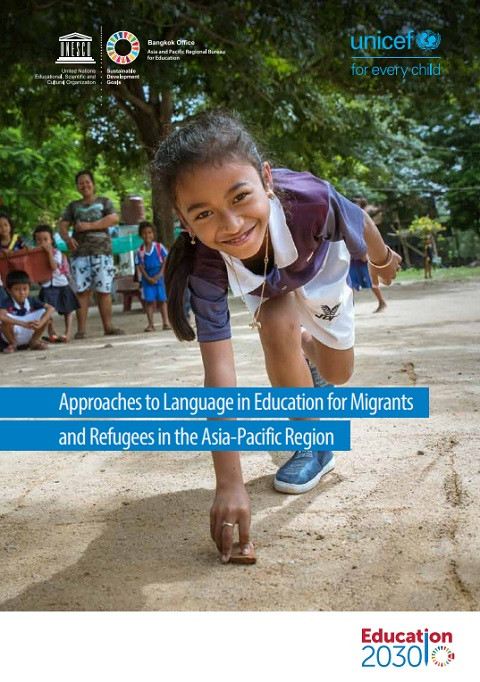 Approaches to Language in Education for Migrants and Refugees in the Asia-Pacific Region Year of publication: 2020 Corporate author: UNESCO | United Nations Children's Fund (UNICEF) UNESCO Bangkok commissioned this paper to examine strategies for addressing the needs of refugee, migrant and internally displaced children in the Asia-Pacific region. This document aims to create a stronger knowledge base to support Member States as they formulate education policies that are responsive to the needs of such children. This document aims to:Examine how linguistic diversity and human mobility intersect and impact minority, migrant and refugee children’s access to quality, inclusive educationLink policy priorities to promising practices, based on international frameworks and lessons learned from successful programmesRecommend steps for improving language-in-education policies and their implementation. To do this, this paper examines:Global and regional trends in migrationThe impact of migration on children’s educationLinguistic diversity and its implications for language-in-education policies and practicesResearch and resources that support inclusive quality education for migrant and refugee children.