
Resources
Explore a wide range of valuable resources on GCED to deepen your understanding and enhance your research, advocacy, teaching, and learning.
1,578 Results found
 消除世界上的种族歧视、种族仇恨和种族仇恨犯罪 Year of publication: 2019 Corporate author: UNESCO 本文件强调,种族歧视、煽动种族仇恨和种族仇恨犯罪对各国人民和国际社会构成威胁。考虑到这一点,兹要求总干事加大教科文组织对打击种族主义、种族歧视、仇外心理及相关不容忍行为的实质性贡献,并向执行局第二一〇届会议报告在这一事项上取得的进展。 القضاء على التمييز العنصري والكراهية العنصرية والجرائم الناجمة عن الكراهية العنصرية في العالم Year of publication: 2019 Corporate author: UNESCO تؤكد الوثيقة أنأشكالالتمييز العنصري والتحريض على الكراهية العنصرية والجرائم الناجمة عن الكراهية العنصرية تمثلًﺗﻬديدالكلالشعوب واﻟﻤﺠتمع الدوليبرمتهطلب ُ. ومن هذا المنطلق، يمن المديرة العامة تعزيز مساهمة اليونسكو الجوهرية في مكافحة العنصرية والتمييز العنصريوكراهية الأجانبان دور ّوما يتعلق ﺑﻬا من تعصب، وموافاة اﻟﻤﺠلس التنفيذي، إبته العاشرة بعد المائتين، بمعلوماتعن التقدم المحرز في هذا الصدد.
  Social Contract Pedagogy: A Dialogical and Deliberative Model for Global Citizenship Education (Background paper for the Futures of Education initiative) Year of publication: 2020 Author: Richard Desjardins | Carlos Alberto Torres | Susan Wiksten Corporate author: UNESCO We propose that together Social Contract Pedagogy (SCP) and Global Citizenship Education (GCE) offer a comprehensive vision including key principles and core elements that are important for rethinking education and shaping the future of the world. We introduce the novel concept of Social Contract Pedagogy (SCP) as a means to adapt the social contract in liberal democracies which has been (conceptually) located at the level of the state, to the level of the classroom and other pedagogically relevant contexts. A key feature of this pedagogy is the negotiation of values and norms in ways that maintain cohesion and inclusion and avoids too much power in the hands of sectarian extremes (of any kind) which tend to impose their views on others, oppress and exclude. This includes using fake news, denying scientific debates and/or any extremely politicized interpretations of evidence and facts to obfuscate or deny consequences of individual and group choices and behavior, but also ‘othering’ of any kind whether from the political right or the political left. In our view, this is an essential premise for the education of democratic citizens. Citizenship education of this kind is seen as essential for the survival and growth of liberal democracies in the future.
 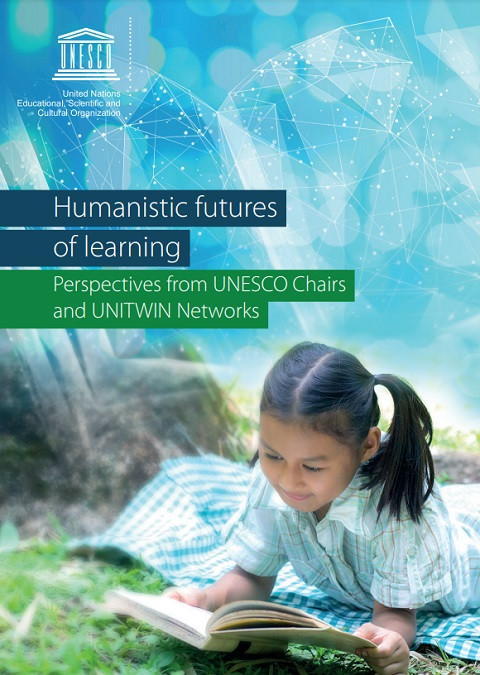 Humanistic Futures of Learning: Perspectives from UNESCO Chairs and UNITWIN Networks Year of publication: 2020 Corporate author: UNESCO UNESCO’s Futures of Education initiative aims to rethink education and shape the future. The initiative is catalyzing a global debate on how knowledge, education and learning need to be reimagined in a world of increasing complexity, uncertainty and precarity. This publication presents the first curated input to the Futures of Education initiative from the UNITWIN/UNESCO Chairs Programme, which now represents an extensive global network of more than 800 higher education institutions in over 115 countries. It features think pieces that highlight key dimensions to be considered in re-visioning and re-purposing education for the future of humanity and the planet. The collection of the pieces calls for greater focus on a number of critical areas such as: The role of culture in strengthening social and environmental sustainability; the values and attitudes that are needed to shape future generations; the importance of both robust public education, as well as of other learning spaces; the need to strengthen human creativity and capability in the digital era, as well as the role of higher education in generating the knowledge and driving the innovation required to transform our world.
 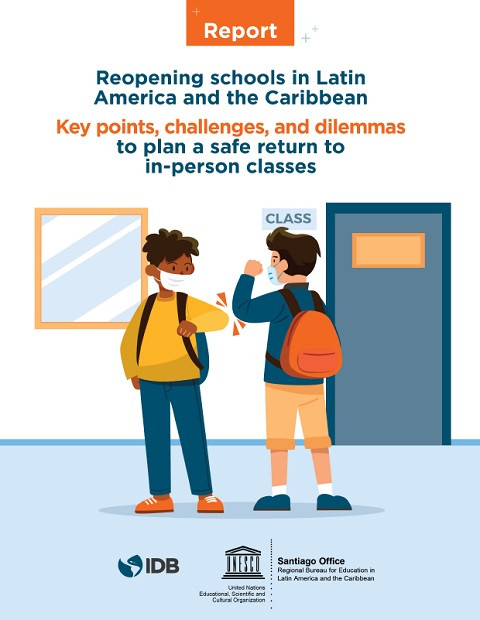 Reabrir las escuelas en América Latina y el Caribe: Claves, desafíos y dilemas para planificar el retorono seguro a las clases presenciales; Reporte Year of publication: 2021 Author: Alejandro Vera | Martín Scasso | Alejandro Morduchowicz | Cecilia Berlanga Alessio Robles Corporate author: UNESCO La suspensión de clases presenciales como consecuencia de la pandemia de COVID-19 afectó profundamente los sistemas educativos de América Latina y el Caribe, y puso en riesgo los avances alcanzados en torno al cumplimiento de las metas establecidas en la Agenda ODS 4-Educación 2030. Las poblaciones más vulnerables se han visto más afectadas por esta situación, lo cual acrecentó las brechas preexistentes. Los países de la región llevaron a cabo enormes esfuerzos para garantizar la continuidad de los aprendizajes. Sin embargo, se ven limitados por los desafíos que presenta este contexto inédito de crisis y agravados por las desiguales condiciones de acceso a infraestructura y otros recursos que afectan a vastos sectores de la población.El reporte analiza las posibilidades, restricciones y necesidades que enfrentarán los países de la región durante el proceso del regreso a las clases presenciales, considerando cinco dimensiones: (i) escuelas seguras (infraestructura escolar, acceso al agua y saneamiento); (ii) recursos humanos (directores y docentes); (iii) acceso a TIC y conectividad, (iv) financiamiento de la educación y (v) información y planificación.
  Do You Speak MIL?: Media and Information Literacy; A Handbook for Jordanian CSOs Year of publication: 2020 Author: Milica Pesic | Lucien Michael Steinberg | Anoud Al-Zou’bi Corporate author: Media Diversity Institute | UNESCO | UN. Office of Counter-Terrorism (UNOCT) The aim of this publication is to provide civil society organizations (CSOs) with practical and effective tool that can help CSOs to champion and adopt MIL within their own training programs. Each chapter is divided into three sections: a technical introduction on the topic, recommended questions, and practical examples and scenarios to be used by the trainers.
  Educación no formal, desarrollo sostenible y la Agenda de Educación 2030: Estudio de prácticas de la sociedad civil en América Latina y el Caribe Year of publication: 2020 Corporate author: UNESCO En esta publicación, se muestran 27 iniciativas de la sociedad civil de diversos países de la región de América Latina y el Caribe que trabajan promoviendo acciones y programas para lograr el cumplimiento de la Meta 4.7 desde la educación no formal. En el estudio, se busca que las propias organizaciones expongan su trabajo, los retos que enfrentan en la implementación de sus programas y sus mayores logros.
  A Guide for ensuring inclusion and equity in education Year of publication: 2017 Corporate author: UNESCO As countries seek to strengthen their national educational systems, finding ways of including all learners and ensuring that each individual has an equal opportunity for educational progress remain major challenges. This guide is intended to support countries in embedding inclusion and equity in educational policy. The ultimate objective is to create system-wide change for overcoming barriers to quality educational access, participation, learning processes and outcomes, and to ensure that all learners are valued and engaged equally.
  Disinfodemic: Deciphering COVID-19 Disinformation (Policy Brief; 1) Year of publication: 2020 Author: Julie Posetti | Kalina Bontcheva Corporate author: UNESCO The purpose of this brief is to provide a structure for understanding the COVID-19 disinfodemic and the responses to it, highlighting practices which have a bearing on the UN Sustainable Development Goals (SDGs), the right to health and the right to freedom of expression. SDG 16.10 calls for “public access to information and fundamental freedoms”. Desinfodemia: Descifrando la desinformación sobre el COVID-19 (Policy Brief; 1) Year of publication: 2020 Author: Julie Posetti | Kalina Bontcheva Corporate author: UNESCO El propósito de este resumen es presentar una estructura para comprender la ‘desinfodemia’ del COVID-19 y las respuestas respectivas, resaltando las prácticas pertinentes a los Objetivos de Desarrollo Sostenible de la ONU, al derecho a la salud y al derecho a la libertad de expresión. EL ODS16.10 subraya la necesidad de “acceso público a la información y libertades fundamentales”.