
Resources
Explore a wide range of valuable resources on GCED to deepen your understanding and enhance your research, advocacy, teaching, and learning.
792 Results found
 Enforcing the right to education of refugees: a policy perspective Year of publication: 2019 Corporate author: UNESCO This paper, aimed at education policymakers, provides analysis and insights on how the right to education for refugees could be ensured from a policy perspective. It does so by reviewing the current status of access to education of refugees, using the scant data that is available in this area. It also outlines some of the extensive barriers to education that refugees face, with recognition of the multifaceted, interlinked and complex nature of exclusion. It provides an overview of the international normative frameworks and global agendas on education that can be applied to refugees to ensure their right to education and achieve SDG 4. Additionally, this document presents practical examples, good practices, and promising measures taken by countries in order to ensure the inclusion of refugees in their national systems and better guarantee the fulfilment of their right to education. As a result of this research, collaboration and the invaluable contributions from the participants in a dedicated Expert Meeting in Barcelona (2018), a set of policy recommendations are provided in the last chapter which aims to guide policymakers to ensure equal access to good quality education for refugees.
 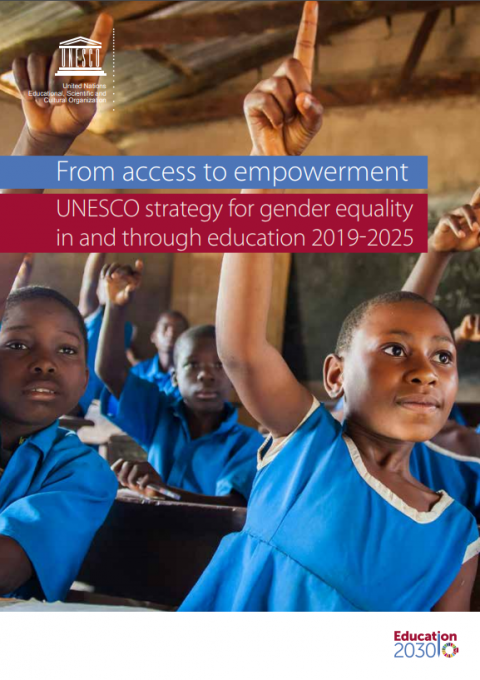 From access to empowerment: UNESCO strategy for gender equality in and through education 2019-2025 Year of publication: 2019 Corporate author: UNESCO Gender bias still permeate the entire education system in some settings and is often perpetuated rather than questionned. This includes the absence of women as leaders in textbooks, to differential expectations of boys and girls by teachers, to school policies that put pregnant girls at the door rather than respecting, protecting and fulfilling their right to education. This Strategy focuses on system-wide transformation to benefit all learners and targeted interventions to support girls’ and women’s empowerment. It offers three clear lines of action: better data to inform action for gender equality in and through education, better legal, policy and planning frameworks to advance rights, and better teaching and learning practices to empower.
 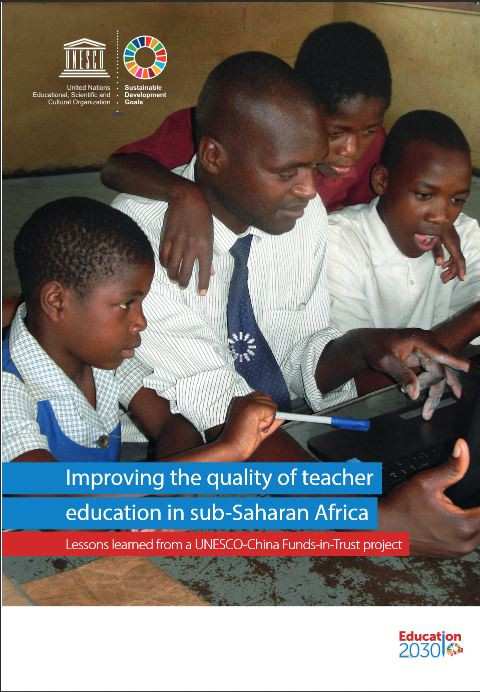 Improving the quality of teacher education in Sub-Saharan Africa: lessons learned from a UNESCO-China Funds-in-Trust project Year of publication: 2018 Corporate author: UNESCO The booklet describes how the project started, the choice of beneficiary countries, the implementation strategies and its achievements. The different sections numbered one to four describe particular aspects of the project, using country cases to illustrate how the success of the project was due to strong country ownership and leadership. UNESCO, in partnership with the Government of the People’s Republic of China, initiated the project to enhance the institutional capacity and the professional development of teacher educators through ICT-supported learning, teaching and research. This technology aided the transformation of capacity teacher training through digitalization of instructional materials.
  I'd blush if I could: closing gender divides in digital skills through education Year of publication: 2019 Author: Mark West | Rebecca Kraut | Han Ei Chew Corporate author: UNESCO | EQUALS Skills Coalition This publication seeks to expose some of these biases and put forward ideas to begin closing a digital skills gender gap that is, in most parts of the world, wide and growing. Today, women and girls are 25 per cent less likely than men to know how to leverage digital technology for basic purposes, 4 times less likely to know how to programme computers and 13 times less likely to file for a technology patent. Ata moment when every sector is becoming a technology sector, these gaps should make policy-makers, educators and everyday citizens ‘blush’ in alarm. The publication explains the role gender-responsive education can play to help reset gendered views of technology and ensure equality for women and girls. This publication was prepared by UNESCO for the EQUALS Skills Coalition, one of three coalitions that comprise the EQUALS partnership. EQUALS is a global partnership of governments and organizations dedicated topromoting gender balance in the technology sector by championing equality of access, skills and leadership for women and men alike. The Skills Coalition, Access Coalition, Leadership Coalition and a transversal Research Group release knowledge products periodically, organize competitions and funds, and take actions in countries and internationally to advance EQUALS’smission. The German Federal Ministry for Economic Cooperation and Development (BMZ) generously supported this publication financially and co-leads the EQUALS Skills Coalition with UNESCO. A dedicated working group composed of digital skills and gender experts guided the development of the content.
  Monitoring the implementation of the Lisbon Recognition Convention - Council of Europe Higher Education Series No. 23 Year of publication: 2019 Corporate author: UNESCO | Council of Europe In accordance with the Lisbon Recognition Convention, the Committee of the Convention shall oversee its implementation and guide the competent authorities in implementing the convention and in their consideration of applications for the recognition of foreign qualifications. The Rules of procedure (adopted by the Committee in Vilnius in 1999) reiterate this role – the function of the Committee is to promote the application of the convention and oversee its implementation. Article II. of the convention states that where the central authorities of a party are competent to make decisions in recognition cases, that party shall be immediately bound by the provisions of the convention and shall take the necessary measures to ensure the implementation of its provisions on its territory. Where the competence to make decisions in recognition matters lies with individual higher education institutions or other entities, each party, according to its constitutional situation or structure, shall transmit the text of this convention to those institutions or entities and shall take all possible steps to encourage the favourable consideration and application of its provisions. The provisions of Article II. are central to determining the obligations of the parties to the convention. This article places upon these parties an obligation to make sure that information on the provisions is disseminated to all competent recognition authorities, and that these institutions are encouraged to abide by the convention (Explanatory report to the convention). The objective of this monitoring exercise has been to oversee the implementation of the main provisions of the convention and to report to parties on the outcome of this monitoring, presenting the main findings and recommendations. This monitoring report is also a contribution to the commitment set out in the Yerevan Communiqué (2015) to review national legislation to ensure full compliance with the convention, and to ask the Convention Committee, in co-operation with the ENIC (Council of Europe and UNESCO European Network of National Information Centres on academic recognition and mobility) and NARIC (EU Network of National Academic Recognition Information Centres) networks, to prepare an analysis of the national legislation reports by the end of 2017, taking due account of this monitoring report. This is the first monitoring of implementation of the Lisbon Recognition Convention (LRC) since its signature in 1997. The questionnaire used for the monitoring exercise was drawn up by the Bureau of the Convention Committee, namely Gunnar Vaht, President of the Committee, Gayane Harutyunyan, Vice-President, Allan Bruun Pedersen, Vice-President, and Baiba Ramina, Rapporteur, together with the joint Council of Europe/UNESCO Secretariat. The monitoring covers the 10 main provisions of the convention and comprises 22 questions relating to implementation of the main principles. The questions focus primarily on how the convention requirements are regulated at national level and to what extent the rules are reflected in national legislation. In cases where some or all of the provisions are not regulated at national level and where the higher education institutions have total autonomy in establishing the principles of the convention, the aim has been to discover how national authorities oversee implementation of the principles of the convention at institutional level. As stated above, the objective of this monitoring report is to monitor implementation of the convention by the parties to the convention. The executive summary focuses on the key findings and the conclusions focus on the recommendations made by the Convention Committee Bureau, which will require political decisions from the Convention Committee and from national authorities for follow-up action. The various chapters of the report elaborate further on both the key findings and the recommendations. The questionnaire was sent to 53 states parties to the LRC, and replies were received from 50 countries. The initial deadline given was 15 February 2015, but this was extended to June 2015. The analysis by the members of the Convention Committee Bureau took place from June to November 2015 and was assisted and reviewed by the Council of Europe and UNESCO, the joint Secretariat of the LRCC Bureau.
 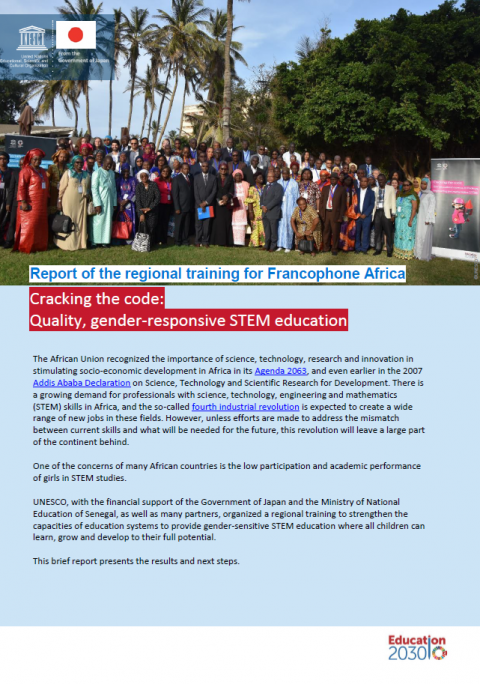 Report of the regional training for Francophone Africa, cracking the code: quality, gender-responsive STEM education Year of publication: 2019 Corporate author: UNESCO The African Union recognized the importance of science, technology, research and innovation in stimulating socio-economic development in Africa in its Agenda 2063, and even earlier in the 2007 Addis Ababa Declaration on Science, Technology and Scientific Research for Development.There is a growing demand for professionals with science, technology, engineering and mathematics (STEM) skills in Africa, and the so-called fourth industrial revolution is expected to create a wide range of new jobs in these fields. However, unless efforts are made to address the mismatch between current skills and what will be needed for the future, this revolution will leave a large part of the continent behind.One of the concerns of many African countries is the low participation and academic performance of girls in STEM studies. UNESCO, with the financial support of the Government of Japan and the Ministry of National Education of Senegal, as well as many partners, organized a regional training to strengthen the capacities of education systems to provide gender-sensitive STEM education where all children can learn, grow and develop to their full potential. This brief report presents the results and next steps.
 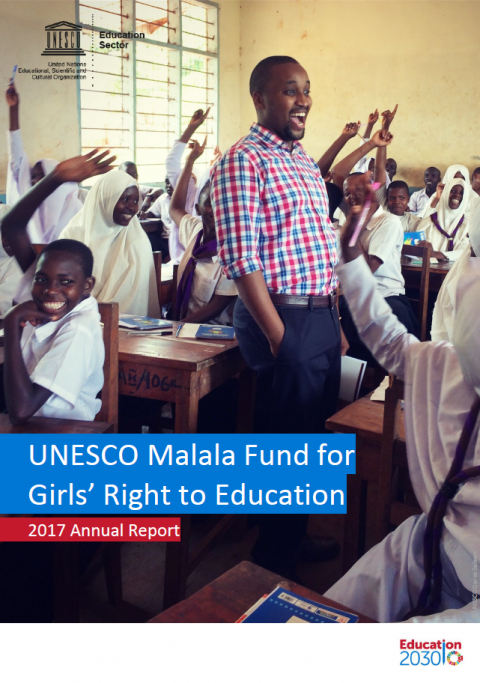 UNESCO Malala Fund for Girls' Right to Education: 2017 annual report Year of publication: 2018 Corporate author: UNESCO The brutal assassination attempt made against Pakistani teenager and activist for girls’ education Malala Yousafzai gave birth to the UNESCO Malala Fund for Girls’ Right to Education. Part of the “Better Life, Better Future” Global Partnership for Girls’ and Women’s Education, the fund was established in 2012 to expand girls’ access to quality and gender-responsive education and ensure safe learning environments, especially in countries affected by conflict and disaster. The Islamic Republic of Pakistan initially committed 10 million USD to the Fund, and since 2014 the CJ Group is another major contributor to the Fund, along with other supporters.Fund objectivesThe Fund supports the implementation of holistic programmes which aim to: Expand access to education for girls and women, especially those hardest to reach and affected by conflict and disaster Improve the quality and relevance of education, ensuring that content, teaching practices, learning processes and environments are gender-sensitive Strengthen policy and capacity to ensure safe learning environments
  Water Security and the Sustainable Development Goals (Global Water Security Issues Series, 1) Year of publication: 2019 Corporate author: UNESCO | International Centre for Water Security and Sustainable Management (i-WSSM) The ‘Global Water Security Issues (GWSI) series’ is the product of synergy within the UNESCO system, in particular the International Water Security and Sustainable Management (i-WSSM).The first edition of the GWSI series also seeks to demonstrate that water has a central role in all aspects of economic development and social welfare, and that concerted action via a collective approach of the water-using sectors is needed to ensure water’s many benefits are maximized and shared equitably and that water-related development goals are achieved.While this publication is factual, containing the most current information available concerning the state of knowledge on water security in the perspective of sustainable development and covering the most recent developments that affect it, this publication also provides decision-makers with concrete examples of approaches and potential responses for addressing water security-related challenges from the perspectives of both the sustainable development goals (SDGs) and a broader political and sectoral scope, which covers development, financing, capacity-building, institutional reform and technology.It is hoped that this publication will be a reference source on water security as it covers all aspects of human development and the cases and solutions introduced in the GWSI series can be invaluable for decision-makers, their advisors and anyone interested in – and concerned about – water security, and that this first edition will reach an ever-widening audience that includes actors outside the ‘water box’ who make or influence broad socio-economic policies that can affect water security.
 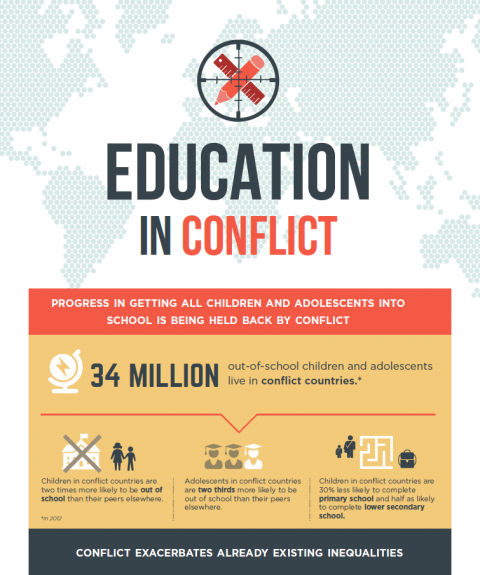 EDUCATION IN CONFLICT Corporate author: EFA Global Monitoring Report Team | UNESCO PROGRESS IN GETTING ALL CHILDREN AND ADOLESCENTS INTO SCHOOL IS BEING HELD BACK BY CONFLICT - 34 million out-of-school children and adolescents live in conflict countries. - Children in conflict countries are two times more likely to be out of school than their peers elsewhere.- Adolescents in conflict countries are two thirds more likely to be out of school than their peers elsewhere.- Children in conflict countries are 30% less likely to complete primary school and half as likely to complete lower secondary school.- Girls are almost two and a half times more likely to be out of school if they live in a conflict country than those elsewhere.- Adolescent girls are almost 90% more likely to be out of secondary school than young women elsewhere.- The poorest children in conflict countries are twice as likely to be out of school as the poorest elsewhere.
  Education for Sustainable Development: Partners in Action; Global Action Programme (GAP) Key Partners' Report (2015-2018) Year of publication: 2019 Corporate author: UNESCO The Global Action Programme (GAP) on Education for Sustainable Development (ESD) was launched by UNESCO as a follow up to the United Nations Decade of ESD in order to accelerate progress on sustainable development and scale up action in all areas of education and learning. Its duration is from 2015 to 2019.To that end, UNESCO works with a network of 97 GAP Key Partners from government, civil society, the private sector and academia active in five Priority Action Areas: advancing policy, transforming learning environments, building the capacity of educators, empowering youth, and accelerating sustainable solutions at the local level. Each GAP Key Partner committed to meet specific targets by 2019. To measure progress in meeting the targets set by the GAP Key Partners, 10 indicators were identified, two in each Priority Action Area. Through surveys sent to them by UNESCO, GAP Key Partners report against these 10 indicators and toward the targets set for each indicator. In the surveys, GAP Key Partners are also invited to rate the benefits of participation in the GAP for their work and provide qualitative data concerning their implementation progress. Three progress reports are scheduled to be produced: The first report, covering progress between 2015 and 2016, was released by UNESCO in 2017 This second report, covering 2015-2018, is to be published in 2019 The third and final report, covering the entire period of the GAP, 2015-2019, will be published in 2020 This second report presents the results of the GAP Key Partners survey carried out at the end of 2018, with a response rate of 78%. The report presents the analysis of the quantitative responses of GAP Key Partners to each of the 10 indicators. Based on the qualitative responses provided by the GAP Key Partners, a short comment on each of the progress status is also provided.