
Resources
Explore a wide range of valuable resources on GCED to deepen your understanding and enhance your research, advocacy, teaching, and learning.
795 Results found
 Media and Information Literacy Education in Asia: Exploration of Policies and Practices in Japan,Thailand, Indonesia, Malaysia, and the Philippines Year of publication: 2020 Author: Masato Kajimoto | Phansasiri Kularb | Bobi Guntarto | Sabariah Mohamed Salleh | Therese Patricia S. Torres | Guillian Mae C. Palcon | Ramon Tuazon Corporate author: UNESCO This book looked at the current media and information literacy education policies and teaching practices in formal and informal settings. It explores how MIL could address emerging and pressing problems such as political extremism, false news, online harassment and discrimination in Indonesia, Japan, Malaysia, the Philippines, and Thailand.
  Ensuring Lifelong Learning for All in Kazakhstan, Kyrgyzstan, Tajikistan and Uzbekistan: Country Evidence and Policy Recommendations Year of publication: 2020 Author: Arne Carlsen Corporate author: UNESCO Lifelong Learning is at the heart of the 2030 Agenda for Sustainable Development and its 17 goals. More speci¬cally, Sustainable Development Goal 4 is devoted to ensuring quality education and lifelong learning opportunities for all. As the lead agency for education, UNESCO is mandated to support Member States in implementing SDG 4 through the Education 2030 Framework for Action. Central Asian countries – Kazakhstan, Kyrgyzstan, Tajikistan and Uzbekistan – have all shown their commitment to achieving the SDGs by 2030, including SDG 4, and have taken several actions in this regard. This sub-regional study aims to provide a broader picture of lifelong learning in Central Asia, supported by evidence and policy recommendations in order to propose a systemic approach for future education reforms.
  Beijing+25: Generation Equality Begins With Adolescent Girls' Education Year of publication: 2020 Corporate author: Plan International France | France. Ministry for Europe and Foreign Affairs | UNESCO This publication examines progress and persistent gaps in our efforts to achieve gender equality in and through education since the adoption of the Beijing Platform for Action 25 years ago. In 2018, 130 million girls worldwide were out of school, and only two out of three girls were enrolled in secondary education. The crisis related to the COVID-19 pandemic is likely to further widen these gaps and threatens to interrupt the education of more than 11 million girls.This publication demonstrates the importance of adolescent girls' education for the advancement of the Beijing Platform for Action’s visionary agenda, and the achievement of the Sustainable Development Goals.It provides recommendations to fast-track investments and action on adolescent girls’ education during the 2021 Generation Equality Forum, and the related Action Coalitions aiming to accelerate progress for gender equality. It promotes intersectoral approaches and multi-stakeholder partnerships, and focuses on three ‘levers of action’: comprehensive sexuality education, the involvement of adolescent girls in science, technology, engineering and mathematics education, and the development of adolescent girls’ leadership. It shares adolescent girls’ own priorities and expectations, and their vision of what is needed for an equal future for us all.
  What Have We Learnt?: Overview of Findings From a Survey of Ministries of Education on National Responses to COVID-19 Year of publication: 2020 Corporate author: UNESCO | United Nations Children's Fund (UNICEF) | World Bank As part of the coordinated global education response to the COVID-19 pandemic, UNESCO, UNICEF and the World Bank conducted a Survey on National Education Responses to COVID-19 School Closures. In this joint report, the results of the first two rounds of data collection administered by the UNESCO Institute for Statistics (UIS) were analysed. They cover government responses to school closures from pre-primary to secondary education.
 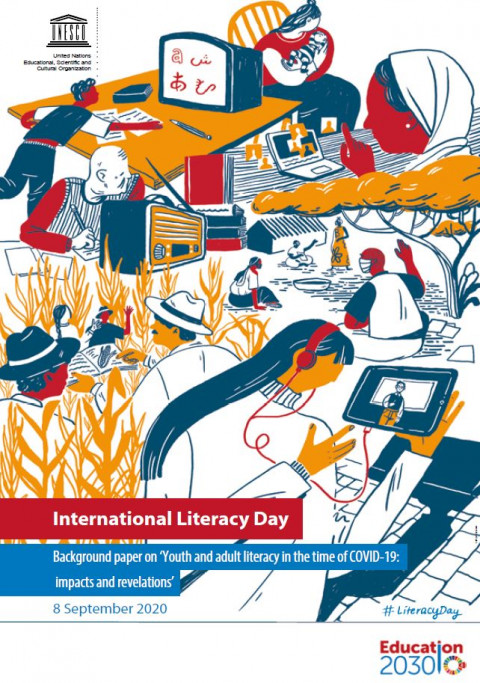 International Literacy Day: Background Paper on 'Youth and Adult Literacy in the Time of COVID-19; Impacts and Revelations' Year of publication: 2020 Corporate author: UNESCO Specially prepared on the occasion of International Literacy Day 2020, this background paper illustrates the impact of the COVID-19 crisis on youth and adult literacy, based on the limited information that is currently available. It provides five regional snapshots and identifies preliminary lessons learned thus far, while aiming to inspire continued reflection and subsequent action. It also makes the case for the ongoing importance of advancing youth and adult literacy, a priority that was already neglected even before the pandemic but which deserves all our attention. ILD 2020 thus seeks to trigger reimaginations of literacy teaching and learning in the COVID-19 crisis and beyond, with a particular focus on the role of educators.
  What Does the Rule of Law Have to Do With Me? Year of publication: 2020 Corporate author: UNESCO Using fun, interactive pedagogical tools and a classroom setting, this video explains to young people the basic concept of the rule of law and how they can engage in building a society on just laws which protect the fundamental rights of the individual and promote citizenship (https://en.unesco.org/themes/gced).In simple engaging language with real life examples and interaction with pupils, it explains 'accountability', 'freedom of expression', the characteristics of good law and equality before the law.The video describes the UNESCO-UNODC partnership on education for the rule of law (https://en.unesco.org/themes/gced/rul...) which works to bridge the gap between education and justice and supports Sustainable Development Goals 4 (in particular target 4.7) and 16. The partnership has developed interactive handbooks for schools and guidance for policy-makers.
 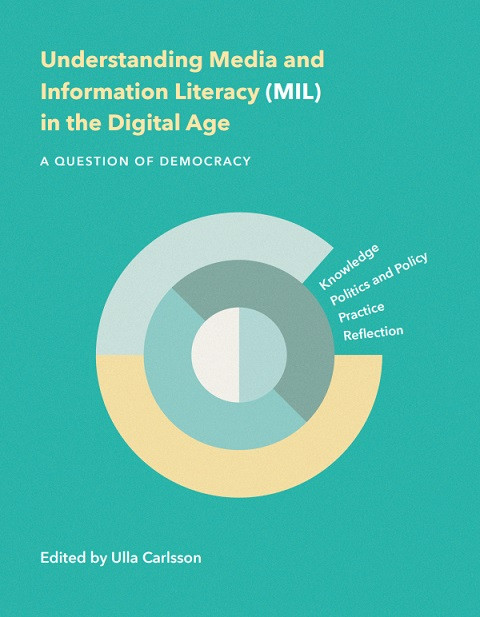 Understanding Media and Information Literacy (MIL) in the Digital Age: A Question of Democracy Year of publication: 2019 Author: Ulla Carlsson Corporate author: University of Gothenburg | UNESCO This book consists of three parts. In the first part, a number of articles of a more general nature discuss media and information literacy (MIL) in a variety of contexts as well as courses of development on national, regional and global levels. The focus in the second part is on Sweden, the host the UNESCO Global MIL Week Feature Conference 2019. The articles in this part present current research findings, policy decisions and political initiatives, and some examples of ‘best practices’ in the MIL area. The third part presents a new approach to MIL in a context of social change and Agenda 2030.
 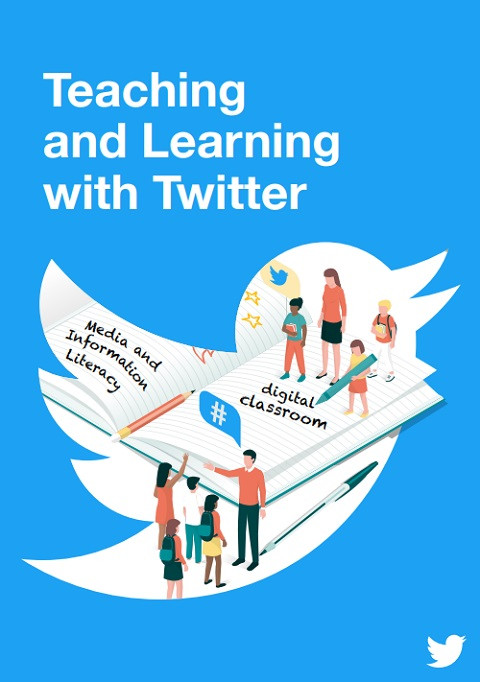 Teaching and Learning With Twitter Year of publication: 2019 Corporate author: Twitter | UNESCO This resource is for educators who want to design lessons around media and information literacy and how it relates to global citizenship and digital citizenship education. Whether your focus is on media and information literacy (MIL) or nurturing good online habits, or other social competencies, there’ll be something here for you.
 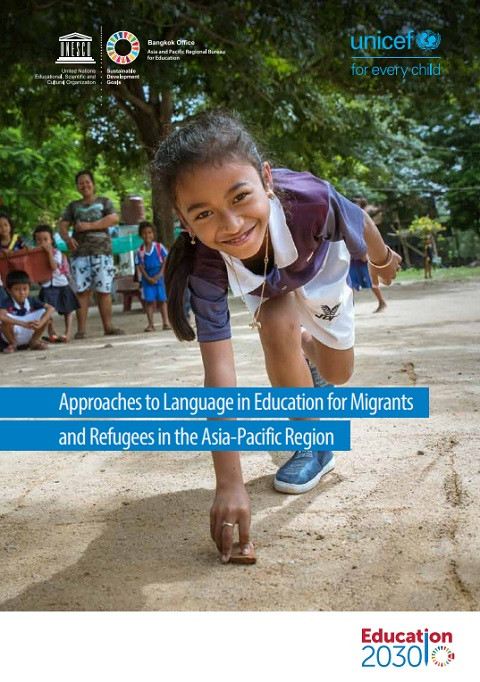 Approaches to Language in Education for Migrants and Refugees in the Asia-Pacific Region Year of publication: 2020 Corporate author: UNESCO | United Nations Children's Fund (UNICEF) UNESCO Bangkok commissioned this paper to examine strategies for addressing the needs of refugee, migrant and internally displaced children in the Asia-Pacific region. This document aims to create a stronger knowledge base to support Member States as they formulate education policies that are responsive to the needs of such children. This document aims to:Examine how linguistic diversity and human mobility intersect and impact minority, migrant and refugee children’s access to quality, inclusive educationLink policy priorities to promising practices, based on international frameworks and lessons learned from successful programmesRecommend steps for improving language-in-education policies and their implementation. To do this, this paper examines:Global and regional trends in migrationThe impact of migration on children’s educationLinguistic diversity and its implications for language-in-education policies and practicesResearch and resources that support inclusive quality education for migrant and refugee children.
  World Programme for Human Rights Education: Plan of Action; Third Phase Year of publication: 2017 Corporate author: UNESCO | UN. Office of the United Nations High Commissioner for Human Rights (UN. OHCHR) The plan of action for the third phase (2015–2019) of the World Programme, which benefited from the input and review of governmental and nongovernmental experts and practitioners, proposes a concrete strategy and practical ideas for further implementing human rights education and training in the above-mentioned areas at the national level. Its key elements are highlighted below:Human rights education in the primary and secondary school systems and in higher education, and human rights training for teachers and educators, civil servants, law enforcement officials and the military.