
Resources
Explore a wide range of valuable resources on GCED to deepen your understanding and enhance your research, advocacy, teaching, and learning.
114 Results found
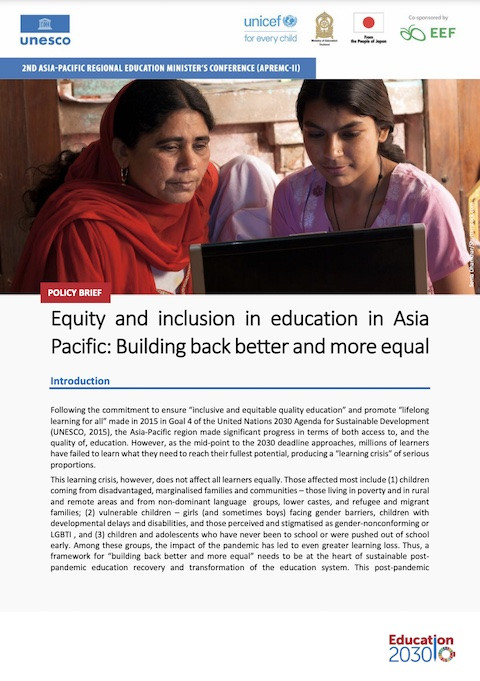 Equity and Inclusion in Education in Asia Pacific: Building Back Better and More Equal; Policy Brief Year of publication: 2022 Corporate author: UNESCO Bangkok Following the commitment to ensure “inclusive and equitable quality education” and promote “lifelong learning for all” made in 2015 in Goal 4 of the United Nations 2030 Agenda for Sustainable Development (UNESCO, 2015), the Asia-Pacific region made significant progress in terms of both access to, and the quality of, education. However, as the mid-point to the 2030 deadline approaches, millions of learners have failed to learn what they need to reach their fullest potential, producing a “learning crisis” of serious proportions. This learning crisis, however, does not affect all learners equally. Those affected most include (1) children coming from disadvantaged, marginalised families and communities – those living in poverty and in rural and remote areas and from non-dominant language groups, lower castes, and refugee and migrant families; (2) vulnerable children – girls (and sometimes boys) facing gender barriers, children with developmental delays and disabilities, and those perceived and stigmatised as gender-nonconforming or LGBTI , and (3) children and adolescents who have never been to school or were pushed out of school early. Among these groups, the impact of the pandemic has led to even greater learning loss. Thus, a framework for “building back better and more equal” needs to be at the heart of sustainable postpandemic education recovery and transformation of the education system. This post-pandemic framework calls for decisive action to protect the right to education of good quality and for measures – as spelled out below – to improve learning outcomes, especially for marginalized children made more vulnerable because of the pandemic.
 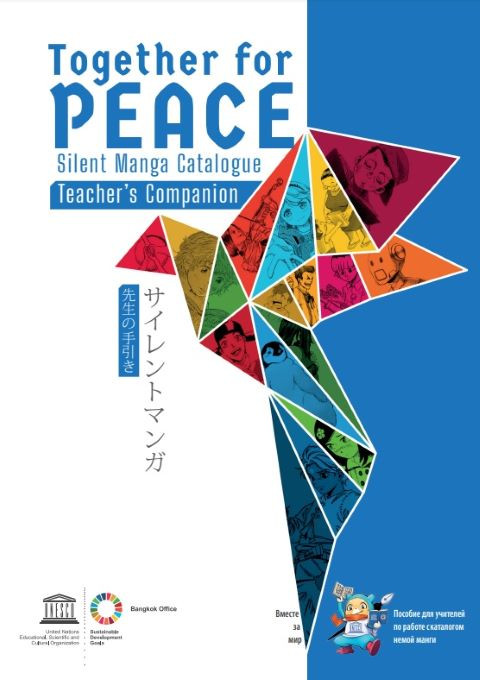 Together for Peace Silent Manga Catalogue: Teacher's Companion Year of publication: 2022 Corporate author: UNESCO Bangkok Silent Manga refers to manga stories told entirely through illustrations without the use of dialogue. This Silent Manga Catalogue Teacher's Companion is intended for use by teachers (or parents) together with Silent Manga Catalogue, a compilation of Silent Manga entries selected from SILENT MANGA AUDITION® Round 13, which was based on the theme ‘Together for Peace’. The manga stories showcase different aspects of peace as envisioned by artists around the world, and based on various related topics such as out-of-school children, lifelong learning, anti-bullying, conflict, youth, learning to live together, refugees and shared histories. Through the power of Silent Manga, teachers can use such manga stories to spark a thought-provoking discussion among younger generations that represent the chief architects of world peace not only in our own times, but in the years to come. 평화를 위한 협력: 사일런트 만화 카탈로그 교사용 안내 자료 Year of publication: 2022 Corporate author: UNESCO Bangkok 사일런트 만화는 대사를 전혀 사용하지 않고 완전히 삽화로만 이루어진 만화를 의미합니다. 이 사일런트 만화 카탈로그 교사용 안내 자료는 교사나 학부모가 ‘평화를 위한 협력’이라는 테마로 진행된 SILENT MANGA AUDITION® Round 13에서 선정된 사일런트 만화들을 수록한 사일런트 만화 카탈로그와 함께 활용하도록 하기 위한 것입니다. 만화는 학교 밖 아동, 평생 학습, 괴롭힘 방지, 분쟁, 청소년, 함께 사는 법 배우기, 난민 및 공동 역사와 같은 다양한 관련 주제를 기반으로 전 세계 예술가들이 꿈꾸는 여러 측면의 평화를 보여줍니다. 사일런트 만화의 힘으로, 교사들은 이러한 만화 이야기를 활용해 현재뿐 아니라 다가올 미래의 세계 평화 구현에 핵심 역할을 하게 될 젊은 세대 간에 생각을 자극하는 토론을 유도할 수 있습니다. Вместе за мир: Пособие для учителей по работес каталогом немой манги Year of publication: 2022 Corporate author: UNESCO Bangkok Немая манга означает истории в формате манги, рассказанные только посредством иллюстраций без использования диалогов. Пособие для учителей по работе с каталогом немой манги предназначено для использования учителями (или родителями) вместе с каталогом немой манги «Silent Manga Catalogue», сборником работ в стиле немой манги, отобранных в ходе 13-го тура Конкурса немой манги SILENT MANGA AUDITION®, темой которого был лозунг «Вместе за мир».Истории манги демонстрируют различные аспекты мирных процессов в представлении художников со всего света, и строятся на различных смежных темах, таких как дети, не посещающие школу, обучение на протяжении всей жизни, борьба с издевательствами, конфликты, молодёжь, необходимость учиться жить вместе, беженцы и общая история. Благодаря выразительной силе немой манги, учителя могут использовать такие истории в формате манги, чтобы побудить к на-во дящей на размышления дискуссии молодое поколение, которое представляет собой главных созидателей мира во всём мире не только в наше время, но и в будущем.
 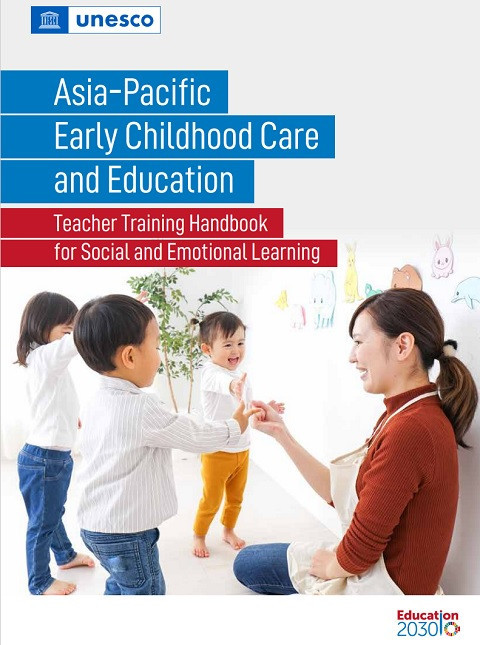 Asia-Pacific Early Childhood Care and Education: Teacher Training Handbook for Social and Emotional Learning Year of publication: 2022 Author: Monisha Singh Diwan Corporate author: UNESCO Bangkok The handbook was initiated by UNESCO Bangkok. This effort is in response to the widespread recognition of social and emotional learning (SEL)’s importance and the lack of robust and more contextually relevant and culturally sensitive SEL programme for teachers to effectively deliver SEL. With this, UNESCO Bangkok aims to support the Member States in the Asia-Pacific to equip their early childhood care and education (ECCE) teachers with SEL knowledge and skills, and to ensure that children develop pro-social and emotional skills and positive relationships within the early stage of the learning process, particularly in enhancing (1) knowledge about student SEL and classroom management; (2) strategies to apply in the classroom; and (3) teachers’ own social and emotional competence.The handbook provides the context and foundation for the programme. The background of the initiative that led to the regional handbook and training modules (Chapter 1), the introduction of the purpose and use of the handbook (Chapter 2), an overview of ECCE (Chapter 3), SEL (Chapter 4), teachers’ professional education, learning and development (Chapter 5), and APETT-SEL conceptual framework followed by an overview of the four themes and ten modules (Chapter 6). The Glossary provides definitions and/or explanations of key educational terminologies used to provide greater clarity. The ten comprehensive training modules aim to build capacity of pre-primary and early primary teachers, both pre- and in-service, across four themes. The first theme focuses on teachers and their well-being; the second equips teachers in building pro-social and responsive classrooms; the third focuses on diversity, inclusion, cultural responsiveness, and equity; and the fourth focuses on SEL measurement and assessment. Each training module consists of scripted sessions and activities, as well as reference materials included as handouts and additional readings.
 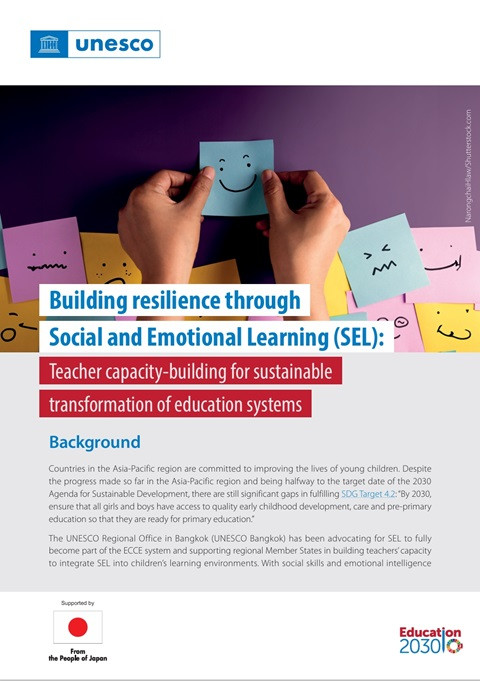 Building Resilience Through Social and Emotional Learning (SEL): Teacher Capacity-building for Sustainable Transformation of Education Systems Year of publication: 2024 Corporate author: UNESCO Bangkok Countries in the Asia-Pacific region are committed to improving the lives of young children. Despite the progress made so far in the Asia-Pacific region and being halfway to the target date of the 2030 Agenda for Sustainable Development, there are still significant gaps in fulfilling SDG Target 4.2: 'By 2030, ensure that all girls and boys have access to quality early childhood development, care and pre-primary education so that they are ready for primary education.' The UNESCO Regional Office in Bangkok (UNESCO Bangkok) has been advocating for SEL to fully become part of the ECCE system and supporting regional Member States in building teachers’ capacity to integrate SEL into children’s learning environments. With social skills and emotional intelligence taught in schools early, children will gain knowledge, skills, and attitudes to develop healthy identities, manage emotions, and achieve personal and collective goals. This can positively contribute to society and transformative resilience through enhancing civic engagement.
  Supporting Schools’ and Teachers’ Use of Assessment to Inform Learning of All Students (Using Assessment Data in Education Policy and Practice: Examples from the Asia-Pacific issue 5, December 2023) Year of publication: 2023 Author: Ursula Schwantner | Soumaya Maghnouj Corporate author: UNESCO Bangkok | Australian Council for Educational Research (ACER) In more than half of Asia-Pacific countries, a majority of learners in primary and secondary education do not have the required foundational skills. The fifth issue of the topical case studies series 'Using Assessment Data in Education Policy And Practice: Examples From The Asia-Pacific' under the Network for Education Quality Monitoring in Asia-Pacific (NEQMAP), documents four promising practices from countries in the Asia-Pacific region on how education systems can better support teachers and schools in effectively integrating assessment practices in the teaching and learning process. The goal of this support is to identify and meaningfully address every learner’s needs, so that every learner can learn successfully. The case studies look at a variety of levers that promote a better use of assessment for learning such as how to develop teachers’ assessment literacy and capacity to design, implement and use assessment to inform their classroom teaching and learning; how to improve the use of standardized assessment data to inform teaching and learning and how to rethink the organization of instruction to address the needs of all learners.
 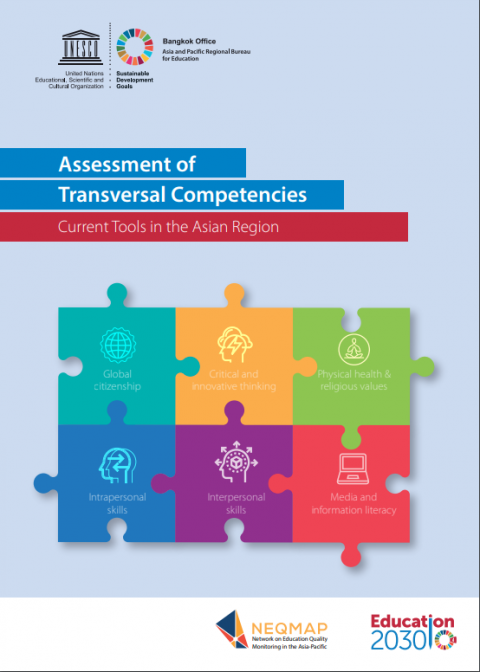 Assessment of Transversal Competencies: Current Tools in the Asian Region Year of publication: 2019 Author: Esther Care | Alvin Vista | Helyn Kim Corporate author: UNESCO Bangkok | Brookings Institution UNESCO’s Asia-Pacific Regional Bureau for Education has been working on education quality under the name of ‘transversal competencies’ (TVC) since 2013. Many of these competencies have been included in national education policy and curricula of countries in the region, but now the importance accorded them is increasingly gaining attention. As policy makers increasingly require their systems to provide evidence of 21st century skills acquired by their learners, implementation challenges highlight the need for a stronger alignment between curricula, pedagogy and learning assessments. UNESCO Bangkok’s Network on Education Quality Monitoring in the Asia Pacific (NEQMAP) undertook this regional study to examine components within countries’ learning assessments that show how these apply to and can measure transversal competencies. This report provides valuable information on how learning assessments are already capturing TVC and is useful for a broad range of education stakeholders, not only test developers, but also curriculum developers, teacher trainers and teachers. Particularly important is the need to align these skills and competencies across the entire education system.
  Blended learning for quality higher education: selected case studies on implementation from Asia-Pacific Year of publication: 2016 Author: Lim, Cher Ping | Wang Libing Corporate author: UNESCO Bangkok Together with The Education University of Hong Kong, UNESCO Bangkok gathered experts from higher education institutions in the Asia-Pacific region to explore the potential of blended learning, including its impact on the role of teachers, the relationship between teachers and students, and the nature of educational institutions themselves. Issues about the quality of education are at the heart of the Sustainable Development Goals, which were adopted during the United Nations Sustainable Development Summit in September 2015.
  Developing Holistic Indicators to Promote the Internationalization of Higher Education in the Asia-Pacific Year of publication: 2018 Author: Da Wan Chang Corporate author: UNESCO Bangkok The internationalization of higher education has been emphasized by the global community to improve access and quality in higher education (SDG4.3), as well as to achieve other global goals by promoting cross-cultural understanding and tolerance. Even though the internationalization of higher education has diverse dimensions, ‘student mobility’ has been a predominant indicator and there are conceptual and methodological challenges in the existing sources of data and statistics. In addition to student mobility, this document proposes a holistic set of indicators to capture other important dimensions of the internationalization of higher education, such as alignment with international normative instruments, international networking, governance and management, as well as the mobility of academics and programmes, etc. The suggested indicators are categorized into domains on two levels: system and institutional. It is hoped that this policy brief will help users better understand and adapt the indicators for use in their local contexts, so as to promote the internationalization of higher education.