
Resources
Explore a wide range of valuable resources on GCED to deepen your understanding and enhance your research, advocacy, teaching, and learning.
14 Results found
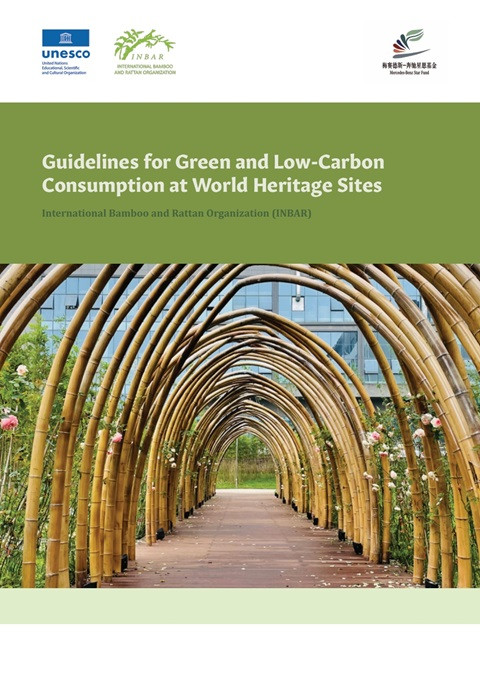 Guidelines for Green and Low-Carbon Consumption at World Heritage Sites Year of publication: 2024 Corporate author: UNESCO Beijing | International Bamboo and Rattan Organization (INBAR) Benefiting from Chishui’s rich tourism resources, such as Chishui Danxia World Heritage site, national nature reserves, and attractive landscapes with bamboo featured, ecotourism is flourishing in Chishui. Since 2018, within the framework of China Youth Development Foundation Mercedes-Benz Star Fund "Conservation and Management of World Heritage Sites in China" project, UNESCO Regional Office for East Asia has been implementing the “Bamboo for Carbon Neutrality in Rural Areas” pilot activity on bamboo handicraft sustainable livelihood and carbon reduction and low-carbon development in collaboration with Chishui World Heritage Administration, Chishui Forestry Administration and International Bamboo and Rattan Organization (INBAR) with the support from the Intangible Cultural Heritage Department of Ministry of Culture and Tourism and the Guizhou Forestry and Grassland Administration. In recent years, the Chinese government has attached great importance to green consumption in implementing the Action Plan for Carbon Dioxide Peak Before 2030 and has achieved remarkable results. However, rigid constraints still exist in several industries, meaning that the long-term mechanism for promoting green consumption and the supporting role of green consumption in high-quality economic development need to be strengthened. In response to this demand, the Guidelines for Green and Low-Carbon Consumption at World Heritage Sites takes the development and utilization of bamboo resources as an entry point to provide systematic guidance for World Heritage sites to implement green and low-carbon concepts in consumer activities, especially in tourism development. 世界遗产地绿色低碳消费指南 Year of publication: 2024 Corporate author: UNESCO Beijing | International Bamboo and Rattan Organization (INBAR) 得益于赤水丰富的竹资源以及丹霞世界遗产地,自然保护区,风景区等旅游资源,近年来赴赤水市生态旅游人次增长迅速,带动和刺激在赤旅游消费。自2018年起,联合国教科文组织东亚地区办事处在CYDF梅赛德斯-奔驰《中国世界遗产地保护和管理》项目框架下,与赤水遗产地管理局、赤水林业局和国际竹藤组织合作,在文化和旅游部非物质文化遗产司和贵州林草局的支持下,在赤水开展 “竹乡碳计” 竹手工艺可持续生计以及世界遗产地减碳和低碳发展试点。近年来,中国政府为贯彻落实《2030年前碳达峰行动方案》,积极在全国范围内推广绿色消费理念,即各类消费主体在消费活动全过程贯彻绿色低碳理念的消费行为,并取得了积极进展。然而绿色消费需求仍待激发和释放,一些领域依然存在浪费和不合理消费,促进绿色消费长效机制尚需完善,绿色消费对经济高质量发展的支撑作用有待进一步提升。为回应这一需求,《世界遗产地绿色低碳消费指南》将以竹资源的开发和利用为切入点,为世界遗产地在消费活动特别是旅游业发展中贯彻绿色低碳理念提供系统性指导。
 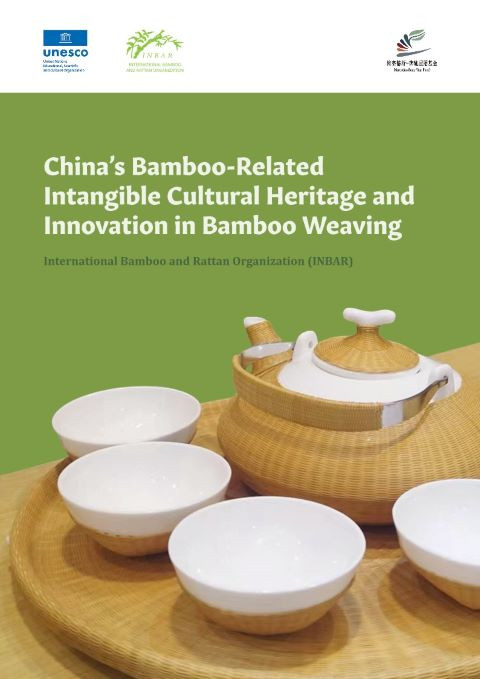 China’s Bamboo-Related Intangible Cultural Heritage and Innovation in Bamboo Weaving Year of publication: 2024 Author: Li Yanxia | Liu Chenge | Wang Renfei Corporate author: UNESCO Beijing | International Bamboo and Rattan Organization (INBAR) In the writing and editing of China’s Bamboo-Related Intangible Cultural Heritage and Innovation in Bamboo Weaving (hereinafter called the “Booklet”), we have focused on introducing Chinese bamboo weaving to allow readers to comprehend relevant knowledge about the craft, fully appreciate its charm, and inspire the passing down and innovation of bamboo-weaving techniques.The Booklet includes six chapters focusing on intangible cultural heritage, China’s national bamboo related intangible cultural heritage elements, the development of Chinese bamboo weaving, analysis of bamboo-weaving patterns, modern designs and product innovations, and a tutorial series on bamboo-woven products. The first chapter introduces the definition of global and Chineseintangible cultural heritage. The second chapter systematically outlines the history, model for classification and contemporary development status of China’s traditional bamboo crafts. The third chapter presents an in-depth analysis of the development of bamboo-weaving skills. The fourth chapter features 12 flat weaving patterns recorded by the project team in Chishui City, Guizhou Province, where “China Danxia, a World Heritage Site, is located. It provides a detailed exploration of pattern characteristics and weaving methods, accompanied by picture and video tutorials for readers to practice by hands. The fifth chapter comprehensively elaborates on the innovative design system of bamboo-woven products and showcases real-world cases through personal involvement in designing and collecting innovative bamboo-woven products from both domestic and international sources. Finally, the sixth chapter explains the production methods of common bamboo-woven products to readers through video tutorials. 中国竹类非物质文化遗产与竹编创新知识图册 Year of publication: 2024 Author: Li Yanxia | Liu Chenge | Wang Renfei Corporate author: UNESCO Beijing | International Bamboo and Rattan Organization (INBAR) 本图册内容包括非物质文化遗产、中国国家级竹类非遗项目、中国竹编发展、竹编图纹解析、竹编的现代设计与产品创新、产品编织讲解系列等 6 节内容。第一节介绍了全球和中国对非物质文化遗产的界定;第二节系统性梳理了中国传统竹类技艺的历史、分类模式以及当代发展现状;第三节着重对代表性非物质文化遗产——竹编技艺深入剖析;第四节则以编写团队在中国丹霞贵州赤水世界自然遗产的所在地,贵州省赤水市所采集到的 12 种平面编织纹样为例,介绍了其纹样特点及编织方法, 并提供图片和视频版本的详细教程,供读者动手编织时参考;第五节竹编的现代设计与产品创新由编前 言写团队与数位清华大学美术学院研究生合作完成,不仅详细介绍了当代竹编产品创新设计体系,还通过亲身参与设计和收集国内外独特的创新竹编产品来进行案例展示。第六节通过视频教程的方式,向读者讲解了制作常见竹编制品方法。
  Implementation of Sexuality Education in Middle Schools in China Year of publication: 2018 Corporate author: UNESCO Beijing | United Nations Population Fund (UNFPA) This research report describes the current situation and problems with the implementation of sex education in schools in China, and makes relevant recommendations for policy makers and schools. 中国初级中学性教育实施状况 Year of publication: 2018 Corporate author: UNESCO Beijing | United Nations Population Fund (UNFPA) 本调研报告介绍了中国目前开展学校性教育的情况以及存在的问题,并对政策制定者和学校提出了相关建议。
 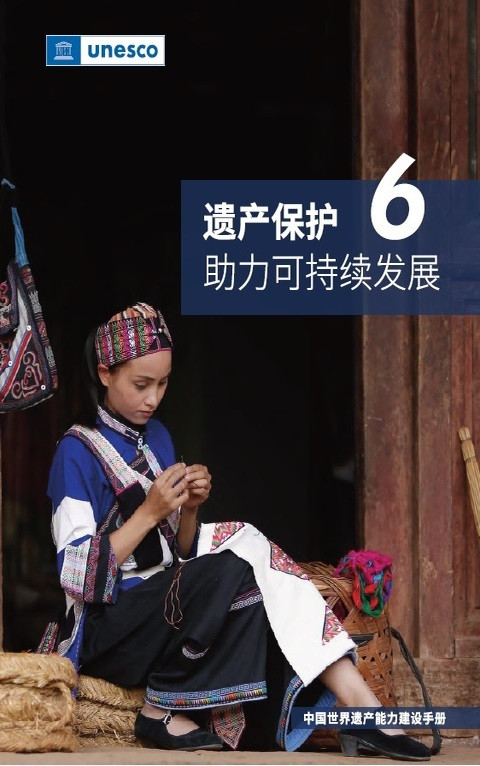 遗产保护助力可持续发展 Year of publication: 2021 Author: Yanxia LI | Gang Zhao | Ai Zhong | Ping Kong Corporate author: UNESCO Beijing 该文件介绍了国际与中国遗产保护和可持续发展的政策,以案例的形式总结了文化在消除贫困、促进性别平等、促进经济增长和就业、提升世界遗产地韧性、推动乡村振兴中的巨大潜力。 Inheritage Conservation Facilitating Sustainable Development Year of publication: 2021 Author: Yanxia LI | Gang Zhao | Ai Zhong | Ping Kong Corporate author: UNESCO Beijing The document presents international and Chinese policies for heritage conservation and sustainable development, summarising in case studies the enormous potential of culture to eradicate poverty, promote gender equality, foster economic growth and employment, enhance the resilience of World Heritage sites, and promote rural revitalisation.
  中国少数民族基础教育政策研究报告 Year of publication: 2010 Corporate author: UNESCO Beijing 本报告是在“提高少数民族群体的受教育程度及文化上敏感的教育”的框架下是实地调查少数民族基础教育政策研究实施情况。2010年,根据对中国政府制定、实施的少数民族基础教育政策文本分析报告,确定实地调研的目标和任务,对三个项目省十二个个案点调研报告。通过田野调查和问卷调查,六个调研组完成十二个个案点调研报告。基于十二个个案调研报告内容形成本报告,并在此基础上提出改进建议和下一步的行动计划。 Research Report on Basic Education Policies for Ethnic Minorities in China Year of publication: 2010 Corporate author: UNESCO Beijing This report is a survey of the implementation of basic education policy research towards ethnic minority in the framework of "Improving the educational level and culturally sensitive education of ethnic minority groups". In 2010, based on the text analysis report of the basic education policy which has been formulated and implemented for ethnic minorities by the Chinese government, the objectives and tasks of the field research were determined. The field research was conducted on the twelve project sites of three provinces. Through field investigations and questonnaire surveys, six research groups completed twelve case study reports. Based on the contents of the 12-case research report, this report is formed and then proposes suggestions for improving and the next action plan.