
Resources
Explore a wide range of valuable resources on GCED to deepen your understanding and enhance your research, advocacy, teaching, and learning.
13 Results found
 Smart Education Strategies for Teaching and Learning: Critical Analytical Framework and Case Studies Year of publication: 2022 Author: Shafika Isaacs | Sanjaya Mishra Corporate author: UNESCO Institute for Information Technologies in Education (IITE) | Beijing Normal University This electronic publication about smart education strategies for building the resilience of education and training systems in the postpandemic environment provides a framework to develop appropriate policy and strategy in existing and emerging forms of schooling, higher education, technical and vocational education, and training (TVET), adult education and lifelong learning, including formal, nonformal and informal educational environments. The publication reviews the status of smart education policies in 10 countries. It includes 15 case studies within the six policy themes: infrastructure, curriculum and pedagogy, digital education resources and platforms, skills and competencies, governance, management and administration, and partnership.
  Development of classroom hour for a healthy lifestyle for students of 6-11 grades: Methodical guide for teachers Year of publication: 2014 Corporate author: UNESCO Institute for Information Technologies in Education (IITE) | Joint United Nations Programme on HIV/AIDS (UNAIDS) This manual has been developed to help pedagogical workers of educational institutions (class teachers, subject teachers) to conduct class hours in a healthy lifestyle using educational videos on the following basic topics: (1) the characteristics of adolescence, (2) the concept of "gender ", “Gender” and “gender equality”, (3) prevention of the consumption of psychoactive substances, (4) decision making and resistance to peer pressure, (5) love and sexual relations, (6) reproductive health and contraception, (7) HIV prevention, (8) interpersonal relationships and conflict resolution, (9) trolling and cyberbulling.
  Artificial Intelligence: Media and Information Literacy, Human Rights and Freedom of Expression Year of publication: 2020 Author: Igor Shnurenko | Tatiana Murovana | Ibrahim Kushchu Corporate author: UNESCO Institute for Information Technologies in Education (IITE) | TheNextMinds The collection of papers “Artificial Intelligence: Media and Information Literacy, Human Rights and Freedom of Expression” continues the UNESCO IITE’s series of publications entitled “Digital Transformation of Education”.The publication describes the fundamentals of artificial intelligence and AI-based technologies, their impact on the modern information and media environment, new challenges in the field of media and information literacy associated with the growing automation of the processes of creating, disseminating and accessing information, the use of AI in decision-making and control systems in various areas. There is a strong focus on the growing risks of reducing individual agency, people’s ability to interpret reality autonomously and to act according to their own agenda.These issues are more relevant now than ever before for education undergoing digital transformation. The publication seeks to contribute to a critical understanding of the digital environment in which learning and teaching unfold, and strategies and tactics for the use of new technologies and the digitalization of educational interactions.
 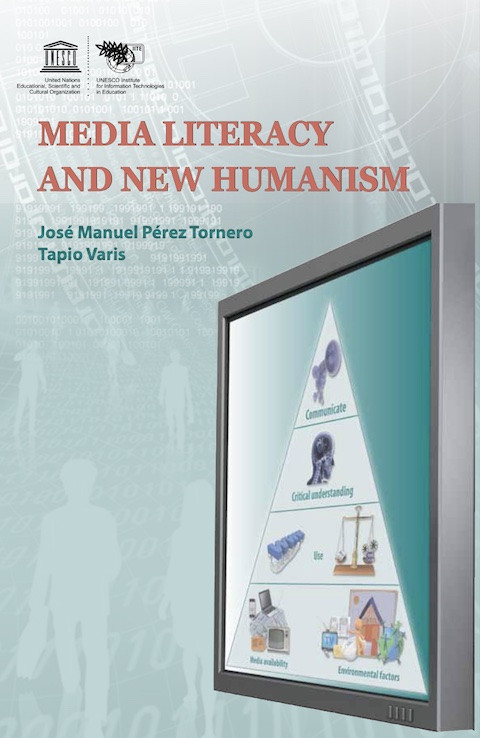 Media Literacy and New Humanism Year of publication: 2010 Author: José Manuel Pérez Tornero | Tapio Varis Corporate author: UNESCO Institute for Information Technologies in Education (IITE) The authors consider the opportunities that media literacy opens in the world of global education and communication in the context of new humanism.Being applied to education, the concept of new humanism, a new UNESCO credo, suggests the creation of a more inclusive society in which all humans have a chance to access knowledge and quality education and every word being heard in the universal dialogue. In the authors’ opinion, the new humanism in the global society must prioritize a new sense of respect for multiplicity and cultural diversity and must support media development with the goal of consolidating the new culture of peace.The book is aimed at educators, researchers, policy-makers, the media and civil society.
  AI in Education: Change at the Speed of Learning Year of publication: 2020 Author: Steven Duggan Corporate author: UNESCO Institute for Information Technologies in Education (IITE) The policy brief “AI in Education: Change at the Speed of Learning” published by the UNESCO Institute for Information Technologies in Education (UNESCO IITE) opens a new series of publications “Digital Transformation of Education”. The new publication describes the advancements in technology, including data, analytics and personalized learning, Artificial Intelligence (AI), cloud computing and machine learning, and explores the promises of AI for students, teachers, school leaders, parents and education administrators. The publication also highlights the ethical aspects of AI implementation and challenges that it might bring. Искусственный интеллект в образовании: Изменение темпов обучения Year of publication: 2020 Author: Steven Duggan Corporate author: UNESCO Institute for Information Technologies in Education (IITE) Аналитическая записка «Искусственный интеллект в образовании: Изменение темпов обучения», опубликованная Институтом ЮНЕСКО по информационным технологиям в образовании (ИИТО ЮНЕСКО), открывает издание новой серии публикаций «Цифровая трансформация образования». В новой публикации представлены достижения в области технологий, включая данные, аналитику и персонализированное обучение, искусственный интеллект (ИИ), облачные вычисления и машинное обучение, а также рассматриваются многообещающие возможности ИИ для учащихся, педагогов, родителей, руководителей учебных заведений и администраторов системы образования. В публикации также обозначены этические аспекты и вызовы, связанные с применением ИИ.
  Медийно-информационная грамотность в цифровом мире: Как научить Учителей Year of publication: 2021 Corporate author: UNESCO Institute for Information Technologies in Education (IITE) В сборник вошли статьи, отражающие некоторые тренды развития цифровой медиасреды, подходы к формированию медийно-информационной грамотности (МИГ), описания отдельных практик, представляющих опыт реализации обучения МИГ педагогов и учащихся различных уровней и форм образования, а также рекомендации, направленные на интеграцию МИГ в педагогическое образование и повышение квалификации учителей и преподавателей. Media and Information Literacy in the Digital Age: How to Teach the Teachers Year of publication: 2021 Corporate author: UNESCO Institute for Information Technologies in Education (IITE) This publication includes articles reflecting some trends in the development of the digital media environment, approaches to the formation of media and information literacy (MIL), practices describing the experience of implementing MIL training for teachers and students of various levels and forms of education. The publication also contains recommendations aimed to integrate MIL into teacher education and professional development.
  Pedagogies of Media and Information Literacies Year of publication: 2012 Author: Suvi Tuominen Corporate author: UNESCO Institute for Information Technologies in Education (IITE) UNESCO has been actively involved in developing foundations for media and information literacy to assist Member States in pursuing the achievement of the objectives of the Grünwald Declaration (1982), the Alexandria Declaration (2005) and the UNESCO Paris Agenda (2007) related to MIL.The UNESCO Institute for Information Technologies in Education commissioned this Handbook, which is intended to become a useful tool that would equip teacher training institutions and facilitate teaching media and information literacy in teacher training, to the Finnish Society on Media Education. This Handbook should help teachers to enhance their media and information literacy and encourage them to take up media education in the classroom. The main target group is teachers of secondary schools who are either in training or in service. The Handbook provides teachers with basic knowledge on media and information literacy, and the way these skills can be taught.The Finnish Society on Media Education (www.mediaeducation.fi – FSME), founded in 2005 by Finnish researchers and practitioners in media education, is an association operating nation-wide in two main languages (Finnish and Swedish). The goal of FSME activities is to support and develop the field of research and practices concerning media education, contribute to the public debate and provide opportunities to share media educational experiences online and offline. Педагогические аспекты формирования медийной и информационной грамотности Year of publication: 2012 Author: Suvi Tuominen Corporate author: UNESCO Institute for Information Technologies in Education (IITE) ЮНЕСКО активно участвует в разработке основ формирования медийной и информационной грамотности и оказывает поддержку странам-членам в достижении целей, сформулированных в Грюнвальдской декларации ЮНЕСКО по медиаобразованию (1982), Александрийской декларации об информационной грамотности и образовании на протяжении всей жизни «Маяки информационного общества» (2005) и Парижской повестки ЮНЕСКО (2007).Настоящий учебник, разработанный в сотрудничестве с Финским обществом медиаобразования, является практическим пособием для педагогических вузов, отражающим передовые тенденции и современный подход к преподаванию медийной и информационной грамотности. Учебник, целевой группой которого являются учителя средних школ, содержит сведения о современных медиа и основных навыках медийной и информационной грамотности.С помощью данного учебника учителя смогут не только повысить собственную медийную и информационную грамотность, но и использовать предложенные в нем материалы для формирования медийной и информационной грамотности своих учеников.Финское общество по медиаобразованию (www.mediaeducation.fi) было основано в 2005 г. исследователями и практиками в области медиаобразования. Цель деятельности Общества заключается в поддержке и развитии исследований в области медийной грамотности и применения полученных результатов в педагогической практике, участие в общественных дебатах и обмен опытом в области медиаобразования.