
Resources
Explore a wide range of valuable resources on GCED to deepen your understanding and enhance your research, advocacy, teaching, and learning.
19 Results found
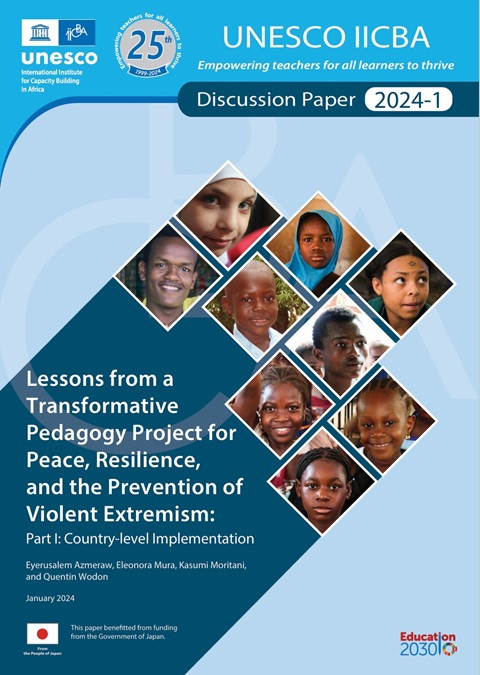 Lessons from a Transformative Pedagogy Project for Peace, Resilience, and the Prevention of Violent Extremism: Part I; Country-Level Implementation Year of publication: 2024 Author: Eyerusalem Azmeraw | Quentin Wodon | Eleonora Mura | Kasumi Moritani Corporate author: UNESCO International Institute for Capacity-Building in Africa (IICBA) From 2017 to 2022, UNESCO’s International Institute for Capacity Building in Africa (IICBA) led a series of projects for peacebuilding and the prevention of violent extremism through education with support from the Government of Japan. This two-part paper draws lessons from the projects. The first part of the paper briefly explains the transformative pedagogy approach that guided project implementation and provides examples of changes that were implemented at the country level under the projects. The analysis is qualitative, with the aim being to outline, through country examples, what can be achieved through such projects. Lessons on factors contributing to impact are also outlined.
 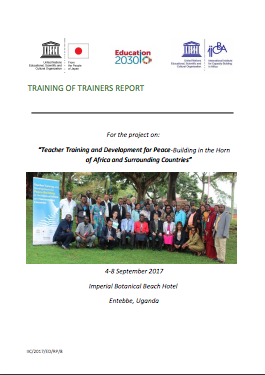 Training of Trainers Report: For the Project on: Teacher Training and Development for Peace-Building in the Horn of Africa and Surrounding Countries Year of publication: 2017 Corporate author: UNESCO International Institute for Capacity-Building in Africa (IICBA) The overall framework of this project is to create a critical mass of teachers who can implement effective teaching and learning, producing economically productive and peace-loving youth. The project has a shortterm objective of training at least 8,000 young teachers through the Training of Trainers (TOT) model. The medium-term objectives will contribute to the 2030 SDGS. The long-term objectives are in line with AU’s Agenda 2063, which promotes increased regional integration, peace and stability, and equitable economic development. Training of Trainers Report: For the Project on: Teacher Training and Development for Peace-Building in the Horn of Africa and Surrounding Countries Year of publication: 2017 Corporate author: UNESCO International Institute for Capacity-Building in Africa (IICBA) The overall framework of this project is to create a critical mass of teachers who can implement effective teaching and learning, producing economically productive and peace-loving youth. The project has a shortterm objective of training at least 8,000 young teachers through the Training of Trainers (TOT) model. The medium-term objectives will contribute to the 2030 SDGS. The long-term objectives are in line with AU’s Agenda 2063, which promotes increased regional integration, peace and stability, and equitable economic development. Training of Trainers Report: For the Project on: Teacher Training and Development for Peace-Building in the Horn of Africa and Surrounding Countries Year of publication: 2017 Corporate author: UNESCO International Institute for Capacity-Building in Africa (IICBA) The overall framework of this project is to create a critical mass of teachers who can implement effective teaching and learning, producing economically productive and peace-loving youth. The project has a shortterm objective of training at least 8,000 young teachers through the Training of Trainers (TOT) model. The medium-term objectives will contribute to the 2030 SDGS. The long-term objectives are in line with AU’s Agenda 2063, which promotes increased regional integration, peace and stability, and equitable economic development.
 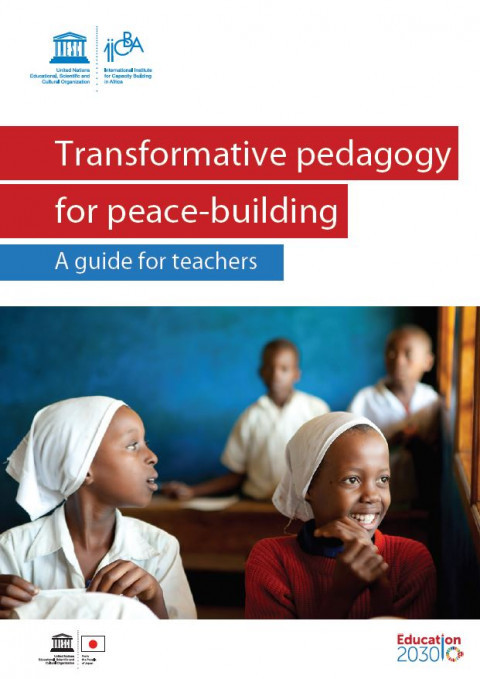 Transformative Pedagogy for Peace-building: A Guide for Teachers Year of publication: 2017 Corporate author: UNESCO International Institute for Capacity-Building in Africa (IICBA) This publication is a guide for teachers and teacher trainers on transformative pedagogy so that they are able to empower youth with peace-building knowledge, skills and competencies necessary to develop into advocates and actors of peace.The guide particularly aims to introduce teachers to the foundation of conflict analysis and peace-building and to equip them with a learner-centered approach to peace education and community engagement.This guide is a resource for educators to engage and support youth in their journey to becoming active peace-builders and fostering transformation in the Horn of Africa and Surrounding Countries.
  Gender-Responsive Education: Toolkit for Teachers, Teacher Educators, School Managers and Curriculum Developers in Africa Year of publication: 2020 Author: Dawit Mekonnen | Haregewoin Cherine Corporate author: UNESCO International Institute for Capacity-Building in Africa (IICBA) This GRE Toolkit is intended to address gender equality in education through intervention across the whole education sector. More specifically, the toolkit contributes to the enhancement of institutional capacities to develop gender responsive curricula, evaluate teaching-learning materials, organize/create gender responsive classroom interaction, eliminate stereotypes in teaching and learning materials, support improvement of the teaching methods and learning assessment techniques in schools and Teacher Training Institutes.The Toolkit is a guide for educators who plan to facilitate gender-responsive education. As such it consists of activities, tools and notes to the facilitators in addition to presenting conceptual discussions and relevant data.
 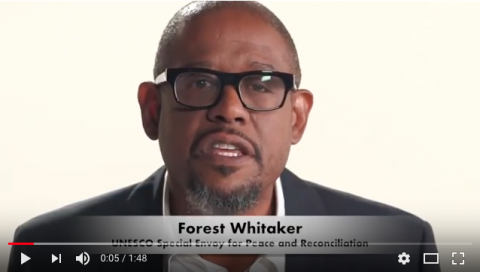 Global Message of Peace 2017 by Forest Whitaker, UNESCO Special Envoy for Peace and Reconciliation Year of publication: 2017 Corporate author: UNESCO International Institute for Capacity-Building in Africa (IICBA) Global Message of Peace 2017 by Forest Whitaker, UNESCO Special Envoy for Peace and Reconciliation Global Message of Peace 2017 by Forest Whitaker, UNESCO Special Envoy for Peace and Reconciliation Year of publication: 2017 Corporate author: UNESCO International Institute for Capacity-Building in Africa (IICBA) Global Message of Peace 2017 by Forest Whitaker, UNESCO Special Envoy for Peace and Reconciliation Global Message of Peace 2017 by Forest Whitaker, UNESCO Special Envoy for Peace and Reconciliation Year of publication: 2017 Corporate author: UNESCO International Institute for Capacity-Building in Africa (IICBA) Global Message of Peace 2017 by Forest Whitaker, UNESCO Special Envoy for Peace and Reconciliation
  Youth Guide on Education for Peacebuilding and the Prevention of Violence Year of publication: 2022 Corporate author: UNESCO International Institute for Capacity-Building in Africa (IICBA) This publication is a training guide for the youth in both formal or non-formal education. It is a resource to work with children and young people in various settings, including schools, non-formal educational program, community activities and other settings. The goal of the training guide is therefore the youth to become a facilitator with the disposition, knowledge, skills and commitment to support other youth in developing their full potential as peace-builders. It provides a foundation of conflict analysis, peacebuilding and describes a learner centered approach to peace education and community engagement.