
Resources
Explore a wide range of valuable resources on GCED to deepen your understanding and enhance your research, advocacy, teaching, and learning.
3 Results found
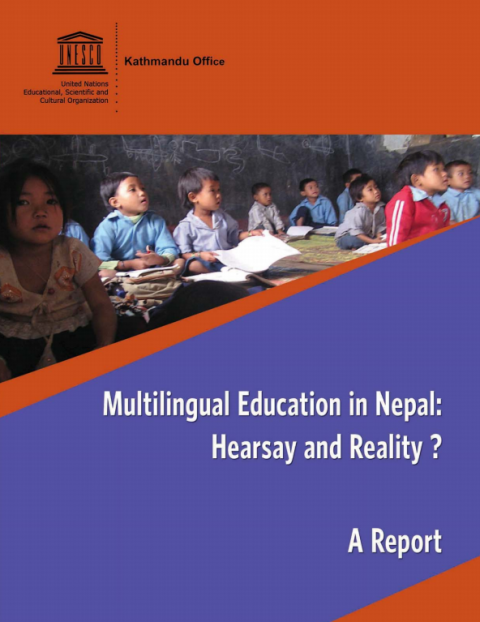 Multilingual education in Nepal: hearsay and reality? A report Year of publication: 2011 Author: Vishnu S. Rai | Maya Rai | Prem Phyak | Nabina Rai Corporate author: UNESCO Kathmandu The present study entitled “Multilingual Education in Nepal: Hearsay and Reality?” was started in April 2011 and completed on 25th May 2011. The main aim of the study was to explore and analyze the realities of the Multilingual Education (MLE) programme being practiced in seven schools from six different districts. The MLE programme was launched by the Department of Education (DOE) with the technical assistance of the Government of Finland in 2007. Nepal Government has planned to implement MLE in 300 schools in the coming years but there have been no comprehensive studies conducted to give an accurate picture of the MLE programme. In this context, the present study was carried out.
 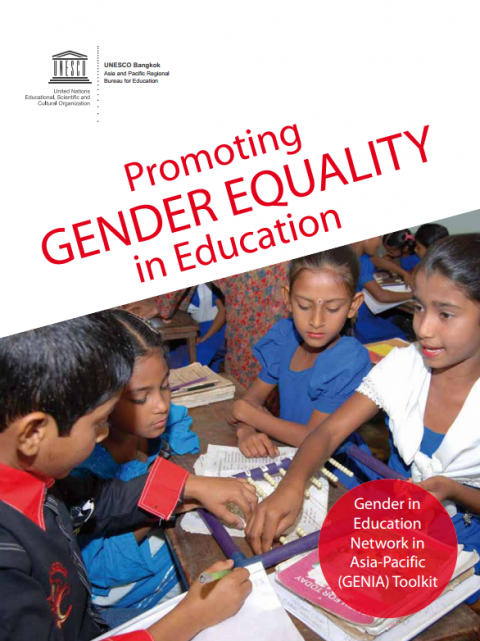 Promoting gender equality in education Year of publication: 2009 Corporate author: UNESCO Kathmandu This publication was originally designed in 2003 when the Gender in Education Network in Asia-Pacific (GENIA) was established. Few gender in education resources were available at that time, and until the 2006 version, documents were mainly intended to be used by GENIA members, who are representatives (gender focal points) from ministries of education in the Asia-Pacific region. GENIA members have been using the Toolkit to sensitize and train their national counterparts ever since. However, the Toolkit has not only been distributed and used by gender focal points, but also by other people who have heard about GENIA, and/or who were interested in the resource materials published by UNESCO Bangkok. For this reason, the Toolkit has been accessible via the UNESCO Bangkok website1 since 2006. As a result, anyone searching the Web for information on gender equality can easily access the Toolkit. This fourth edition of the Toolkit, thus, expands the scope of the target audience. The content has likewise been adapted accordingly in order to meet the needs of all who could potentially access it. The Toolkit also integrates existing information and tools designed by other national or international organizations dedicated to promoting and providing training on gender equality in education and other sectors. Further information from these sources is obtained by consulting the references section at the end of the Toolkit. The Toolkit is designed as a user-friendly resource. As such, a matrix is provided on pages 4 and 5 to indicate each tool’s potential for use, based on its relevance to each prospective user group. Still, every tool will have relevance to many contexts or situations and, therefore, we encourage you to make use of all the materials by adapting them to your country context.
 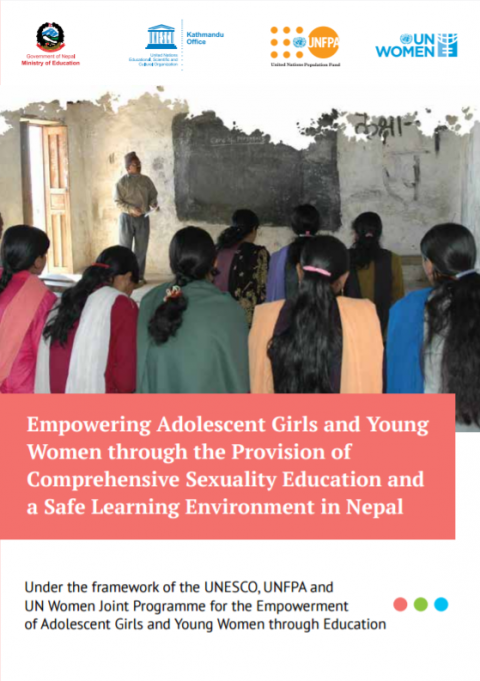 Empowering Adolescent Girls and Young Women through the Provision of Comprehensive Sexuality Education and a Safe Learning Environment in Nepal Year of publication: 2016 Corporate author: UNESCO Kathmandu | United Nations Entity for Gender Equality and the Empowerment of Women (UN Women) | United Nations Population Fund (UNFPA) There are many challenges for adolescent girls and young women in Nepal in terms of access, participation, and completion of good quality education. Child marriage and early pregnancy, gender-based violence, lack of knowledge or provision of proper hygiene facilities such as WASH (water, sanitation and hygiene) are factors preventing adolescent girls and young women from accessing education. This publication is a project plan for empowering adolescent girls and young women in Nepal.