
Resources
Explore a wide range of valuable resources on GCED to deepen your understanding and enhance your research, advocacy, teaching, and learning.
137 Results found
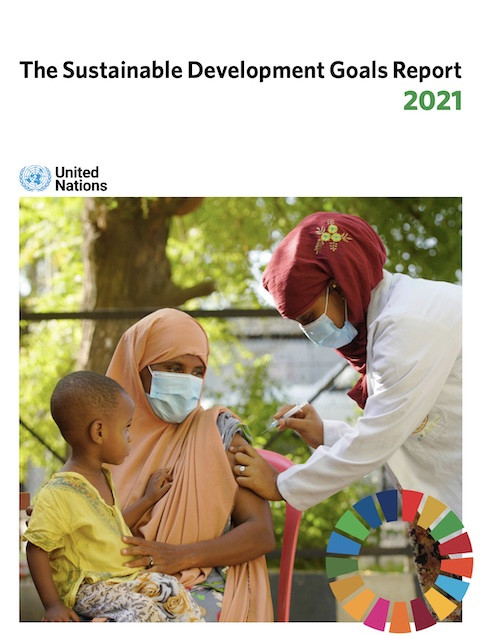 The Sustainable Development Goals Report 2021 Year of publication: 2021 Corporate author: United Nations (UN) As the pandemic continues to unfold, The Sustainable Development Goals Report 2021 outlines some significant impacts in many areas that are already apparent. The global extreme poverty rate rose for the first time in over 20 years, and 119 to 124 million people were pushed back into extreme poverty in 2020. There is a risk of a generational catastrophe regarding schooling, where an additional 101 million children have fallen below the minimum reading proficiency level, potentially wiping out two decades of education gains. Women have faced increased domestic violence, child marriage is projected to rise after a decline in recent years, and unpaid and underpaid care work is increasingly and disproportionately falling on the shoulders of women and girls, impacting educational and income opportunities and health. Notwithstanding the global economic slowdown, concentrations of major greenhouse gases continue to increase. With the global average temperature reaching about 1.2°C above pre-industrial levels, the climate crisis has well and truly arrived, and its impacts are being felt across the world. The pandemic has also brought immense financial challenges, especially for developing countries – with a significant rise in debt distress and dramatic decreases in foreign direct investment and trade. Yet, with a surge in global solidarity and leadership from the highest political level, countries can still deliver on the 2030 Agenda and the 2015 Paris Agreement on Climate Change. A global vaccination plan, designed and implemented by the countries that can produce vaccines today or will be able to do so if properly supported, is an urgent first step in that direction. A recommitment by Governments, cities, businesses, and industries to ensure that the recovery reduces carbon emissions, conserves natural resources, creates better jobs, advances gender equality and tackles growing poverty and inequalities is a further imperative. Rapport sur les objectifs de développement durable 2021 Year of publication: 2021 Corporate author: United Nations (UN) Le Rapport sur les objectifs de développement durable pement durable 2021 décrit certains effets importants qui se manifestent déjà dans de nombreux domaines. Le taux mondial d’extrême pauvreté a augmenté pour la première fois en plus de 20 ans, et entre 119 et 124 millions de personnes ont basculé dans l’extrême pauvreté en 2020. Un risque de catastrophe générationnelle se dessine en matière de scolarisation, alors que 101 millions d’enfants de plus sont passés sous le seuil minimum de compétence en lecture, ce qui pourrait réduire à néant deux décennies de progrès scolaires. Les femmes ont été confrontées à une hausse de la violence conjugale, le mariage d’enfants devrait augmenter après des années de baisse, et le travail domestique non rémunéré et sous-payé repose de plus en plus et de façon disproportionnée sur les femmes et les filles, avec des répercussions sur leurs possibilités d’édu- cation et de revenu et leur santé. Malgré le ralentissement économique mondial, la concentration des principaux gaz à effet de serre continue d’augmenter. La température moyenne mondiale s’établissant à environ 1,2 °C au-dessus des niveaux préindustriels, la crise climatique est bel et bien là et ses effets se font sentir partout dans le monde. La pandémie a également engendré d’immenses défis financiers, en particulier pour les pays en développement, avec une augmentation significative du surendettement et une baisse spectaculaire de l’investissement étranger direct et du commerce.Pourtant, avec un élan de solidarité mondiale et un leadership au plus haut niveau politique, les pays peuvent encore réaliser le Programme 2030 et l’Accord de Paris sur les changements climatiques adopté en 2015. Un plan mondial de vaccination, conçu et mis en œuvre par les pays qui peuvent aujourd’hui produire des vaccins ou qui le pourront dans le futur avec le soutien adéquat, est une première étape urgente pour y parvenir.Il est également impératif que les gouvernements, les villes, les entreprises et les industries s’engagent de nouveau à assurer une reprise qui prises et les industries s’engagent de nouveau à assurer une reprise qui réduise les émissions de carbone, préserve les ressources naturelles, crée de meilleurs emplois, fasse progresser l’égalité entre les sexes et fasse reculer la pauvreté et les inégalités croissantes.
 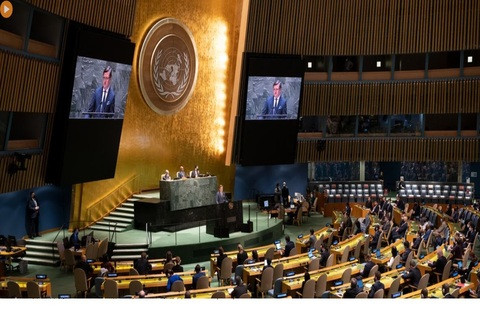 UN General Assembly Meeting on the Situation in Ukraine Year of publication: 2022 Corporate author: United Nations (UN) This video shows the statements made by the UN Secretary-General and delegates at the UN General Assembly on the situation in Ukraine. 联合国大会就乌克兰局势举行会议 Year of publication: 2022 Corporate author: United Nations (UN) 该视频展示了联合国大会上联合国秘书长与各国代表对乌克兰局势的发言。
  Feature Story: Freedom of the Press and Safety of Journalists in the Digital Age - Global Conference on World Press Freedom Day Year of publication: 2022 Corporate author: United Nations (UN) This audio is an introduction to the Global Conference on World Press Freedom Day, co-hosted by UNESCO and the Government of Uruguay, and includes brief content from some of the speakers. 《专题报道》数字时代下的新闻自由和记者安全 — 记世界新闻自由日全球会议 Year of publication: 2022 Corporate author: United Nations (UN) 本音频是对联合国教科文组织与乌拉圭政府共同主办的世界新闻自由日全球会议的介绍,包括一些发言人的内容简介。
  Feminist Perspectives on Security and the Role of Women in Peacebuilding - Interview with Feminist Scholar Priscyll Anctil Avoine Year of publication: 2022 Corporate author: United Nations (UN) This audio is an interview with Priscyll Anctil, a feminist researcher on security at Lund University in Sweden. It focuses on feminist security research, which examines the various forms and impacts of security through a gender lens. 《专题报道》安全议题中的女权主义视角和女性在和平建设中的作用 — 专访女权学者普里西尔.安克蒂尔 Year of publication: 2022 Corporate author: United Nations (UN) 本音频是对瑞典隆德大学的女权主义安全问题研究学者普里西尔.安克蒂尔的专访,主要讨论女权主义安全研究,即通过性别视角研究安全的各种形式及影响。
  الندوب الخفية: كيف يضر العنف بالصحة النفسية للأطفال Year of publication: 2020 Author: Ghizlane Benjelloun Corporate author: United Nations (UN) على الرغم من الالتزامات، لا يزال العنف ضد الأطفال يلحق خسائر فادحة بصحتهم العقلية وقدرتهم على التعلم والنمو والتطور إلى أقصى إمكاناتهم. يهدف هذا التقرير إلى دعم هذه العملية. يقدم نظرة عامة على الأدلة الدولية حول الطرق المختلفة التي يضر بها العنف الصحة العقلية للأطفال، ويسلط الضوء على الحاجة الملحة لاتخاذ إجراءات. ومن خلال القيام بذلك، يأخذ التقرير في الاعتبار الأوضاع المختلفة وأشكال العنف، والاختلافات التنموية في آثار العنف، وأهم عوامل الخطر والحماية. كما يسلط التقرير الضوء على الحلول، مع الاعتراف بأنه على الرغم من الثغرات المستمرة في معرفتنا، هناك نهج فعالة ينبغي اتباعها. Hidden Scars: How Violence Harms the Mental Health of Children Year of publication: 2020 Author: Ghizlane Benjelloun Corporate author: United Nations (UN) Despite these obligations and commitments, violence against children continues to take a heavy toll on their mental health and their ability to learn, grow and develop to their full potential. This report aims to support this process. It provides an overview of international evidence on the different ways in which violence harms children’s mental health, highlighting the urgent need for action. In doing so, the report considers diverse settings and forms of violence, the developmental differences in the effects of violence, and the most significant risk and protective factors. The report also highlights solutions, recognizing that despite the continuing gaps in our knowledge, there are effective approaches that should be pursued.