
Resources
Explore a wide range of valuable resources on GCED to deepen your understanding and enhance your research, advocacy, teaching, and learning.
204 Results found
 Social and Emotional Learning Manual on Family Activities Year of publication: 2020 Corporate author: China. Ministry of Education | United Nations Children's Fund (UNICEF) This material is a guide for schools to promote family-school cooperation and for family to carry out social and emotional learning at home. It provides guidances for family to organise parent-child activities to facilitate children's social and emotional development. 社会情感学习家庭活动指导手册 Year of publication: 2020 Corporate author: China. Ministry of Education | United Nations Children's Fund (UNICEF) 该材料为推进社会情感学习家校合作、指导家庭教育提供指导,包括为家长提供科学的指导,通过亲子活动等帮助学生发展社会情感能力。
  Social and Emotional Learning Teacher's Manual Year of publication: 2020 Corporate author: China. Ministry of Education | United Nations Children's Fund (UNICEF) This material provides an overview and guidance for teachers to carry out social and emotional learning. It discusses the role of teachers in social and emotional learning, and it also covers methods and tools that teachers can use to implement social and emotional learning. 社会情感学习教师指导手册 Year of publication: 2020 Corporate author: China. Ministry of Education | United Nations Children's Fund (UNICEF) 该手册专门为教师开展社会情感学习提供指导,介绍了教师需要承担的角色,以及实施社会情感学习的方法、途径及可借鉴的案例与操作工具。
  Social and Emotional Learning Principle's Manual Year of publication: 2020 Corporate author: China. Ministry of Education | United Nations Children's Fund (UNICEF) This manual is for principals who are key person in implementing social and emotional learning. It includes suggestions on school development planning, management system improvement, teachers' professional development and home-school cooperation etc. 社会情感学习校长指导手册 Year of publication: 2020 Corporate author: China. Ministry of Education | United Nations Children's Fund (UNICEF) 该手册专门为校长开发,为校长推进社会情感学习提供指导建议,包括学校发展规划、管理制度建设、教师教学改进、家校社区合作等方面。旨提升校长管理能力。
  Social and Emotional Learning Manual for Classroom Teaching Year of publication: 2020 Corporate author: China. Ministry of Education | United Nations Children's Fund (UNICEF) This manual provides specific suggestions for teachers for classroom teaching. It aims to resolve teachers' confusion and challenge during teaching practice of social and emotional learning, such as how to effectively achieve the expected learning outcome, promote students' participation and improve student-teacher interaction etc. 社会情感学习课堂教学指导手册 Year of publication: 2020 Corporate author: China. Ministry of Education | United Nations Children's Fund (UNICEF) 该手册是用于为教师开展社会情感学习的课堂教学提供指导,包括如何达到教学目标、如何组织教学环节、如何改进师生互动、如何提升学生学习体验等,旨在帮助教师解决教学中的困惑与挑战。
 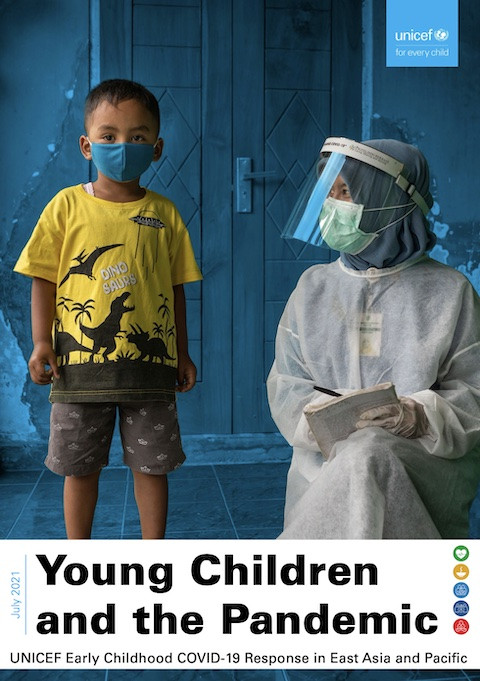 Young Children and the Pandemic: UNICEF Early Childhood COVID-19 Response in East Asia and Pacific Year of publication: 2021 Corporate author: United Nations Children's Fund (UNICEF) This report summarizes the impact of the COVID-19 disruptions on early childhood development in countries across East Asia and the Pacific in terms of the five dimensions of the Nurturing Care Framework. It proposes priorities for stakeholders and policy-makers towards achieving the fourth Sustainable Development Goal, which is inclusive and equitable in nature. The report also highlights and analyses examples of UNICEF’s programmatic interventions geared towards supporting the development of young children during this pandemic.
 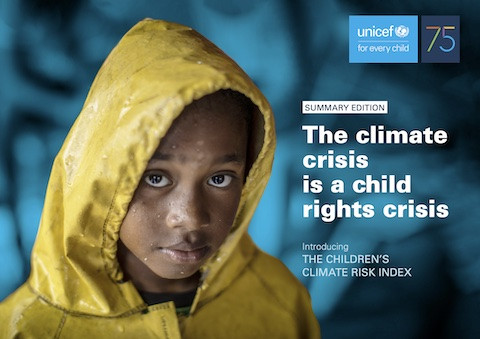 [Résumé] La crise climatique est une crise des droits de l’enfant: Présentation de l’indice des risques climatiques pour les enfants Year of publication: 2021 Author: Nicholas Rees | Margaretha Barkhof | Jan Burdziej | Sophie Lee | Harriet Riley Corporate author: United Nations Children's Fund (UNICEF) La crise climatique est une crise des droits de l’enfant. Les canicules, les incendies et les inondations sans précédent qui viennent de frapper plusieurs pays sont annonciateurs d’une nouvelle normalité climatique particulièrement hostile. L’impact des changements climatiques est connu de tous. Les solutions le sont également. Il est inadmissible que les enfants et les jeunes d’aujourd’hui soient confrontés à un avenir aussi incertain. Partout dans le monde, à travers des manifestations, des interventions sur les réseaux sociaux et un engagement communautaire et citoyen, les enfants et les jeunes revendiquent haut et fort le changement. Les modi operandi classiques ont fait long feu. Le présent rapport s’appuie sur l’Indice des risques climatiques pour les enfants (IRCE) pour fournir un premier aperçu de l’exposition et de la vulnérabilité des enfants aux effets des changements climatiques.