
Resources
Explore a wide range of valuable resources on GCED to deepen your understanding and enhance your research, advocacy, teaching, and learning.
204 Results found
 Action Protocol in Bullying Situations Year of publication: 2016 Corporate author: Costa Rica. Ministry of Public Education | Directorate of Student Life | United Nations Children's Fund (UNICEF) Bullying is a reality suffered by children, adolescents and young people all over the world. It affects their well-being, their development and the exercise of their rights as well as their responsibilities. Addressing these situations in the educational environment requires a coordinated and articulated effort to assign time, resources, tasks, and responsibilities of each and every actor in the educational community and institutions responsible for the care of the child and adolescent population.
  Education, Children on the Move and Inclusion in Education: Lessons Learned and Scalable Solutions to Accelerate Inclusion in National Education Systems and Enhance Learning Outcomes Year of publication: 2022 Author: Neven Knezevic | Katherine Curtiss | Eric Gero Corporate author: United Nations Children's Fund (UNICEF) This report summarizes how UNICEF and its partners have contributed to the creation of education solutions that support the skills development and educational attainment of children on the move in countries and regions across the world. Country case studies highlighting best practices from 19 countries and the East African and Sahel regions showcase UNICEF’s work with country governments on issues such as the inclusion of refugees in national education systems and improving relations between refugee children, their families, and their host communities.
  Digital Learning for Every Child: Closing the Gaps for an Inclusive and Prosperous Future Year of publication: 2021 Author: Matt Brossard | Marta Carnelli | Stephane Chaudron | Rosanna Di-Gioia | Thomas Dreesen | Daniel Kardefelt-Winther | Céline Little | Jean Luc Yameogo Corporate author: United Nations Children's Fund (UNICEF) Pre-COVID-19, half of the world’s children were already unable to read a simple text by the age of 10. School closures have deepened pre-existing learning disparities, within and among countries, due to inequities in access to technology. This brief summarises research findings and provides actionable recommendations for how to equitably scale up digital learning and provide children and young people with the skills to improve their prospects and safeguard their well-being. It pinpoints solutions for education systems’ use of digital and blended learning anchored in a sound pedagogical approach and urges the G20 and other countries to overcome the barriers that limit the potential benefits of digital learning.
  Let's Be Friends at School: A Guide to Promoting Empathy and Inclusion Year of publication: 2019 Corporate author: United Nations Children's Fund (UNICEF) Empathy is a skill that allows us to understand the emotions and experiences of other people. This guide seeks to promote empathy in the educational context, to promote peaceful coexistence, inclusion and non-violence in schools. It focuses its vision on the mission of teachers to educate not only the academic curriculum but also their emotional managing skills to deal with their own emotions and those of others. Seamos amigos en la escuela: Una guía para promover la empatía y la inclusión Year of publication: 2019 Corporate author: United Nations Children's Fund (UNICEF) La empatía es una habilidad que nos permiten comprender las emociones y experiencias de las otras personas.Esta guía busca promocionar la empatia en el constexto educativo, para fomentar la convivencia pacifica,la inclusión y la no violencia en las escuelas. Centra su visión en la misión que tienen los docentes de educar además de lo que respecta a la malla curricular el manejo de las emociones propias y ajenas.
  Does It Sound Familiar to You? : Family Guide Year of publication: 2015 Author: Francisca Morales | Catalina Moya Corporate author: United Nations Children's Fund (UNICEF) This guide presents practical activities to work with families around different topics of interest, such as the expression of emotions, conflict resolution, child development, children's rights and the media, among others. ¿Te suena familiar? : Guía para la familia Year of publication: 2015 Author: Francisca Morales | Catalina Moya Corporate author: United Nations Children's Fund (UNICEF) En esta guía se presentan actividades prácticas para trabajar con familias alrededor de diferentes temas de interes, como la la expresión de emociones, la resolución de conflictos, el desarrollo infantil, los derechos de los niños y los medios de comunicación entre otros.
  Technical Guidelines for the Return to Educational Establishments Year of publication: 2020 Author: Ximena Bugueño Corporate author: United Nations Children's Fund (UNICEF) This document presents the guiding principles of the return to schools process and recommendations to prepare as an educational team. It offers guidelines to call for participation and communication with families and students, organize learning, reception and socio-emotional support activities in mixed modality, and to implement measures that care for the health of the community. Orientaciones técnicas para el retorno: A los establecimientos educacionales Year of publication: 2020 Author: Ximena Bugueño Corporate author: United Nations Children's Fund (UNICEF) Este documento presenta losprincipios rectores del proceso de retorno y recomendaciones para prepararse como equipo educativo. Ofrece lineamientops para convocar a participar y comunicarse con las familias y estudiantes, organizar las actividades de aprendizaje, acogida y apoyo socioemocional en modalidad mixta, y para implementar las medidas que cuidan la salud de la comunidad.
 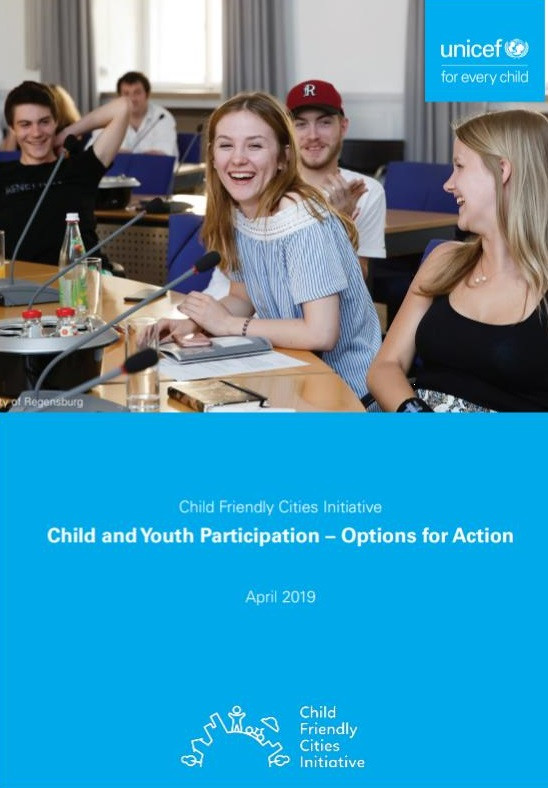 Child and Youth Participation – Options for Action: Child Friendly Cities Initiative Year of publication: 2019 Author: Gerison Lansdown Corporate author: United Nations Children's Fund (UNICEF) This report summarises practical experiences and recommendations for the development of child-friendly cities, which aimed at enabling children to become active citizens through participation.