
Resources
Explore a wide range of valuable resources on GCED to deepen your understanding and enhance your research, advocacy, teaching, and learning.
204 Results found
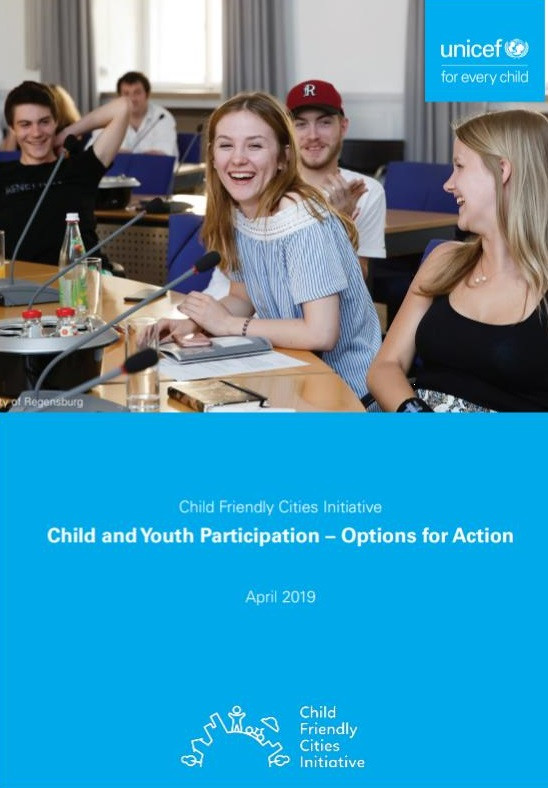 促进儿童和青年参与——备选行动方案:儿童友好型城市倡议 Year of publication: 2019 Author: Gerison Lansdown Corporate author: United Nations Children's Fund (UNICEF) 本报告总结了儿童友好型城市发展的实践经验并提出相关建议,致力于促使儿童通过参与行使其积极公民权。
 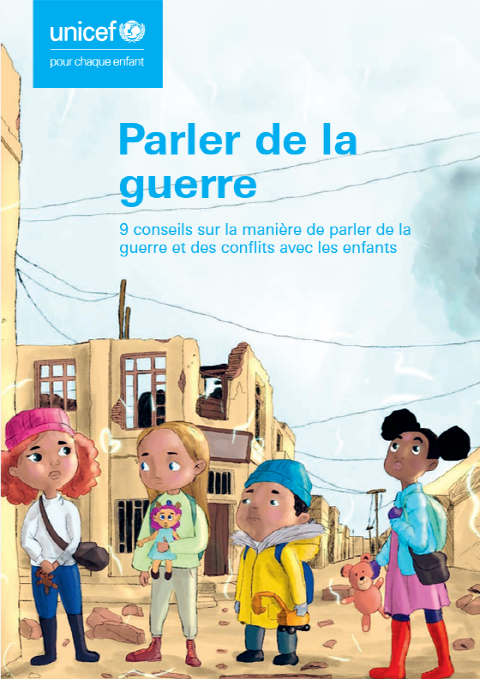 Parler de la guerre: 9 conseils sur la manière de parler de la guerre et des conflits avec les enfants Year of publication: 2023 Corporate author: United Nations Children's Fund (UNICEF) La guerre est un sujet difficile, souvent lié à des images ou informations perturbantes, en particulier pour les enfants. Comment les parents, les proches et les enseignants doivent-ils/elles se comporter et comment peuvent-ils/elles apaiser les craintes des enfants ?Peur, tristesse, colère, nervosité : ces sentiments ainsi que d’autres peuvent survenir lorsqu’une guerre ou un conflit fait les gros titres. Dès que les enfants ont besoin de sécurité et de protection, ils/elles se tournent vers leurs parents, proches et enseignants - encore plus en périodes de crise. Vous trouverez ici neuf conseils sur la manière de communiquer avec les enfants, les soutenir et leur apporter du réconfort.
 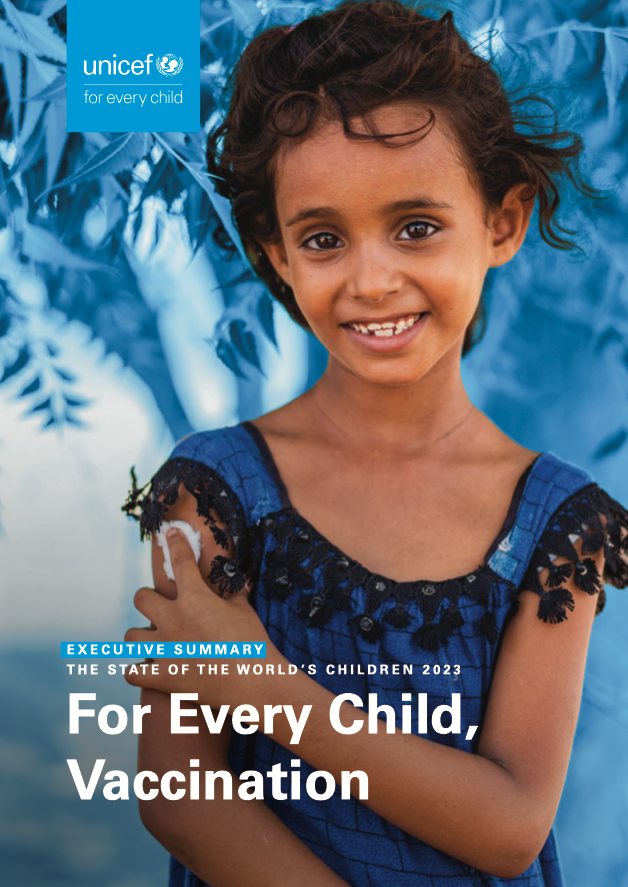 The State of the World’s Children 2023 Executive Summary Year of publication: 2023 Corporate author: United Nations Children's Fund (UNICEF) The world is facing a red alert for children’s health: Vaccination coverage dropped sharply during the COVID-19 pandemic, leaving millions more children unprotected against some of childhood's most serious diseases. In addition, many millions of children from some of the world's most marginalized communities have long missed out on life-saving vaccination. Catch-up and recovery are needed urgently to vaccinate the children missed and to avoid further backsliding. And greater effort is needed to reach the children historically left behind.The State of the World’s Children 2023 examines what needs to happen to ensure that every child, everywhere is protected against vaccine-preventable diseases. In the wake of the COVID-19 pandemic, which set back progress in childhood immunization globally, it focuses on the role of poverty, marginalization and gender in determining whether or not children are vaccinated. Drawing on lessons learned during the pandemic and from UNICEF's decades-long expertise and experience in vaccinating children, the report examines the ways in which primary health care can be strengthened to better support immunization services. It looks, too, at concerns around trust in vaccines. And it examines a range of innovations in vaccine development and delivery and in financing. 《2023年世界儿童状况》执行摘要 Year of publication: 2023 Corporate author: United Nations Children's Fund (UNICEF) 全球的儿童健康工作正在拉响红色警报:在2019冠状病毒病(COVID-19)大流行期间,疫苗接种率急剧下降,使大量儿童无法得到疫苗的保护,从而难以预防部分最严重的儿童疾病。此外,世界上部分最边缘化社区的大量儿童长期以来一直无法获得能挽救生命的免疫接种。因此,我们迫切需要追赶进度,为错过接种的儿童补种疫苗,并避免形势出现进一步倒退。同时,我们还需要实施更多的工作来帮助那些已掉队多时的儿童。《2023年世界儿童状况》报告探讨了需要采取哪些措施,才能确保世界各地每一名儿童都能避免患上疫苗可预防的疾病。2019冠状病毒病大流行使全球儿童免疫接种工作的进展出现倒退,本报告将重点关注贫困、边缘化和性别等因素在决定儿童是否接种疫苗方面的作用。参考2019冠状病毒病大流行期间所积累的经验教训以及联合国儿童基金会数十年来在儿童免疫接种方面所积累的专业知识和经验,本报告还探讨了如何加强初级卫生保健体系,以提供更高质量的免疫接种服务,并提升公众对疫苗的信心等问题。此外,本报告还对疫苗研发、交付以及筹资等方面所涌现出来的一系列创新举措进行了研究。
 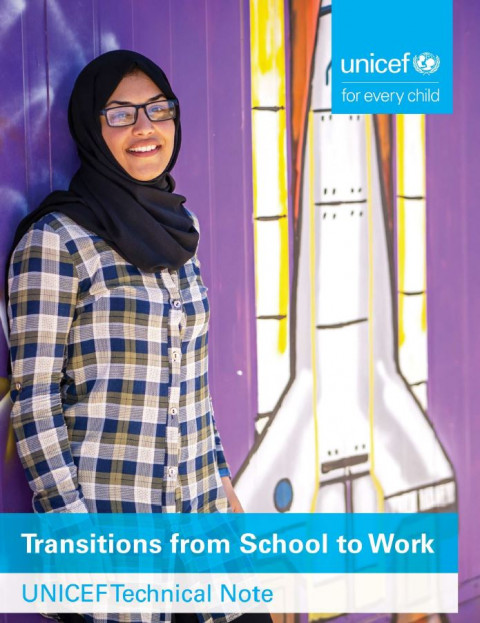 Transitions from School to Work: UNICEF Technical Note Year of publication: 2019 Corporate author: United Nations Children's Fund (UNICEF) This report provides guidance on ways that UNICEF can support governments and partners to help adolescents to make a smooth transition from school to decent work. To prepare them for life, work, citizenship and life-long learning, UNICEF encourages governments and partners to expand access to learning and skills development for all children and adolescents – from pre-primary to upper-secondary age, and particularly for the most marginalized. UNICEF further advocates strengthening systems to enable them to develop a breadth of skills across the life course and through multiple learning pathways, such as formal, non-formal, on the job and community based.
 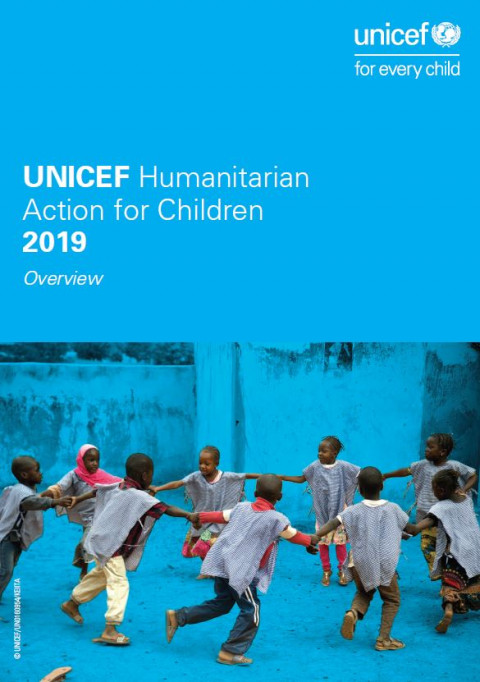 Humanitarian Action for Children 2019: Overview Year of publication: 2019 Corporate author: United Nations Children's Fund (UNICEF) This edition of UNICEF’s report on requirements for humanitarian action highlights major emergencies affecting children and families around the world, and the results achieved by UNICEF and partners in response to those crises. Noting that more violent conflicts are raging today than at any time since the adoption of the Convention on the Rights of the Child 30 years ago, the report also describes UNICEF initiatives to improve the quality of its humanitarian response in 2019 – particularly in high-threat contexts. Additional information about humanitarian action and UNICEF funding appeals at the country and regional levels is available online atwww.unicef.org/appeals.
 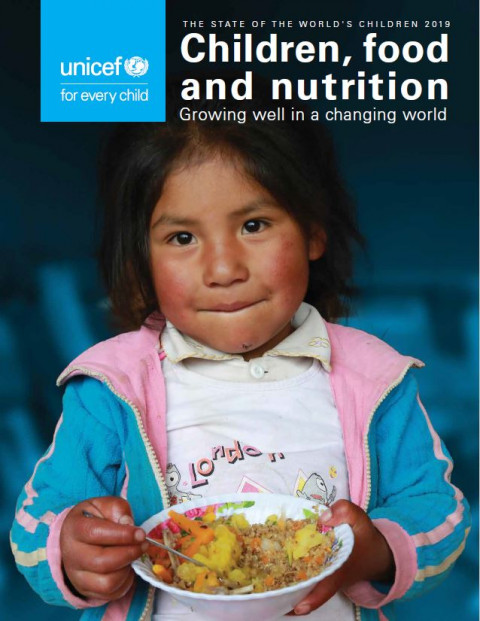 Children, Food and Nutrition: Growing Well in a Changing World Year of publication: 2019 Corporate author: United Nations Children's Fund (UNICEF) This 2019 edition of The State of the World’s Children (SOWC) examines the issue of children, food and nutrition, providing a fresh perspective on a rapidly evolving challenge. Despite progress in the past two decades, one third of children under age 5 are malnourished – stunted, wasted or overweight – while two thirds are at risk of malnutrition and hidden hunger because of the poor quality of their diets. At the center of this challenge is a broken food system that fails to provide children with the diets they need to grow healthy. This report also provides new data and analyses of malnutrition in the 21st century and outlines recommendations to put children’s rights at the heart of food systems.
 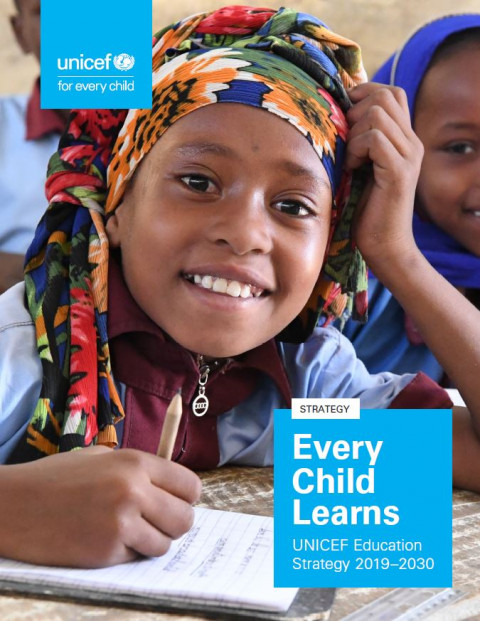 Every Child Learns: UNICEF Education Strategy 2019–2030 Year of publication: 2019 Corporate author: United Nations Children's Fund (UNICEF) The gap between the levels of learning that education systems are providing and what children, communities and economies need, is growing. The breadth and depth of this learning crisis constitute the greatest global challenge to preparing children and adolescents for life, work and active citizenship. The lesson of the learning crisis is clear: the conventional assembly of education inputs is not improving learning outcomes. This presents a fundamental challenge to the way that governments, development partners and communities are managing and supporting education systems. A new, more radical approach that focusses on enhancing learning outcomes is long overdue and forms the basis for this strategy.The report also outlines the shift towards a greater focus on improving learning outcomes, including supporting the breadth of skills that allow young people to become agile, adaptive learners and citizens, equipped to navigate personal, social, academic, economic and environmental challenges.
 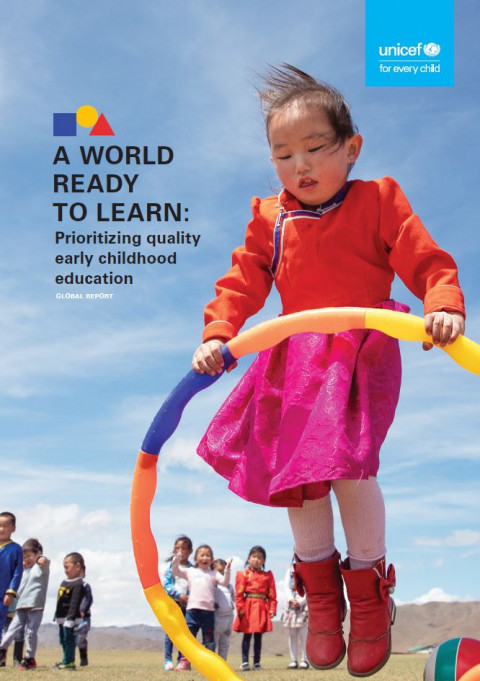 A World Ready to Learn: Prioritizing Quality Early Childhood Education Year of publication: 2019 Corporate author: United Nations Children's Fund (UNICEF) The Sustainable Development Goals (SDGs), and target 4.2 specifically, convey a clear objective that all girls and boys have access to quality early childhood development, care and pre-primary education so that they are ready for primary education. This global report confirms the importance of early childhood education in achieving SDG 4 and supports a bold challenge: Provide all children with at least one year of quality pre-primary education by 2030.The reasons for this aspiration are clear, as a solid body of evidence shows that the foundations for learning are largely built in the early years of life, before a child ever crosses the threshold of a primary school.In recent proposals on how to achieve universal education at all levels, the International Commission on Financing Global Education Opportunity (the Education Commission), the World Development Report and the Global Education Monitoring Reports3,4,5 have all emphasized that investments in early childhood education have positive returns not only for individual children but also for building more efficient and effective education systems.Yet, currently, both domestic financing and international aid invested in pre-primary education are poorly targeted and grossly inadequate. This represents one of the greatest missed opportunities to nurture the world’s human capital and help children reach their fullest potential.Based on comprehensive, data-driven analysis, this report examines the current status of pre-primary education and offers a practical vision for expanding equitable access and improving quality. Recognizing that many countries, especially low- and lower-middle-income countries, are at the beginning of this journey, providing universal access to pre-primary education in all countries by 2030 requires a realistic yet bold approach.
  Regional thematic consultation of Western European and North American States (Group I Countries) on Education in the Post-2015 Development Agenda, Paris, France, 5-6 December 2013: background paper Year of publication: 2013 Author: François Leclercq Corporate author: United Nations Children's Fund (UNICEF) This paper first describes ongoing trends affecting education systems in Western Europe and North America , as well as Turkey, and reflects on their policy implications. The paper then analyses current indicators of education in the region and mentions key existing strategies and policies. Finally, it reflects on the relevance of the emerging post-2015 agenda for the region.