
Resources
Explore a wide range of valuable resources on GCED to deepen your understanding and enhance your research, advocacy, teaching, and learning.
204 Results found
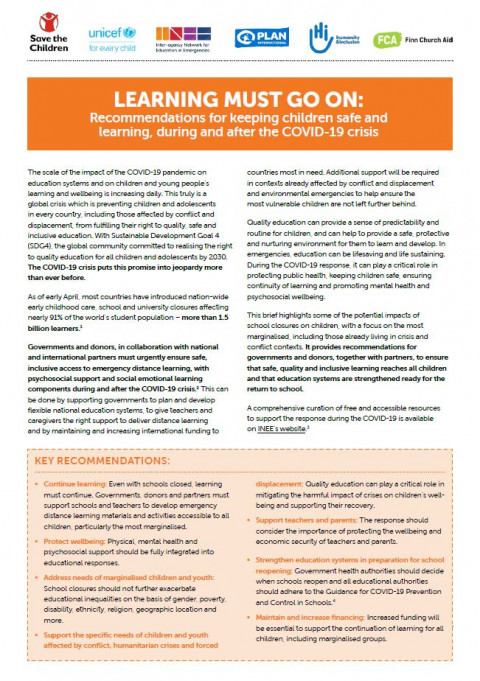 Learning Must Go On: Recommendations for Keeping Children Safe and Learning, During and After the COVID-19 Crisis Year of publication: 2020 Corporate author: Save the Children | United Nations Children's Fund (UNICEF) | The Inter-agency Network for Education in Emergencies (INEE) This brief highlights some of the potential impacts of school closures on children, with a focus on the most marginalised, including those already living in crisis and conflict contexts. It provides recommendations for governments and donors, together with partners, to ensure that safe, quality and inclusive learning reaches all children and that education systems are strengthened ready for the return to school.A comprehensive curation of free and accessible resources to support the response during the COVID-19 is available on INEE’s website.
  A Human Rights-Based Approach to Education for All Year of publication: 2008 Corporate author: United Nations Children's Fund (UNICEF) This publication presents the theoretical foundations of human rights education and the responsibilities of states in guaranteeing them. Un enfoque de la educación para todos basado en los derechos humanos Year of publication: 2008 Corporate author: United Nations Children's Fund (UNICEF) En esta publicacion se presentan las bases teóricas de la educación para los derechos humanos y las responsabilidades de los estados en su garantía.
 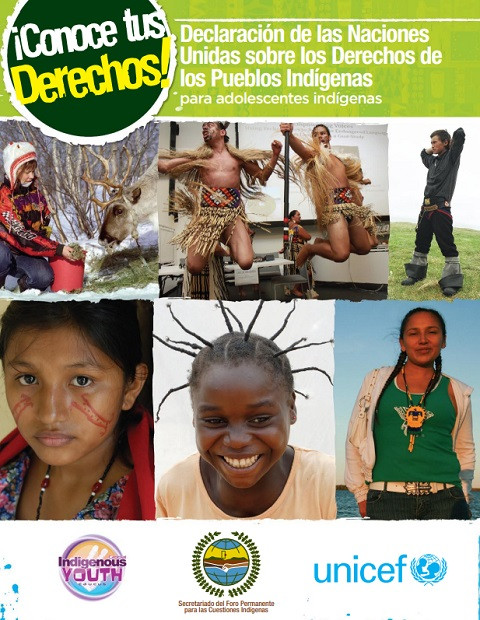 Know Your Rights!: United Nations Declaration on the Rights of Indigenous Peoples for Indigenous Adolescents Year of publication: 2013 Corporate author: United Nations Children's Fund (UNICEF) This publication presents, in a format specifically targeted at indigenous adolescents, the United Nations Declaration on the Rights of Indigenous Peoples, its implications and relationship with indigenous movements. ¡Conoce tus derechos!: Declaración de las Naciones Unidas sobre los Derechos de los Pueblos Indígenas para adolescentes indígenas Year of publication: 2013 Corporate author: United Nations Children's Fund (UNICEF) Esta publicación presenta, en un lenguaje dirigido específicamente a adolescentes indígenas, la Declaración de las Naciones Unidas sobre los Derechos de los Pueblos Indígenas, sus implicaciones y relación con los movimientos indígenas.
  Teaching and Learning about Child Rights: A Study of Implementation in 26 Countries Year of publication: 2015 Author: Lee Jerome | Lesley Emerson | Laura Lundy | Karen Orr Corporate author: Queen’s University Belfast | United Nations Children's Fund (UNICEF) This research contributes to the global debate on child rights education (CRE). It explores implementation of CRE in early childhood education, primary and secondary schools in 26 countries with a UNICEF National Committee presence. It includes a literature review, results from an on-line survey completed by national experts, seven country case studies and a series of benchmarking statements for CRE implementation.
 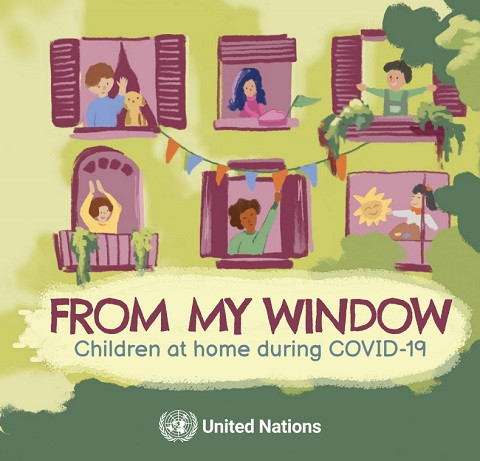 From My Window: Children at Home During COVID-19 Year of publication: 2020 Author: Xue Bai Corporate author: World Health Organization (WHO) | United Nations Children's Fund (UNICEF) | United Nations (UN) This book for young readers looks at the lives of housebound children during the coronavirus epidemic. Inspired by true events and people from around the world, From My Window shows children that we all have the same fears and that we can overcome them by being creative, and empathetic, and by staying positive and healthy. This book shows us that there are opportunities every day to love, learn, create, and connect, no matter the circumstances.
 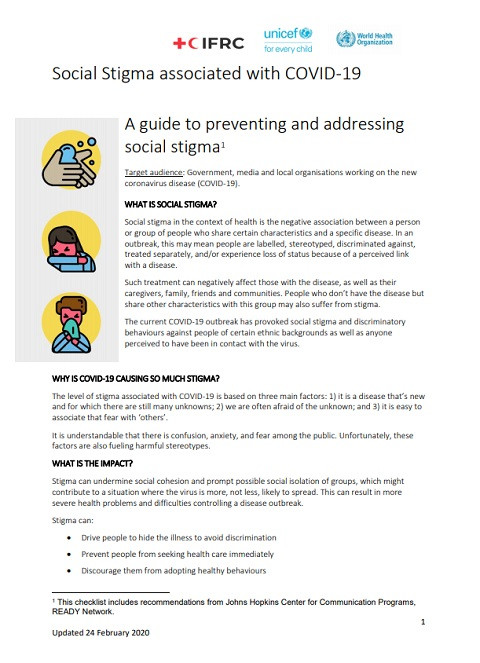 Social Stigma Associated with COVID-19: A Guide to Preventing and Addressing Social Stigma Year of publication: 2020 Corporate author: International Federation of Red Cross and Red Crescent Societies (IFRC) | United Nations Children's Fund (UNICEF) | World Health Organization (WHO) This resource aims for Government, media and local organisations working on the new coronavirus disease to prevent and address social stigma associated with COVID-19. It offers concrete examples and communication tips on possible actions to counter stigmatizing attitudes.
 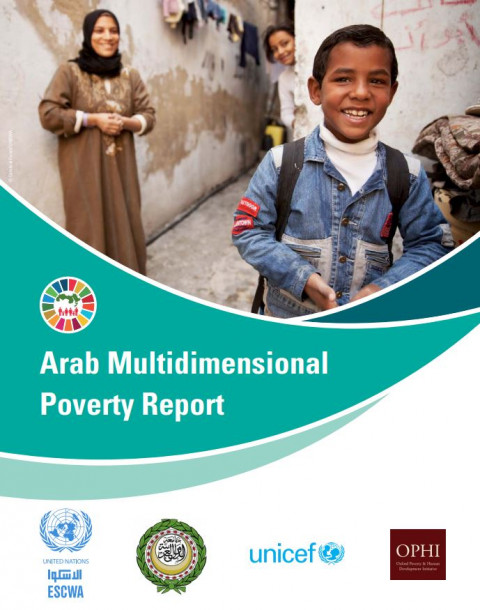 التقرير العربي حول الفقر المتعدد الابعاد Year of publication: 2017 Corporate author: UN. Economic and Social Commission for Western Asia (UN. ESCWA) | United Nations Children's Fund (UNICEF) | Oxford Poverty and Human Development Initiative (OPHI) التقرير العربي حول الفقر المتعدد الأبعاد هو الأول من نوعه منذ إطلاق خطة عام 2030. ونتج التقرير عن تعاون استمر لثلاثة أعوام بين المجلس الوزاري للشؤون الاجتماعية في جامعة الدول العربية، ولجنة الأمم المتحدة الاقتصادية والاجتماعية لغربي اسيا (الإسكوا)، ومنظمة الأمم المتحدة للطفولة (اليونيسف)، ومبادرة أكسفورد للفقر والتنمية البشرية. Arab Multidimensional Poverty Report Year of publication: 2017 Corporate author: UN. Economic and Social Commission for Western Asia (UN. ESCWA) | United Nations Children's Fund (UNICEF) | Oxford Poverty and Human Development Initiative (OPHI) The Arab Multidimensional Poverty Report, the first of its kind following the launch of the 2030 Agenda, is the result of three years of collaboration between the League of Arab States’ Council of Arab Ministers for Social Affairs, the Economic and Social Commission for Western Asia (ESCWA), the United Nations Children's Fund (UNICEF), and Oxford Poverty and Human Development Initiative (OPHI).