
Resources
Explore a wide range of valuable resources on GCED to deepen your understanding and enhance your research, advocacy, teaching, and learning.
204 Results found
 Manual for the Programme to Prevent and Respond to School Violence in East Kazakhstan Year of publication: 2014 Author: Robin Haarr Corporate author: United Nations Children's Fund (UNICEF) School violence can threaten a child’s sense of safety within school, negatively impacting on their ability to learn. The best way to address school violence is to step in promptly, with effective intervention in the first instance. Internationally, ‘best practice’ in preventing and responding to school violence is being used to develop school-wide systems of prevention and intervention.This publication was prepared under the co-operation between the Ministry of Education and Science of Kazakhstan, the Office of the Commissioner for Human Rights of the Republic of Kazakhstan, the Akimat of East Kazakhstan Oblast, the East Kazakhstan State University, and the UNICEF Office in Kazakhstan. It aims to facilitate the prevention of violence towards children in schools in Kazakhstan, with support from the Ministry of Foreign Affairs of Norway. Руководство по реализации программы: Профилактика и реагирование на насилие в школах в восточно-казахстанской области Year of publication: 2014 Author: Robin Haarr Corporate author: United Nations Children's Fund (UNICEF) Насилие в школе может угрожать ощущению безопасности детей в школе и отрицательно влиять на их способность к обучению. Наилучшим способом решения проблемы насилия в школе является профилактика и должное вмешательство при его проявлении.Данное пособие подготовлено в рамках сотрудничества между Министерством образования и науки РК, учреждением Уполномоченного по правам человека, акиматом Восточно-Казахстанской области, Восточно-Казахстанским государственным университетом им. Аманжолова и ЮНИСЕФ в целях реализации проекта по профилактике и реагированию на насилие в отношении детей в школах Казахстана, при поддержке Министерства иностранных дел Норвегии.
  Primary Prevention Curriculum: The Programme to Prevent Violence Against Children Year of publication: 2014 Author: Robin Haarr Corporate author: United Nations Children's Fund (UNICEF) This publication was prepared under the cooperation between the Ministry of Education and Science of Kazakhstan, the Office of the Commissioner for Human Rights in the Republic of Kazakhstan, akimat of East Kazakhstan Oblast, the East Kazakhstan State University, and UNICEF Office in Kazakhstan to implement the programme on prevention and response to violence against children in schools in Kazakhstan, with thesupport from the Ministry of Foreign Affairs of Norway.This primary prevention curriculum has been developed for use with all students (schoolwide), and each includes specific worksheets and activities that should be taught in chronological order to students between the 3rd and 7th grades.
 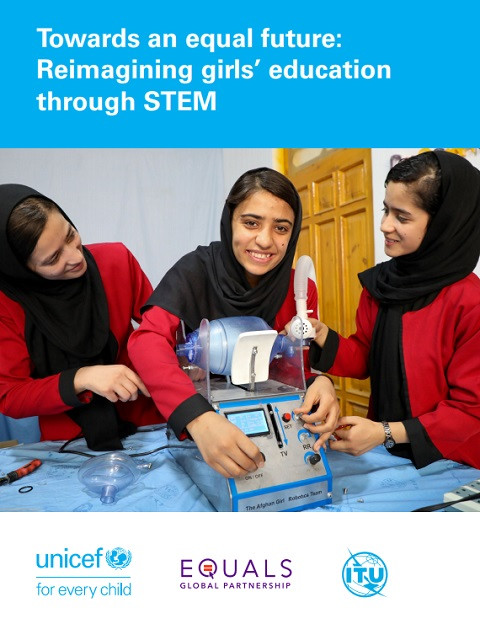 Towards an Equal Future: Reimagining Girls’ Education Through STEM Year of publication: 2020 Corporate author: United Nations Children's Fund (UNICEF) | International Telecommunication Union (ITU) This document seeks to call attention to the potential of STEM education to transform gender norms in the education system, to improve quality learning opportunities for girls, and to highlight key actions that can accelerate girls’ transition between education and technical expert jobs in STEM industries. Critically, STEM education also has the potential to contribute to personal empowerment, transformation of communities and nations, and building economies for the future.The evidence presented here provides a foundation for a call to action for global, national and regional actors. All stakeholders are called to work together to dismantle the barriers that girls face to develop the skills they need to become users, shapers and creators of scientific knowledge and new technologies. This will allow girls to choose the skills they want to learn and how to apply them, empowering them to contribute to a gender-equal world.
  Learning to live together: an intercultural and interfaith programme for ethics education: Good Practices Series; Massa-Massar: The Journey Year of publication: 2012 Corporate author: United Nations Children's Fund (UNICEF) | Interfaith Council on Ethics Education for Children | Arigatou Foundation The Massa-Massar programme creates opportunities for Jews and Palestinians to meet, learn from one another, challenge their prejudices and stereotypes, listen to new narratives and reflect on their relations with others and their role in their societies. Aprender a vivir juntos: Un programa intercultural e interreligioso para la educación ética: Serie de buenas prácticas; Massa-Massar: el viaje Year of publication: 2012 Corporate author: United Nations Children's Fund (UNICEF) | Interfaith Council on Ethics Education for Children | Arigatou Foundation The Massa-Massar programme creates opportunities for Jews and Palestinians to meet, learn from one another, challenge their prejudices and stereotypes, listen to new narratives and reflect on their relations with others and their role in their societies.
 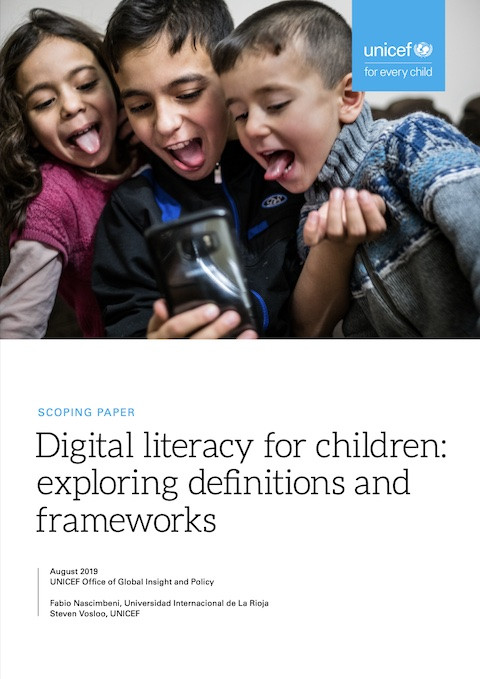 Digital Literacy for Children: Exploring Definitions and Frameworks Year of publication: 2019 Author: Fabio Nascimbeni Corporate author: United Nations Children's Fund (UNICEF) This paper presents the results of a scoping exercise on children’s digital literacy that has been undertaken with the following objectives:To understand the current digital literacy policy and practice landscape;To highlight existing competence frameworks and how they can be adapted to UNICEF’s needs;To analyze the needs and efforts of UNICEF country offices; andTo reflect on policy and programme recommendations, including a definition of digital literacy for UNICEF
 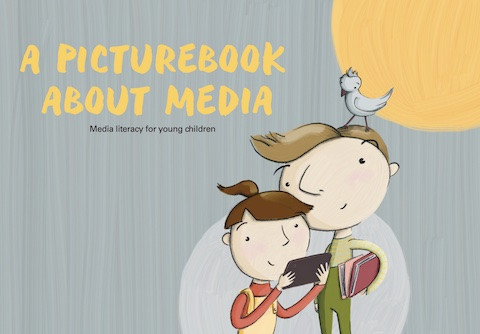 A Picture Book About Media: Media Literacy For Young Children Year of publication: 2018 Author: Alma Čakmazović Corporate author: United Nations Children's Fund (UNICEF) Media literacy helps to form the habit of appraising media contents and to develop the skills of expression necessary for critical thinking. Today, it represents education for life, human values, active citizenship and responsible media practices.This picturebook is devoted to children, parents, foster parents and educators. Its purpose is to give the youngest children the chance to understand media through one of the first lessons in media literacy, one about the difference between the media world and the real world.
 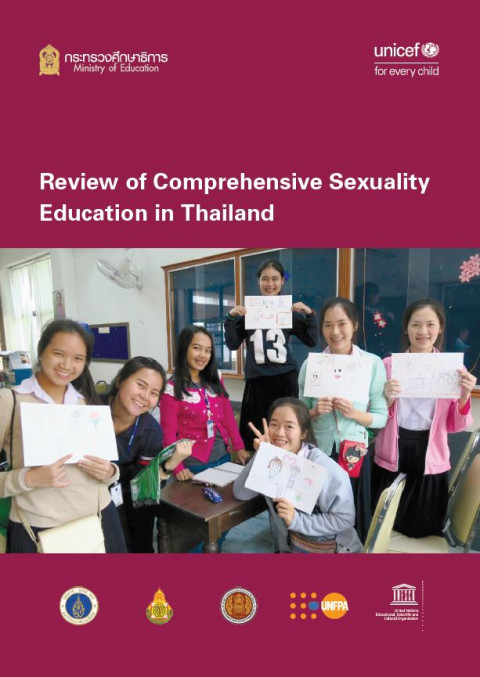 Review of Comprehensive Sexuality Education in Thailand Year of publication: 2017 Corporate author: United Nations Children's Fund (UNICEF) | Thailand. Ministry of Education This review of comprehensive sexuality education (CSE) in Thai educational institutions collected data from students, teachers, guardians, school directors and national policy advocacy stakeholders. Standard international data collection tools were used, with the hope that important information could be gathered to guide the development of school-based CSE implementation in Thailand. The review aims to increase understanding about how CSE is being implemented in Thai general secondary schools and vocational colleges and to examine the values and attitudes of teachers, school directors, students, and parents on sexuality and sexuality education. It also analyses policies relevant to current national strategies of CSE implementation and documents successes and gaps in the current provision of CSE in the country. The report, prepared by the Ministry of Education, Thailand, and UNICEF, with inputs from UNESCO Bangkok, is available in English and in Thai.
 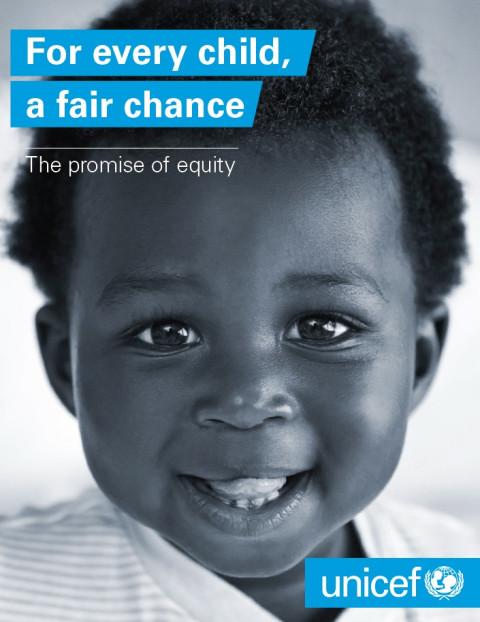 For every child, a fair chance: The promise of equity Year of publication: 2015 Corporate author: United Nations Children's Fund (UNICEF) This report is based on an in-depth paper that was the centrepiece of discussions at the UNICEF Executive Board’s Special Session on Equity held in New York, in June 2015.The principle of equity guides UNICEF’s work with a sharp focus on the world’s most vulnerable children: those from the poorest households, girls, children with disabilities, migrant and refugee children, those living in remote areas, and children from ethnic or religious groups facing discrimination. The following pages build on evidence and experience from this work to make two main arguments for closing persistent gaps in equity. It examines seven sectors that are critical to progress for children: health; HIV and AIDS; water, sanitation and hygiene; nutrition; education; child protection; and social inclusion. In each sector, there are stark contrasts between global advances on one hand and the urgent, unmet needs of the world’s most vulnerable children on the other.