
Resources
Explore a wide range of valuable resources on GCED to deepen your understanding and enhance your research, advocacy, teaching, and learning.
204 Results found
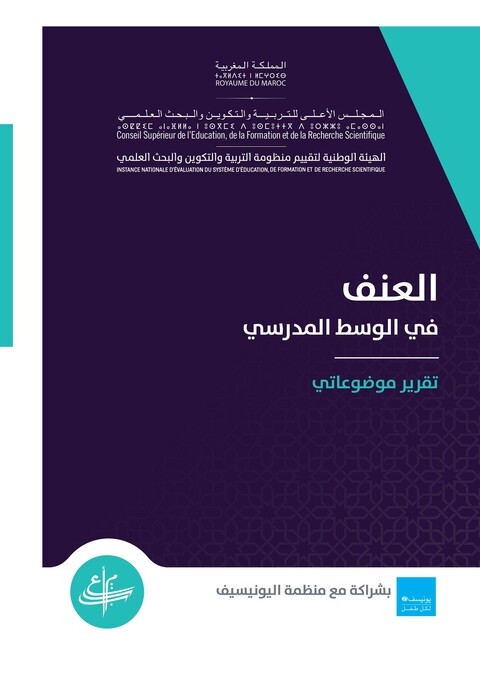 العنف في الوسط المدرسي:تقرير موضوعاتي Year of publication: 2023 Corporate author: Higher Council for Education, Training, and Scientific Research (CSEFRS) | United Nations Children's Fund (UNICEF) يقدم هذا التقرير نتائج تقييم العنف في الوسط المدرسي الذي أجراه المجلس الأعلى للتربية والتكوين والبحث العلمي، من خلال الهيئة الوطنية للتقييم، بشراكة مع منظمة اليونيسيف. ويسلط هذا التقرير الضوء على أهمية وجود بيئة مدرسية آمنة وخالية من العنف لضمان تعليم ذي جودة.الهدف الرئيسي لهذا التقييم يكمن في تقديم تشخيص مفصل لوضع العنـف في الوسط المدرسي في المغرب. وعليـه، تركــز الدراســة عـلـى قيــاس مــدى انتشــار هــذه الظاهــرة وتحديــد أشــكالها وتجلياتها المختلفة في الوســط المدرسي، وكــذا الفاعلـيـن المعنين بهــا، وهــي لا تســتهدف مرتكبــي العنــف فقــط، بــل أيضــا ضحايــاه مــن تلامذة وأطر تربوية.
  Education Sector Analysis: Methodological Guidelines (Vol. 3) Year of publication: 2021 Corporate author: UNESCO International Institute for Educational Planning (IIEP) | United Nations Children's Fund (UNICEF) | Global Partnership for Education (GPE) | Foreign, Commonwealth & Development Office (UK) This present volume is the third in a series of education sector analysis (ESA) guidelines following two volumes published in 2014. The series provides methodologies and applied examples for diagnosing education systems and informing national education policies and plans. This volume proposes guidelines to strengthen national capacities in analyzing education systems in four areas: inclusive education system for children with disabilities, risk analysis for resilient education systems, functioning and effectiveness of the educational administration, and stakeholder mapping and problem-driven analysis (governance and political economy).
 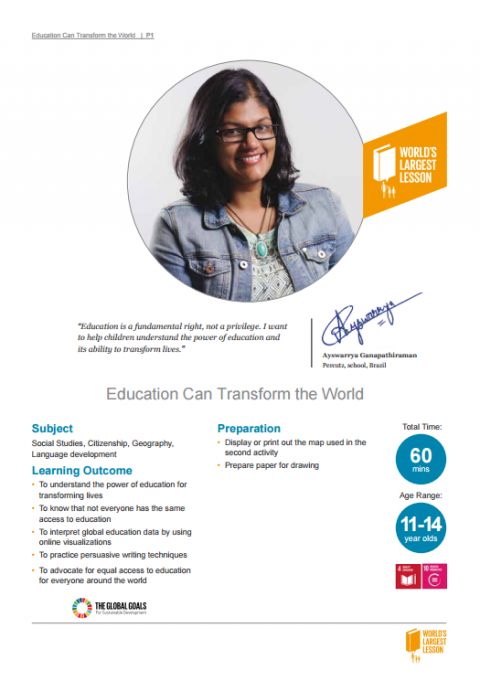 Education Can Transform the World Corporate author: United Nations Children's Fund (UNICEF) World’s Largest Lesson is a collaborative education project to support the announcement of the United Nations Global Goals for Sustainable Development.Learning outcomes of the project is: • To understand the power of education for transforming lives • To know that not everyone has the same access to education • To interpret global education data by using online visualizations • To practice persuasive writing techniques • To advocate for equal access to education for everyone around the world
 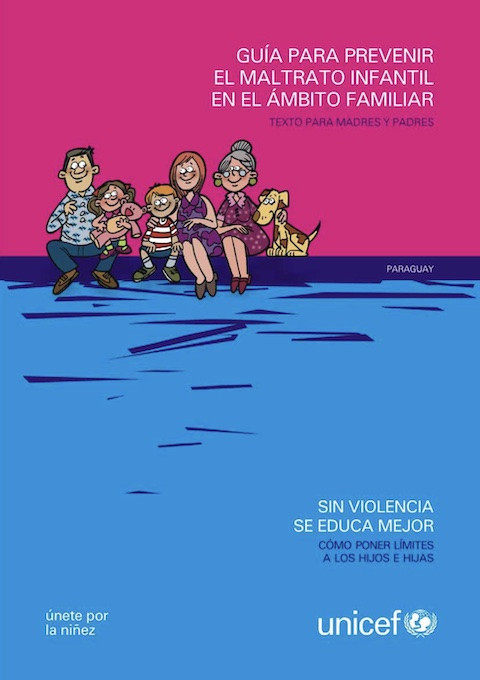 Guide to Prevent Child Abuse in the Family Year of publication: 2010 Author: Cecilia Sirtori Corporate author: United Nations Children's Fund (UNICEF) This guide seeks to point out a path that leads to cultural change, in which it is possible to replace the deep tradition of using physical and verbal violence for the purpose of setting limits to boys and girls by others methods of discipline. This guide is based upon the principle that humiliating treatment does not educate. Guía para prevenir el maltrato infantil en el ambito familiar Year of publication: 2010 Author: Cecilia Sirtori Corporate author: United Nations Children's Fund (UNICEF) Está guía busca señalar un camino que conduzca a un cambio cultural en el cual sea posible reemplazar la profunda tradición de usar la violencia física y verbal con el proposito de poner límites a los niños y niñas por otros métodos de disciplina. Está guía sustenta que los tratos humillantes no educan.
 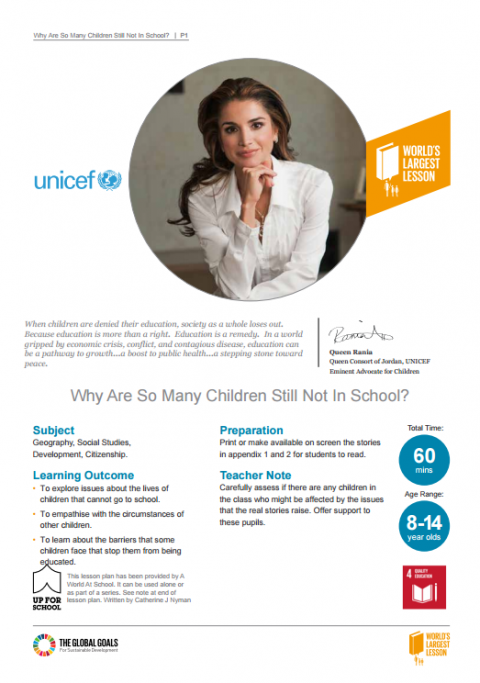 Why are so many children not in school? Corporate author: United Nations Children's Fund (UNICEF) World’s Largest Lesson is a collaborative education project to support the announcement of the United Nations Global Goals for Sustainable Development. Learning outcomes of the project is: • To explore issues about the lives of children that cannot go to school. • To empathise with the circumstances of other children. • To learn about the barriers that some children face that stop them from being educated.
 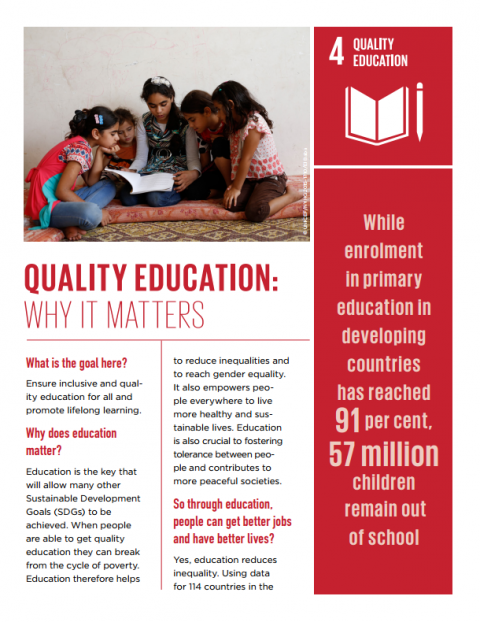 Quality Education: Why It Matters Corporate author: United Nations Children's Fund (UNICEF) Education is the key that will allow many other Sustainable Development Goals (SDGs) to be achieved. When people are able to get quality education they can break from the cycle of poverty. Education therefore helps to reduce inequalities and to reach gender equality. It also empowers people everywhere to live more healthy and sustainable lives. Education is also crucial to fostering tolerance between people and contributes to more peaceful societies.
 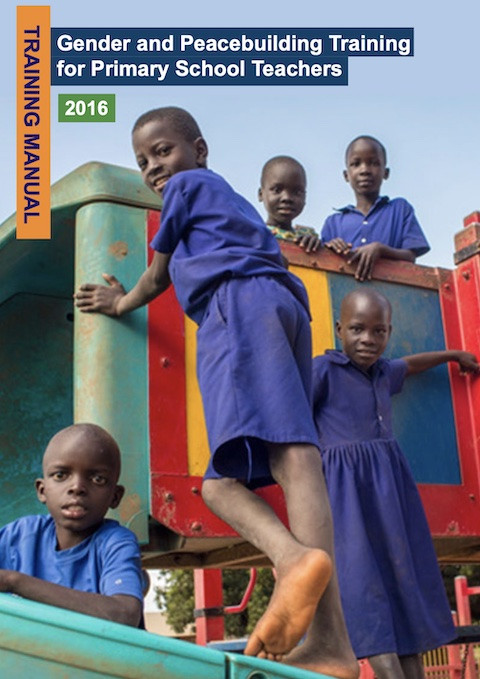 Gender and Peacebuilding Training for Primary School Teachers: Training Manual Year of publication: 2016 Corporate author: United Nations Children's Fund (UNICEF) The Gender and Peacebuilding training material is intended to be used for teachers teaching in primary or secondary school. It is shaped by a participatory approach. This is because the discussion of gender and conflict issues requires participants to sit back and reflect on their diverse experiences and knowledge. The training encourages the participants to learn from one another by sharing their thoughts, discussing their views and concerns, analysing situations and, most importantly, questioning attitudes and behaviours.
 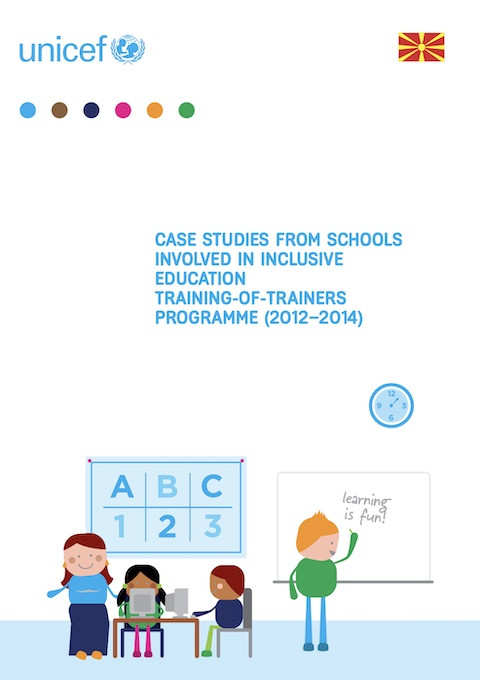 Case Studies From Schools Involved in Inclusive Education in Macedonia Training-of-Trainers Programme (2012–2014) Year of publication: 2014 Corporate author: United Nations Children's Fund (UNICEF) This short booklet offers some of the case studies that the teachers/ trainers developed in their schools, following the training-of-trainers. Some of the examples focus on telling a whole-school story, while others focus on individual children who have been supported to attend and participate in learning. All of the case studies offer ideas and inspiration to other practitioners – within and beyond the former Yugoslav Republic of Macedonia – who are working hard to make education more inclusive for all children.
 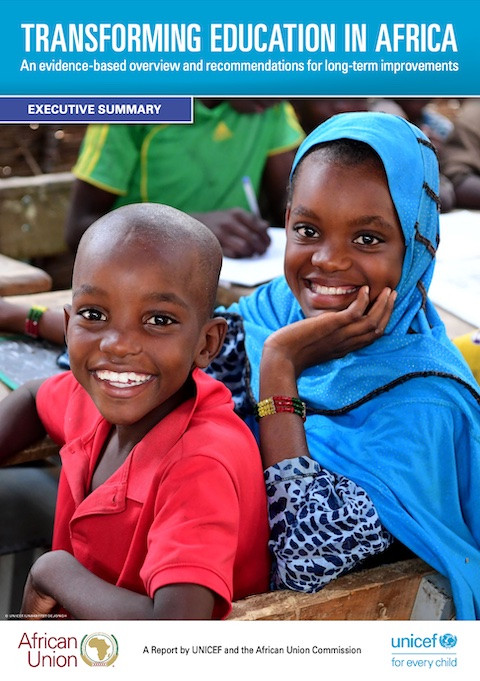 [Summary] Transforming Education in Africa: An Evidence-Based Overview and Recommendations for Long-Term Improvements Year of publication: 2021 Author: Nicolas Reuge | Lukman Olawale Jaji | Nicholas Ouma | Adoumtar Noubatour | Hambani Masheleni | Noguebzanga Jean Luc Yameogo | Achila Imchen | Alassane Ouedraogo | Beifith Kouak Tiyab | Yacouba Djibo Abdou | Erin Euiryeong Jeong Corporate author: United Nations Children's Fund (UNICEF) | African Union Commission This report is the result of a successful collaboration between UNICEF and the African Union Commission. The report intends to contribute to the facilitation of high-level policy discussions between national education authorities, regional and continental bodies on possible strategic shifts and interventions to boost access to education and improve the quality of teaching and learning in Africa. The report provides evidence-based analysis of the situation of education in Africa while putting into perspective the Sustainable Development Goals and the objectives of the Continental Education Strategy for Africa (CESA 16–25) in line with the African Union Agenda 2063. It highlights the progress made in the continent’s education sector over the past decade (2010–2020) while pointing out the challenges that remain, particularly in the area of equity.