
Resources
Explore a wide range of valuable resources on GCED to deepen your understanding and enhance your research, advocacy, teaching, and learning.
204 Results found
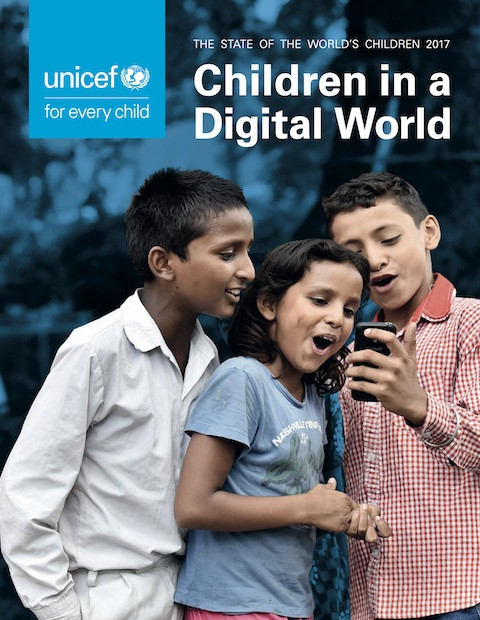 The State of the World’s Children 2017: Children in a Digital World Year of publication: 2017 Corporate author: United Nations Children's Fund (UNICEF) The State of the World’s Children 2017 examines the ways in which digital technology has already changed children’s lives and life chances – and explores what the future may hold.If leveraged in the right way and made universally accessible, digital technology can be a game changer for children being left behind – whether because of poverty, race, ethnicity, gender, disability, displacement or geographic isolation – connecting them to a world of opportunity and providing them with the skills they need to succeed in a digital world. But unless we expand access, digital technology may create new divides that prevent children from fulfilling their potential. And if we don’t act now to keep pace with rapid change, online risks may make vulnerable children more susceptible to exploitation, abuse and even trafficking – as well as more subtle threats to their well-being.This report argues for faster action, focused investment and greater cooperation to protect children from the harms of a more connected world – while harnessing the opportunities of the digital age to benefit every child. Estado mundial de la infancia 2017: Niños en un mundo digital Year of publication: 2017 Corporate author: United Nations Children's Fund (UNICEF) El Estado Mundial de la Infancia examina las formas en que la tecnología digital ha cambiado ya las vidas de los niños y sus oportunidades, y explora lo que puede deparar el futuro. Si se aprovecha de la manera adecuada y es accesible a escala universal, la tecnología digital puede cambiar la situación de los niños que han quedado atrás –ya sea debido a la pobreza, la raza, el origen étnico, el género, la discapacidad, el desplazamiento o el aislamiento geográfico– al conectarlos a un mundo de oportunidades y dotarles de las aptitudes que necesitan para tener éxito en un mundo digital. Pero a menos que ampliemos el acceso, la tecnología digital puede crear nuevas brechas que impidan que los niños alcancen todo su potencial. Y si no actuamos ahora para mantenernos al ritmo de los rápidos cambios, los riesgos en línea pueden llevar a que los niños vulnerables sean más susceptibles a la explotación, el abuso y hasta la trata, así como a otro tipo de amenazas menos evidentes para su bienestar. Este informe aboga en favor de una acción más rápida, de inversiones adaptadas y de una mayor cooperación para proteger a los niños de los daños que pueden sufrir en un mundo más conectado, al tiempo que exhorta a que se aprovechen las oportunidades de la era digital para beneficiar a todos los niños. La situation des enfants dans le monde 2017: Les enfants dans un monde numérique Year of publication: 2017 Corporate author: United Nations Children's Fund (UNICEF) La Situation des enfants dans le monde 2017 examine la manière dont la technologie numérique a déjà changé la vie des enfants et les possibilités qui s’offrent à eux – et s’interroge sur ce que l’avenir leur réserve. Si elle est universellement accessible et exploitée correctement, la technologie numérique peut changer la donne pour les enfants laissés pour compte – que ce soit pour des raisons de pauvreté, de race, d’appartenance ethnique, de sexe, de handicap, de déplacement ou d’isolement géographique – en les connectant à un large éventail de possibilités et en leur fournissant les compétences nécessaires pour s’épanouir dans un monde numérique. Mais à moins d’en élargir l’accès, la technologie numérique peut créer de nouvelles fractures qui empêchent les enfants de réaliser leur potentiel. Si nous n’intervenons pas maintenant pour tenir le rythme rapide des évolutions, les risques encourus en ligne pourraient rendre les enfants vulnérables plus susceptibles d’être exploités, maltraités, voire victimes de traite, et exposerait leur bien-être à des menaces plus subtiles. Le présent rapport appelle à une action plus rapide, à des investissements ciblés et à une plus grande coopération afin de protéger les enfants contre les dangers d’un monde chaque jour plus connecté, et à faire profiter chaque enfant des possibilités offertes par l’ère numérique. 2017 年世界儿童状况:数字时代的儿童 Year of publication: 2017 Corporate author: United Nations Children's Fund (UNICEF) 《2017 年世界儿童状况:数字时代的儿童》探讨 了数字技术如何改变着儿童的生活,给他们带来的机 遇,及未来的发展方向。 数字技术如果能得到恰当运用并得以普及,则可 以在很大程度上改变许多儿童因贫困、种族、民族、 性别、残障、流离失所或地处偏远地区等因素而落后 的现状,他们将有机会接触到世界范围内的各种机遇, 获得必要的技能,从而在数字时代取得成功。 然而,如果普及范围得不到扩大,数字技术将带 来新的分化,儿童的潜能将无法得到充分释放。如果 我们现在不采取行动,适应迅速变化的环境,互联网 带来的威胁会让原本就处于弱势群体的那部分儿童更 容易遭受剥削、虐待甚至贩卖。同时,他们的成长还 会面临更多隐性威胁。 《2017 年世界儿童状况》报告指出:我们要迅速 采取行动,加强投资与合作,保护儿童在日趋互联的 世界中免受伤害;同时也要利用数字时代的机遇,确 保每个儿童从中受益。
 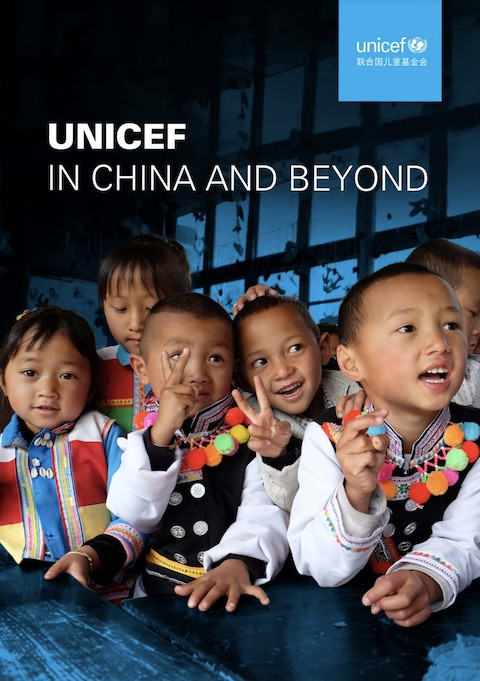 UNICEF in China and Beyond Year of publication: 2019 Corporate author: United Nations Children's Fund (UNICEF) This report seeks to give an overview of UNICEF’s work in China and, through these experiences, provide a global perspective on the major development areas relevant to children today. This includes child-friendly spaces, poverty reduction and early childhood education. The publication presents a snapshot of the issues, challenges and accomplishments in health, education, child protection, and social policy and reform sectors in China. 中国经验 全球视角:联合国儿童基金会在华合作项目概览 Year of publication: 2019 Corporate author: United Nations Children's Fund (UNICEF) 该报告概述了联合国儿童基金会在中国所开展的项目,并通过这些项目的经验,为关乎儿童利益的主要发展领域提供全球视角,包括儿童友好家园、减贫与儿童早期教育等。这份报告还简要介绍了合作项目在卫 生保健、教育、儿童保护、社会政策与改革等领域所关注的重点、取得的成果与面临的挑战。
 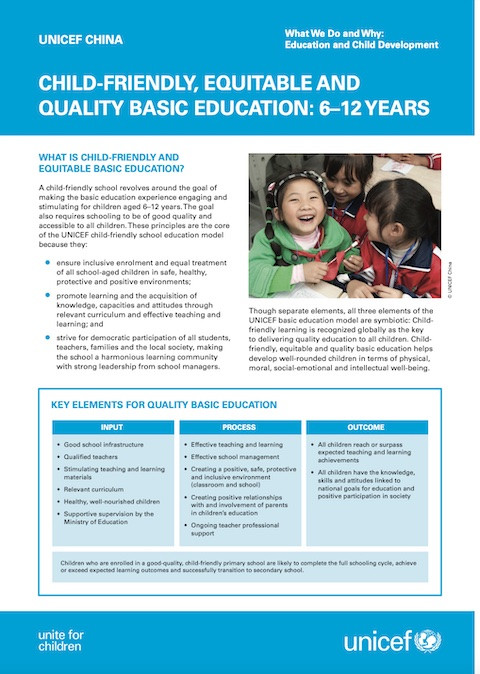 Child-Friendly, Equitable and Quality Basic Education: 6-12 Years Year of publication: 2017 Corporate author: United Nations Children's Fund (UNICEF) This report introduces the ideas and specific practices of UNICEF-operated child-friendly and equitable education in China, including its inputs, processes, and results. It also describes the progress of related projects and specific programmes, such as school management standards. The report also includes future plans for related projects, particularly in the areas of global development and South-South cooperation. 爱生、公平和优质的基础教育:6 - 12岁 Year of publication: 2017 Corporate author: United Nations Children's Fund (UNICEF) 该报告介绍了联合国儿童基金会在中国运营的爱生和公平教育的理念与具体做法,包括其投入、过程、成果等。也介绍了相关项目的进展与具体方案,如学校管理标准等。报告也包括了相关项目的未来计划,尤其是在全球发展和南南合作领域。
 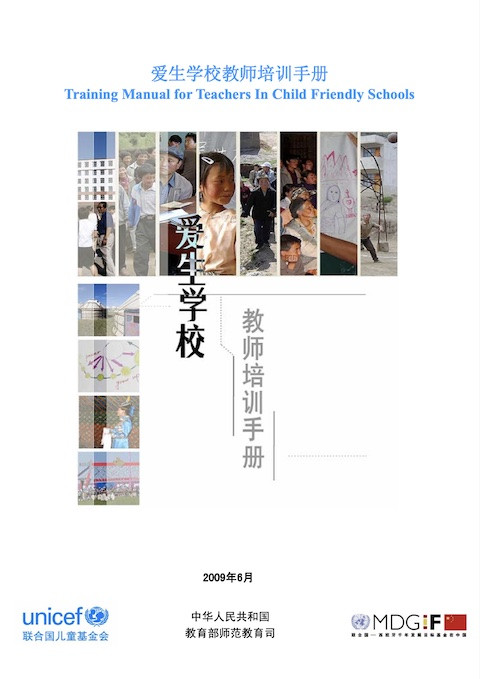 Training Manual for Teachers in Child Friendly Schools Year of publication: 2009 Corporate author: United Nations Children's Fund (UNICEF) | China. Ministry of Education | MDG Achievement Fund (MDG-F) This manual is a training resource for teachers in child-friendly schools or those who subscribe to the child-friendly education philosophy, with the aim of making education more equitable and inclusive. The manual is very detailed, with tools and resources to help teachers in child-friendly schools in their work, as well as detailed instructions for trainers on how to organise training and activities. Through studying the manual, teachers can develop gender sensitivity, awareness of the concept and importance of inclusive education, and tools to ensure maximum and effective learning for all children and to provide an equitable school and classroom environment. 爱生学校教师培训手册 Year of publication: 2009 Corporate author: United Nations Children's Fund (UNICEF) | China. Ministry of Education | MDG Achievement Fund (MDG-F) 该手册是一本培训资料,用于培训爱生学校教师或认可爱生教育理念的教师,目的是使教育更加公平、包容。手册内容非常详细, 既有帮助爱生学校教师工作的工具和资 源, 也 有培训者如何组织培训和活动的详细说明。 通过学习该手册,教师们可以形成性别敏感性,认识到全纳教育的概念和重要性,掌握相关工具,确保所有孩子能够最大限度的、 最有效的学习, 并提供公平的学校与课堂环境。