
Resources
Explore a wide range of valuable resources on GCED to deepen your understanding and enhance your research, advocacy, teaching, and learning.
204 Results found
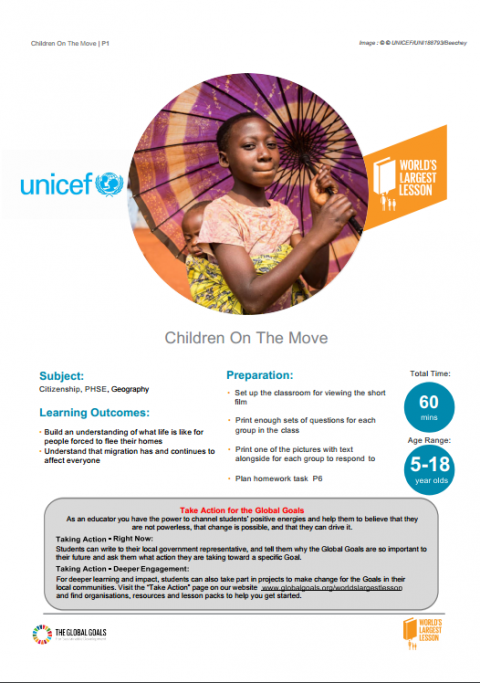 Children on the Move Corporate author: United Nations Children's Fund (UNICEF) World’s Largest Lesson is a collaborative education project to support the announcement of the United Nations Global Goals for Sustainable Development. Learning outcomes of the project: • Build an understanding of what life is like for people forced to flee their homes • Understand that migration has and continues to affect everyone
 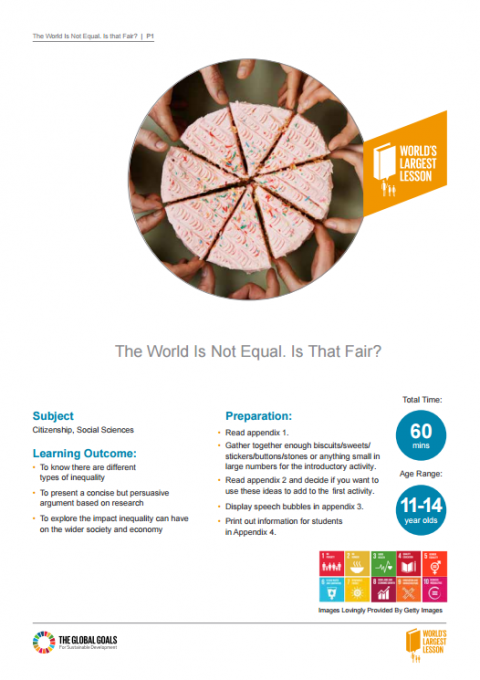 The World Is Not Equal. Is That Fair? Corporate author: United Nations Children's Fund (UNICEF) World’s Largest Lesson is a collaborative education project to support the announcement of the United Nations Global Goals for Sustainable Development. Learning outcomes of the project: • To know there are different types of inequality • To present a concise but persuasive argument based on research • To explore the impact inequality can have on the wider society and economy
 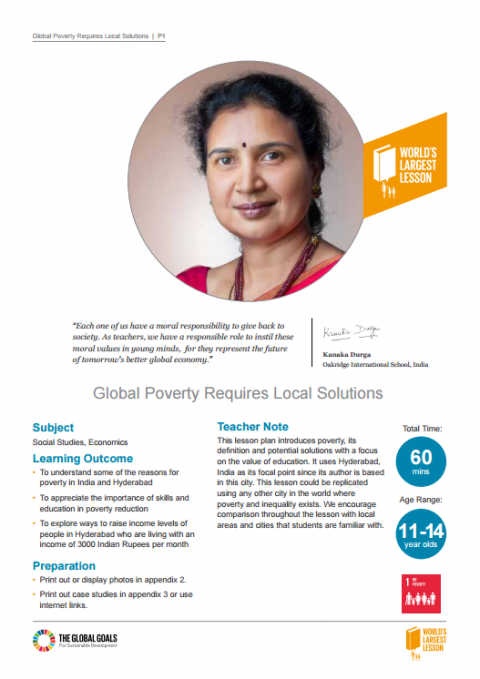 Global Poverty Requires Local Solutions Corporate author: United Nations Children's Fund (UNICEF) World’s Largest Lesson is a collaborative education project to support the announcement of the United Nations Global Goals for Sustainable Development. Learning outcomes of the project: • To understand some of the reasons for poverty in India and Hyderabad • To appreciate the importance of skills and education in poverty reduction • To explore ways to raise income levels of people in Hyderabad who are living with an income of 3000 Indian Rupees per month
 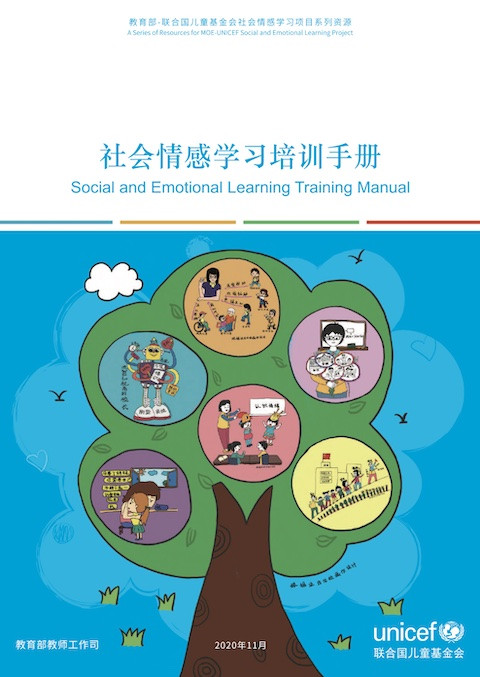 Social and Emotional Learning Training Manual Year of publication: 2020 Corporate author: China. Ministry of Education | United Nations Children's Fund (UNICEF) This material is the training manual of the social and emotional learning training programme organised by the Chinese Ministry of Education and UNICEF. It mainly discusses what is social and emotional learning and its significance, as well as the content of the programme. 社会情感学习培训手册 Year of publication: 2020 Corporate author: China. Ministry of Education | United Nations Children's Fund (UNICEF) 本材料是中国教育部与联合国儿童基金社会情感学习项目系列资源的培训手册的第一册。主要介绍社会情感学习的概念及意义,以及项目实施内容。
 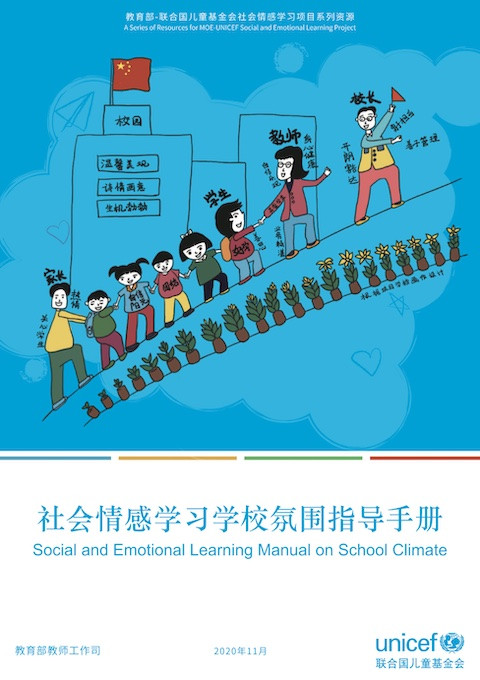 Social and Emotional Learning Manual on School Climate Year of publication: 2020 Corporate author: China. Ministry of Education | United Nations Children's Fund (UNICEF) This material is a guide for school leaders and teachers to promote a positive school climate that supports children's social and emotional learning. It talks about the relationship between school climate and school environment, the key elements of school climates etc. 社会情感学习学校氛围指导手册 Year of publication: 2020 Corporate author: China. Ministry of Education | United Nations Children's Fund (UNICEF) 这份材料是社会情感学习项目中学校氛围指导手册,包括学校氛围的构成要素及作用等,旨在为学校校长和教师在全校范围内推进学校氛围提供针对性的指导和参照。
  Introducing the Global Goals Corporate author: United Nations Children's Fund (UNICEF) Learners can explain what the Global Goals for Sustainable Development are, why they are important and how they relate to the learner her/himself.
  The global goals debate Corporate author: United Nations Children's Fund (UNICEF) Learning outcomes: To encourage critical debate about the Global Goals for Sustainable Development, so that young people are aware of the Goals, have critically evaluated them in their own minds and have drawn their own conclusions
  What To Do With The Global Goals In My Daily Life? Corporate author: United Nations Children's Fund (UNICEF) Learning outcomes: Be able to identify creative ways of implementing the Global Goals, understand how to build on each other’s ideas and use creativity in the initial steps of developing sustainability projects