
Resources
Explore a wide range of valuable resources on GCED to deepen your understanding and enhance your research, advocacy, teaching, and learning.
51 Results found
 People's Climate Vote 2024 Year of publication: 2024 Author: Cassie Flynn | Silvia Tovar Jardon | Stephen Fisher | Matthew Blayney | Albert Ward | Hunter Smith | Paula Struthoff | Zoë Fillingham Corporate author: United Nations Development Programme (UNDP) | University of Oxford The Peoples’ Climate Vote is the world’s largest standalone public opinion survey on climate change. It serves as a platform for people to express their concerns and needs on climate change to world leaders. This initiative, carried out by UNDP and the University of Oxford, was launched in 2021 with a first poll that surveyed people across 50 countries through adverts in popular mobile gaming apps. The 2024 survey is bigger in terms of scope: 77 countries, representing 87 percent of the world’s population, were asked their views on climate change. The 15 questions in the 2024 edition have never been put to people in any survey before. They asked how people’s day-to-day lives are impacted by climate change, how they feel it is being addressed in their countries and what they would like the world to do about it. The results give the most comprehensive public account yet of how people feel and respond to climate change. The Peoples’ Climate Vote 2024 results come at a crucial time. Leading scientific bodies warn that climate change is accelerating faster than expected. Meanwhile, global GHG emission levels continue to rise, and international tensions and conflicts are similarly on the increase. With more than half of the world’s population potentially voting in 2024, understanding how citizens are thinking about climate change is more important than ever. The survey’s results can help decision makers navigate this challenging context, and beyond. To explore the data and country results in more detail, please visit: https://peoplesclimate.vote/
  Improving Knowledge of Central Asian Glaciers and Their Resilience to Climate Change Year of publication: 2022 Corporate author: UNESCO Almaty | Global Environment Facility (GEF) | United Nations Development Programme (UNDP) The planned project under the Global Environment Facility and jointly with the UN Development Programme aims to improve the knowledge and monitoring of all key components of the cryosphere: glaciers, snow and permafrost, and support practical climate adaptation measures in the five nations of Central Asia. Paзвитие знаний о ледниках центральной азии и меры адаптации к изменению климата Year of publication: 2022 Corporate author: UNESCO Almaty | Global Environment Facility (GEF) | United Nations Development Programme (UNDP) Планируемый проект в рамках Глобального Экологического Фонда и совместно с Программой Развития ООН направлен на улучшение знаний и мониторинга всех ключевых компонентов криосферы: ледников, снега и вечной мерзлоты, а также на поддержку практических мер по адаптации к изменению климата в пяти странах Центральной Азии.
  Pacific Climate Security Assessment Guide Year of publication: 2023 Author: Spencer McMurray | Lukas Ruttinger | Serena Arcone | Michael Crowe Corporate author: United Nations Development Programme (UNDP) | Pacific Islands Forum Secretariat (PIFS) The new Pacific Climate Security Assessment guide aims to support Pacific Island Countries to collectively and individually uncover, assess and respond to climate security implications for their peoples, prosperity and peace. The Assessment Guide builds off of the Weathering Risk initiative’s methodology, and was undertaken by adelphi in collaboration with the UNDP, IOM and PIF as a part of the UNPBF-funded “Climate Security in the Pacific” project. In addition to incorporating a brief regional trend analysis and limited entry points to kick start countries’ efforts to address climate insecurity, the guide provides a “how to” for countries to undertake assessments themselves and across different levels. Anchored in the Pacific, the guide was developed through extensive consultation with regional specialists, key regional institutions, civil society and with Forum member representatives.
  Gender, Climate & Security: Sustaining Inclusive Peace on the Frontlines of Climate Change Year of publication: 2020 Corporate author: United Nations Environment Programme (UNEP) | United Nations Entity for Gender Equality and the Empowerment of Women (UN Women) | United Nations Development Programme (UNDP) Climate change is a defining threat to peace and security in the 21st century – its impacts felt by everyone, but not equally. Gender norms and power dynamics shape how women and men of different backgrounds experience or contribute to insecurity in a changing climate. Grounded in a series of case studies from research and programming experience, this report offers a comprehensive framework for understanding how gender, climate and security are inextricably linked. The report assesses entry points for action across existing global agendas and suggests concrete recommendations for how policymakers, development practitioners and donors can advance three inter-related goals: peace and security, climate action and gender equality.
  The Climate Dictionary: Speak Climate Fluently Year of publication: 2023 Corporate author: United Nations Development Programme (UNDP) The Climate Dictionary is a guide to understanding climate change. It aims to bridge the gap between complex scientific jargon and the general public, making climate concepts accessible and understandable to people of different backgrounds and levels of expertise. It is based on the belief that empowering people with knowledge is crucial to fostering collective action and responsibility in the face of climate change. Using a creative combination of engaging images, concise explanations and engaging storytelling, The Climate Dictionary effectively communicates complex climate concepts in a visual and easy-to-consume way. El diccionario climático: Una guía práctica para el cambio climático Year of publication: 2023 Corporate author: United Nations Development Programme (UNDP) El Diccionario Climático es una guía para entender el cambio climático. El objetivo de la misma es tender un puente entre la compleja jerga científica y el público en general, haciendo que los conceptos sobre el clima sean accesibles y comprensibles para personas de distintos orígenes y niveles de especialización. Se basa en la creencia de que dotar a la gente de conocimientos es crucial para fomentar la acción y la responsabilidad colectiva frente al cambio climático. Utilizando una combinación creativa de imágenes atractivas, explicaciones concisas y una narración interesante, El Diccionario Climático comunica con eficacia conceptos complejos sobre el clima de una manera visual y fácil de consumir.
 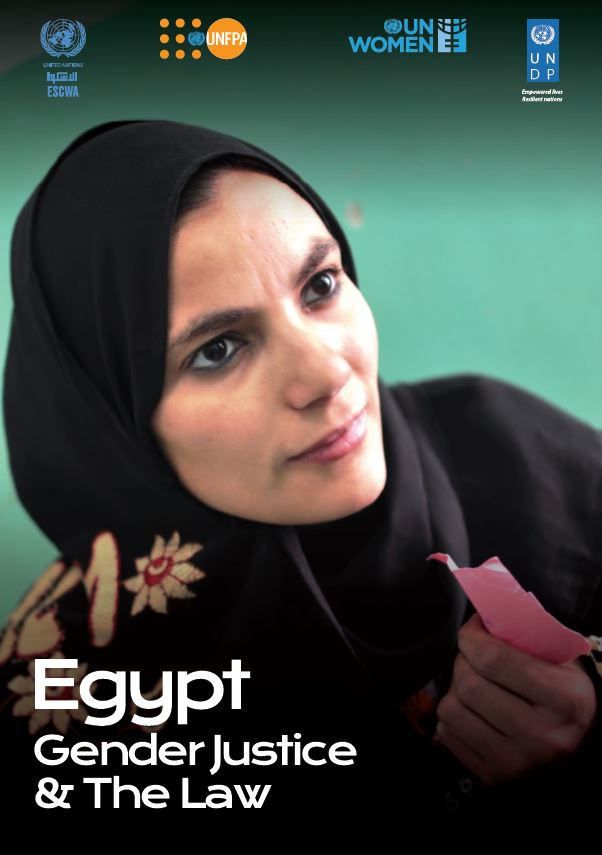 Egypt: Gender Justice and the Law Year of publication: 2018 Corporate author: United Nations Development Programme (UNDP) The United Nations Development Program, in cooperation with UN Women, the United Nations Population Fund and the Economic and Social Commission for Western Asia (ESCWA), has conducted a study on gender justice and the law. The study aims to provide an integrated assessment of laws and policies affecting gender justice and protection from gender-based violence. Gender in the Arab States Region This file focuses on Egypt. مصر: عدالة النوع الاجتماعي والقانون Year of publication: 2018 Corporate author: United Nations Development Programme (UNDP) قام برنامج الأمم المتحدة الإنمائي – بالتعاون مع هيئة الأمم المتحدة للمرأة وصندوق الأمم المتحدة للسكان واللجنة الاقتصادية والاجتماعية لغرب آسيا )الإسكوا( بإجراء دراسة حول عدالة النوع الاجتماعي والقانون. وتهدف الدراسة إلى تقديم تقييم متكامل للقوانين والسياسات المؤثرة على عدالة النوع الاجتماعي والحماية من العنف القائم على النوع الاجتماعي في منطقة الدول العربية. هذا الملف يركز على مصر.
 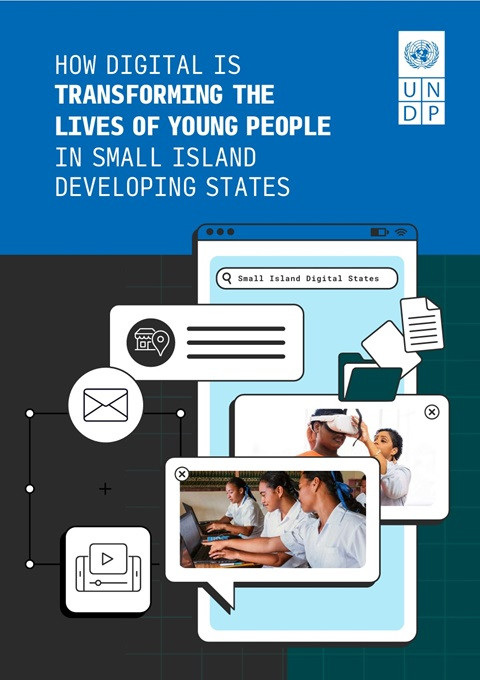 How Digital is Transforming the Lives of Young People in Small Island Developing States Year of publication: 2024 Corporate author: United Nations Development Programme (UNDP) Young people represent a sizeable and vital population in Small Island Developing States (SIDS). For them, digital technologies are more than just tools; they are gateways to new horizons. Digital is creating fresh opportunities, opening doors to unconventional careers, and redefining how knowledge is acquired and shared. Young people are using digital to start new businesses, explore new opportunities, learn new knowledge and skills, and to build global connections. However, young people are also cautious about digital – and they recognise risks and issues posed by digital channels, tools, and technologies. ‘How Digital is Transforming the Lives of Young People in SIDS’ explores these opportunities and challenges by hearing from young people – in their own words. Through a bespoke survey chatbot, running on messaging platforms most used by young people living in SIDS, more than 5,000 respondents from over 30 countries discuss how they’re using digital to transform their lives and livelihoods. And the barriers and challenges that they are facing on their digital journeys.