
Resources
Explore a wide range of valuable resources on GCED to deepen your understanding and enhance your research, advocacy, teaching, and learning.
29 Results found
 Climate change starter's guidebook: an issues guide for education planners and practitioners Year of publication: 2011 Author: Alejandro Deeb | Amber French | Julia Heiss | Jason Jabbour | Dominique LaRochelle | Arkadiy Levintanus | Anna Kontorov | Rummukainen Markku | Gerardo Sanchez Martinez | Rosalyn McKeown | Nicolay Paus | Antoine Pecoud | Guillaume Pénisson | Daniel Puig | Vanessa Retana | Serban Scrieciu | Morgan Strecker | Vimonmas Vachatimanont | Benjamin Witte | Noriko Yamada. Corporate author: United Nations Environment Programme (UNEP) The Climate Change Starter’s Guide provides an introduction and overview for education planners and practitioners on the wide range of issues relating to climate change and climate change education, including causes, impacts, mitigation and adaptation strategies, as well as some broad political and economic principles. The aim of this guide is to serve as a starting point for mainstreaming climate change education into school curricula. It has been created to enable education planners and practitioners to understand the issues at hand, to review and analyse their relevance to particular national and local contexts, and to facilitate the development of education policies, curricula, programmes and lesson plans. The guide covers four major thematic areas: 1. the science of climate change, which explains the causes and observed changes; 2. the social and human aspects of climate change including gender, health, migration, poverty and ethics; 3. policy responses to climate change including measures for mitigation and adaptation; and 4. education approaches including education for sustainable development, disaster reduction and sustainable lifestyles. A selection of key resources in the form of publication titles or websites for further reading is provided after each of the thematic sections. The United Nations Educational, Scientific and Cultural Organization (UNESCO) provides its expertise and know-how in areas such as education, culture, and the social sciences. In particular, UNESCO emphasises the role of education in support of climate change adaptation and mitigation in providing skills and capacities but also through shaping the values, attitudes and behaviours needed to put the world on a more sustainable path. The United Nations Environment Programme (UNEP) works with countries to strengthen their ability to adapt to climate change, move towards low-carbon growth, reduce emissions from deforestation and forest degradation, improve understanding of climate science, and raise public awareness of the changing climate. UNEP is supporting countries to seize the opportunities of moving towards low-carbon growth, while improving human health and well-being, generating green jobs and moving towards a green economy. With this publication, the two organizations have embarked on a collaboration on climate change education that we are committed to building upon and expanding in the period ahead. Le guide du changement climatique démarreur: un guide de questions pour les planificateurs de l'éducation et des praticiens Year of publication: 2011 Author: Alejandro Deeb | Amber French | Julia Heiss | Jason Jabbour | Dominique LaRochelle | Arkadiy Levintanus | Anna Kontorov | Rummukainen Markku | Gerardo Sanchez Martinez | Rosalyn McKeown | Nicolay Paus | Antoine Pecoud | Guillaume Pénisson | Daniel Puig | Vanessa Retana | Serban Scrieciu | Morgan Strecker | Vimonmas Vachatimanont | Benjamin Witte | Noriko Yamada. Corporate author: United Nations Environment Programme (UNEP) Le guide du changement de démarrage climatique fournit une introduction et un aperçu des planificateurs de l'éducation et de praticiens sur le large éventail de questions relatives au changement climatique et éducation au changement climatique, y compris les causes, les impacts, l'atténuation et les stratégies d'adaptation, ainsi que certains grands principes politiques et économiques. Le but de ce guide est de servir de point de départ pour l'intégration de l'éducation au changement climatique dans les programmes scolaires. Il a été créé pour permettre aux planificateurs de l'éducation et les praticiens à comprendre les questions à portée de main, pour examiner et analyser leur pertinence pour des contextes nationaux et locaux, et de faciliter le développement des politiques d'éducation, des programmes, des programmes et des plans de leçon.Le guide couvre quatre grands domaines thématiques: 1. La science du changement climatique, ce qui explique les causes et les changements observés; 2. les aspects sociaux et humains du changement climatique, y compris le sexe, la santé, la migration, la pauvreté et l'éthique; 3. les réponses politiques aux changements climatiques, y compris les mesures d'atténuation et d'adaptation; et 4. approches éducatives, y compris l'éducation pour le développement durable, la prévention des catastrophes et de modes de vie durables. Une sélection de ressources clés sous forme de titres de publications ou sites web pour davantage de lecture est fourni après chacune des sections thématiques. L'Organisation des Nations Unies pour l'éducation, la science et (UNESCO) fournit son expertise et son savoir-faire dans des domaines tels que l'éducation, la culture et les sciences sociales. En particulier, l'UNESCO met l'aCECnt sur le rôle de l'éducation à l'appui de l'adaptation au changement climatique et l'atténuation dans la fourniture de compétences et de capacités mais aussi à travers l'élaboration des valeurs, des attitudes et des comportements nécessaires pour mettre le monde sur une voie plus durable. Le Programme des Nations Unies pour l'Environnement (PNUE) travaille avec les pays pour renforcer leur capacité d'adaptation au changement climatique, se déplacer vers une croissance faible en carbone, la réduction des émissions dues à la déforestation et à la dégradation des forêts, d'améliorer la compréhension de la science du climat, et de sensibiliser le public au changement climatique . Le PNUE aide les pays à saisir les opportunités de progresser vers une croissance à faible émission de carbone, tout en améliorant la santé humaine et le bien-être, la création d'emplois verts et avancer vers une économie verte. Avec cette publication, les deux organisations se sont engagées dans une collaboration sur le changement climatique éducation que nous sommes déterminés à bâtir sur et en expansion dans la période à venir. Symposium on climate change education and sustainable cities, 31 August 2009, United Nations Office at Nairobi, Kenya Year of publication: 2009 Corporate author: United Nations Environment Programme (UNEP) | United Nations Centre for Human Settlement Programme (UN Habitat) Education plays an important role in promoting knowledge, skills and values that are necessary for the realization of a sustainable society. It also assists learners to learn to cope with today's challenges such as climate change and urbanization. The overarching theme of the symposium was the critical role of education in promoting sustainable urbanization with a particular focus on climate change and its challenges. This broad theme was divided into two major sub-themes: 1. Role of education in building sustainable cities 2. Mainstreaming climate change in education for building sustainable cities. The key objective of the symposium was to raise awareness about the decade of education on sustainable development and to promote a constructive dialogue between local authorities, practitioners, academia and civil society organizations on the role of education in addressing the challenges of sustainable urbanization and climate change. A major thrust of the dialogue was “moving from rhetoric to action”. Key concepts of the Symposium Cities Half of humanity now lives in cities, and around one billion urban residents live in slums. The urbanization of poverty is therefore one of the most daunting challenges of the 21st century. Cities offer opportunities, but most urban development is largely toxic, segregated and inefficient. If cities are to come to terms with rapid levels of urbanization, they require leaders, managers and staff capable of adopting innovative and robust approaches to planning, developing, managing and financing growth for all citizens. Climate Change Globally, climate change is now recognized as one of the defining challenges of the 21st century. The future of hundreds of millions of people in urban areas across the world will be affected by the different impacts of climate change. Developing and least developed countries have higher vulnerability to climate change impacts compared to developed countries. Climate change has been identified as one of the main strategic perspectives to inform education and learning for sustainable development and by extension sustainable city development. Climate change issues need to be part of public awareness, learning and education for a sustainable future. The integrated, multifaceted vision provided by ESD is particularly well-suited to addressing climate change and city development in terms of understanding its causes, recognising its impact and effects, and preparing and implementing appropriate mitigation and adaptation responses. Symposium sur le changement climatique et l'éducation des villes durables 31 Août 2009, le Bureau des Nations Unies à Nairobi, au Kenya Year of publication: 2009 Corporate author: United Nations Environment Programme (UNEP) | United Nations Centre for Human Settlement Programme (UN Habitat) L'éducation joue un rôle important dans la promotion des connaissances, des compétences et des valeurs qui sont nécessaires à la réalisation d'une société durable. Il aide également les élèves à apprendre à faire face aux défis actuels tels que le changement climatique et l'urbanisation. Le thème général du colloque était le rôle crucial de l'éducation dans la promotion de l'urbanisation durable avec un aCECnt particulier sur le changement climatique et ses défis. Ce thème général a été divisé en deux sous-thèmes: 1. Rôle de l'éducation dans la construction de villes durables 2. Intégration du changement climatique dans l'éducation pour la construction de villes durables. L'objectif principal du colloque était de sensibiliser au sujet de la décennie de l'éducation sur le développement durable et de promouvoir un dialogue constructif entre les organisations autorités, les praticiens, les universités et la société civile locale sur le rôle de l'éducation dans la lutte contre les défis de l'urbanisation durable et le changement climatique . Un axe majeur du dialogue était «passer de la rhétorique à l'action». Les concepts clés du Symposium Villes moitié de l'humanité vit aujourd'hui dans les villes, et environ un milliard de citadins vivent dans des bidonvilles. L'urbanisation de la pauvreté est donc l'un des défis les plus redoutables du 21e siècle. Les villes offrent des possibilités, mais la plupart du développement urbain est en grande partie toxique, la ségrégation et inefficace. Si les villes doivent se réconcilier avec les niveaux rapides d'urbanisation, ils exigent des dirigeants, des gestionnaires et du personnel capables d'adopter des approches novatrices et robustes à la planification, le développement, la gestion et la croissance de financement pour tous les citoyens. À l'échelle mondiale sur les changements climatiques, le changement climatique est maintenant reconnu comme l'un des défis du 21ème siècle. L'avenir de centaines de millions de personnes dans les zones urbaines à travers le monde seront touchés par les différents impacts du changement climatique. Le développement et les pays les moins avancés ont une plus grande vulnérabilité aux impacts des changements climatiques par rapport aux pays développés. Le changement climatique a été identifié comme l'une des principales perspectives stratégiques pour informer l'éducation et l'apprentissage pour le développement durable et, par extension, le développement de la ville durable. les questions de changement climatique doivent faire partie de la sensibilisation du public, l'apprentissage et l'éducation pour un avenir durable. La vision à multiples facettes intégré fourni par EDD est particulièrement bien adapté à lutter contre le changement climatique et le développement de la ville en termes de compréhension de ses causes, en reconnaissant son impact et les effets, et la préparation et la mise en œuvre des mesures d'atténuation et d'adaptation appropriées.
 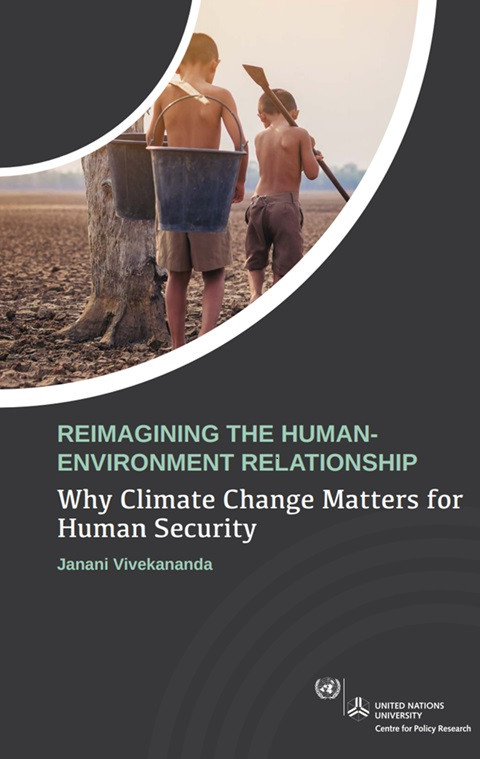 Why Climate Change Matters for Human Security Year of publication: 2022 Author: Janani Vivekananda Corporate author: United Nations University | United Nations Environment Programme (UNEP) This paper outlines the state of knowledge regarding security risks related to climate change, synthesizing the existing scientific evidence to set out five broad pathways of risk. Climate change itself is rarely a direct cause of conflict. Yet, there is ample evidence that its effects exacerbate important drivers and contextual factors of conflict and fragility, thereby challenging the stability of states and societies. Climate change impacts such as coral bleaching, diversity loss, and erratic rainfall can stress livelihoods and drive displacement, increase resource conflicts, and challenge the security and stability of people and states worldwide. Managing these security risks requires action across the entire impact chain: work to mitigate climate change; reducing its consequences on ecosystems; adapting socioeconomic systems; better management of climate-induced heightened resource competition; and strengthening governance and conflict management institutions. And every dimension of the response must be conflict-sensitive and climate proof. Without the right responses, climate change will mean more fragility, less peace and less security. But this paper sets out illustrative examples of how, with a greater understanding of how climate change interacts with social, political, economic and environmental drivers of conflict and fragility, we will be better placed to make the kind of risk-informed decisions is integral to achieving international peace and security.
  Global Environment Outlook 4 (GEO-4): Environment for Development Year of publication: 2007 Corporate author: United Nations Environment Programme (UNEP) The fourth Global Environment Outlook – environment for development ( GEO-4 ) places sustainable development at the core of the assessment, particularly on issues dealing with intra- and intergenerational equity. The analyses include the need and usefulness of valuation of environmental goods and services, and the role of such services in enhancing development and human well-being, and minimizing human vulnerability to environmental change. The GEO-4 temporal baseline is 1987, the year in which the World Commission on Environment and Development (WCED) published its seminal report, Our Common Future . The Brundtland Commission was established in 1983, under UN General Assembly resolution 38/161 to look at critical environment and development challenges. It was established at a time of an unprecedented rise in pressures on the global environment, and when grave predictions about the human future were becoming commonplace. تقرير التوقعات البيئية العالمية الرابع: البيئة من أجل التنمية المستدامة Year of publication: 2007 Corporate author: United Nations Environment Programme (UNEP) تضع توقعات البيئة العالمية الرابعة - البيئة من أجل التنمية (GEO-4) التنمية المستدامة في صميم التقييم ، لا سيما فيما يتعلق بالقضايا التي تتناول المساواة بين الأجيال وبين الأجيال. تشمل التحليلات الحاجة والفائدة في تقييم السلع والخدمات البيئية ، ودور هذه الخدمات في تعزيز التنمية ورفاهية الإنسان ، وتقليل تعرض الإنسان للتغير البيئي. خط الأساس الزمني لتوقعات البيئة العالمية الرابع هو عام 1987 ، وهو العام الذي نشرت فيه اللجنة العالمية للبيئة والتنمية (WCED) تقريرها الأساسي ، مستقبلنا المشترك. تأسست لجنة برونتلاند في عام 1983 ، بموجب قرار الجمعية العامة للأمم المتحدة 38/161 للنظر في تحديات البيئة والتنمية الحرجة. تم تأسيسه في وقت ارتفاع غير مسبوق في الضغوط على البيئة العالمية ، وعندما أصبحت التنبؤات الخطيرة حول مستقبل الإنسان أمرًا شائعًا.
 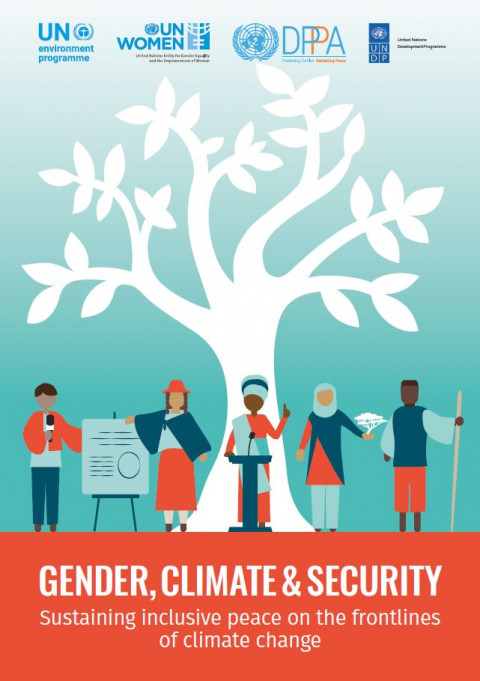 Gender, Climate & Security: Sustaining Inclusive Peace on the Frontlines of Climate Change Year of publication: 2020 Corporate author: United Nations Environment Programme (UNEP) | United Nations Entity for Gender Equality and the Empowerment of Women (UN Women) | United Nations Development Programme (UNDP) Climate change is a defining threat to peace and security in the 21st century – its impacts felt by everyone, but not equally. Gender norms and power dynamics shape how women and men of different backgrounds experience or contribute to insecurity in a changing climate. Grounded in a series of case studies from research and programming experience, this report offers a comprehensive framework for understanding how gender, climate and security are inextricably linked. The report assesses entry points for action across existing global agendas and suggests concrete recommendations for how policymakers, development practitioners and donors can advance three inter-related goals: peace and security, climate action and gender equality.
  Environmental Education Toolkit Guide for Latin America and the Caribbean Year of publication: 2023 Author: Eloísa Tréllez Solís Corporate author: United Nations Environment Programme (UNEP) The Environmental Education Toolkit is aimed primarily at teachers, multipliers and facilitators in Latin America and the Caribbean (LAC), and aims to promote interdisciplinary approaches, with a view to the transversality of environmental education. In the new context of a post-COVID-19 health emergency world, this approach becomes more relevant and necessary to achieve a better vision and understanding of the relationships between humans and nature; between societies, cultures and with the ecosystems on which they depend. In the chapters that make up this publication, an approach is proposed through a methodological proposal for reflection and action, the Interdisciplinary Roundtables for Environmental Education towards Sustainability, whose main objective is to strengthen and complement the environmental education processes that are carried out both in educational centers and in community groups, from an interdisciplinary, transversal perspective and with systemic thinking. Guía de herramientas de educación ambiental para América Latina y el Caribe Year of publication: 2023 Author: Eloísa Tréllez Solís Corporate author: United Nations Environment Programme (UNEP) La Guía de Herramientas de Educación Ambiental está dirigida principalmente a docentes, multiplicadores y facilitadores de América Latina y el Caribe (ALC), tiene el propósito de impulsar enfoques interdisciplinarios, con miras a la transversalidad de la educación ambiental. En el nuevo contexto de un mundo post emergencia sanitaria COVID-19 este enfoque se vuelve más relevante y necesario para lograr una mejor visión y entendimiento de las relaciones entre el ser humano y la naturaleza; entre las sociedades, culturas y con los ecosistemas, de los que depende. Se propone, en los capítulos que integran esta publicación, un abordaje a través de una propuesta metodológica de reflexión y acción, las Mesas Interdisciplinarias de Educación Ambiental hacia la Sostenibilidad, cuyo objetivo principal es fortalecer y complementar los procesos de educación ambiental que se llevan a cabo tanto en centros educativos como en grupos comunitarios, desde una perspectiva interdisciplinaria, transversal y con pensamiento sistémico.