
Resources
Explore a wide range of valuable resources on GCED to deepen your understanding and enhance your research, advocacy, teaching, and learning.
21 Results found
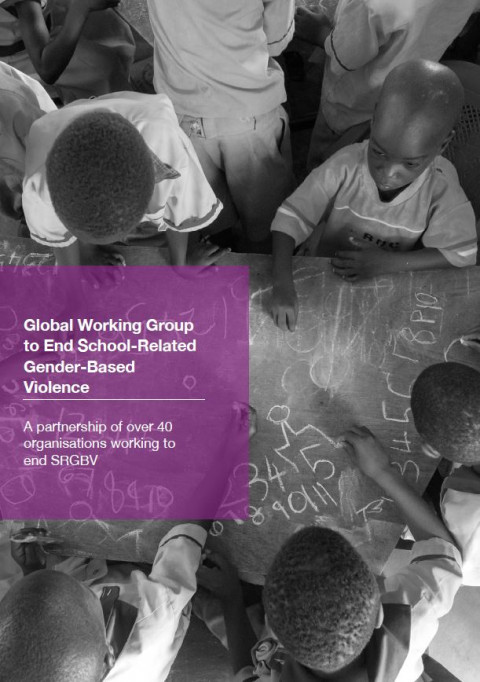 Global Working Group to End School-Related Gender-Based Violence Year of publication: 2017 Corporate author: United Nations Girls' Education Initiative (UNGEI) In August 2014, a coalition of governments, development organizations, civil society activists, UN agencies and research institutions came together to collaborate on ending gender-based violence in and around schools.The Global Working Group to End SRGBV has been a strong advocate to ensure that schools remain safe places for learning and that girls and boys have the opportunity to acquire the knowledge, skills and resources they need to reach their potential.To learn more about the group and its members, please go here:www.ungei.org/srgbv
 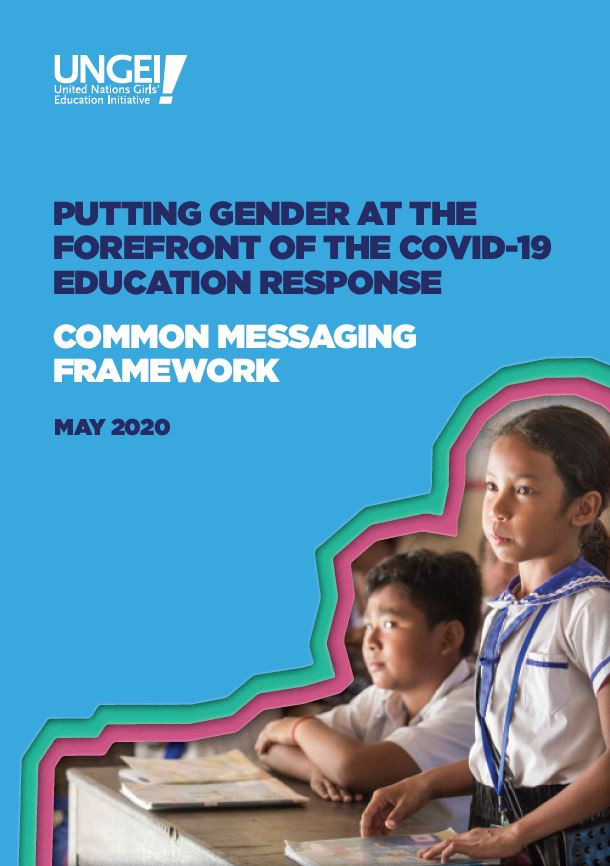 Putting Gender at the Forefront of the COVID-19 Education Response: Common Messaging Framework Year of publication: 2020 Corporate author: United Nations Girls' Education Initiative (UNGEI) Nationwide school closures as part of measures to prevent the spread of COVID-19 have disrupted the education of an entire generation of children and youth. Previous health emergencies demonstrate that girls are disproportionately affected, with the effects of gender inequality and unequal power structures exacerbated in times of crisis. This Common Messaging Framework, developed with UNGEI partner and ally organisations, can be used as an advocacy tool to leverage the power of collective action to position gender at the forefront of the COVID-19 response and enhance coherence in advocacy and communications efforts. Mettre le genre au premier plan de la réponse éducative au COVID-19: Cadre de messagerie commun Year of publication: 2020 Corporate author: United Nations Girls' Education Initiative (UNGEI) Les fermetures d’écoles à l’échelle nationale dans le cadre des mesures visant à prévenir la propagation du COVID-19 ont perturbé l’éducation de toute une génération d’enfants et de jeunes. Les urgences sanitaires antérieures démontrent que les filles sont touchées de manière disproportionnée, les effets de l’inégalité entre les sexes et des structures de pouvoir inégales étant exacerbés en temps de crise.En tant que partenariat mondial dédié à la promotion de l’égalité des sexes dans et à travers l’éducation, nous devons tirer parti de la puissance de l’action collective pour placer le genre au premier plan de la réponse COVID-19 et renforcer la cohérence dans le plaidoyer et la communication entre les organisations partenaires et alliées.Cette initiative de messagerie commune représente une opportunité stratégique pour favoriser le dialogue et attirer l’attention sur les impacts sexospécifiques de COVID-19, plaider en faveur de stratégies pour répondre aux dimensions sexospécifiques de cette crise et envisager la réouverture en toute sécurité des écoles à travers une perspective sexospécifique. Poniendo el género en primer plano de la respuesta educativa ante el COVID-19: Marco común de la mensajería Year of publication: 2020 Corporate author: United Nations Girls' Education Initiative (UNGEI) El cierre de las escuelas a nivel nacional como parte de las medidas para prevenir el contagio del COVID-19 ha interrumpido la educación de toda una generación de niños, niñas y jóvenes. Las emergencias de salud anteriores han demostrado que las niñas se ven afectadas de manera desproporcionada con los efectos de la desigualdad de género y estructuras de poder desiguales exacerbadas en tiempos de crisis.Como asociación mundial dedicada a avanzar la igualdad de género en y a través de la educación, debemos ejercer el poder de la acción colectiva para posicionar al género en primer plano en la respuesta ante el COVID-19 y aumentar la coherencia en la defensa, promoción y comunicación entre las organizaciones socias y aliadas.Esta iniciativa común de mensajería representa una oportunidad estratégica para promover el diálogo y llamar la atención sobre los impactos de género del COVID-19, abogar por estrategias que respondan a las dimensiones de género de esta crisis y ver hacia una futura reapertura de las escuelas a través de una lente de género.
  Advocacy for Impact: Gender and Education Year of publication: 2022 Author: Justine Brice | Elodie Gnonlonfoun | Marina Gutiérrez García de Viedma | Chattalie Jayatilaka Corporate author: United Nations Girls' Education Initiative (UNGEI) There has been an urgent need to include a gender-inclusive, anti-racist and decolonial lens in advocacy strategies in recent years. In the rare circumstances these lenses were applied, they were not effectively utilised when designing and implementing an advocacy campaign regarding education. Often, an intersectional approach was not used to consider context-specific power dynamics impacting girls’ ability to access education. The first objective of this report is to understand the “best practices to design and implement advocacy strategies that are gender-inclusive and anti-racist in the development sector, with a focus on gender and education”. The second objective was to examine the evidence regarding the effectiveness and impact of different advocacy strategies. Thirdly, the study aimed to understand the “best tools and approaches to measure advocacy impact." This research was conducted by an LSE student research team exploring gender-inclusive and anti-racist advocacy strategies.
 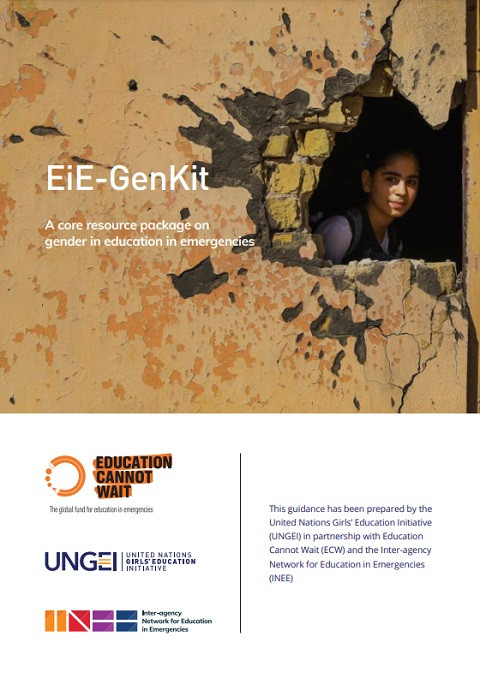 EiE-GenKit: A Core Resource Package on Gender in Education in Emergencies Year of publication: 2021 Corporate author: Education Cannot Wait (ECW) | Inter-agency Network for Education in Emergencies (INEE) | United Nations Girls' Education Initiative (UNGEI) When gender-responsive, quality education is available to all it has the potential to transform societies and build sustainable peace. A joint initiative from the Inter-agency Network for Education in Emergencies (INEE), Education Cannot Wait (ECW) and the UN Girls’ Education Initiative (UNGEI), the EiE-GenKit is a core resource package for gender in education in emergencies. The EiE-GenKit is the first resource of its kind, providing education practitioners with practical tools to promote gender-responsive programming from crisis to peace and sustainable development.The EiE-GenKit is based on extensive research and consultation with the latest resources, evidence, new tools and good practice available in one easy-to-use package. The EiE-GenKit builds on existing humanitarian processes for a streamlined approach to gender-responsive EiE. The EiE-GenKit offers tools for practical and immediate use including checklists, tipsheets and assessment templates supporting practitioners to ensure that each phase of an EiE intervention is gender-responsive. Bridging the gap between what we know about gender-responsive EiE and the tools we need to make it happen, the EiE-GenKit aims to promote improved gender and education outcomes of learners living in crises.
  In Solidarity With Girls: Gender and Education in Crisis (Policy Brief Series) Year of publication: 2020 Corporate author: United Nations Girls' Education Initiative (UNGEI) The In Solidarity With Girls: Gender and education in crisis policy brief series was developed through a series of intergenerational dialogues on gender, education and COVID-19. The contents of this paper and its recommendations belong to the young women activists featured in each brief. Drawing on the ‘build back equal’ principle, this brief contributes to policy dialogues and discussions on (1) how we can plan for and work towards more equal, gender-responsive school systems once restrictions are lifted, and (2) achieve this through meaningful partnership with youth and youth-led networks.
  G7 Global Objectives On Girls’ Education: Baseline Report Year of publication: 2022 Corporate author: United Nations Girls' Education Initiative (UNGEI) This publication serves as a baseline report to accompany efforts of the G7 Accountability Working Group to monitor progress towards the two global objectives. It presents evidence on low- and lower-middle-income countries’ progress in achieving the two global objectives and what remains to be done.It is important to stress that the two G7 global objectives on girls’ education are measures of gender parity, which are necessary but not sufficient as measures of gender equality. Assessing progress towards the latter requires information, which tends not to be available systematically enough to allow a comparative perspective. However, this report provides insights to remaining challenges.
 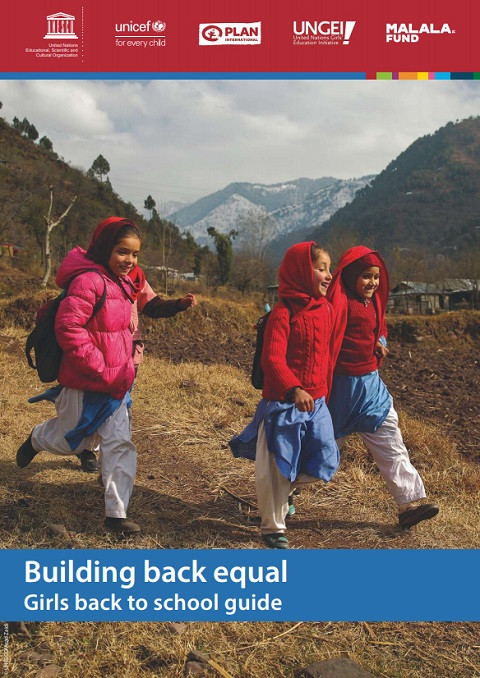 Building Back Equal: Girls Back to School Guide Year of publication: 2020 Corporate author: UNESCO | United Nations Children's Fund (UNICEF) | Plan International | United Nations Girls' Education Initiative (UNGEI) | Malala Fund The guide provides targeted inputs to ensure continuity of learning during school closures, and comprehensive, timely and evidence-based plans for reopening schools in a way that is safe, gender-responsive and child-friendly, and meets the needs of the most marginalised girls. This guide emphasizes an approach to ‘build back equal’ through gender-responsive measures that transform education systems, prioritise resilience and address the key bottlenecks and barriers to girls’ education, including: Gender-responsive data and evidence to inform action, including data disaggregated by sex and gender-responsive monitoring to identify promising practices to promote gender equality. Policies, laws and plans to advance girls’ rights, including the removal of discriminatory practices that impede girls’ educational participation and completion, and ability to apply their learning. Sustained financing to achieve results, protecting education financing for girls’ education, alongside health, social protection and economy recovery initiatives with an equity lens. Reforzar la igualdad: Guía para el regreso de las niñas a la escuela Year of publication: 2020 Corporate author: UNESCO | United Nations Children's Fund (UNICEF) | Plan International | United Nations Girls' Education Initiative (UNGEI) | Malala Fund La guía proporciona información específica para garantizar la continuidad del aprendizaje durante los cierres escolares, así como planes integrales, oportunos y fundados en datos empíricos para reabrir escuelas de forma segura, con perspectiva de género, adaptada a las necesidades de los niños, y que satisfaga las necesidades de las niñas más marginadas. Esta guía enfatiza un enfoque basado en “reforzar la igualdad”, a través de medidas con perspectiva de género que transformen los sistemas educativos, den prioridad a la resiliencia, y aborden los principales obstáculos y limitaciones para la educación de las niñas, incluyendo: Datos y pruebas con perspectiva de género para fundamentar las acciones, incluidos datos desglosados por sexo, y un seguimiento con perspectiva de género para identificar prácticas prometedoras para promover la igualdad de género. Políticas, leyes y planes para promover los derechos de las niñas, incluida la eliminación de las prácticas discriminatorias que impidan la participación y finalización educativa de las niñas, y la posibilidad de aplicar los conocimientos adquiridos. Financiamiento sostenido para lograr resultados, protegiendo el financiamiento educativo para las niñas, junto con iniciativas de salud, protección social y recuperación económica, con una perspectiva de igualdad de género.