
Resources
Explore a wide range of valuable resources on GCED to deepen your understanding and enhance your research, advocacy, teaching, and learning.
3 Results found
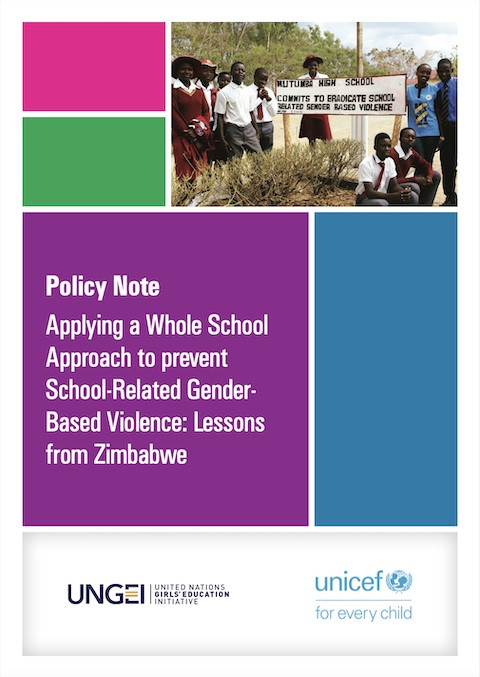 Applying a Whole School Approach to Prevent School-Related Gender-Based Violence: Lessons From Zimbabwe Year of publication: 2021 Corporate author: United Nations Girls’ Education Initiative (UNGEI) In 2018, the United Nations Girls’ Education Initiative (UNGEI) along with the Forum for African Women Educationalists Zimbabwe Chapter (FAWEZI), with support from UNICEF, launched a pilot initiative to test whether and how the eight domains and minimum standards can be operationalized in schools. Miske Witt & Associates (MWAI), a technical partner in the initiative, supported FAWEZI to design and monitor interventions aligned to the minimum standards. The pilot was implemented in ten schools (five primary and five secondary) across two districts in Zimbabwe.Implemented over the period October 2018 – December 2020, including during the COVID-19 lockdown, this policy note briefly describes the pilot, highlights what worked and lessons and recommendations for policy action. The target audience for this policy note are education practitioners, policymakers, researchers and donors.
 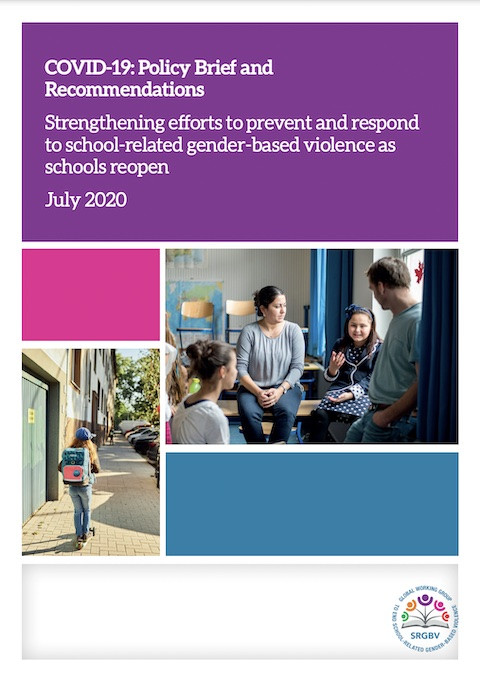 COVID-19: Policy Brief and Recommendations; Strengthening Efforts to Prevent and Respond to School-Related Gender-Based Violence as Schools Reopen Year of publication: 2020 Corporate author: United Nations Girls’ Education Initiative (UNGEI) This policy brief is targeted at policymakers and practitioners working in gender, education and child protection fields. It draws from emerging evidence on the gendered implications of COVID-19 on violence as well as research from previous health emergencies regarding the impacts of school closures on gender-based violence. Working on the principle of ‘Build Back Better’, this brief may be used to advocate for improved attention to school- related gender-based violence (SRGBV).
 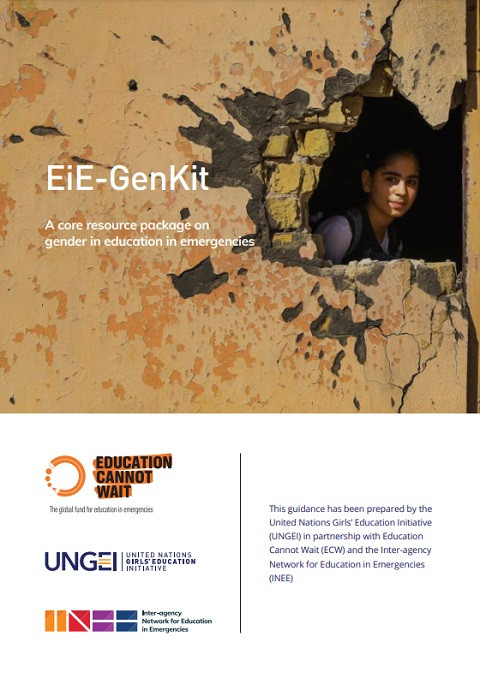 EiE-GenKit: A Core Resource Package on Gender in Education in Emergencies Year of publication: 2021 Corporate author: United Nations Girls’ Education Initiative (UNGEI) | Education Cannot Wait (ECW) | Inter-agency Network for Education in Emergencies (INEE) When gender-responsive, quality education is available to all it has the potential to transform societies and build sustainable peace. A joint initiative from the Inter-agency Network for Education in Emergencies (INEE), Education Cannot Wait (ECW) and the UN Girls’ Education Initiative (UNGEI), the EiE-GenKit is a core resource package for gender in education in emergencies. The EiE-GenKit is the first resource of its kind, providing education practitioners with practical tools to promote gender-responsive programming from crisis to peace and sustainable development.The EiE-GenKit is based on extensive research and consultation with the latest resources, evidence, new tools and good practice available in one easy-to-use package. The EiE-GenKit builds on existing humanitarian processes for a streamlined approach to gender-responsive EiE. The EiE-GenKit offers tools for practical and immediate use including checklists, tipsheets and assessment templates supporting practitioners to ensure that each phase of an EiE intervention is gender-responsive. Bridging the gap between what we know about gender-responsive EiE and the tools we need to make it happen, the EiE-GenKit aims to promote improved gender and education outcomes of learners living in crises.