
Resources
Explore a wide range of valuable resources on GCED to deepen your understanding and enhance your research, advocacy, teaching, and learning.
33 Results found
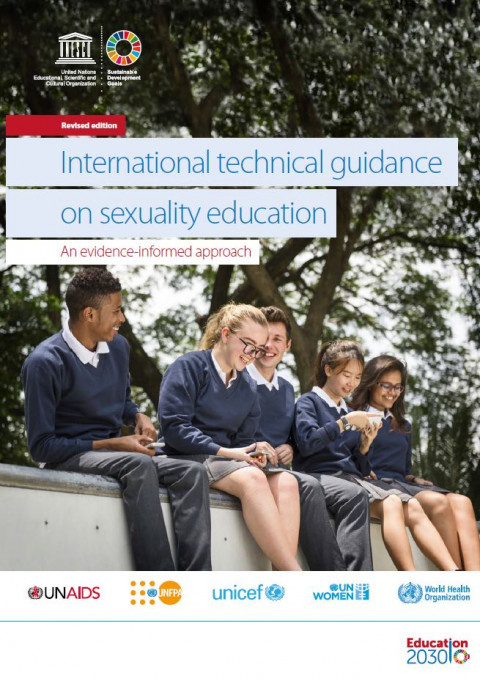 International Technical Guidance on Sexuality Education: An Evidence-Informed Approach Year of publication: 2018 Corporate author: Joint United Nations Programme on HIV/AIDS (UNAIDS) | United Nations Population Fund (UNFPA) | United Nations Children's Fund (UNICEF) | United Nations Entity for Gender Equality and the Empowerment of Women (UN Women) | World Health Organization (WHO) The UN International technical guidance on sexuality education was first published in 2009 as an evidence-informed approach for schools, teachers and health educators.Recognizing the dynamic shifts in the field of sexuality education that have occurred since then, an expanded group of UN co-publishing partners has reviewed and updated the content to respond appropriately to the contemporary needs of young learners, and to provide support for education systems and practitioners seeking to address those needs. The International technical guidance on sexuality education (revised edition) provides sound technical advice on the characteristics of effective comprehensive sexuality education (CSE) programmes; a recommended set of topics and learning objectives that should be covered in comprehensive sexuality education; and, recommendations for planning, delivering and monitoring effective CSE programmes. This revised edition of the Guidance reaffirms the position of sexuality education within a framework of human rights and gender equality, and promotes structured learning about sex and relationships in a manner that is positive, affirming, and centred on the best interests of the young person. It is based on a review of the latest evidence and lessons-learned from implementing CSE programmes across the globe. The revised Guidance reflects the contribution of sexuality education to the realization of multiple Sustainable Development Goals, notably Goal 3 on good health and well-being for all, Goal 4 on quality education for all, and Goal 5 to achieve gender equality.
 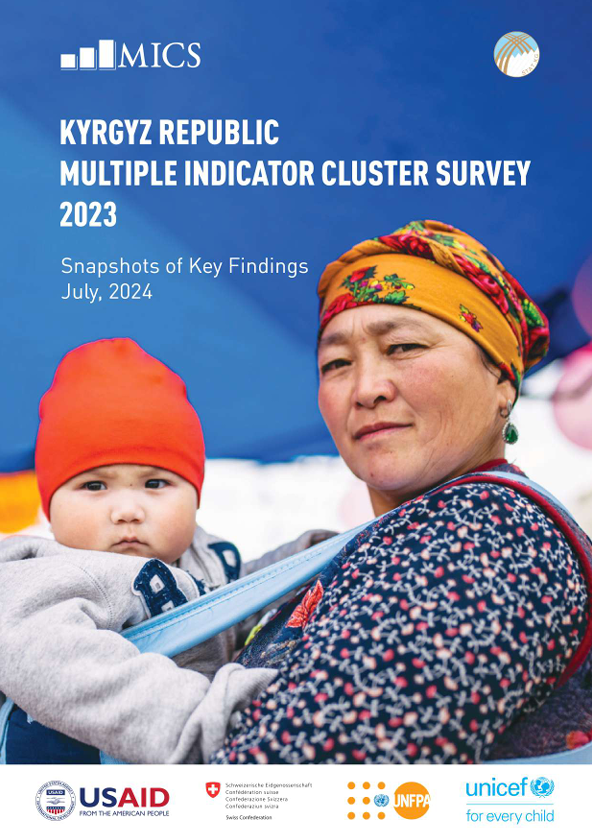 Kyrgyz Republic Multiple Indicator Cluster Survey 2023: Snapshots of Key Findings July, 2024 Year of publication: 2024 Corporate author: National Statistical Committee of the Kyrgyz Republic | UNICEF Kyrgyzstan | United Nations Population Fund (UNFPA) | United States Agency for International Development (USAID) | Government of Switzerland The 5th round of Multiple Indicator Cluster Survey (MICS) covers 7,200 households across Kyrgyzstan, measuring 185 indicators related to healthcare, education, and social protection for women and children. MICS 2023 produced data for 32 global Sustainable Development Goal (SDG) indicators, disaggregated by key characteristics such as gender, age, geographic location, income level and disability. Кластерное обследование по многим показателям в Кыргызстане 2023: Обзор основных статистических данных Июль 2024г. Year of publication: 2024 Corporate author: National Statistical Committee of the Kyrgyz Republic | UNICEF Kyrgyzstan | United Nations Population Fund (UNFPA) | United States Agency for International Development (USAID) | Government of Switzerland Национальный статистический комитет КР презентовал результаты нового Кластерного обследования по многим показателям (КОМП). В рамках исследования, было опрошено 7,2 тыс. домохозяйств по всему Кыргызстану по 185 показателям, связанных со здравоохранением, образованием и социальной защитой женщин и детей. В результате КОМП-2023 были собраны данные для 32 глобальных показателей Целей устойчивого развития (ЦУР), дезагрегированные по ключевым признакам, таким как пол, возраст, географическое положение, уровень дохода и наличие инвалидности.
 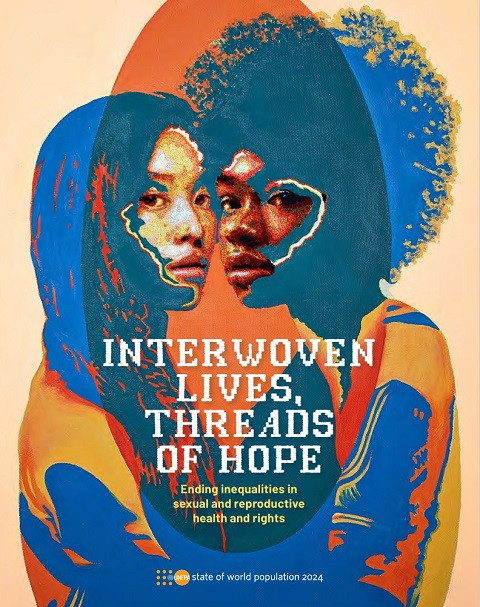 Interwoven Lives, Threads of Hope: Ending Inequalities in Sexual and Reproductive Health and Right; State of World Population 2024 Year of publication: 2024 Author: Daniel Baker | Ann Garbett | Gretchen Luchsinger | Tlaleng Mofokeng | Letlhogonolo Mokgoroane | Gilda Sedgh | Claire Thomas Corporate author: United Nations Population Fund (UNFPA) Everywhere, people seeking essential sexual and reproductive health care are forced to navigate overlapping hurdles because of their gender, economic status, ethnicity, sexual orientation, disability and more. In the few places where data are collected, women of African descent are found to be more vulnerable to obstetric mistreatment and negative maternal health outcomes. Indigenous women are often denied culturally appropriate maternal health care, and their own childbirth practices may be criminalized, resulting in significantly higher risk of death in pregnancy and childbirth. Gender-unequal norms remain embedded in health-care infrastructure, including persistent underinvestment in the world’s largely female midwifery workforce. Women and girls with disabilities face up to 10 times more gender-based violence while also facing higher barriers to sexual and reproductive information and care. LGBTQIA+ people face serious health disparities in addition to – and as a result of – discrimination and stigma. The path forward to fulfill the Cairo International Conference on Population and Development promise of universal sexual and reproductive health and rights is clear: To achieve it we must root out inequalities from our health systems and policies and focus as a priority on those women and young people who are most marginalized and excluded. We need comprehensive, universal and inclusive health care grounded in human rights and evidence of what works. This work is vitally important, it is just, and it is possible. This report contains many examples of programmes and efforts that have expanded access to, and uptake of, quality care, usually with interventions tailored by and for those most in need. To accelerate success, we will require more and better data, disaggregated to understand exactly who is being left behind, and collected with their input and safety assured.
 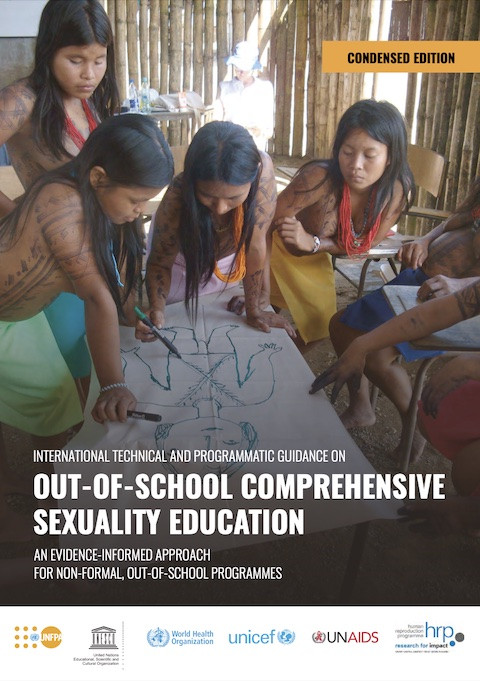 International Technical and Programmatic Guidance on Out-of-School Comprehensive Sexuality Education: An Evidence-Informed Approach for Non-Formal, Out-of-School Programmes Year of publication: 2020 Corporate author: United Nations Population Fund (UNFPA) This Guidance complements and refers to the International Technical Guidance on Sexuality Education published in 2018. Informed by evidence and grounded in a human-rights approach, this out-of-school edition provides concrete guidelines and recommendations to ensure that the most vulnerable young people receive information that enables them to develop the knowledge and skills they need to make informed choices about their sexual and reproductive health. Orientaciones técnicas y programáticas internacionales sobre educación integral en sexualidad fuera de la escuela: Un enfoque basado en evidencia para programas extraescolares Year of publication: 2020 Corporate author: United Nations Population Fund (UNFPA) Estas Orientaciones complementan y hacen referencia a las Orientaciones Técnicas Internacionales sobre Educación en Sexualidad publicadas en 2018. Elaborada a partir de evidencia y basada en un enfoque de derechos humanos, esta edición extraescolar proporciona orientaciones y recomendaciones concretas para asegurarnos de que las y los jóvenes más vulnerables reciban información que les permita desarrollar los conocimientos y las habilidades que necesitan para tomar decisiones informadas relacionadas con su salud sexual y reproductiva. Международное техническое и программное руководство по внешкольному комплексному сексуальному образованию: Информационно-доказательный подход для неформальных внешкольных программ Year of publication: 2020 Corporate author: United Nations Population Fund (UNFPA) Данное Руководство дополняет «Международное техническое руководство по сексуальному образо- ванию», опубликованное в 2018 году, и разработано на его основе. В данном издании для внешкольных программ, которое опирается на факты и использует правозащитный подход, даны конкретные инструкции и рекомендации, которые помогут наиболее уязвимым категориям молодых людей расширить свои знания и навыки, необходимые для принятия взвешенных решений, касающихся сексуального и репродуктивного здоровья.
 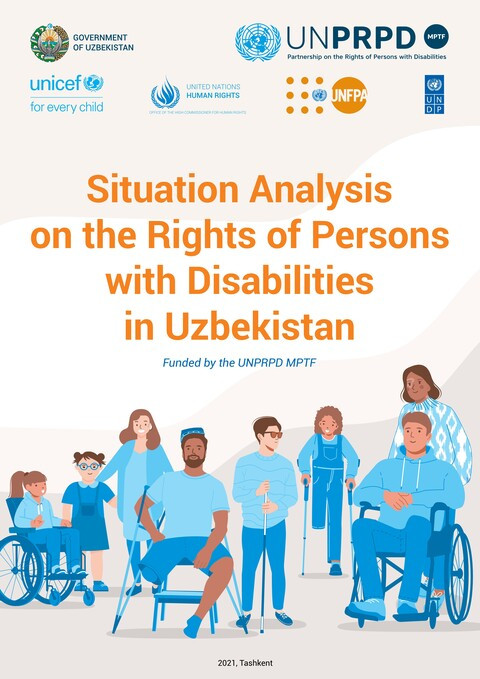 Situation Analysis on the Rights of Persons with Disabilities in Uzbekistan Year of publication: 2021 Corporate author: UNICEF Uzbekistan | United Nations Population Fund (UNFPA) | United Nations Development Programme (UNDP) | UN. Office of the United Nations High Commissioner for Human Rights (UN. OHCHR) This study is based on the results of a situation analysis of children and adults with disabilities conducted in 2019. The ambition of this Situation Analysis is not merely to point at problems but to lay ground for solutions by identifying the opportunities and catalytic forces emerging today. The report looks at the necessary preconditions for realisation of human rights of persons with disabilities, particularly women, girls, and boys with disabilities, such as a robust equality and non-discrimination framework, availability of inclusive and accessible services in the community, disability inclusive financial and coordination mechanisms, transparent monitoring and accountability systems and meaningful participation of persons with disabilities. Анализ ситуации по обеспечению прав лиц с инвалидностью в Узбекистане Year of publication: 2021 Corporate author: UNICEF Uzbekistan | United Nations Population Fund (UNFPA) | United Nations Development Programme (UNDP) | UN. Office of the United Nations High Commissioner for Human Rights (UN. OHCHR) Данное исследование основывается на результатах ситуационного анализа детей и взрослых с инвалидностью, проведенного в 2019 г. Цель данного анализа – не в том, чтобы указать на проблемы, а в том, чтобы заложить основу для их решения путем выявления возможностей и сил содействия, возникающих сегодня. В отчете рассматриваются необходимые предпосылки для реализации прав человека людей с инвалидностью, особенно женщин, девочек и мальчиков с инвалидностью, такие как надежная система обеспечения равенства и недискриминации, наличие инклюзивных и доступных услуг в сообществе, финансовые и координационные механизмы, учитывающие интересы людей с инвалидностью, прозрачные системы мониторинга и отчетности, а также значимое участие людей с инвалидностью.
 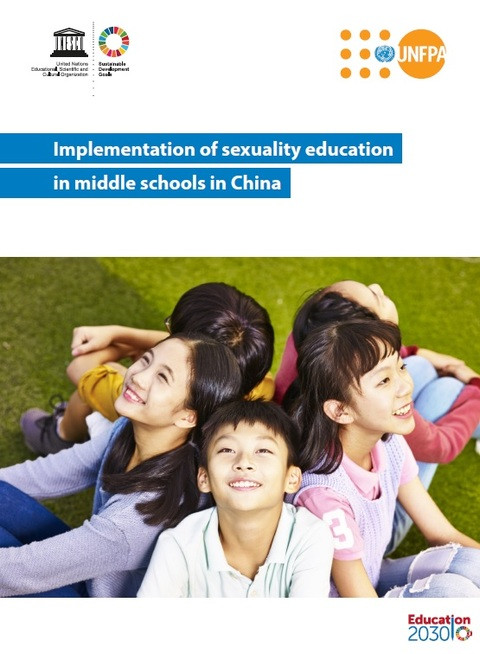 Implementation of Sexuality Education in Middle Schools in China Year of publication: 2018 Corporate author: UNESCO Beijing | United Nations Population Fund (UNFPA) This research report describes the current situation and problems with the implementation of sex education in schools in China, and makes relevant recommendations for policy makers and schools.