
Resources
Explore a wide range of valuable resources on GCED to deepen your understanding and enhance your research, advocacy, teaching, and learning.
6 Results found
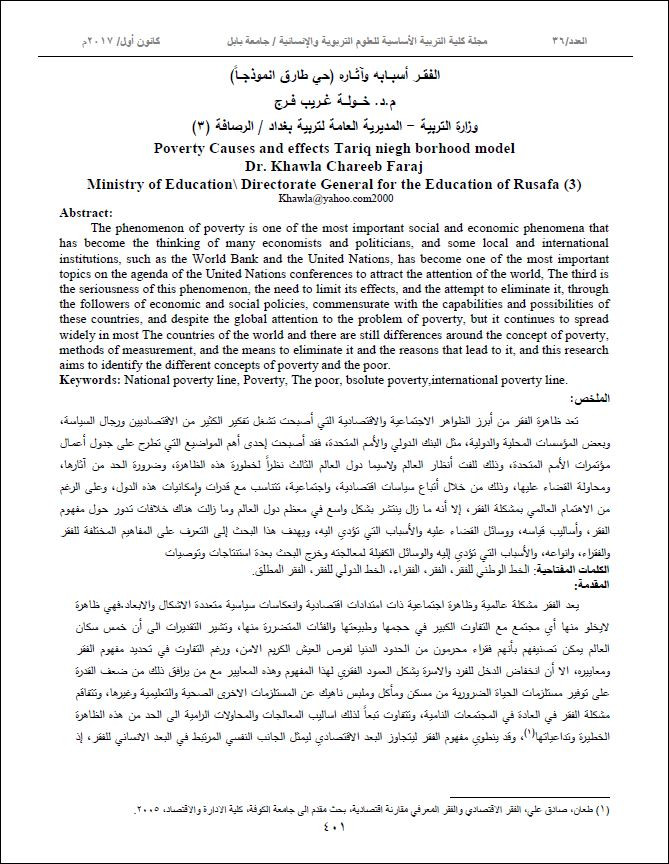 الفقر أسبابه وآثاره (حي طارق انموذجا) Year of publication: 2017 Author: Khawla Chareeb Faraj Corporate author: University of Babylon تعد ظاهرة الفقر من أبرز الظواهر الاجتماعية والاقتصادية التي أصبحت تشغل تفكير الكثير من الاقتصاديين ورجال السياسة، وبعض المؤسسات المحلية والدولية، مثل البنك الدولي والأمم المتحدة، فقد أصبحت إحدى أهم المواضيع التي تطرح على جدول أعمال مؤتمرات الأمم المتحدة، وذلك للفت أنظار العالم ولاسيما دول العالم الثالث نظرا لخطورة هذه الظاهرة، وضرورة الحد من آثارها، ومحاولة القضاء عليها، وذلك من خلال أتباع سياسات اقتصادية، واجتماعية، تتناسب مع قد ا رت وامكانيات هذه الدول، وعلى الرغم من الاهتمام العالمي بمشكلة الفقر، إلا أنه ما ا زل ينتشر بشكل واسع في معظم دول العالم وما ا زلت هناك خلافات تدور حول مفهوم الفقر، وأساليب قياسه، ووسائل القضاء عليه والأسباب التي تؤدي اليه، ويهدف هذا البحث إلى التعرف على المفاهيم المختلفة للفقر، وانواعه، والأسباب التي تؤدي إليه والوسائل الكفيلة لمعالجته وخرج البحث بعدة استنتاجات وتوصيات. Poverty Causes and Effects: Tareq Neighborhood as a Model Year of publication: 2017 Author: Khawla Chareeb Faraj Corporate author: University of Babylon The phenomenon of poverty is one of the most important social and economic phenomena that has become the thinking of many economists and politicians, and some local and international institutions, such as the World Bank and the United Nations, has become one of the most important topics on the agenda of the United Nations conferences to attract the attention of the world, The third is the seriousness of this phenomenon, the need to limit its effects, and the attempt to eliminate it, through the followers of economic and social policies, commensurate with the capabilities and possibilities of these countries, and despite the global attention to the problem of poverty, but it continues to spread widely in most The countries of the world and there are still differences around the concept of poverty, methods of measurement, and the means to eliminate it and the reasons that lead to it, and this research aims to identify the different concepts of poverty and the poor.
  دور التربية والتعليم في تحصين عقول الناشئة من التطرف والارهاب Year of publication: 2015 Author: السلطاني، نسرين حمزة عباس Corporate author: University of Babylon الإرهاب أصبح ظاهرة عالمية، أي أنها لا ترتبط بمنطقة أو ثقافة أو مجتمع أو جماعات دينية أو عرقية معينة، بل ترتبط بعوامل اجتماعية وثقافية وسياسية وتقنية أفرزتها التطورات السريعة والمتلاحقة في العصر الحديث. فقد شهدت السنوات الأولى من القرن الواحد والعشرين تصاعدا ملحوظاً في العمليات الإرهابية في قطرنا (العراق). ...كل تلك التفجيرات تعكس فكرا متطرفاً لدى مجموعة من الشباب الذين يحملون فتاوى مستوردة من رموز فكرية خارجة عن تعاليم الدين الإسلامي التي تدعو إلى التسامح وقبول الآخر. إنما أصبح الأمن قضية يجب أن نشارك فيها جميعا، فالهاجس الأمني لم يعد مسؤولية رجال الأمن وحدهم... وتمثل المدرسة الوسط االاجتماعي الثاني بعد الأسرة التي يتشرب فيها الناشئة القيم الاجتماعية والثقافية في المجتمع. إذا ما فشلت المدرسة في تشريب الناشئة تلك القيم فإن المجتمع يفقد خط الدفاع الثاني ضد الجريمة. لذا فإن استعراض الدور الأمني للمؤسسات التعليمية في مقاومة الإرهاب والعنف والتطرف أصبح أمرأً ضروريا في الوقت الحاضر... والبحث الحالي هو محاولة استعراض دور المدرسة في مقاومة الإرهاب والعنف والتطرف بأشكاله الحديثة التي أصبحت تهدد كل أفراد المجتمع على اختلاف أماكنهم ومسؤولياتهم. ويمكن توضيح ذلك من خلال الإجابة عن السؤالين التاليين- ما مفهوم العنف والإرهاب والتطرف؟ - ما دور المدرسة الوقائي في مواجهة ظاهرة الإرهاب والعنف والتطرف؟ The Role of Education in Enforcing the Mentality of the Youth Against Terrorism and Extremism Year of publication: 2015 Author: السلطاني، نسرين حمزة عباس Corporate author: University of Babylon Terrorism has become an international phenomenon. It does not relate to a certain region or culture or society or certain religious group. Terrorism is related to social, political factors as a result of the rapid progress. The early years of the twenty first century have witnessed growth of terrorism in Iraq. Many specialists think that those years represent a turning point in the history of terrorism. Actually, terrorism is not limited to western countries but it strikes all Arab counties especially Iraq. All those explosions reflect extremist thought adopted by young people mobilized by Fatwas imported from ideologies foreign to Islamic Teachings that advocate tolerance and accepting the other. Security is not anymore the sole responsibilty of security forces rather all formal and informal institutions of society must be engaged.Next to the family, the school represents the second social environment where young people internalize social and cultural values. Should the school fail to do that society would loose its srcond defence line. Hence, it is necessary to discuss the role of the educational institutions in combatting terrorism and extremism. This study attempts to look at the role of schools in combatting terrorism, violence and extremism in all their contemporary forms, through the following two questions: what is the concept of violence, terrorism and violence? what role for the school in facing this phenomenon?
 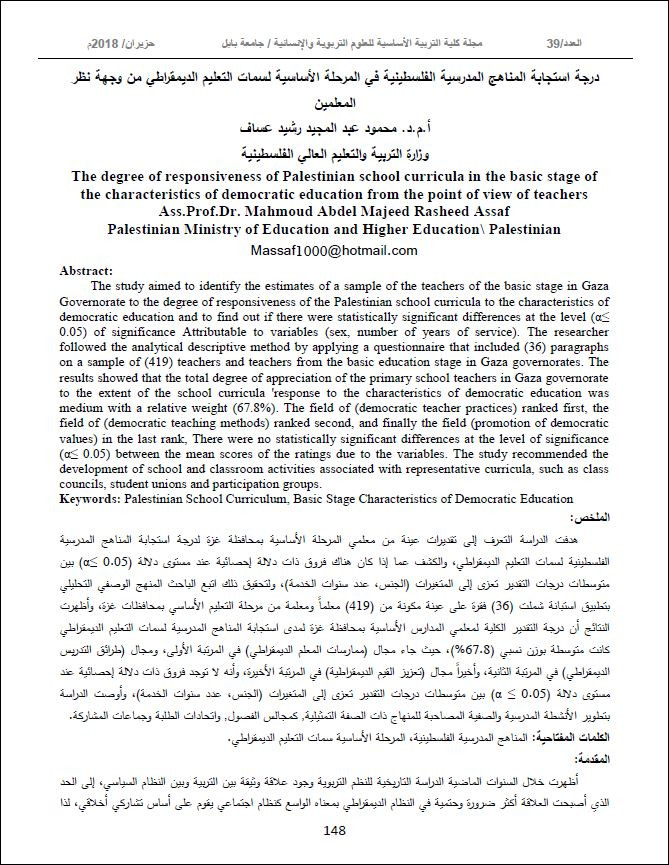 The Degree of Responsiveness of Palestinian School Curricula in the Basic stage of the Characteristics of Democratic Education from the Point of View of Teachers Year of publication: 2018 Author: Mahmoud Abdel Majeed Rasheed Assaf Corporate author: University of Babylon The study aimed to identify the estimates of a sample of the teachers of the basic stage in Gaza Governorate to the degree of responsiveness of the Palestinian school curricula to the characteristics of democratic education and to find out if there were statistically significant differences at the level (α≤ 0.05) of significance Attributable to variables (sex, number of years of service). The researcher followed the analytical descriptive method by applying a questionnaire that included (36) paragraphs on a sample of (419) teachers and teachers from the basic education stage in Gaza governorates. The results showed that the total degree of appreciation of the primary school teachers in Gaza governorate to the extent of the school curricula 'response to the characteristics of democratic education was medium with a relative weight (67.8%). The field of (democratic teacher practices) ranked first, the field of (democratic teaching methods) ranked second, and finally the field (promotion of democratic values) in the last rank, There were no statistically significant differences at the level of significance (α≤ 0.05) between the mean scores of the ratings due to the variables. The study recommended the development of school and classroom activities associated with representative curricula, such as class councils, student unions and participation groups. درجة استجابة المناهج المدرسية الفلسطينية في المرحلة الأساسية لسمات التعليم الديمقراطي من وجهة نظرالمعلمين Year of publication: 2018 Author: Mahmoud Abdel Majeed Rasheed Assaf Corporate author: University of Babylon هدفت الدراسة التعرف إلى تقديرات عينة من معلمي المرحلة الأساسية بمحافظة غزة لدرجة استجابة المناها المدرسية الفلسطينية لسمات التعليم الديمقراطي، والكشف عما إذا كان هنالك فروق ذات دالة إحصائية عند مستوى دالة (05.0≤ α (بين متوسطات درجات التقدير تعزى إلى المتغيرات )الجنس، عدد سنوات الخدمة(، ولتحقيق ذلل اتبع الباحث المنها الوصفي التحليلي بتطبيق استبانة شملت )36 )فقرة على عينة مكونة من )419 )معلما ومعلمة من مرحلة التعليم الأساسي بمحافظات غزة، وأظهرت النتائج أن درجة التقدير الكلية لمعلمي المدارس الأساسية بمحافظة غزة لمدى استجابة المناها المدرسية لسمات التعليم الديمقراطي كانت متوسطة بوزن نسبي )8.67 ،)%حيث جاء مجال )ممارسات المعلم الديمقراطي( في المرتبة الأولى، ومجال )طرائق التدريس وأخي ار مجال )تعزيز القيم الديمقراطية( في المرتبة الأخيرة، وأنث ال توجد فروق ذات دالة إحصائية عند الديمقراطي( في المرتبة الثانية، مستوى دالة (05.0 ≤ α (بين متوسطات درجات التقدير تعزى إلى المتغيرات )الجنس، عدد سنوات الخدمة(، وأوصت الدراسة بتطوير الأنشطة المدرسية والصفية المصاحبة للمنهاج ذات الصفة التمثيلية, كمجالس الفصول, واتحادات الطلبة وجماعات المشاركة.