
Resources
Explore a wide range of valuable resources on GCED to deepen your understanding and enhance your research, advocacy, teaching, and learning.
51 Results found
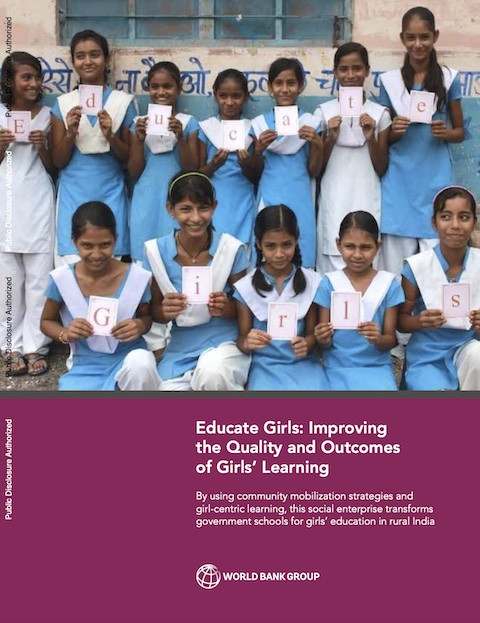 Educate Girls: Improving the Quality and Outcomes of Girls’ Learning Year of publication: 2017 Corporate author: World Bank In India, women and girls, especially in rural areas, are particularly affected by the country’s illiteracy problem, since they face discrimination based on their sex and need for childbearing. In Rajasthan, the north- western Indian state that borders Pakistan, 9 out of 26 districts have the worst gender gap in India for girls’ education.Established in 2007, Educate Girls is holistically tackling issues at the root cause of gender inequality in India’s education system that has helped to ensure over 90% enrollment and significantly higher attendance for all girls as well as improved school infrastructure, quality of education and learning outcomes for all children.As a result of Educate Girls’ efforts to date, an army of “girls champions” has been created to combat cultural issues and support systemic change. More than 150,000 out-of-school girls have been enrolled in school and the program has benefitted around 3.8 million of beneficiaries. Continuing to address the social and cultural barriers in girls’ education can bring about real transformation, such as improvement in health, income levels, and overall livelihoods in rural populations.
 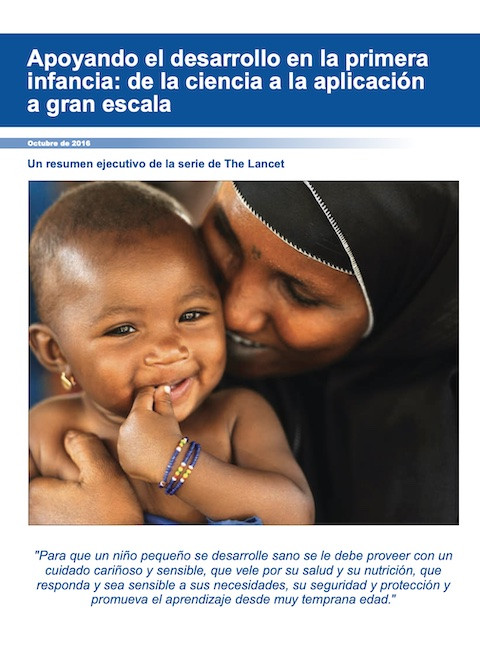 Supporting Early Childhood Development: From Science to Large-Scale Application Year of publication: 2016 Author: The Lancet Corporate author: United Nations Children's Fund (UNICEF) | World Bank | World Health Organization (WHO) This document summarizes the series of articles on Early Childhood Development published by The Lancet in 2016. It presents new scientific evidence that supports interventions and proposes measures to be applied in large-scale child development programs. The series emphasizes "loving care sensitive to the needs of the child", especially up to three years of age, as well as multisectoral interventions that, taking the health sector as a starting point, allow reaching many families and young children through health and nutrition. Apoyando el desarrollo en la primera infancia: De la ciencia a la aplicación a gran escala Year of publication: 2016 Author: The Lancet Corporate author: United Nations Children's Fund (UNICEF) | World Bank | World Health Organization (WHO) Este documento resume la serie de artículos sobre Desarrollo en la primera infancia que publicó The Lancet en 2016. Presenta nueva evidencia científica que fundamenta intervenciones y propone medidas a ser aplicadas en programas de desarrollo infantil a gran escala. La serie hace hincapié en el “cuidado cariñoso y sensible a las necesidades del niño”, sobre todo hasta los tres años de edad, así como en las intervenciones multisectoriales que, tomando el sector salud como punto de partida, permiten llegar a muchas familias y niños pequeños a través de la salud y la nutrición.
  موجز التقرير العالمي حول الإعاقة Year of publication: 2011 Corporate author: World Health Organization (WHO) | World Bank قامت منظمة الصحة العالمية بالاشتراك مع البنك الدولي في إصدار هذا التقرير العالمي حول الإعاقة، من أجل عرض البيِّنات اللازمة لوضع السياسات والبرامج المبتكرة القادرة على تحسين حياة ذوي الإعاقة، وتيسير تنفيذ اتفاقية الأمم المتحدة لحقوق الأشخاص ذوي الإعاقة التي تم تفعيلها في أيار/مايو من عام 2008. ويقدم التقرير العالمي تعريفا عن الإعاقة بوصفها مصطلحاً جامعاً يضم تحت مظلته الأشكال المختلفة للاعتلال/الخلل العضوي، ومحدودية النشاط، والقيود التي تحد من المشاركة. كما أن مصطلح الإعاقة يعود إلى السمات السلبية للتفاعل بين الأفراد الذين يعانون من حالة صحية ما )مثل الشلل الدماغي، أو متلازمة داون، أو الاكتئاب(، وبين العوامل الشخصية والبيئية )مثل المواقف السلبية، وانعدام إتاحة وسائل النقل والمباني العامة، والدعم الاجتماعي المحدود).ثم يقدم اقتراحات بخطوات يمكن أن تتخذ من قبل كافة الأطراف المعنية –ومنها الحكومات، ومنظمات المجتمع المدني، ومنظمات الأشخاص ذوي الإعاقة – من أجل إيجاد بيئات ممكِّنة، وتطوير خدمات التأهيل والدعم، وضمان الحماية الاجتماعية الكافية، وإطلاق سياسات وبرامج شاملة، وتفعيل المعايير والتشريعات الجديدة والقائمة، وذلك لصالح ذوي الإعاقة والمجتمع على نطاقه الأوسع. وينبغي أن يكون ذوو الإعاقة هم المركز الذي تتمحور حوله هذه المساعي. كما يلقي الضوء على العقبات والعوائق المتباينة التي يواجهها ذوو الإعاقة - عقبات تتعلق بما يصادفونه من مواقف واتجاهات، وعقبات مادية، ومالية – وكلها عقبات يسهل التعامل معها والتصدي لها. يقدم توصيات للعمل على المستويات المحلية والوطنية والدولية، ومن ثم فهو أداة لا تقدر بثمن. Summary of the World Report on Disability Year of publication: 2011 Corporate author: World Health Organization (WHO) | World Bank The World Health Organization and the World Bank jointly produced this global report on disability, in order to present the evidence needed to develop innovative policies and programs capable of improving the lives of people with disabilities, and to facilitate the implementation of the United Nations Convention on the Rights of Persons with Disabilities that was activated in May of 2008. The World Report provides a definition of disability as an umbrella term that includes under its umbrella various forms of organ impairment/dysfunction, limited activity, and participation limitations. The term disability also refers to the negative features of the interaction between individuals with a health condition (such as cerebral palsy, Down syndrome, or depression), and between personal and environmental factors (such as negative attitudes, lack of access to transportation and public buildings, and limited social support).It then presents suggestions for steps that can be taken by all concerned parties - including governments, civil society organizations, and organizations of persons with disabilities - in order to create enabling environments, develop rehabilitation and support services, ensure adequate social protection, launch comprehensive policies and programs, and activate new standards and legislation List, for the benefit of people with disabilities and society at large. People with disabilities should be the centerpiece of these endeavours. It also sheds light on the various obstacles and barriers faced by persons with disabilities - obstacles related to the attitudes and trends they encounter, and physical and financial obstacles - all of which are easy to deal with and address. It provides recommendations for action at the local, national and international levels, and is thus an invaluable tool.
 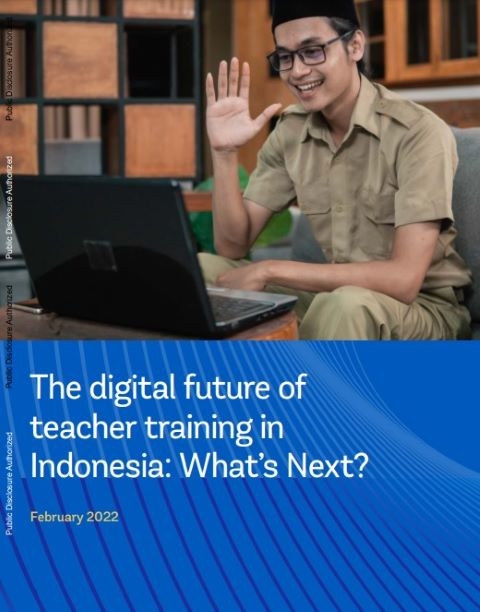 The Digital Future of Teacher Training in Indonesia: What’s Next? Year of publication: 2022 Author: Noah Yarrow | Noviandri Khairina | Jacobus Cilliers | Indah Dini Corporate author: World Bank | Government of Australia This report reflects on the Indonesia’s online teacher training ecosystem based on unique data collected from both teachers and providers during the COVID-19 period. A detailed mapping of the eight largest providers of online teacher training in Indonesia was conducted, covering 25 programs. We find that the majority of programs are short in duration and focus on digital literacy skills and remote learning. Training programs were mostly provided using online lectures, few provided individual coaching, while none provided opportunities for personalized learning. Second, we conducted a nationally representative phone survey of 435 primary and junior secondary teachers spanning 30 provinces across Indonesia (66 percent of whom are female teachers). The teacher survey was conducted between February and March 2021 and covered teachers under both the Ministry of Education, Research, and Technology (MoECRT) and the Ministry of Religious Affairs (MoRA). We find that 44 percent of teachers participated in online learning during the pandemic, and that three quarters of these teachers had never participated in online training prior to the pandemic. Many training participants reported challenges in implementing what they learned from online training. Most of the teachers who participated (88 percent) would like to continue receiving training online even after the pandemic ends. These results suggest that demand for online training is expected to persist, but more can be done to improve their quality.
  Gender Bias, Citizen Participation, and AI (Policy Research Working Papers; Planet; RRR; 11046) Year of publication: 2025 Author: Jose Antonio Cuesta Leiva | Natalia Gisel Pecorari Corporate author: World Bank This paper investigates the role of gender bias in artificial intelligence–driven analyses of citizen participation, using data from the 2023 Latinobarómetro Survey. The paper proposes that gender bias—whether societal, data driven, or algorithmic—significantly affects civic engagement. Using machine learning, particularly decision trees, the analysis explores how self-reported societal bias (machismo norms) interacts with personal characteristics and circumstances to shape civic participation. The findings show that individuals with reportedly low levels of gender bias, who express political interest, have high levels of education, and align with left-wing views, are more likely to participate. The paper also explores different strategies to mitigate gender bias in both the data and the algorithms, demonstrating that gender bias remains a persistent factor even after applying corrective measures. Notably, lower machismo thresholds are required for participation in more egalitarian societies, with men needing to exhibit especially low machismo levels. Ultimately, the findings emphasize the importance of integrated strategies to tackle gender bias and increase participation, offering a framework for future studies to expand on nonlinear and complex social dynamics.
 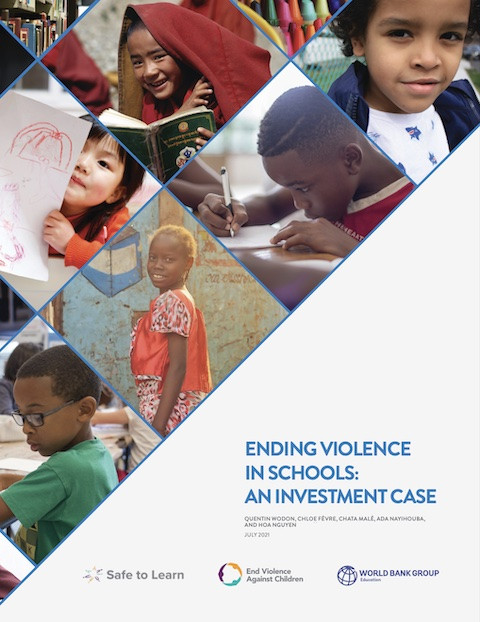 Ending Violence in Schools : An Investment Case Year of publication: 2021 Author: Quentin Wodon | Chloë Fèvre | Chata Malé | Ada Nayihouba | Hoa Nguyen Corporate author: World Bank Preventing violence in and through school is a prerequisite for girls and boys getting the education they need and deserve, and acquiring the skills, knowledge and values that provide the foundations for strong and inclusive societies. This report demonstrates that violence in and around schools negatively impacts educational outcomes, and society pays a heavy price as a result (with an estimate of $11 trillion in lost lifetime earnings). Cost-benefit analyses suggest that implementing interventions to prevent violence in and through schools from early childhood to secondary education is a smart economic investment. Rigorously evaluated programs and policies aimed at preventing violence at different levels of the education system show that action is feasible. The benefits of investing in preventing violence in and through schools is likely to far outweigh the costs.
 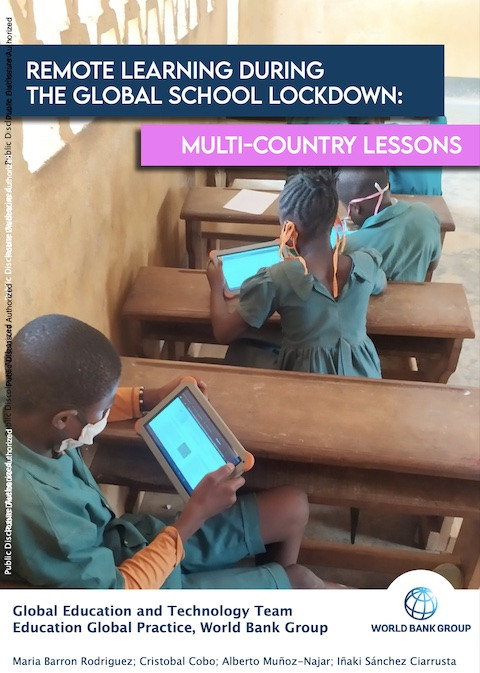 Remote Learning During the Global School Lockdown: Multi-Country Lessons Year of publication: 2020 Author: Maria Barron Rodriguez | Cristobal Cobo | Alberto Muñoz-Najar | Iñaki Sánchez Ciarrusta Corporate author: World Bank This study includes three main sections that have been organized in a chronological order within this report: the first one, “What can we learn from education emergency responses in low- and middle-income countries?” analyzes the emergency education responses to the COVID-19 pandemic of over 120 governments from April until May, 2020. The second section, “Is remote learning perceived as effective? An in-depth analysis across five countries” discusses the main national education responses deployed by Brazil, Kenya, Nigeria, Sierra Leone, and Peru, as well as the perceived effectiveness of these strategies conducted from May until August, 2020. The third section, “What works with remote and remedial strategies? an analysis across 13 countries” builds on key lessons learned during the analysis of the five multi-country experiences and presents global trends of remote learning implemented during school closures and the actions governments adopted to get ready for remedial learning, conducted from August until December 2020. The countries prioritized for the third section are IDA borrowing countries of which six are low-income countries: Afghanistan, Haiti, Malawi, Mozambique, Niger, and Rwanda; and five are lower-middle-income countries: Cambodia, Cameroon, Kenya, Nepal, and Pakistan. Additionally, two high-income countries, Estonia and Uruguay, have been included in the report. The main trends across this report are discussed below and have been grouped in five themes: (1) Adopt delivery systems with an inclusive approach; (2) Adjust the curriculum to ensure effectiveness; (3) Secure sustained teacher training and in-service support; (4) Leverage institutional capacities while ensuring sustained monitoring and evaluation; and (5) Consolidate national strategies to remediate learning losses.
 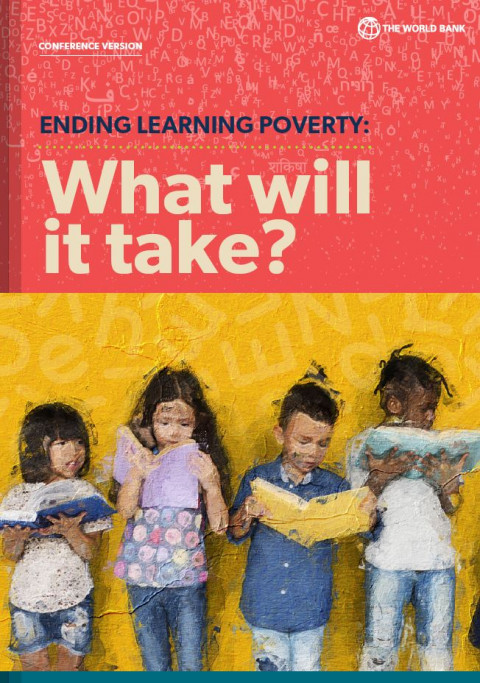 Ending Learning Poverty : What Will It Take? Year of publication: 2019 Corporate author: World Bank In recent years, it has become clear that many children around the world are not learning to read proficiently. As a major contributor to human capital deficits, the learning crisis undermines sustainable growth and poverty reduction. To spotlight this crisis, we are introducing the concept of Learning Poverty, drawing on new data developed in coordination with the UNESCO Institute for Statistics.