
Resources
Explore a wide range of valuable resources on GCED to deepen your understanding and enhance your research, advocacy, teaching, and learning.
31 Results found
 Health-related SDG Targets in Tajikistan: Implementation of Policies and Measures for Health and Well-being Year of publication: 2020 Corporate author: World Health Organization (WHO) This report reviews and assesses the achievements towards SDG 3 and its targets as well as health-related targets of other SDGs to date in Tajikistan. This is the first step of the GAP process (engage, assess, align, accelerate and account) and will clarify priorities for action to accelerate the achievement of SDG 3 in Tajikistan and alignment of development partners’ support. Задачи ЦУР, связанные со здоровьем, в Таджикистане: реализация политики и мер в области здравоохранения и повышения благополучия населения Year of publication: 2020 Corporate author: World Health Organization (WHO) В этом отчете проводится обзор и оценка достижений в достижении ЦУР 3 и связанных с ней задач, а также связанных со здоровьем задач других ЦУР на сегодняшний день в Таджикистане. Это первый шаг процесса ГПД (вовлечение, оценка, согласование, ускорение и учет), который прояснит приоритеты действий для ускорения достижения ЦУР 3 в Таджикистане и согласования поддержки партнеров по развитию.
  International Technical Guidance on Sexuality Education: An Evidence-Informed Approach Year of publication: 2018 Corporate author: Joint United Nations Programme on HIV/AIDS (UNAIDS) | United Nations Population Fund (UNFPA) | United Nations Children's Fund (UNICEF) | United Nations Entity for Gender Equality and the Empowerment of Women (UN Women) | World Health Organization (WHO) The UN International technical guidance on sexuality education was first published in 2009 as an evidence-informed approach for schools, teachers and health educators.Recognizing the dynamic shifts in the field of sexuality education that have occurred since then, an expanded group of UN co-publishing partners has reviewed and updated the content to respond appropriately to the contemporary needs of young learners, and to provide support for education systems and practitioners seeking to address those needs. The International technical guidance on sexuality education (revised edition) provides sound technical advice on the characteristics of effective comprehensive sexuality education (CSE) programmes; a recommended set of topics and learning objectives that should be covered in comprehensive sexuality education; and, recommendations for planning, delivering and monitoring effective CSE programmes. This revised edition of the Guidance reaffirms the position of sexuality education within a framework of human rights and gender equality, and promotes structured learning about sex and relationships in a manner that is positive, affirming, and centred on the best interests of the young person. It is based on a review of the latest evidence and lessons-learned from implementing CSE programmes across the globe. The revised Guidance reflects the contribution of sexuality education to the realization of multiple Sustainable Development Goals, notably Goal 3 on good health and well-being for all, Goal 4 on quality education for all, and Goal 5 to achieve gender equality.
  Preventing Youth Violence: An Overview of the Evidence Year of publication: 2015 Corporate author: World Health Organization (WHO) Every year about 200.000 adolescents and young people between the ages of 10 and 29 die, which places homicide in fourth place in the world as cause of death in young population. Several million adolescents and young people suffer from acts of violence, and trauma that require urgent medical and psychological treatment. The emotional imprints that youth volence leaves on its survivors and their loved ones are often profound. Youth violence destroys lives and its consequences have very high economic costs, both for society and for the families of young people. The goal of this manual is to provide a scientific framework that allows us to understand why some people have a greater tendency to be involved in acts of youth violence and how to prevent it. La prevención de la violencia juvenil: Panorama general de la evidencia Year of publication: 2015 Corporate author: World Health Organization (WHO) Cada año mueren unos 200.000 adolescentes y jovenes entre los 10 y los 29 años de edad, lo cual coloca al homicidio en cuarto lugar en el mundo como causa demuerte en la población joven. Varios millones de adolescentes y jovenes sufren por actos de violencia, traumatismos que exijen tratamiento medico y psicologico urgente. Las huellas emocionales que la violencia juvenil deja en sus sobrevivientes y en los seres queridos de estos suelen ser profundas. La violencia juvenil destroza vidas y sus consecuencias tienen costos economicos muy altos,tanto para la sociedad como para las familias de los jovenes. El objetivo de este manual es ayudar a los formuladores de politicas y planificadores en todas partes a contrarrestar la violencia juvenil mediante estrategias respaldadas por la evidencia. El manual proporciona un marco cientifico que permite entender por qué algunas personas tiene una mayor tendencia a verse involucradas en actos de violencia juvenil y cómo prevenirla.
  Caring for Women Subjected to Violence: A Who Curriculum For Training Health-Care Providers Year of publication: 2019 Corporate author: World Health Organization (WHO) This curriculum draws on the work of many people around the world dedicated to preventing and responding to all forms of violence against women and girls. WHO would like to thank all of those who contributed and who shared their training exercises and experiences, many of which have been incorporated into this manual. Atención para las mujeres que han sufrido violencia: Programa de capacitación de la OMS dirigido a los prestadores de servicios de salud Year of publication: 2019 Corporate author: World Health Organization (WHO) Este programa de capacitación se basa en el trabajo de muchas personas de todo el mundo que se dedican a prevenir y responder frente a todas las formas de violencia contra las mujeres y las niñas.
 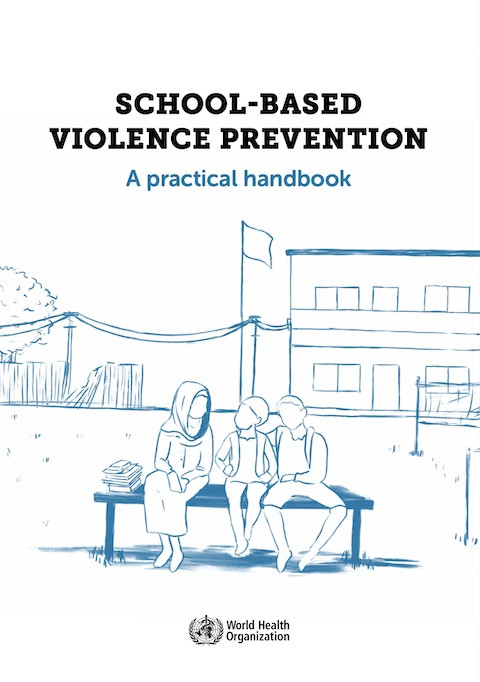 School-Based Violence Prevention: A Practical Handbook Year of publication: 2019 Corporate author: World Health Organization (WHO) School-based violence prevention: a practical handbook is a World Health Organization (WHO) resource for school officials and educators to help prevent violence in and around schools. The handbook gives advice on how schools can embed violence prevention within their routine activities and across the points of interaction schools provide with children, parents and other community members. Prevención de la violencia en la escuela: Manual práctico Year of publication: 2019 Corporate author: World Health Organization (WHO) Este recurso, Prevención de la violencia en la escuela: manual práctico, trata sobre la escuela, la educación y la prevención de la violencia. Ofrece orientación a los funcionarios escolares y a las autoridades de Educación sobre el modo en que las escuelas pueden incorporar la prevención de la violencia a sus actividades habituales y en todos los puntos de interacción facilitan con los niños, los progenitores y otros miembros de la comunidad. La puesta en práctica del manual contribuirá en gran medida a la consecución de los ODS y otros objetivos mundiales de salud y desarrollo. Prévention de la violence à l’école : Guide pratique Year of publication: 2019 Corporate author: World Health Organization (WHO) Cette ressource intitulée Prévention de la violence à l’école : guide pratique, porte sur l’école, l’éducation et la prévention de la violence. Ce guide conseille le personnel des écoles et les autorités chargées de l’éducation quant à la façon dont les établissements scolaires peuvent intégrer la prévention de la violence dans leurs activités de routine. Il leur propose également de réfléchir au lieu même qu’est l’école, à savoir un espace d’interaction et de communication entre parents, enfants et les autres membres de la communauté. S’il est mis en œuvre, ce manuel contribuera grandement à la réalisation des ODD et d’autres objectifs mondiaux en matière de santé et de développement.