
Resources
Explore a wide range of valuable resources on GCED to deepen your understanding and enhance your research, advocacy, teaching, and learning.
22 Results found
 Au-delà du COVID-19 : Un plan féministe de durabilité et de justice sociale Year of publication: 2021 Corporate author: United Nations Entity for Gender Equality and the Empowerment of Women (UN Women) Alors que le monde apprend à vivre avec le COVID-19, à « reconstruire en mieux » et est mobilisé pour sortir de la crise actuelle, le nouveau « Plan féministe » d’ONU Femmes fournit une feuille de route visionnaire mais concrète visant à placer l’égalité des sexes, la justice sociale et la durabilité au centre de la relance. Le « Plan féministe » cartographie les politiques ambitieuses et transformatrices relatives aux moyens de subsistance, aux soins et à l'environnement qui sont nécessaires pour construire un avenir plus équitable et durable. Pour y parvenir, il appelle à des approches politiques spécifiques au contexte, à des stratégies politiques adaptées et à un financement. Le plan identifie les leviers clés qui peuvent créer un changement ainsi que les actrices et acteurs aux niveaux mondial, national et local qui doivent prendre des mesures pour avancer vers cette vision.
 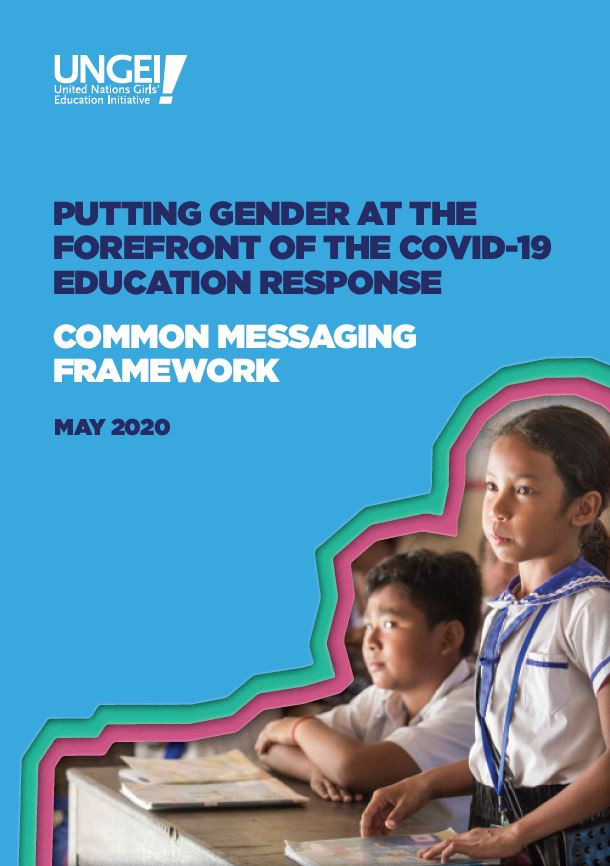 Mettre le genre au premier plan de la réponse éducative au COVID-19: Cadre de messagerie commun Year of publication: 2020 Corporate author: United Nations Girls' Education Initiative (UNGEI) Les fermetures d’écoles à l’échelle nationale dans le cadre des mesures visant à prévenir la propagation du COVID-19 ont perturbé l’éducation de toute une génération d’enfants et de jeunes. Les urgences sanitaires antérieures démontrent que les filles sont touchées de manière disproportionnée, les effets de l’inégalité entre les sexes et des structures de pouvoir inégales étant exacerbés en temps de crise.En tant que partenariat mondial dédié à la promotion de l’égalité des sexes dans et à travers l’éducation, nous devons tirer parti de la puissance de l’action collective pour placer le genre au premier plan de la réponse COVID-19 et renforcer la cohérence dans le plaidoyer et la communication entre les organisations partenaires et alliées.Cette initiative de messagerie commune représente une opportunité stratégique pour favoriser le dialogue et attirer l’attention sur les impacts sexospécifiques de COVID-19, plaider en faveur de stratégies pour répondre aux dimensions sexospécifiques de cette crise et envisager la réouverture en toute sécurité des écoles à travers une perspective sexospécifique.
  Progrès vers la réalisation des Objectifs de développement durable : Gros plan sur l’égalité des sexes 2021 Year of publication: 2021 Author: Ginette Azcona | Antra Bhatt | Julia Brauchle | Guillem Fortuny Fillo | Yongyi Min | Heather Page | Yuxi Zhang Corporate author: United Nations Entity for Gender Equality and the Empowerment of Women (UN Women) | UN. Department of Economic and Social Affairs (UN. DESA) La pandémie a mis à l’épreuve et même inversé les progrès dans l’élargissement des droits et des opportunités des femmes. Les femmes n’ont pas récupéré les emplois et les revenus perdus, la faim augmente et les fermetures d’écoles menacent les progrès scolaires des filles. La participation des femmes au gouvernement, à la recherche et à la gestion des ressources est loin d’être égale. Les groupes de femmes vulnérables, y compris les migrantes, les personnes handicapées et celles touchées par les conflits, sont souvent laissés pour compte. Les disparités entre les pays riches et les pays pauvres empêchent l’égalité d’accès aux vaccins et aux traitements vitaux contre la COVID-19, ce qui expose les femmes des pays les plus pauvres à un risque disproportionné.De plus, malgré le rôle central des femmes dans la réponse à la COVID-19, y compris en tant que professionnelles de santé de première ligne, elles n’ont pas les postes de direction qu’elles méritent. Pour aller de l’avant différemment et mieux, il faudra placer les femmes et les filles au centre de tous les aspects de la réponse et de la relance, notamment par le biais de lois, de politiques et d’une budgétisation sensibles au genre.Le rapport Progrès vers la réalisation des Objectifs de développement durable : Gros plan sur l’égalité des sexes 2021 présente les dernières données probantes sur l’égalité des sexes dans l’ensemble des 17 Objectifs de développement durable, soulignant les progrès réalisés depuis 2015, mais aussi l’inquiétude continue liée la pandémie de COVID-19, son effet immédiat sur le bien-être des femmes et la menace qu’elle représente pour les générations futures.
  10 questions pour mieux comprendre la peine de mort pour les personnes LGBTQIA+ Year of publication: 2022 Author: Céline Martin Corporate author: Ensemble contre la Peine de Mort (ECPM) Ensemble Contre la Peine de Mort (ECPM) présente dans ce rapport l’état de la peine de mort dans le monde pour les LGBTQUIA+. Le rapport interroge les liens entre le genre, l’orientation sexuelle et la peine de mort pour explorer les discriminations subies par les personnes faisant partie de minorités sexuelles sous un angle juridique.Ce dossier permet au grand public d’analyser les législations complexes des pays appliquant la peine de mort suite à des relations sexuelles consenties entre personnes de même sexe, qui revêtent des particularités historiques, religieuses ou fondées sur la moralité imposée par le gouvernement au pouvoir. Ensemble Contre la Peine de Mort (ECPM) presents in this report the state of the death penalty worldwide for LGBTQIA+ people. The report questions the links between gender, sexual orientation and the death penalty, exploring the discrimination suffered by people belonging to sexual minorities from a legal angle.This publication enables the general public to analyze the complex legislation of countries applying the death penalty for consented sexual relations between people of the same sex, which take on historical, religious or morality-based particularities imposed by the government in power.
 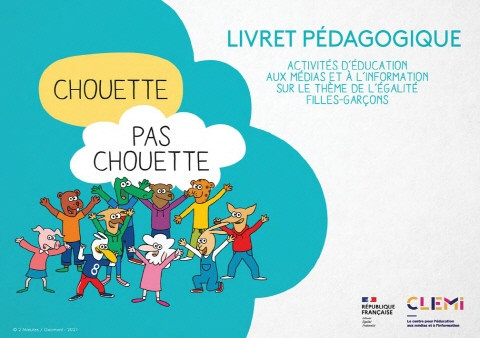 Chouette, pas chouette, déconstrure les stéréotypes sexistes, ça s'apprend ! Year of publication: 2021 Author: Anne Lechaudel | Séverine Poncet-Ollivier | Séverin Ledru-Milon Corporate author: Centre pour l’éducation aux médias et à l’information (CLEMI) Ce livret propose des activités pédagogiques sur le thème de l’égalité filles/garçons, pour apprendre à questionner et déconstruire les stéréotypes sexistes.Il est réalisé dans l’univers graphique et avec les personnages de la série Chouette, pas chouette ! une série de 16 programmes courts animés pour sensibiliser les 4-6 ans aux stéréotypes sexistes. Les activités proposées dans le livret permettent de soutenir l’expression des élèves, d’aborder le quotidien des relations filles - garçons, et plus largement du vivre-ensemble, de manière concrète et créative. Trois entrées thématiques par niveau et des pistes d’activités adaptées en éducation aux médias et à l’information sont proposées:- L’apparence. « À quoi doit ressembler une fille ou un garçon ? » (cycle 1, 4-5 ans)- Le comportement. « Fais-le comme une fille, comme un garçon » (cycle 2, 6-7-8 ans)- Le devenir et les désirs d’orientation. C ’est quoi un "métier de femme", un "métier d’homme" ? (cycle 3, 9-10 ans)Des épisodes de la série « Chouette, pas chouette ! » ont été identifiés pour chacune des entrées thématiques.Le livret est accompagné de ressources pédagogiques pour aller plus loin. This booklet offers educational activities on the theme of equality between girls and boys, to help children question and deconstruct sexist stereotypes.It is based on the graphics and characters of Chouette, pas chouette! a series of 16 short animated programs designed to raise awareness of sexist stereotypes among 4-6 year-olds. The activities in the booklet are designed to support pupils' self-expression, and address the day-to-day issues of boy-girl relationships and, more broadly, living together, in a concrete, creative way. The booklet features three thematic entries for each grade level, along with suggestions for activities adapted to media and information literacy:- Appearance. "What should a boy or a girl look like?" (cycle 1, 4-5 years old)- Behavior. "Do it like a girl, do it like a boy" (cycle 2 6-7-8 years old)- Becoming and career aspirations. What's a "woman's job", what's a "man's job"? (cycle 3, 9-10 years old)Episodes from the "Chouette, pas chouette!" series have been identified for each of these themes.The booklet is accompanied by teaching resources for further reading.
 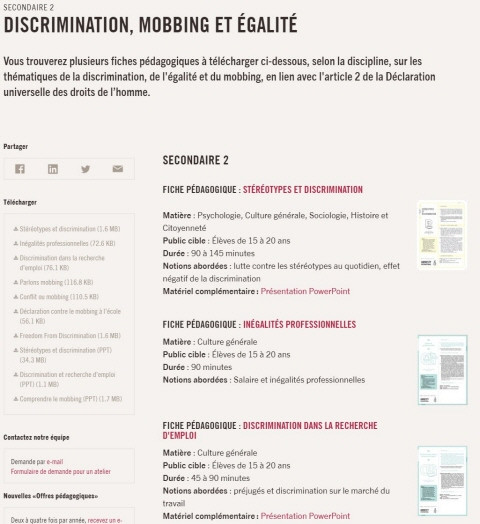 Discrimination, Mobbing and Equality Corporate author: Amnesty International. Swiss Section These 7 education sheets(Stereotypes and Discrimination, Occupational Inequalities, Discrimination in Job Searching, Let’s Talk about Mobbing!, Conflict or Mobbing?, Declaration against Mobbing at School, Freedom from Discrimination) cover the themes of discrimination, equality and mobbing(conflictual relations in the workplace, both between colleagues and between superiors and subordinates), in relation to article 2 of the Universal Declaration of Human Rights. Discrimination, mobbing et égalité Corporate author: Amnesty International. Swiss Section Ces 7 fiches pédagogiques(Stéréotypes et discrimination, Inégalités professionnelles, Discrimination dans la recherche d'emploi, Parlons mobbing!, Conflit ou mobbing? Déclaration contre le mobbing à l'école, Freedom from discrimination) portent sur les thématiques de la discrimination, de l'égalité et du mobbing (relation conflictuelle sur le lieu de travail, aussi bien entre collègues qu'entre supérieurs et subordonnés), en lien avec l'article 2 de la Déclaration universelle des droits de l’homme.
 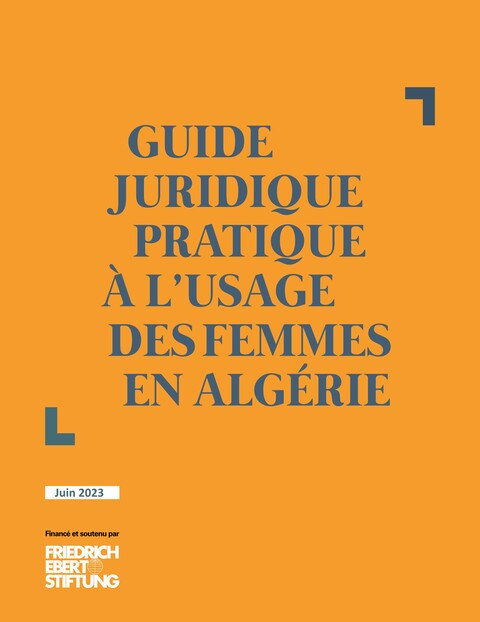 Practical Legal Guide for Women in Algeria Year of publication: 2023 Author: Fériel Khelil | Saadia Gacem Corporate author: Fondation Friedrich-Ebert This practical legal guide, in Arabic and French, enables women in Algeria to find out about their rights, the laws that protect them, but also the legislative inequalities they will encounter in their life course, through tools for practical understanding of the laws. It was produced by Feriel Khelil, jurist with the Réseau Wassila/Avife association, and Saadia Gacem, doctoral student in anthropology and feminist activist, and supported by the Friedrich Ebert Foundation. Guide juridique pratique à l'usage des femmes en Algérie Year of publication: 2023 Author: Fériel Khelil | Saadia Gacem Corporate author: Fondation Friedrich-Ebert Ce guide juridique pratique, en arabe et en français, permet aux femmes en Algérie de connaître leurs droits, les lois qui les protègent mais également les inégalités législatives qu’elles rencontreront dans leur parcours de vie, à travers des outils de compréhension pratique des lois. Il a été réalisé par Feriel Khelil, juriste au sein de l’association Réseau Wassila/Avife et Saadia Gacem, doctorante en anthropologie et militante féministe et soutenu par la Fondation Friedrich Ebert.
  Centre Hubertine Auclert Year of publication: 2010 Author: Marie-Pierre Badré Corporate author: Centre Hubertine Auclert (CHA) L'Égalithèque est une banque de donnée unique en France recensant des milliers de guides, expositions, ouvrages, affiches, vidéos, spectacles vivants, diaporamas, formations, quiz, etc. sur l'égalité femmes-hommes et la lutte contre les violences de genre. Elle propose à la fois les ressources créées par le Centre Hubertine Auclert - publications, campagnes de sensibilisation, malles virtuelles et expositions - ainsi que de nombreuses autres ressources créées par des structures oeuvrant pour l'égalité. Enrichie et actualisée régulièrement par l'équipe du Centre, l'Égalithèque sera très prochainement participative : les membres du Centre pourront soumettre un outil qui sera contrôlé avant d'être référencé. The Égalithèque is a database unique in France, containing thousands of guides, exhibitions, books, posters, videos, live shows, slide shows, training courses, quizzes, etc. on gender equality and the fight against gender violence. It includes resources created by the Centre Hubertine Auclert - publications, awareness-raising campaigns, virtual trunks and exhibitions - as well as many other resources created by structures working for equality. Enriched and updated on a regular basis by the Centre's team, the Égalithèque will soon be participative: Centre members will be able to submit a tool, which will be checked before being referenced.