
Resources
Explore a wide range of valuable resources on GCED to deepen your understanding and enhance your research, advocacy, teaching, and learning.
34 Results found
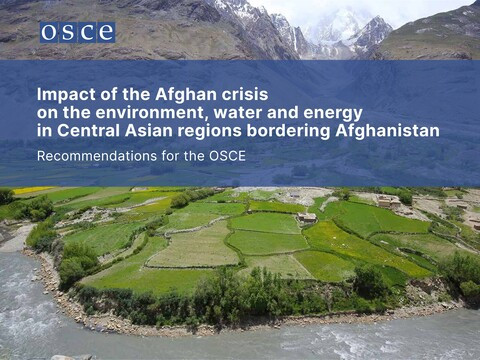 Impact of the Afghan Crisis on the Environment, Water and Energy in Central Asian Regions Bordering Afghanistan Year of publication: 2023 Corporate author: Organization for Security and Co-operation in Europe (OSCE) Development projects in Central Asia are diverse. In 2021, the Interstate Commission on Sustainable Development of Central Asia adopted the Central Asian Sustainable Development Program till 2030, while a regional climate adaptation strategy is being developed. Afghanistan is not involved in regional environmental and water processes. The results and lessons from the development projects could be useful in tackling the effects of the Afghan crisis. Исследование влияния кризиса в Афганистане на экологическую, водную и энергетическую ситуацию в приграничных областях Центральной Азии Year of publication: 2023 Corporate author: Organization for Security and Co-operation in Europe (OSCE) В странах Центральной Азии также реализуются проекты развития в различных сферах. Для целей охраны природы на региональном уровне в 2021 г. МКУР принята центрально-азиатская программа устойчивого развития до 2030 г., и разрабатывается региональная стратегия адаптации к изменению климата, но Афганистан в региональных экологических и водных процессах не участвует. Результаты и наработки проектов могут оказаться полезными для обмена опытом и масштабирования, в том числе для смягчения кризиса в Афганистане.
 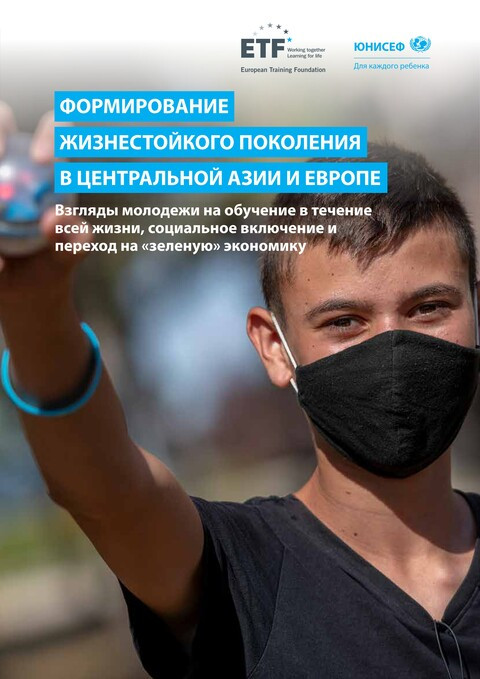 Formation of a Resilient Generation in Central Asia and Europe Year of publication: 2021 Corporate author: ЮНИСЕФ | Европейский фонд образования In this joint report of the United Nations Children's Fund (UNICEF) and the European Education Foundation (ETF) reflect the views, views and sentiments of young people in Central Asia and Europe, which will be taken into account in regional and international discussions on options for creating more effective lifelong learning systems, more inclusive communities and a more "green" society. Формирование жизнестойкого поколения в Центральной Азии и Европе Year of publication: 2021 Corporate author: ЮНИСЕФ | Европейский фонд образования В этом совместном отчете Детского фонда ООН (ЮНИСЕФ) и Европейского фонда образования (ЕФО) отражены точки зрения, взгляды и настроения молодежи в регионе ЕЦА, которые будут учитываться в региональных и международных обсуждениях вариантов создания более эффективных систем обучения в течение всей жизни, более инклюзивных сообществ и более «зеленого» общества.
 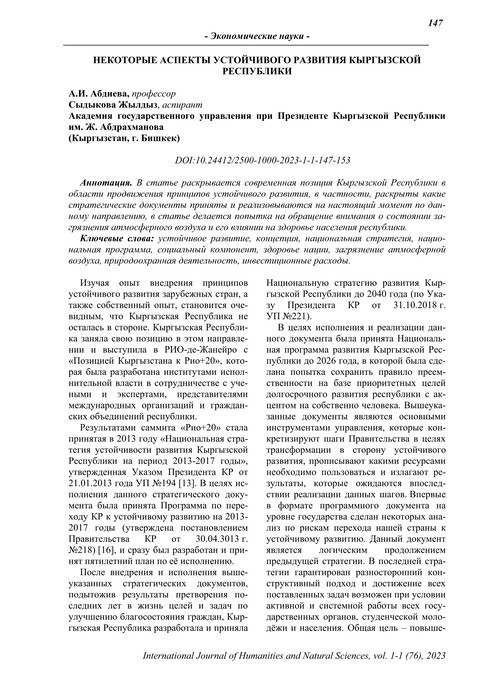 Some Aspects of Sustainable Development of the Kyrgyz Republic (International Journal of Humanities and Natural Sciences; Vol.1-1, No.76) Year of publication: 2023 Author: А.И. Абдиева | Сыдыкова Жылдыз The article reveals the modern position of the Kyrgyz Republic in the field of promoting the principles of sustainable development, in particular, it discloses what strategic documents have been adopted and are currently being implemented in this area, the article attempts to draw attention to the state of air pollution and its impact on the health of the population of the republic. Некоторые аспекты устойчивого развития Кыргызской республики (Международный журнал гуманитарных и естественных наук; Vol.1-1, No.76) Year of publication: 2023 Author: А.И. Абдиева | Сыдыкова Жылдыз В статье раскрывается современная позиция Кыргызской Республики в области продвижения принципов устойчивого развития, в частности, раскрыты какие стратегические документы приняты и реализовываются на настоящий момент по данному направлению, в статье делается попытка на обращение внимания о состоянии загрязнения атмосферного воздуха и его влиянии на здоровье населения республики.
  Адаптация к изменению климата с учетом гендерных аспектов Year of publication: 2022 Corporate author: ПРООН в Туркменистане Анализ национальных стратегических документов для определения возможностей учета гендерных аспектов при планировании адаптационных мероприятий в водном и сельскохозяйственном секторах Туркменистана.
  Early Childhood Education in Tajikistan Year of publication: 2021 Corporate author: UNICEF Tajikistan Preschool education is the foundation of lifelong learning and development. The focus on preschool is essential. Access to quality early childhood education (ECE) services not only gives children better chances at success in school, but better learning outcomes in the future. It enhances the efficiency of the school system by reducing repetition and drop-out and improving achievement, especially among girls and marginalized groups. If timely and sufficient investments in early childhood are made, human capital and momentum will grow and provide a great and unique opportunity for the country to improve its future economic prospects. Раннее образование детей в Таджикистане Year of publication: 2021 Corporate author: UNICEF Tajikistan Дошкольное образование - это основа непрерывного обучения и развития ребенка. Акцент на дошкольное образование имеет важное значение. Доступ к качественным услугам дошкольного образования (ДО) не только дает детям больше шансов на успех в школе, но и улучшает результаты их обучения в будущем. Если будут сделаны своевременные и достаточные инвестиции в систему раннего развития детей, человеческий капитал страны будет расти и предоставит стране прекрасную и уникальную возможность улучшить свои будущие экономические перспективы.
 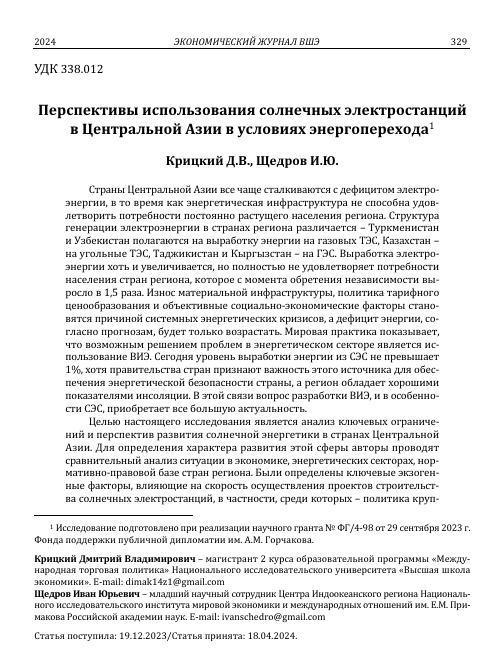 Перспективы использования солнечных электростанций в Центральной Азии в условиях энергоперехода (Экономический журнал ВШЭ, Том 28, №2) Year of publication: 2024 Author: Крицкий Дмитрий | Щедров Иван Целью настоящего исследования является анализ ключевых ограничений и перспектив развития солнечной энергетики в странах Центральной Азии. Для определения характера развития этой сферы авторы проводят сравнительный анализ ситуации в экономике, энергетических секторах, нормативно-правовой базе стран региона.