
Resources
Explore a wide range of valuable resources on GCED to deepen your understanding and enhance your research, advocacy, teaching, and learning.
4 Results found
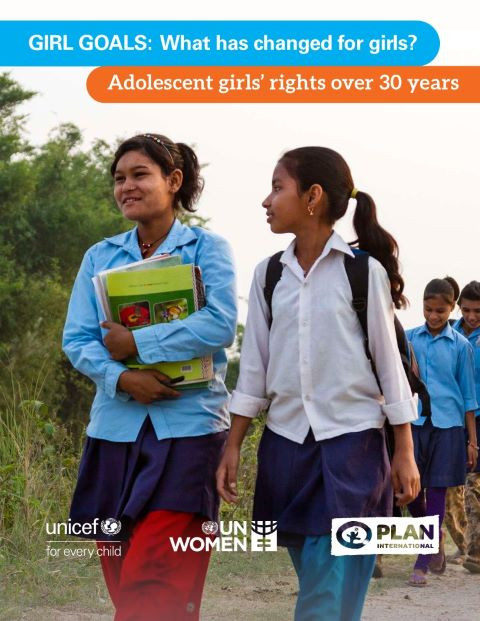 Girl Goals: What has Changed for Girls? Adolescent Girls’ Rights over 30 Years Year of publication: 2025 Corporate author: United Nations Children's Fund (UNICEF) | United Nations Entity for Gender Equality and the Empowerment of Women (UN Women) | Plan International This report makes three key recommendations on action we can take now to advance adolescent girls’ rights at scale, in ways that account for fiscally constrained contexts and multiple competing priorities: 1. Ensure tangible and actionable support for adolescent girls’ voices, advocacy and action. The current generation of girls are raising their voices to be heard and are already at the forefront of making change around the world. With the right support, resources and seats at the table, adolescent girls can help transform the world for the better, shaping better policy outcomes for themselves and everyone. This is not about girls’ voices above all others, or endless consultation, but about specific, meaningful actions that ensure girls get the support they need and are heard on policy issues that matter to them. 2. Establish and track explicit targets for change for adolescent girls, who are too often invisible and sidelined Setting explicit targets to monitor outcomes for adolescent girls is key to making progress. Context-specific prioritization will be necessary, but there are some issues that stand out globally. Gaps in progress (such as child marriage gains accruing disproportionately to wealthier households) demonstrate the need forprogrammes that address poverty and economic realities alongside harmful social norms. The disproportionate number of adolescent girls not in education, employment or training, not entering the labour market as young women, and left behind when it comes to digital skills, is a threat to the gains made for girls and to economic growth that will benefit everyone. Stagnation on issues like underweight also stand out. Country- specific priorities supported by data- driven accountability mechanisms and investments are needed to translate policy commitments into change on the ground. 3. Resource and deliver smartly to unlock the social and economic dividend Governments and partners should invest in solutions proven to change outcomes across multiple SDGs at scale – for example, investing in education and skills, cash transfers and economic empowerment programmes designed to support girls. Existing systems, from maternal health care to school curricula, should be adapted to meet girls’ needs rather than creating small- scale, separate projects. Streamlined, evidence-based ‘add-ons’ – such as adding parenting support to existing maternal health-care programmes – can be cost effective and accelerate outcomes if well designed. Change is possible, and this report shows that great gains have been made. Smart investments now can transform the world for girls, families, communities and national economies. It is time to act.
  Faith for Earth : a Call for Action Year of publication: 2020 Corporate author: United Nations Environment Programme (UNEP) | Inter-Agency Network on Women and Gender Equality (IANWGE) The UN Environment Programme (UNEP) and the Parliament of the World’s Religions today released a new book, "Faith for Earth — A Call for Action", which gives readers a wide-ranging look at the history and diversity of faith teachings and their advocacy for the protection of the environment. The online book and its print edition were launched on 8 October 2020 during the Faith for Nature Global Conference, (5th - 8th October) in Skálhol, Iceland. The book provides a comprehensive overview of the faith traditions and scientific findings that underpin the understandings and reflections of world religions concerning environmental sustainability. It includes clear statements from sacred scripts and faith leaders. It underlines that protecting the Earth, restoring ecosystems, preventing pollution, and leaving behind a healthy environment for the next generations is an ethical, moral and spiritual responsibility. With more than one hundred million houses of worship around the globe, adapting green building principles is a massive demonstration of commitment to sustainability.
 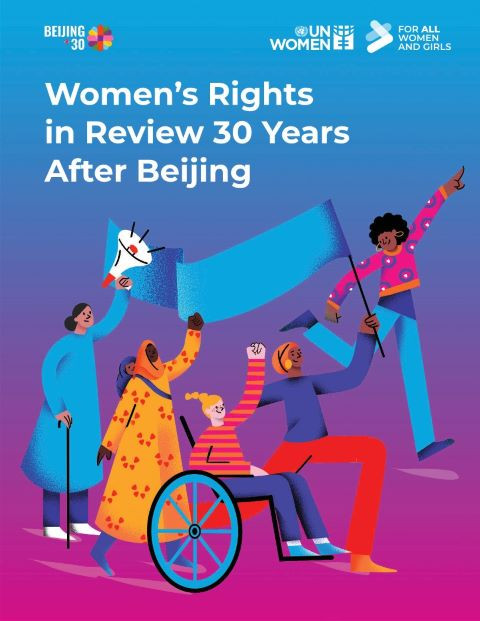 Women’s Rights in Review 30 Years after Beijing Year of publication: 2025 Corporate author: United Nations Entity for Gender Equality and the Empowerment of Women (UN Women) In 2025, the world celebrates 30 years of achievement on the Beijing Declaration and Platform for Action, a visionary 1995 plan agreed by 189 governments to achieve the equal rights of all women and girls. The UN Secretary-General’s report on the 30-year review and appraisal of the Beijing Declaration and Platform for Action reflects global, regional, and national reviews of 159 countries, summarizing progress and priorities for further action. It finds that many countries have made strides on gender equality and women’s empowerment, from banning discrimination in employment to adopting gender-responsive climate action plans. Innovation is accelerating progress, and opportunities are opening to scale up proven strategies. Yet gender discrimination remains deeply embedded in all economies and societies, imposing chronic constraints on the rights and hopes of women and girls.
 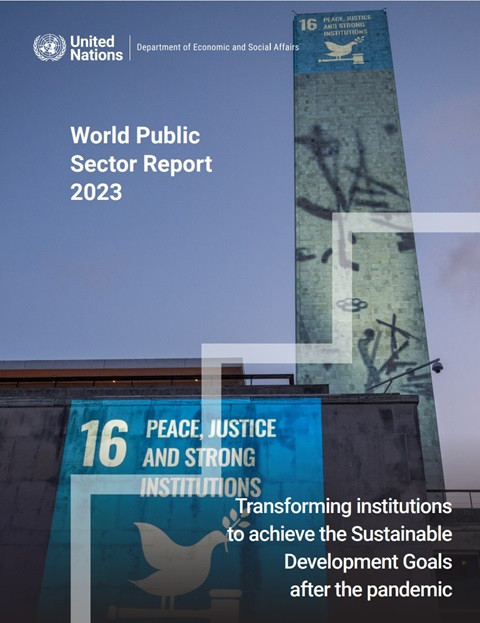 World Public Sector Report 2023: Transforming Institutions to Achieve the Sustainable Development Goals After the Pandemic Year of publication: 2023 Corporate author: United Nations (UN) The World Public Sector Report 2023 examines the role that national institutional and governance innovations and changes that emerged during the COVID-19 pandemic can play in advancing progress towards the 2030 Agenda for Sustainable Development. The report focuses on three main questions: How can Governments reshape their relationship with people and other actors to enhance trust and promote the changes required for more sustainable and peaceful societies? How can Governments assess competing priorities and address difficult policy trade-offs that have emerged since 2020? What assets and innovations can Governments mobilize to transform the public sector and achieve the SDGs? The report addresses them in chapters composed of short overviews followed by a set of in-depth contributions from a wide range of experts which examine institutional changes observed in different contexts, sectors and policy processes and explore the potential of those with a positive impact on the achievement of the SDGs to be sustained beyond the pandemic. The report aims to draw attention to institutional change as a key component of the societal transformations required to realize the 2030 Agenda for Sustainable Development.