
Resources
Explore a wide range of valuable resources on GCED to deepen your understanding and enhance your research, advocacy, teaching, and learning.
20 Results found
 Forecast the Adult Learning Education in Kuwait Through 2024 (Journal of Educational and Psychological Sciences; vol.4, no.33) Year of publication: 2020 Author: Rasha Mhdi Al-Ajmi | Sheikha Ibrahim Al-Tuwaijri | Fatima Mutlaq Al-Otaibi | Ghazi Al-Rashidi Corporate author: Arab Institute of Science and Research Publishing (AISRP) This study aimed to identify the predictive values of the secular trend for the next five years of the time series to the most important educational factors in Literacy and Adult Learning Education in Kuwait. Also, it aimed to compare between growth rate on the secular trend of the time series towards the most important educational factors at Literacy and Adult Learning Education at the different phases. Time series was used to analyze Literacy and Adult Learning Education’s statistics; which were taken from Ministry of Education in Kuwait, from 2014 to 2019. The study showed several results such as most of the educational factors’ growth rates were low. In addition, it appeared that most of the predictive values from 2020 to 2024 were degreased. The growth rate for the total centers for adult learning was- 2.7%; whereas, it was- 3.7% for classes. Also, the growth rate for the total of students was- 1.9%. The last but not the least, the growth rate for the total of teachers was the lowest which was- 6.0%. Several recommendations and suggestions were given based on the results of this study.
  Adult education and development: global citizenship education (no 82, 2015) Year of publication: 2015 Corporate author: DVV International Issue 82/2015 of the international journal Adult Education and Development (AED) explores the topic global citizenship education.In the international debates, we are witnessing a growing interest in the concept of global citizenship education. It is one of the three pillars of the Global Education First Initiative (GEFI) launched by the United Nations Secretary-General in 2012 and is being internationally promoted by the work of UNESCO. According to the GEFI, education that fosters global citizenship “must fully assume its central role in helping people to forge more just, peaceful, tolerant and inclusive societies”. The 2030 Agenda for Sustainable Development, adopted by the United Nations General Assembly in September 2015, refers to global citizenship as one tool to “ensure that all learners acquire the knowledge and skills needed to promote sustainable development”.The ambitions are high, but the concrete understanding of global citizenship education and its implications differ widely. Is it just another abstract concept? What meaning can the word citizenship have if it does not refer to a specific nation? What do people in different parts of the world understand by global citizenship? And how can global citizenship education be put into practice?Adult Education and Development decided to engage in the debate and invited authors from different regions, backgrounds and disciplines to share their thoughts and experiences on the topic and related questions such as identity, migration, peace, the meaning of citizenship, globalisation and sustainable development.Irina Bokova, Director-General of UNESCO, explains the organisation’s understanding of global citizenship education, and why adult education and “learning beyond the classrooms” are crucial when it comes to promoting global citizenship. Canadian author and journalist Doug Saunders (“Arrival City: How the Largest Migration in History Is Reshaping Our World”) talks about the challenges and opportunities of what he refers to as the last great human migration, that from the countryside to the cities, and about the positive role adult education can play during this transition.In the section “Citizens’ voices” people from all over the world talk about what global citizenship means to them and in what ways they see themselves as global citizens. And photographer Viktor Hilitksi travelled through Belarus and captured with his camera how villages rediscover their local traditions and cultures. Quality Adult Education Benchmarks for Indigeneous Education Year of publication: 2011 Author: Sandra L. Morrison | Timote Vaioleti Corporate author: Asia South Pacific Association for Basic and Adult Education (ASPBAE) In November 2010, in Indonesia, Asia South Pacific Association for Basic and Adult Education(ASPBAE) brought together a number of educators from across its region to discuss benchmarking quality adult education for indigenous peoples. Educators came from across the ASPBAE region including the Philippines, India, Nepal, New Zealand, Australia, Thailand, Indonesia and Uzbekistan to share experiences and to build a collective understanding of what constitutes a good quality adult education program for indigenous peoples. Discussions were informed by a broader ASPBAE Quality Adult Education Framework, which had its origins in discussions held in 2009. The Core of the Framework is grounded on ASPBAE’s commitment to education as a right, adult education for transformation, and adult and basic education as integral and inter‐connected components of the vision of lifelong learning (Guevara, 2010). Other frameworks promoted by ASPBAE for education to be empowering, pro‐poor, gender just and sustainable were also important considerations. The 2010 gathering served as a nodal point to discuss the ASPBAE framework more deeply and to reaffirm or create a set of benchmarks for indigenous education which can be validated through a subsequent national and regional consultation process.
  Envision 4.7: Bridge 47 Global Event; Helsinki, Finland 5–7 November 2019: Report Year of publication: 2019 Corporate author: Bridge 47 | Frinland. Ministry of Education and Culture | Finland. Ministry for Foreign Affairs Global event Envision 4.7 was held in Helsinki in November 2019. The event brought around 200 people together to discuss ways to take the SDG Target 4.7 forward. In this report you can find summaries of all the speeches, panel discussions, workshops and working groups that were held at the event, together with a summary of discussions around all the different topics. You can also find pictures and drawings from the event at the report.
 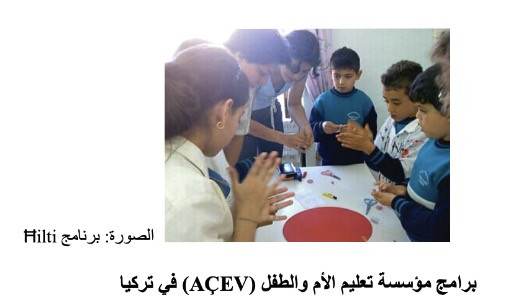 Reaching the Marginalized - Good Practices in Adult Learning and Teaching in the Middle East, Southeast Asia and South Asia Year of publication: 2020 Author: Johann Heilmann | Nazaret Nazaretyan Corporate author: DVV International This publication aims to enrich the theoretical and practical aspects of adult teaching and learning. Providing access to information, communication channels, and exchange, which will serve to deepen knowledge, experience, and increase cooperation in adult education at the international level.
  Adult education and development: global citizenship education (no 82, 2015) Year of publication: 2015 Corporate author: DVV International Issue 82/2015 of the international journal Adult Education and Development (AED) explores the topic global citizenship education. In the international debates, we are witnessing a growing interest in the concept of global citizenship education. It is one of the three pillars of the Global Education First Initiative (GEFI) launched by the United Nations Secretary-General in 2012 and is being internationally promoted by the work of UNESCO. According to the GEFI, education that fosters global citizenship “must fully assume its central role in helping people to forge more just, peaceful, tolerant and inclusive societies”. The 2030 Agenda for Sustainable Development, adopted by the United Nations General Assembly in September 2015, refers to global citizenship as one tool to “ensure that all learners acquire the knowledge and skills needed to promote sustainable development”. The ambitions are high, but the concrete understanding of global citizenship education and its implications differ widely. Is it just another abstract concept? What meaning can the word citizenship have if it does not refer to a specific nation? What do people in different parts of the world understand by global citizenship? And how can global citizenship education be put into practice? Adult Education and Development decided to engage in the debate and invited authors from different regions, backgrounds and disciplines to share their thoughts and experiences on the topic and related questions such as identity, migration, peace, the meaning of citizenship, globalisation and sustainable development. Irina Bokova, Director-General of UNESCO, explains the organisation’s understanding of global citizenship education, and why adult education and “learning beyond the classrooms” are crucial when it comes to promoting global citizenship. Canadian author and journalist Doug Saunders (“Arrival City: How the Largest Migration in History Is Reshaping Our World”) talks about the challenges and opportunities of what he refers to as the last great human migration, that from the countryside to the cities, and about the positive role adult education can play during this transition. In the section “Citizens’ voices” people from all over the world talk about what global citizenship means to them and in what ways they see themselves as global citizens. And photographer Viktor Hilitksi travelled through Belarus and captured with his camera how villages rediscover their local traditions and cultures.
 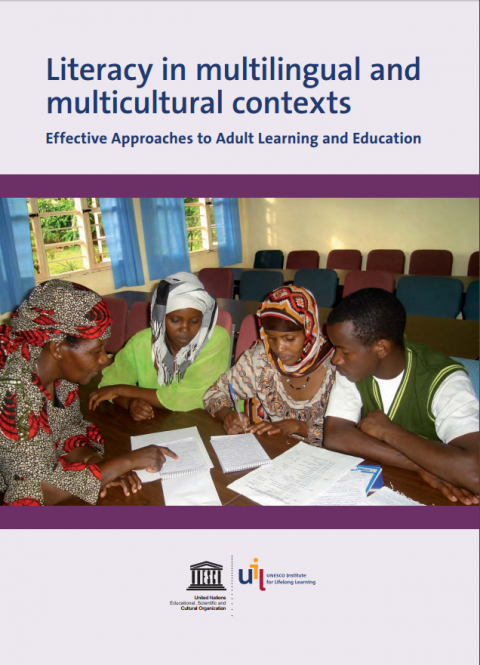 Literacy in multilingual and multicultural contexts: effective approaches to adult learning and education Year of publication: 2016 Author: Ulrike Hanemann, Cassandra Scarpino All of the literacy programmes featured in this publication offer valuable experiences and lessons on how the challenges posed by linguistic and cultural diversity can be productively addressed by harnessing the potential of language and culture as enriching resources in the process of literacy teaching and learning. A major lesson that has emerged over the years is that the use of local languages as the medium of instruction enhances the effectiveness and efficiency of the learning process in developing literacy, numeracy and (second or more) language skills. However, mother tongue-based literacy not only facilitates the learning process, but is also an important symbol of identity, unity and self-determination. It is closely intertwined with culture and local values, wisdom, worldviews and tradition. A number of the featured programmes demonstrate that language and culture in education are highly political. Respect for all languages and cultures, and their equal treatment, can play a critical role in fostering national cohesion. In some cases, this is contributing to rebuilding peace in post-conflict communities. Literacy programmes that contribute to the preservation of linguistic and cultural diversity should, also, be viewed as integral to sustainable development.
  Developing Adult Education and Training Policies for Sustainable Development: A Case Study of the State of Kuwait Year of publication: 2017 Author: Sabika Hussain Bursli Corporate author: Tanta University In this article, the author presents the case of Kuwait in relation to adult education. The article analyzes the current Kuwaiti policies related adult education in light of sustainable development requirements. Inclusion, education for sustainable development, adult learning, higher education and research: four international conferences to promote equity, quality, relevance and social responsibility in education Year of publication: 2008 Corporate author: UNESCO This cycle of conferences brings together a wide array of influential stakeholders in the common interest of creating education systems that serve the needs of all learners, address the challenges of today's world and make learning a springboard of development.
  CONFINTEA VI Mid-Term Review: Report of the Conference Year of publication: 2017 Author: Clinton Robinson Corporate author: UNESCO Institute for Lifelong Learning (UIL) The Sixth International Conference on Adult Education (CONFINTEA VI), held in Brazil in 2009, closed with the adoption of the Belem Framework for Action (BFA), which recorded the commitments of Member States and presented a strategic guide for the global development of adult learning and education. The third Global Report on Adult Learning and Education (GRALE 3), published in 2016, drew on survey data to evaluate progress made by countries in fulfilling the commitments made in Brazil.The CONFINTEA VI Mid-Term Review, held in Suwon, Republic of Korea, in October 2017, took stock of progress made by Member States in the past eight years, looking ahead to GRALE 4 in 2019 and CONFINTEA VII in 2021.This report summarizes the discussions that animated the Mid-Term Review conference and gives readers a brief survey of the key issues concerning progress against the BFA, across all world regions.