
Resources
Explore a wide range of valuable resources on GCED to deepen your understanding and enhance your research, advocacy, teaching, and learning.
90 Results found
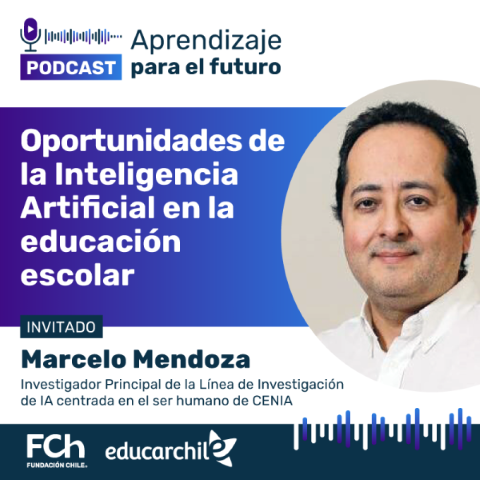 Podcast: Aprendizaje para el futuro; Oportunidades de la Inteligencia Artificial en la educación escolar Year of publication: 2024 Author: Marcelo Mendoza Corporate author: Chile Foundation | Educarchile En esta edición del podcast: Aprendizaje para el Futuro, conversamos con Marcelo Mendoza, Investigador Principal de la Línea de Investigación de IA centrada en el ser humano de CENIA, con quien desarrollamos el tema: Oportunidades de la Inteligencia Artificial en la educación escolar. También, conocimos la experiencia del Liceo Bicentenario People Help People de Pilmaiquén usando la IA en diversos procesos, junto al docente Cristóbal Morales.
 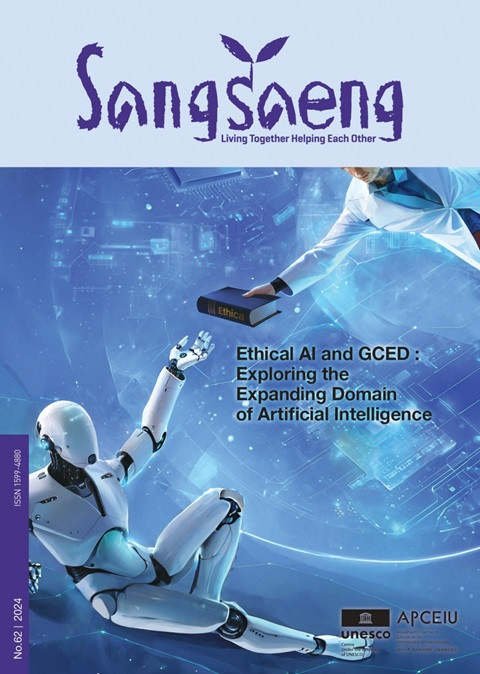 Ethical AI and GCED: Exploring the Expanding Domain of Artificial Intelligence (SangSaeng; No. 62, 2024) Year of publication: 2024 Corporate author: APCEIU The 62nd issue of SangSaeng has been published with the theme of “Ethical AI and GCED: Exploring the Expanding Domain of Artificial Intelligence.” AI has never been as pervasive and influential as it is in today’s rapidly changing world. Despite the convenience and cutting-edge technology AI has offered us, it has the potential to pose a threat to humanity. This is where ethics for AI should come forward. In this regard, this issue will lead readers to the alarming side of AI as well as its future developments, focusing on the importance of GCED and AI ethics in tackling any potential problems. Contents03 Editor's Note 04 Special ColumnEmbracing Change to Cultivate Success — Integrating Global Citizenship Education into Tertiary Education / Dendev Badarch 08 FOCUS: Ethical AI and GCED: Exploring the Expanding Domain of Artificial IntelligenceRole of Ethics in the Era of AI — Protecting and Guiding AI Processes for Humanity to Flourish / Emma Ruttkamp-BloemPaying Attention to AI Ethics — An Avenue for a New Competitive Edge in Business / Myoungshin KimDriving Innovative Education — Balancing Future Possibilities and Ethical Concerns: How GCED Can be Used to Address AI Issues / Angelique Southern 20 Special ReportEmpowering a Climate Generation — From Classrooms to Climate Frontlines: The Transformative Role of Education highlighted at COP28 / Djian Sadadou 22 Best PracticesNavigating an AI Future — Ethical AI and the Importance of Critical Thought / Hannah GrantGLACE Brings the World to a City — Empowering Youth as Global Citizens: Lessons from Navotas City’s Project GLAC / Marco D. MedurandaLowering Eco-Anxiety — Teaching Climate Change Through Media and Information Literacy / Laetitia Legrand 33 GCED YOUTH NETWORK New Wave of Youth Advocacy — Role of AI in Youth Advocacy and its Ethical Implications to Global Citizenship / Oshan M. Gunathilake and Diego Manrique 36 Understanding the Asia Pacific RegionDiscovering Auroville — Where Boundaries Fade, Nature Thrives, and Global Minds Unite / Akanksha Arya 39 Peace in My MemoryHappiness without Violence — Mindanao Peace ForumCelebrates Building a Culture of Peace / Ludivina Borja-DekitPeace Scholar Passes Away Amidst Turbulent Times / Kwang-Hyun KIM 45 Story TimeThe Right Footing — My Life Has Purpose Thanks to Football / Hajar Abulfazl 48 LetterShared Challenges of Global Citizens / Natsuki Nagata 50 APCEIU in Action
  Metodología de evaluación del estadio de preparación: una herramienta de la Recomendación sobre la Ética de la Inteligencia Artificial Year of publication: 2023 Corporate author: UNESCO En noviembre de 2021, los 193 Estados Miembros de la UNESCO aprobaron la Recomendación sobre la Ética de la Inteligencia Artificial, primer instrumento normativo mundial en este ámbito. Esta Recomendación constituye un marco completo y práctico para el desarrollo y el uso éticos de la IA, abarcando todo el espectro de los derechos humanos. Para ello, toma en cuenta todas las etapas del ciclo de vida de los sistemas de IA. Más allá de elaborar los valores y principios que deben guiar el diseño, desarrollo y uso ético de la inteligencia artificial, la recomendación establece las acciones requeridas por los Estados miembros para garantizar el cumplimiento de dichos valores y principios, a través de la promoción de una regulación efectiva y la provisión de recomendaciones en varias áreas políticas esenciales, como el género, el medio ambiente y la comunicación e información. Teniendo en cuenta estos valores, principios y ámbitos políticos, la Secretaría de la UNESCO elaboró un programa para la aplicación de la Recomendación, con el objetivo principal de crear capacidades nacionales para llevar a cabo las actuaciones definidas en la Recomendación y reforzar los marcos regulatorios. Las recomendaciones exigieron el desarrollo de las herramientas clave: la Metodología de Evaluación del Estadio de Preparación (RAM, por sus siglas en inglés) y la Evaluación de Impacto Ético (EIA, por sus siglas en inglés), que constituyen los pilares fundamentales de la implementación. Estas herramientas tienen como objeto evaluar y promover la resistencia de las leyes, las políticas y las instituciones existentes para a la aplicación de la IA en el país, así como la conformidad de los sistemas de inteligencia artificial con los valores y principios establecidos en la Recomendación. El presente documento tiene por objeto proporcionar más información acerca de la metodología de evaluación del estadio de preparación, exponer sus diversas dimensiones y detallar el plan de trabajo para los países implementadores, incluyendo el tipo de entidades que deben participar, las responsabilidades de cada una de ellas y la división del trabajo entre la UNESCO y el país ejecutante. Méthode d’évaluation de l’état de préparation : un outil de la Recommandation sur l’éthique de l’intelligence artificielle Year of publication: 2023 Corporate author: Organisation des Nations Unies pour l'éducation, la science et la culture (UNESCO) En novembre 2021, les 193 États membres de l’UNESCO ont signé la Recommandation sur l’éthique de l’intelligence artificielle, premier instrument normatif de portée internationale consacré à cette question. La Recommandation établit un cadre opérationnel complet et fondé sur l’ensemble des droits de l’homme en vue du développement et de l’utilisation éthiques de l’IA. Elle accorde à cette fin une attention particulière à tous les stades du cycle de vie du système de l’IA. Au-delà de l'élaboration des valeurs et des principes qui devraient guider la conception, le développement et l'utilisation éthiques de l'IA, la Recommandation indique aux États membres les mesures à prendre pour garantir le respect de ces valeurs et principes en préconisant une réglementation efficace et en formulant des recommandations dans divers domaines stratégiques clés tels que le genre, l’environnement, la communication et l’information. Guidé par ces valeurs, principes et domaines stratégiques, le Secrétariat de l’UNESCO a conçu un programme de mise en œuvre de la Recommandation en s’attachant avant tout à renforcer les capacités nationales nécessaires pour donner suite aux mesures énoncées dans la Recommandation et renforcer les cadres réglementaires. Les Recommandation demande le développement de deux outils clés qui sont les principaux fondements sur lesquels repose la mise en œuvre : la méthode d’évaluation de l’état de préparation et l’évaluation de l’impact éthique. Ces outils visent tous deux à évaluer et à renforcer la résilience des lois, politiques et institutions en vigueur en vue de la mise en œuvre de l’IA dans le pays mais aussi à rendre les systèmes d’IA conformes aux valeurs et aux principes énoncés dans la Recommandation. Ce document a pour objet d’expliquer plus clairement la méthode d’évaluation de l’état de préparation, de présenter ses différentes dimensions et d’exposer en détail le plan de travail à l’intention des pays concernés, en précisant notamment le type d’entités appelées à intervenir, les responsabilités de chacune d’entre elles et le partage des tâches entre l’UNESCO et les pays participants.
  Ethical Impact Assessment: A Tool of the Recommendation on the Ethics of Artificial Intelligence Year of publication: 2023 Corporate author: UNESCO As stated in article 50 of UNESCO’s Recommendation on the Ethics of Artificial Intelligence (UNESCO, 2021), the goal of this instrument is to “identify and assess benefits, concerns and risks of AI systems, as well as appropriate risk prevention, mitigation, redressal and monitoring measures, among other assurance mechanisms. Such assessments should identify the impacts on human rights and fundamental freedoms, in particular but not limited to the rights of people in vulnerable and precarious situations, labour rights, the environment and ecosystems and ethical and social implications, and facilitate citizen participation in line with the values and principles set forth in this Recommendation”. This instrument is primarily designed to help government officials (individuals and teams) involved in the procurement of AI systems. The goal of the methodology is to equip procurement officers with the set of questions to ask in order to ensure that the AI systems they are purchasing are aligned with the ethical standards set out in the UNESCO Recommendation on the Ethics of AI.
  لتوصية الخاصة بأخلاقيات الذكاء الاصطناعي Year of publication: 2022 Corporate author: UNESCO تتناول هذه التوصية ما يندرج في نطاق مهمة اليونسكو من القضايا األخالقية المتعلقة بمجال الذكاء االصطناعي. ً ً معياريا وتبحث التوصية أخالقيات الذكاء االصطناعي بحثا ً يقوم على إطار كلي شامل ومتعدد الثقافات ومتغير منهجيا ِلقيم ومبادئ وإجراءات مترابطة يمكن أن ترشد المجتمعات فيما يخص التصدي بطريقة مسؤولة للعواقب المعروفة وغير المعروفة لوسائل تكنولوجيا الذكاء االصطناعي على البشر والمجتمعات البشرية، وكذلك على البيئة والنُظم اإليكولوجية؛ وترسي التوصية بالتالي األسس الالزمة التي يستطيع البشر االستناد إليها للحكم على وسائل تكنولوجيا الذكاء االصطناعي وقبولها أو رفضها. وتعتبر ً مرنة للتقييم المعياري والتوجيه ُسسا التوصية األخالقيات أ المعياري لوسائل تكنولوجيا الذكاء االصطناعي، وتستند إلى وجوب صون كرامة اإلنسان ووجوب ضمان السالمة والرفاهية ووجوب درء الضرر باعتبارها البوصلة التي يجب االسترشاد بها، وباعتبارها مبادئ راسخة في أخالقيات العلوم والتكنولوجيا.
  Artificial Intelligence Needs Assessment Survey in Africa Year of publication: 2021 Author: Prateek Sibal | Bhanu Neupane Corporate author: UNESCO There are encouraging signs of AI innovation and development across Africa, from community run AI classes over weekends, AI training bootcamps for students and young researchers to the establishment of private sector and government driven innovation hubs across the continent. Even as there is an enormous potential for AI development, there are also legacy challenges in terms of infrastructure availability as well as human and institutional capacity gaps to develop and govern AI to optimise benefits and minimise harms. Building upon the recommendations of UNESCO report Steering AI and Advanced ICTs for Knowledge Societies, the findings of this survey aim to bridge the information gap concerning the strategic priorities, policy measures, developmental challenges, human and institutional capacity needs, and legal frameworks concerning AI in African countries. Évaluation des besoins en intelligence artificielle en Afrique Year of publication: 2021 Author: Prateek Sibal | Bhanu Neupane Corporate author: UNESCO Le continent africain enregistre des signes encourageants en matière d’innovation et de développement dans le domaine de l’intelligence artificielle (IA) : cours dans des structures de quartier le week-end, formations intensives pour étudiants et jeunes chercheurs, création de pôles d’innovation transnationaux publics ou privés… Cependant, malgré un fort potentiel de développement, des défis subsistent quant à la disponibilité des infrastructures. De même, le développement et la gestion de l’IA dans le but d’optimiser les avantages et de minimiser les dommages se heurtent à des problèmes de compétences humaines et institutionnelles. Les conclusions de cette enquête, qui s’appuient sur les recommandations du rapport de l’UNESCO Piloter l’IA et les TIC avancées pour les sociétés du savoir visent à pallier le déficit d’informations sur les priorités stratégiques, les mesures politiques, les défis relatifs au développement, les cadres juridiques et les besoins de compétences humaines et institutionnelles en matière d’IA dans les pays africains.
  دليل معلمي الصحافة: تقرير حول الذكاء الاصطناعي Year of publication: 2023 Author: Maarit Jaakkola Corporate author: UNESCO يؤثر تطور الذكاء االصطناعي والتحكم فيه على المجتمع بأثره، وبالتالي البد أن تتولى التغطية اإلعالمية القائمة على الذكاء االصطناعي توعية الجمهور بشأن اآلثار المترتبة على التكنولوجيا نفسها، بغض النظر عن الجانب الصحفي. فعلى سبيل المثال، إعداد تقارير بخصوص القوى الديناميكية في العالقة المتغيرة ما بين الشركات والسلطات والمواطنين والرقائق الحاسوبية، وبين البيانات والخوارزميات. على الرغم من أن العديد من تطبيقات الذكاء االصطناعي تخدم مصلحة الجمهور، إال أن الصحفيين بحاجة إلى بصيرة وخبرة بشأن جوانب مثل اإلقصاء، وعدم المساواة في المزايا والمنافع، وانتهاك حقوق اإلنسان . كجزء من سلسلة التعليم الصحفي، عمل برنامج اليونسكو الدولي لتنمية االتصاالت على دعم مجلس التعليم العالمي للصحافة في التكليف بإعداد هذا الدليل، وذلك بهدف تحفيز معلمو الصحافة وتمكينهم حتى تسنى يتسنى لهم مساعدة طلبة الصحافة والصحفيين العاملين على الوصول إلى العدالة في واحدة من أهم قضايا عصرنا. مشتمالت الدليل يغطي هذا الكتيب الجوانب التالية : • فهم آلية الذكاء االصطناعي والتعرف على أنواع الذكاء االصطناعي المختلفة• استكشاف إمكانيات الذكاء االصطناعي، باإلضافة إلى نقاط قوته وضعفه .• تخيل مستقبل يتسم بالتنوع باستخدام الذكاء االصطناعي من خالل التعرف على الخطابات الشائعة التي تشكل وعي الجمهور . • فهم دور الصحافة في توسيط وتشكيل الحوار حول الذكاء االصطناعي• لبحث عن وسائل لتقديم إلعداد تقارير حول الذكاء االصطناعي بطريقة متنوعة وواقعية ومسؤولة.• إقامة صالت عالقات مع أساليب أنواع الصحافة الموجودة بالفعل، من تقارير األخبار العامة إلى صحافة البيانات . يمثل تعزيز التعليم الصحفي أحد النتائج الرئيسية التي يسعى إليها البرنامج الدولي لتنمية االتصاالت، وهو برنامج حكومي دولي فريد ضمن نظام األمم المتحدة متخصص في تنمية وسائل اإلعالم . Reporting on Artificial Intelligence: A Handbook for Journalism Educators Year of publication: 2023 Author: Maarit Jaakkola Corporate author: UNESCO The rise and control of artificial intelligence (AI) is impacting society as a whole. It follows that AI coverage must inform audiences about the implication of the technology itself, beyond journalism. For instance, reporting on the power dynamics in the changing relationship between companies, authorities, citizens and computer chips, and between data and algorithms. While many AI deployments serve public interest, journalists also need insight and expertise to alert about aspects like exclusions, unequal benefits, and violations of human rights. As part of its journalism education series, UNESCO’s International Programme for the Development of Communication (IPDC) has supported the World Journalism Education Council in commissioning this handbook. The aim is to inspire and empower so that journalism educators can help both journalism students and working journalists do justice to one of the major issues of our times. The handbook covers:• Understanding machine intelligence and identifying different types of AI• Exploring AI’s potential, as well as its strengths and weaknesses• Imagining diverse futures with AI by recognising pervasive popular narratives that inform public consciousness• Understanding journalism’s role in mediating and shaping AI discourse• Finding ways of reporting about AI in a nuanced, realistic and accountable manner• Making connections to existing genres of journalism, ranging from general news reporting to data journalism. Strengthening journalism education is one of the key results sought by IPDC, a unique intergovernmental programme within the UN system that specializes in media development.