
Resources
Explore a wide range of valuable resources on GCED to deepen your understanding and enhance your research, advocacy, teaching, and learning.
17 Results found
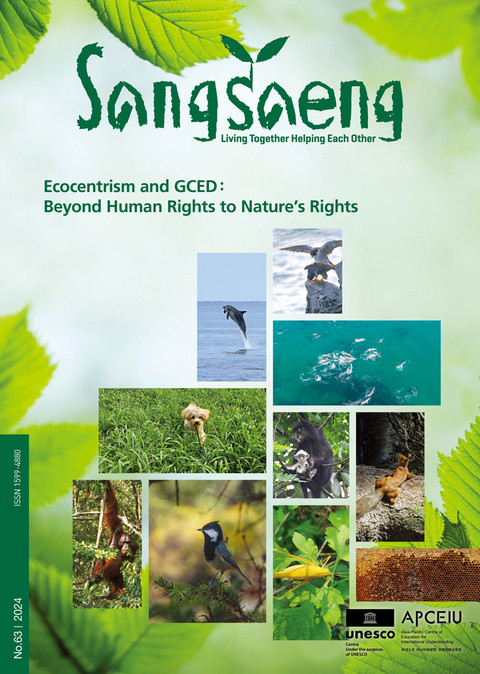 Ecocentrism and GCED : Beyond Human Rights to Nature’s Rights (SangSaeng; No.63, 2024) Year of publication: 2024 Corporate author: APCEIU In the context of Sustainable Development Goal (SDG) 4, global citizenship and sustainability are spotlighted through SDG Target 4.7, which underscores the importance of harmonising cultural and biological diversity.To address the urgent need for harmony between humanity and the nature, ecocentrism needs to be explored as a guiding principle for fostering ethical and sustainable coexistence.In this light, Issue 63 of SangSaeng delves into Ecocentrism—a perspective advocating for the ethical treatment of all beings and recognising their intrinsic value—alongside Global Citizenship Education (GCED). Contents 03 Editor's Note 04 Special Column- Creating Respectful, Valued Society — Strengthening Global Citizenship Education (GCED) to Combat Hate, Racism, and Discrimination Worldwide / Peter K. Ngure 08 FOCUS Ecocentrism and GCED: Beyond Human Rights to Nature’s Rights- Getting Over Ourselves — Ecocentrism: The Importance of Earth Jurisprudence, Compassionate Conservation, and Personal Rewilding / Marc Bekoff- Combating Decline of Nature’s Diversity — Global Citizenship Education for Geodiversity, Biodiversity Conservation / Eunhee Lee- Ecocentrism and Global Citizenship Education — Fostering Coexistence with Critically Endangered Primates through Citizen Science / Andie Ang- Dolphins Dream of Peace: Beyond Human Rights to Nature’s Rights / Interview with Seungmok Oh 23 Special Report- Small Actions, Global Ripples — How GCED is Revitalizing Peace / Micha Aime 26 Best Practices- What’s Good for the Community — GCED in Action Fosters Culture of Bulungi Bwansi in Uganda / Barbara Nakijoba- Sharing Emotional Sensibility in Education — Practicing Arts Opens up the Spirit of Global Citizenship / Seoyoung Bae - Teaching GCED through Liberation History — Working to Eradicate Entrenched Racism, Intolerance, Xenophobia / Charles Chikunda 36 GCED YOUTH NETWORK- How Youth Leaders Redefine Advocacy, Leading Global Change to Shape our Future — Deep Dive into South Asian Youth Declaration on GCED, Facilitation Techniques for Empowered Youth / Noora Elkenawi 39 Peace in My Memory- Pathway to Inner Peace — Journey is Interconnected with Relationships and Environment / Itseng Kwelagobe 42 Story Time- From Drops to Waves — Power of Poetry-telling in Times of Crisis / Kalpani Dambagolla & Alessia Marzano 45 Understanding the Asia Pacific Region- Central Asian Heart of Culture — Legacy of Horsemanship from Tradition to Modernity / Gulzhan Kabysheva 48 Letter- Raising a Global Citizen / Nelly Aluanga Omino 50 APCEIU in Action
 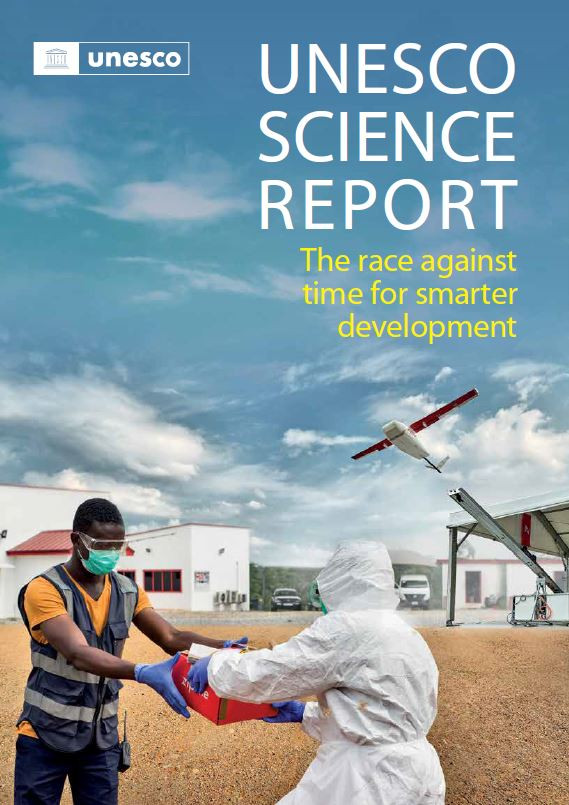 UNESCO Science Report: The Race Against Time for Smarter Development Year of publication: 2021 Author: Susan Schneegans | Tiffany Straza | Jake Lewis Corporate author: UNESCO This seventh edition of the report monitors the development path that countries have been following over the past five years from the perspective of science governance. It documents the rapid societal transformation under way, which offers new opportunities for social and economic experimentation but also risks exacerbating social inequalities, unless safeguards are put in place.The report concludes that countries will need to invest more in research and innovation, if they are to succeed in their dual digital and green transition. More than 30 countries have already raised their research spending since 2014, in line with their commitment to the Sustainable Development Goals. Despite this progress, eight out of ten countries still devote less than 1% of GDP to research, perpetuating their dependence on foreign technologies.
 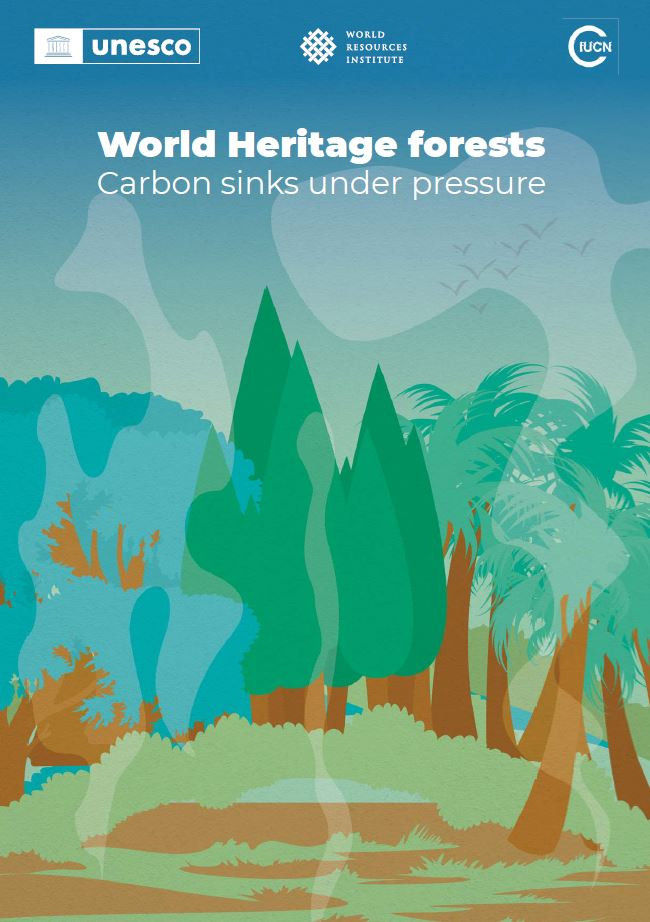 World Heritage Forests: Carbon Sinks Under Pressure Year of publication: 2021 Author: Tales Carvalho Resende | David Gibbs | Nancy Harris | Elena Osipova Corporate author: UNESCO | International Union for Conservation of Nature (IUCN) | World Resources Institute This report provides the first global scientific assessment of greenhouse gas emissions and sequestration in forests found in UNESCO World Heritage sites.World Heritage forests, whose combined area of 69 million hectares is roughly twice the size of Germany, are some of the most biodiversity-rich habitats on Earth and play a crucial role in climate regulation by absorbing carbon dioxide (CO2) from the atmosphere. However, these forests are under increasing anthropogenic pressures, including climate change.By combining remote sensing data with site-level monitoring, this report has quantified the climate benefits of World Heritage forests for the first time, assessed the impacts on carbon of common threats to World Heritage forests and identified sites that are net carbon sources. It therefore provides information to facilitate dialogues between policymakers and local stakeholders for the development of effective solutions aimed at maintaining the continuing role of World Heritage forests as sinks and stable carbon stores for future generations.
 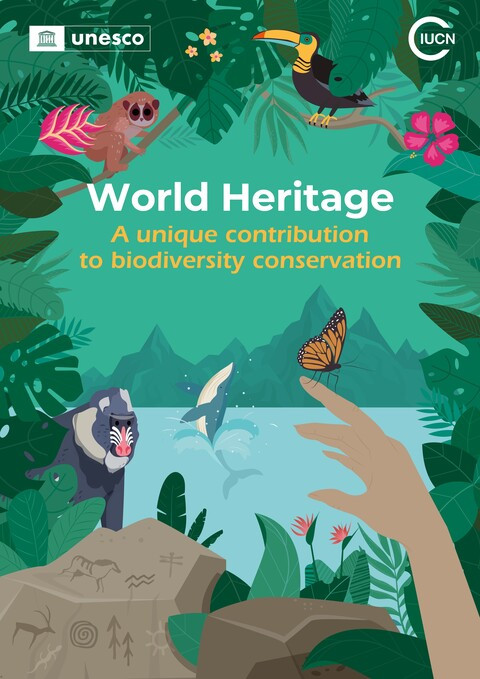 World Heritage: A Unique Contribution to Biodiversity Conservation Year of publication: 2023 Corporate author: UNESCO | International Union for Conservation of Nature (IUCN) The UNESCO World Heritage Convention is unique among international agreements as it deals with both natural and cultural heritage. By conferring one of the highest levels of protection recognized by 195 countries, it ensures a truly global commitment to safeguarding exceptional places. UNESCO natural World Heritage sites are critical for the conservation of ecosystem integrity and biodiversity. While they make up less than 1% of the Earth’s surface, they harbor more than 1/5 of mapped global species richness. This includes over 75,000 species of plants, and over 30,000 species of mammals, birds, fishes, reptiles and amphibians. Cultural World Heritage sites in particular can be an important ally in biodiversity conservation since around 20% of them are located in Key Biodiversity Areas (KBAs). UNESCO World Heritage sites also represent a safe haven for some of the most threatened species on Earth. They are estimated to protect over 20,000 globally threatened species, and are home to some of the last individuals of many iconic species. Today, up to 1/3 of remaining elephants, tigers and pandas can be found in these sites, as well as at least 1 in 10 great apes, giraffes, lions and rhinos. However, even these highly protected sites are today threatened by global climate change and human pressures, including agricultural expansion, infrastructure development, poaching, overexploitation of resources and the proliferation of invasive species. Every 1°C increase in temperature could double the number of species exposed to dangerous climate conditions. Ensuring effective and sustained protection of UNESCO World Heritage sites and surrounding landscapes is crucial for maximizing their value as a solution to tackle the current biodiversity and climate crisis. One way of achieving this is by supporting countries to integrate World Heritage into their National Biodiversity Strategies and Action Plans (NBSAPs), as they are key to implementing the Kunming-Montreal Global Biodiversity Framework (GBF). Patrimonio mundial: Una contribución única a la conservación de la biodiversidad Year of publication: 2023 Corporate author: UNESCO | International Union for Conservation of Nature (IUCN) La Convention du patrimoine mondial de l’UNESCO est un instrument unique parmi les accords internationaux, car elle traite à la fois du patrimoine naturel et culturel. En conférant l’un des plus hauts niveaux de protection reconnu par 195 pays, elle garantit un engagement véritablement mondial en faveur de la sauvegarde de lieux exceptionnels. Les sites naturels du patrimoine mondial de l’UNESCO sont essentiels à la conservation de l’intégrité des écosystèmes et de la biodiversité. Alors qu’ils représentent moins de 1 % de la surface terrestre, ils abritent plus d’un cinquième de la richesse mondiale des espèces cartographiées, soit plus de 75 000 espèces de plantes et plus de 30 000 espèces de mammifères, d’oiseaux, de poissons, de reptiles et d’amphibiens. Les sites culturels du patrimoine mondial, en particulier, peuvent être des alliés importants pour la conservation de la biodiversité, car près de 20 % d’entre eux sont situés dans des zones clés pour la biodiversité (ZCB). Les sites du patrimoine mondial de l’UNESCO représentent également un refuge pour certaines espèces parmi les plus menacées de la planète. On estime qu’ils protègent plus de 20 000 espèces menacées à l’échelle mondiale et qu’ils abritent certains des derniers individus de nombreuses espèces emblématiques. Aujourd’hui, jusqu’à un tiers des éléphants, tigres et pandas restants se trouvent dans ces sites, ainsi qu’au moins un grand singe, une girafe, un lion et un rhinocéros sur dix. Cependant, même ces sites hautement protégés sont aujourd’hui menacés par le dérèglement climatique mondial et les pressions humaines, notamment l’expansion de l’agriculture, le développement des infrastructures, le braconnage, la surexploitation des ressources et la prolifération d’espèces envahissantes. Chaque augmentation de température de 1°C pourrait doubler le nombre d’espèces exposées à des conditions climatiques dangereuses. Il est essentiel d’assurer une protection effcace et durable des sites du patrimoine mondial de l’UNESCO et des paysages environnants pour maximiser leur valeur en tant que solution à la crise actuelle de la biodiversité et du climat. L’un des moyens d’y parvenir est d’aider les pays à intégrer le patrimoine mondial dans leurs stratégies et plans d’action nationaux pour la biodiversité (SPANB), car ils sont essentiels à la mise en œuvre du Cadre mondial pour la biodiversité (CMB) de Kunming-Montréal. Patrimoine mondial: Une contribution unique à la conservation de la biodiversité Year of publication: 2023 Corporate author: Organisation des Nations Unies pour l'éducation, la science et la culture (UNESCO) | International Union for Conservation of Nature (IUCN) La Convention du patrimoine mondial de l’UNESCO est un instrument unique parmi les accords internationaux, car elle traite à la fois du patrimoine naturel et culturel. En conférant l’un des plus hauts niveaux de protection reconnu par 195 pays, elle garantit un engagement véritablement mondial en faveur de la sauvegarde de lieux exceptionnels. Les sites naturels du patrimoine mondial de l’UNESCO sont essentiels à la conservation de l’intégrité des écosystèmes et de la biodiversité. Alors qu’ils représentent moins de 1 % de la surface terrestre, ils abritent plus d’un cinquième de la richesse mondiale des espèces cartographiées, soit plus de 75 000 espèces de plantes et plus de 30 000 espèces de mammifères, d’oiseaux, de poissons, de reptiles et d’amphibiens. Les sites culturels du patrimoine mondial, en particulier, peuvent être des alliés importants pour la conservation de la biodiversité, car près de 20 % d’entre eux sont situés dans des zones clés pour la biodiversité (ZCB). Les sites du patrimoine mondial de l’UNESCO représentent également un refuge pour certaines espèces parmi les plus menacées de la planète. On estime qu’ils protègent plus de 20 000 espèces menacées à l’échelle mondiale et qu’ils abritent certains des derniers individus de nombreuses espèces emblématiques. Aujourd’hui, jusqu’à un tiers des éléphants, tigres et pandas restants se trouvent dans ces sites, ainsi qu’au moins un grand singe, une girafe, un lion et un rhinocéros sur dix. Cependant, même ces sites hautement protégés sont aujourd’hui menacés par le dérèglement climatique mondial et les pressions humaines, notamment l’expansion de l’agriculture, le développement des infrastructures, le braconnage, la surexploitation des ressources et la prolifération d’espèces envahissantes. Chaque augmentation de température de 1°C pourrait doubler le nombre d’espèces exposées à des conditions climatiques dangereuses. Il est essentiel d’assurer une protection effcace et durable des sites du patrimoine mondial de l’UNESCO et des paysages environnants pour maximiser leur valeur en tant que solution à la crise actuelle de la biodiversité et du climat. L’un des moyens d’y parvenir est d’aider les pays à intégrer le patrimoine mondial dans leurs stratégies et plans d’action nationaux pour la biodiversité (SPANB), car ils sont essentiels à la mise en œuvre du Cadre mondial pour la biodiversité (CMB) de Kunming-Montréal.
  UNESCO World Heritage sites: key to biodiversity conservation Year of publication: 2023 Corporate author: UNESCO