
Resources
Explore a wide range of valuable resources on GCED to deepen your understanding and enhance your research, advocacy, teaching, and learning.
56 Results found
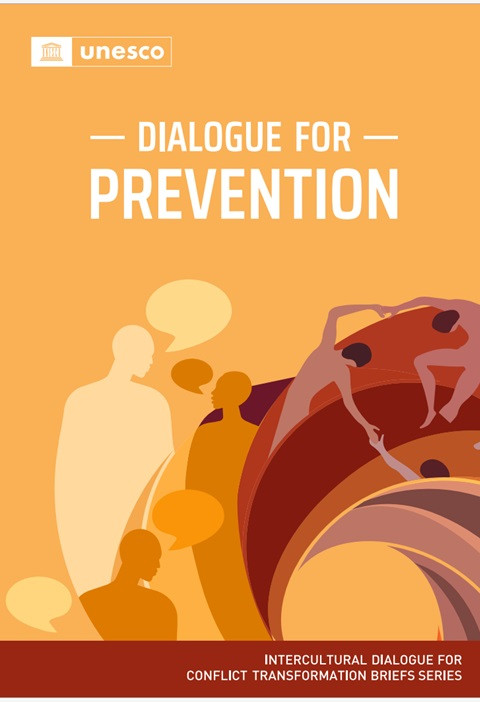 Dialogue for Prevention Year of publication: 2025 Corporate author: UNESCO In an era where geopolitical power struggles disrupt traditional peacebuilding, where identity and misinformation fuel divisions, and where trust in institutions is eroding, UNESCO’s Intercultural Dialogue for Conflict Transformation briefs series presents an adaptable, culturally grounded, and people-centred approach to peacebuilding. With 1.5 billion people living in contexts with low intercultural dialogue where global challenges such as absolute poverty, terrorism and forced displacement are more prevalent, this four-part series draws on firsthand experience, country case studies, and expert analysis to demonstrate the transformative potential of dialogue in fragile and conflict-sensitive settings. The Dialogue for Prevention brief, developed with the Auschwitz Institute for the Prevention of Genocide and Mass Atrocities, explores the powerful role intercultural dialogue can play in preventing large-scale identity-based violence, particularly in the upstream and downstream phases of conflict. Grounded in the idea that dialogue can bridge divides and foster mutual understanding, the brief argues that enabling environments for intercultural dialogue—marked by stability, inclusive governance, freedom of expression, horizontal equality, and social cohesion—also mitigate key risk factors for atrocity violence. Drawing on diverse examples from Cambodia, Colombia, Italy, and Kenya, it showcases creative, context specific applications of dialogue. Through practical guidance, the brief equips policymakers, practitioners and civil society seeking to embed dialogue into prevention strategies.
 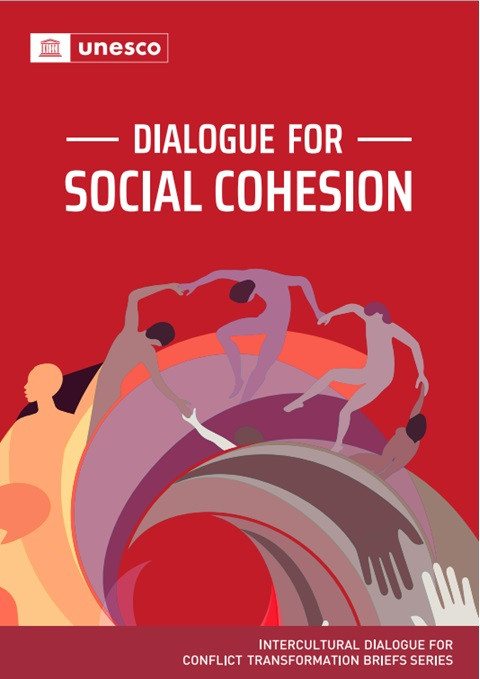 Dialogue for Social Cohesion Year of publication: 2025 Author: Isaure Vicarini | Euan Mackway-Jones Corporate author: UNESCO In an era where geopolitical power struggles disrupt traditional peacebuilding, where identity and misinformation fuel divisions, and where trust in institutions is eroding, UNESCO’s Intercultural Dialogue for Conflict Transformation briefs series presents an adaptable, culturally grounded, and people-centred approach to peacebuilding. With 89% of conflicts worldwide occurring in countries with limited capacity for intercultural dialogue, this four-part series draws on firsthand experience, country case studies, and expert analysis to demonstrate the transformative potential of dialogue in fragile and conflict-sensitive settings. The Dialogue for Social Cohesion brief—developed in collaboration with the Berghof Foundation and Search for Common Ground—bridges theory and practice to explore the horizontal (community-to-community) and vertical (citizen-to-state) dimensions of social cohesion and highlights how inclusive dialogue can support both. Case studies from Afghanistan, Germany, Somalia, and South Sudan illustrate how dialogue—whether through theatre, education, local governance, or environmental peacebuilding—can cultivate mutual understanding and trust, bridge identity-based divides, and restore, step by step, the social fabric in fractured societies. Through actionable recommendations, this brief equips practitioners, policymakers, and civil society with the essential guidance needed to tailor and embed dialogue in their respective contexts, helping to ensure that peace processes are inclusive, locally driven, and enduring.
  Consultation Paper on AI Regulation: Emerging Approaches Across the World Year of publication: 2024 Author: Juan David Gutiérrez Corporate author: UNESCO Since 2016, over thirty countries have passed laws explicitly mentioning AI, and in 2024, the discussion about AI bills in legislative bodies has increased globally. This policy brief aims to inform legislators about the different regulatory approaches to artificial intelligence (AI) being considered worldwide by legislative bodies. The brief explains nine emerging regulatory approaches, each illustrated with specific cases worldwide. The order in which the nine AI regulatory approaches are presented is deliberately structured to guide readers from less interventionist, light-touch regulatory measures to more coercive, demanding approaches. These regulatory approaches are not mutually exclusive and AI bills often combine two or more approaches:1. Principles-Based Approach2. Standards-Based Approach3. Agile and Experimentalist Approach4. Facilitating and Enabling Approach5. Adapting Existing Laws Approach6. Access to Information and Transparency Mandates Approach7. Risk-Based Approach8. Rights-Based Approach9. Liability Approach The policy brief suggests parliamentarians how they can address three key questions before adopting AI regulations:1. Why regulate? Determine whether regulation is needed to address public problems, fundamental and collective rights, or desirable futures.2. When to regulate? Reach a consensus on why regulation is needed, map available regulatory instruments, compare them with other policy instruments, and assess the feasibility of adopting the former.3. How to regulate? Identify a combination of AI regulatory approaches that are tailored to specific contexts.
  Teaching approaches that help to build resilience to extremism among young people Year of publication: 2011 Corporate author: United Kingdom. Department of Education This is a summary for decision-makers – policy- makers, school leaders, teachers and other practitioners, such as youth and community workers – of the key ingredients of evidence-based teaching approaches and interventions that are effective in building resilience to extremism among young people. It also details support factors in schools and other education settings that maximize the benefits and impact of such interventions.
  Developing Positive Values: A case study of Holocaust Memorial Day in the primary schools of one local authority in Scotland Many schools and local authorities saw the initial Holocaust Memorial Day as an important stimulus to develop lessons and events in Holocaust history amongst young people of vital importance for today. The focus of this paper is to examine the potential for Holocaust education in the primary curriculum in Scotland and whether the instance of Holocaust Memorial Day and the undertaking of a serious commitment to it by a local authority had an impact on the teaching and raising of Holocaust issues in the primary schools in that area. The authors previously argued (Maitles & Cowan, 1999) that there needed to be a major commitment from the Scottish Executive and/or local councils to encourage teachers and schools to coordinate or introduce Holocaust education in the schools. To test this, the field research for this survey was conducted by means of a questionnaire to every primary school in the local authority and achieved a 91% response rate. Strong national commitment to Holocaust educational activities, backed up by commitment from the local authority, in terms of staff development and teaching materials, ensured a quality of experience as well as the quantity. Linked to this was an effective structure in the schools, with a designated Holocaust education coordinator and the involvement of the wider community. This led teachers in schools to imaginatively develop pupil skills, knowledge and understanding and informed attitudes in Holocaust history which potentially has a resonance in the wider citizenship area. (By the publisher) Values and Attitudes - Positive and Negative: A study of the impact of teaching the Holocaust on citizenship among Scottish 11-12 year olds Previous research on teaching the Holocaust, notably case studies in the primary or the secondary sectors, suggests that Holocaust education can make a significant contribution to citizenship by developing pupils’ understandings of justice, tolerance, human rights issues, and the many forms of racism and discrimination. Yet, there have been no longitudinal studies into its impact on primary pupils. This paper reports on the first stages of ongoing longitudinal research (sponsored by the Scottish Executive Education Department) and concentrates on the relevance of Holocaust education to citizenship, by comparing the attitudes of primary 7 pupils before and after Holocaust teaching using data from questionnaires. Results show an improvement in pupils’ values and attitudes after learning about the Holocaust in almost every category related to minority groups, ethnic or otherwise. One significant finding was a deep anti-English feeling and this in itself indicates the need for further investigation. (By the author)
 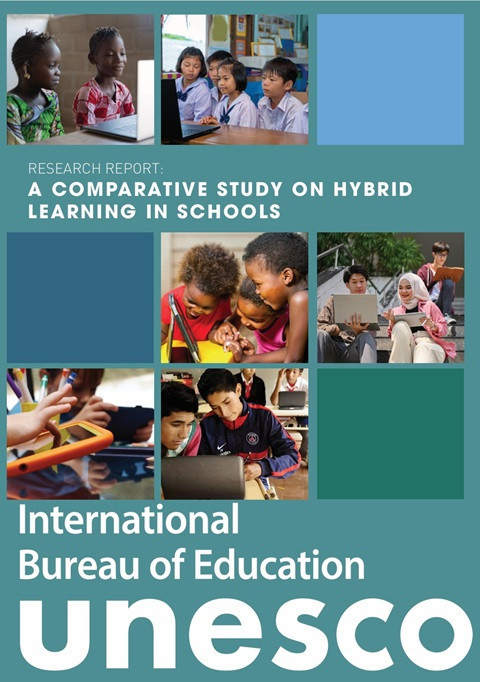 Research Report: A Comparative Study on Hybrid Learning in Schools Year of publication: 2024 Corporate author: UNESCO International Bureau of Education (IBE) During the COVID-19 lockdown, policymakers and educators faced an unprecedented challenge disrupting all levels of education. The initial optimism about replacing physical classes with virtual lessons diminished as complex interconnected issues emerged. To address the need for continuous and sustainable learning, school systems implemented variations of hybrid learning during the pandemic, seeking to integrate physical and virtual classes. These approaches prompted this comparative study led by UNESCO-IBE. The initial phase of this study involved collecting and analysing data on hybrid strategies from six countries. The research aimed to examine factors influencing hybrid learning implementation during the lockdown, with a subsequent focus on developing and validating a practical Hybrid Learning Framework for Schools. The cross-case analysis was designed not to rank or compare, but to understand and connect different scenarios and contexts. Phase I focuses on current hybrid learning practices and influencing factors, while Phases II and III will concentrate on using the information gathered to create and validate a Hybrid Learning Framework for Schools. Hybrid learning is not just a response to pandemics but also serves as a viable solution for other scenarios where full school attendance is difficult. Aligned with UNESCO-IBE’s overarching vision of a comprehensive, personalized, and democratized curriculum accessible to all, hybrid learning facilitates inclusive education across diverse regions, overcoming geographical and temporal limitations. The approach aims to unlock the unique potential of every learner, fostering a more flexible educational environment.Published in February 2024 by the UNESCO International Bureau of Education (IBE) with support from the European Union. Education sector responses to climate change: background paper with international examples Year of publication: 2012 Corporate author: UNESCO Bangkok Through a review of academic articles and project documents, this paper explores the relationship between the education sector and climate change. It introduces how education is both impacted by and has an impact on this phenomenon, and proposes various sector responses. Different theoretical frameworks for where and how climate change education fits into the education sector are made concrete with case studies from across the globe. An essential introduction to climate change and education, this paper brings together theory, policy and practice. A useful read for those working in either the education sector or on climate change.
  Reconceptualising global education from the grassroots: the lived experiences of practitioners Year of publication: 2015 Corporate author: DEEEP This research aims to conceptualise and reflect on DEEEP's understanding of Globalcitizenship Education(i.e., GE) in a way that is practice-led and rooted in practitioners’ experiences. We argue that the strategies practitioners use to negotiate the institutional and conceptual challenges of GE should be more systematically engaged with and central to our understanding of GE, and provide critical lessons for how practitioners can be supported, but also how we can understand the GE that results.
  School for all: experiences of municipal public schools with inclusion of students with disabilities, ASD, GDD and high ability/giftedness Year of publication: 2017 Author: Carla Mauch | Wagner Santana Corporate author: UNESCO Brasilia This publication is the result of a research project entitled Good Practices in Inclusive Education: the experience of Brazilian municipalities with the inclusion of students with disabilities, Autism Spectrum Disorder (ASD), Global Developmental Disorder (GDD) and of high ability/giftedness students (Boas Práticas em Educação Inclusiva: a experiência de municípios brasileiros na inclusão de alunos com deficiência, transtornos do espectro autista (TEA), transtorno global do desenvolvimento (TGD) e altas habilidades/superdotação). The study set out to identify and analyse the practices of municipal public-school networks in Brazil concerning the educational inclusion of students with disabilities, ASD and GDD, as well as gifted/talented students. The initiative arose out of a will to subsidise and strengthen processes for the formulation and implementation of policies, programmes and projects aligned with the principles of the Convention on the Rights of Persons with Disabilities (United Nations, 2006; Brazil, 2009) and the National Special Education Policy in the Perspective of Inclusive Education (Política Nacional de Educação Especial na Perspectiva da Educação Inclusiva) (Brasil. MEC/SEESP, 2008c). It is important to point out that those normative frameworks bring principles and presuppositions that have been reaffirmed in more recent documents such as the Incheon Declaration (World Education Forum, UNESCO, 2015) and the Sustainable Development Goals (SDG) (United Nations, 2015).