
Resources
Explore a wide range of valuable resources on GCED to deepen your understanding and enhance your research, advocacy, teaching, and learning.
56 Results found
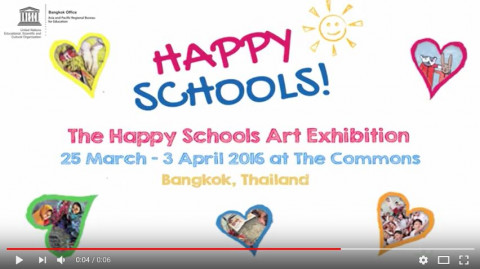 Happy Schools Art E-Exhibition Year of publication: 2016 Corporate author: UNESCO Bangkok Happy Schools Art E-Exhibition What does a Happy School look like to you? A happy learner is more likely to be a thriving one – better able to solve problems and apply critical thinking skills, more self-confident and likelier to form and foster positive relationships with others. Happy learners require Happy Schools, those that ensure the holistic development and well-being of students and the wider school community. In today’s rapidly changing world, we are faced with increasing mobility, life stress, competition, information overload, inequalities and environmental concerns. As these symptoms of ‘unhappiness’ begin to emerge, the Happy Schools Project calls for the need for education systems to reposition the school as more than a service for educational instruction, but rather, an environment which allows for social and emotional growth and development for learners to contribute to a more peaceful, just and equitable world. As part of UNESCO Bangkok’s Happy Schools Project, the Happy Schools team hosted an art contest in early 2016 in an effort to capture actions, moments and ideas that are promoting happiness in schools. All residents of the Asia-Pacific region were invited to submit images of any kind (photos, drawings, cartoons, paintings, graphics, and posters) along with a caption/description that captures the concept of Happy Schools. Thirty winners were selected from the pool of entries for the Happy Schools Art Exhibition and Report Launch (of the Happy Schools: A Framework for Learner Well-being in the Asia-Pacific report. The artwork will be on display for the Happy Schools Art Exhibition from 25 March to 3 April, 2016 at The Commons in Bangkok, Thailand, and available to view here as an e-exhibition.
  Turning Students into Global Citizens Year of publication: 2016 Author: Fernando Reimers Prof. Fernando M. Remiers made the case for global citizenship education and shared his experiences through Ed Week.
  "Why Do We Always Have to Say We're Sorry?" A Case Study on Navigating Moral Expectations in Classroom Communication on National Socialism and the Holocaust in Germany Against the background of the pedagogization and internationalization of Holocaust memory discourse, this contribution focuses on the specific conditions of history classes on National Socialism and the Holocaust in Germany. Using a case study, this article shows both how the meanings of these subjects are communicatively negotiated in history classes and how these classroom discourses relate to the specific context of the culture of memory in Germany. Particular attention is given to the question of guilt and the concomitant moral expectations—which can be interpreted as a specific condition of the memory of the Holocaust in the successor state of the Third Reich. Within this context, the central questions of my study are: (1) How do today's youth in Germany navigate the moral expectations that are implicit within the established historical narratives on the Holocaust? (2) How do ethnically and nationally linked conceptions of memory play a role in youth's sense-making about the Holocaust? (By the author)
 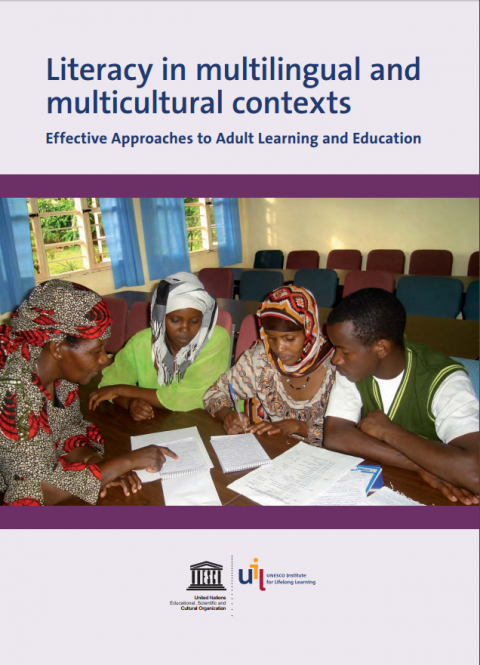 Literacy in multilingual and multicultural contexts: effective approaches to adult learning and education Year of publication: 2016 Author: Ulrike Hanemann, Cassandra Scarpino All of the literacy programmes featured in this publication offer valuable experiences and lessons on how the challenges posed by linguistic and cultural diversity can be productively addressed by harnessing the potential of language and culture as enriching resources in the process of literacy teaching and learning. A major lesson that has emerged over the years is that the use of local languages as the medium of instruction enhances the effectiveness and efficiency of the learning process in developing literacy, numeracy and (second or more) language skills. However, mother tongue-based literacy not only facilitates the learning process, but is also an important symbol of identity, unity and self-determination. It is closely intertwined with culture and local values, wisdom, worldviews and tradition. A number of the featured programmes demonstrate that language and culture in education are highly political. Respect for all languages and cultures, and their equal treatment, can play a critical role in fostering national cohesion. In some cases, this is contributing to rebuilding peace in post-conflict communities. Literacy programmes that contribute to the preservation of linguistic and cultural diversity should, also, be viewed as integral to sustainable development. Global education in Austria Corporate author: North-South Centre of the Council of Europe This National Report on Global Education in Austria is part of the European Global Education Peer Review Process, which was initiated in 2002 with the purpose of increasing and improving global education in Council of Europe member states. This report is the culmination of a peer review process led by an international peer review team. Through research and interviews with key stakeholders, information was gathered and critical perspectives developed about the current state of, and the future prospects for, global education in Austria. This year–long process, facilitated by the North-South Centre of the Council of Europe, was developed in partnership with the Austrian Strategy Group for Global Education as the national counterpart in the process. It involved the Ministry of Foreign Affairs, the Ministry of Education, the Austrian Development Agency (ADA), KommEnt, and the NGO and academic communities.This Peer Review report recognises the relatively strong tradition of global education in Austria. Austrian support for GE is reflected in the range of committed organisations involved in GE, and the many initiatives and projects in the formal and non-formal education sectors, and in civil society. Chapter 1 below provides an introduction to the report and the process generally. Chapter 2 outlines the context of global education in Austria. Chapter 3 examines global education in the formal education sector. Chapter 4 focuses on the important and varied work taking place in non-formal education, civil society organisations and other sectors in this field. Chapter 5 provides, in summary fashion, an outline of the key observations and recommendations of the Peer Review.
  Languages in adult literacy: policies and practices during the 15 years of EFA (2000-2015) Year of publication: 2015 Author: Clinton Robinson Linguistic diversity characterises many countries with large literacy needs. Meeting these needs will require a multilingual approach based on learning initial literacy in the learner’s mother tongue, with other languages used subsequently. This paper identifies five major challenges in implementing multilingual programmes, and traces the international policy developments over the 15 years of the EFA period. Four case studies – Mexico, Morocco, Papua New Guinea and Senegal – illustrate a range of policies, showing differing approaches and levels of commitment in providing literacy acquisition based on the mother tongue. The paper concludes with six policy orientations to guide action as part of the post- 2015 agenda.
 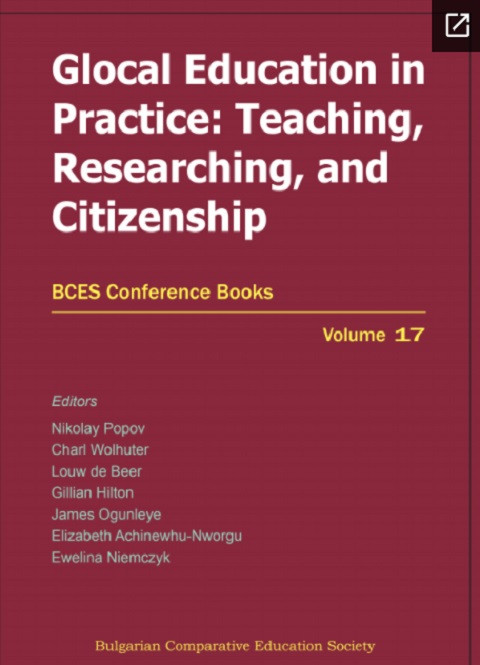 Glocal Education in Practice: Teaching, Researching, and Citizenship (BCES Conference Books; Vol. 17) Year of publication: 2019 Author: Nikolay Popov | Charl Wolhuter | Louw de Beer | Gillian Hilton | James Ogunleye | Elizabeth Achinewhu-Nworgu | Ewelina Niemczyk Corporate author: Bulgarian Comparative Education Society (BCES) This volume contains selected papers submitted to the XVII Annual International Conference of the Bulgarian Comparative Education Society (BCES) held in June 2019 in Pomorie, Bulgaria. The XVII BCES Conference theme is Glocal Education in Practice: Teaching, Researching, and Citizenship. The book includes 34 papers written by 69 authors from 20 countries.
  Mapping of Media Literacy Practices and Actions in EU-28 Year of publication: 2016 Corporate author: European Audiovisual Observatory | Council of Europe A project conducted by the European Audiovisual Observatory and financed by the European Commission This study aims at analysing the various media literacy initiatives on a national or regional level in order to provide an overview of what is currently being undertaken. This is the first major mapping exercise to survey the field in Europe. Although this study does not aim at covering the entire media literacy initiatives, it provides a detailed overview of the main trends, coming out of a selection of 547 featured projects involving 939 stakeholders across the European Union, which were identified through a questionnaire addressed at national experts from the different EU-28 member states. So what is Europe doing to encourage our media literacy? What measures are being taken at national and European levels to foster our critical appreciation and understanding of the mass media? The results of this study can be found in a general report accompanied by 4 annexes: Annex 1 provides national summaries showing the findings of the responses concerning each of the 28 EU member states; Annex 2 contains the list of the 547 featured projects; Annex 3 summarises the 145 case-study projects; Annex 4 contains the original responses from the 29 national experts, which are accessible in separate files available on the website of the European Commission.
 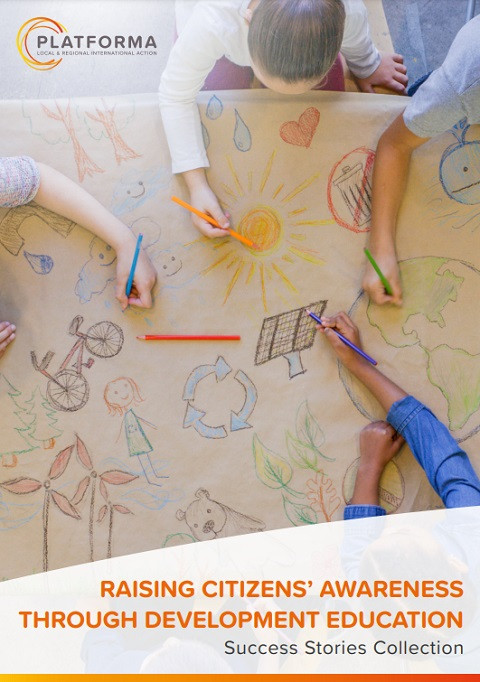 Raising Citizens' Awareness Through Development Education: Success Stories Collection Year of publication: 2020 Author: Lur Fernandez Salinas Corporate author: PLATFORMA Development Education and Awareness Raising (DEAR) are natural lines of action for local and regional governments active in development cooperation and tie in perfectly with their territorial strategies.Awareness-raising among citizens, through the action of municipalities and regions, remains a core component of the co-responsibility, solidarity, mutual knowledge and mutual understanding needed to mobilise and unite communities.Discover this Success Stories Collection which aims to showcase concrete, impactful and transformative experiences of local and regional governments and their associations actively engaged in DEAR projects and decentralised cooperation strategies.
 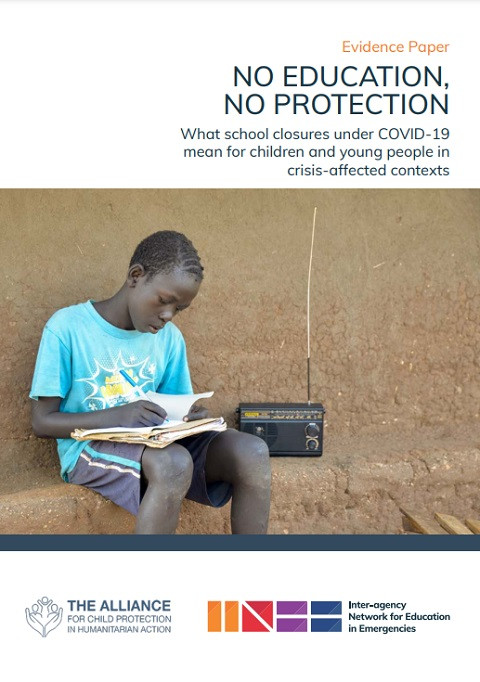 No Education, No Protection: What School Closures Under COVID-19 Mean for Children and Young People in Crisis-Affected Contexts Year of publication: 2021 Corporate author: Inter-agency Network for Education in Emergencies (INEE) | Alliance for Child Protection in Humanitarian Drawing from research and experience on previous infectious disease outbreaks and an emergent body of work from the current COVID-19 pandemic, this report highlights the primarily negative effects resulting from the combination of sudden school closures and restricted access to and availability of services, social networks, and other protective facilities for children and young people living in crisis-affected contexts. The consequences of school closures on education and child protection can be categorized into three principal areas:1. Loss of learning and impediments to providing inclusive, equitable, quality education2. Negative impact on child well-being and healthy development3. Amplified child protection risks and harms experienced by children and young people