
Resources
Explore a wide range of valuable resources on GCED to deepen your understanding and enhance your research, advocacy, teaching, and learning.
56 Results found
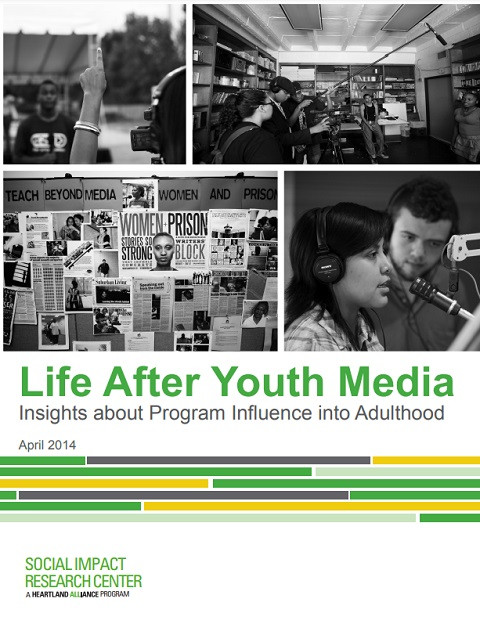 Life After Youth Media: Insights About Program Influence Into Adulthood Year of publication: 2014 Author: Suniya Farooqui | Amy Terpstra Corporate author: Social IMPACT Research Center * Do the skills, attitudes, and behaviors imparted in youth programs "stick" into adulthood? * If they do, how do they manifest in career, education, and life decisions? * How do the skills, attitudes, and behaviors that youth programs try to impart differ based on program intensity or levels of engagement? * Do these elements look different for people who went through youth media programs versus people who went through other types of youth programs? These are common questions that youth program providers, funders, public officials, and other leading thinkers regularly wrestle with. This report tells the story of a group in Chicago committed to providing quality youth media programming in the city and how, through a collective evaluation, they were able to begin to answer these critical questions.
  Flexible Learning Pathways in Malaysian Higher Education: Balancing Human Resources Development and Equity Policies Year of publication: 2020 Author: Morshidi Sirat | Abdul Karim Alias | Hazri Jamil | Wan Zuhainis Saad | Muhamad Saiful Bahri Yusoff | Munir Shuib | Mahiswaran Selvanathan | Muhammad Muftahu | Majid Ghasemy | Mazlinawati Mohamed Corporate author: Commonwealth Tertiary Education Facility (CTEF) | UNESCO International Institute for Educational Planning (IIEP) Malaysia’s higher education system is highly centralized, with a set of legislations to govern and monitor public universities and regulate the private higher education sector. The latest discourse, the Sustainable Development Goals (SDGs), particularly SDG4, pitted against existing policies on lifelong learning, presented an opportunity to assess practices at the institutional level. In the national context, there is a need to confirm the extent to which the linkages between national policies on lifelong learning, strategies, instruments, and institutional practices in terms of flexible learning pathways (FLPs) have benefited nontraditional learners, disadvantaged and marginalized groups. Hence, this research aims to investigate how FLPs have benefited particularly the bottom 40 percent of households (B40 households), disadvantaged and marginalized groups, persons with disabilities, and also women in Malaysia.
  Environmental education in action: a story from the Tonle Sap biosphere reserve in Cambodia Year of publication: 2013 Author: Keat Kunthea Osmose is a not-for-profit association linking community-based conservation, ecotourism and environmental education in Prek Toal. Osmose has been supported by UNESCO in Phnom Penh in many projects including: production of a poster depicting the flooded forest and plants of the Tonle Sap Biosphere Reserve, handicraft, and particularly, environemental education (EE). EE was initiated in 2000 when Osmose realized there was an increase in the child population and that education was therefore needed in order to protect their natural resources.
 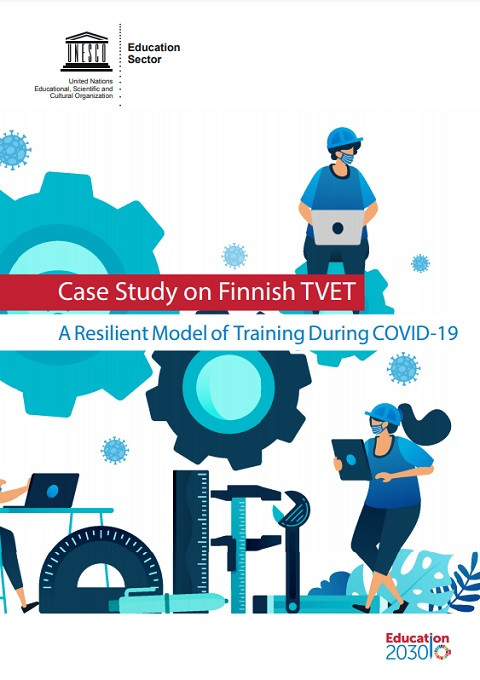 Case Study on Finnish TVET: A Resilient Model of Training During COVID-19 Year of publication: 2021 Corporate author: UNESCO | Omnia Education Partnerships This case study examines how technical and vocational education and training (TVET) was organized during the state of emergency caused by the COVID-19 pandemic in Finland. The disruption accentuated the importance of flexibility within the education system to make it resilient. Finnish TVET, created as a hybrid solution combining school-based, work-based and online-based learning environments, remained responsive and functional throughout the difficult time in spring 2020.To urgently improve the resilience of education, this case study emphasizes the necessity to improve system-level flexibilities across all levels and all types of TVET, including alternative modes of delivery and hybrid learning opportunities, as the one size fits all approach increases rigidity and redundancy of education and training. Flexible measures are key to improve resilience, also beyond the COVID-19 pandemic.
 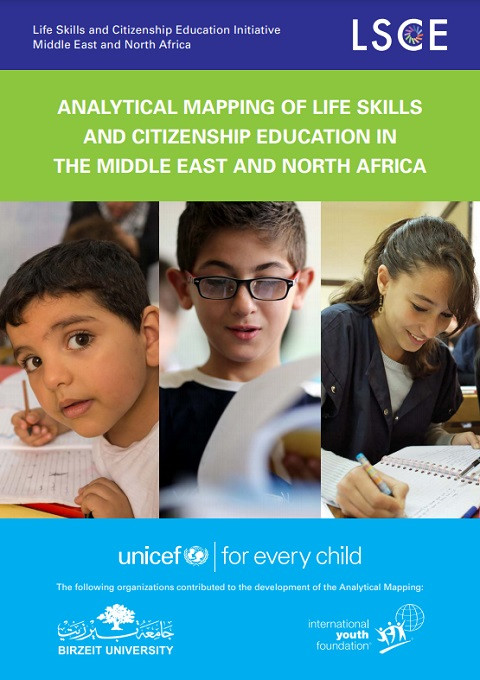 Analytical Mapping of Life Skills and Citizenship Education in the Middle East and North Africa Year of publication: 2017 Corporate author: UNICEF Middle East and North Africa The Analytical Mapping of the Life Skills and Citizenship Education in MENA, published in October 2017, provides a multi-stakeholder view of the status of life skills and citizenship education in MENA and the corresponding vision for the region. It does not evaluate existing interventions, nor is it meant to generate an exhaustive list of all existing life skills programmes in MENA. It rather aims to provide an analytical overview of Life Skills and Citizenship Education (LSCE) related intervention in the region. Through analyzation, it also attempts to highlight general challenges encountered in the programming of LSCE, as well as focus on opportunities for LSCE in MENA national education systems.
  Imagining and Practising Global Citizenship Education Year of publication: 2020 Corporate author: UNESCO Venice This methodological guide illustrates the ways in which the International Cooperation Centre (ICC) has been promoting and practicing Global Citizenship Education in Italy for more than ten years. The training work developed by the ICC in the field of GCED, presented here in its theoretical articulation and in its practical outlining in some concrete experiences, may offer some reflections in the form of useful recommendations for continuing and strengthening the promotion of GCED.
 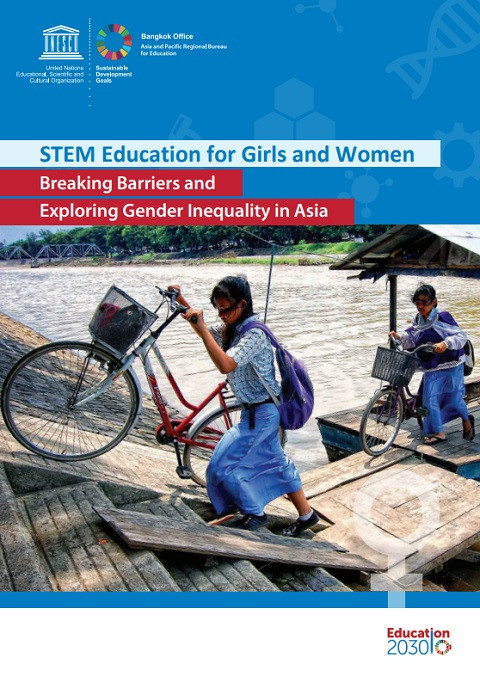 STEM Education for Girls and Women: Breaking Barriers and Exploring Gender Inequality in Asia Year of publication: 2020 Corporate author: UNESCO Bangkok | UNESCO Science, Technology, Engineering and Mathematics (STEM) fields are considered catalysts for the achievement of the 2030 Agenda for Sustainable Development. Yet, particularly for STEM fields, girls and women, for a multitude of social, cultural and psychological reasons, engage and participate at a lower rate than boys and men. This research collection aims to highlight the contextual barriers that girls and women face in STEM education and careers and offer concrete examples of interventions that successfully encourage participation of girls and women in STEM. These eight case studies from across Asia explore both the barriers and the achievements in SDG 4 and SDG 5, and give context-specific analysis of different aspects of gender disparities in the respective countries.
  Holocaust Education: Analysis of Curricula and Frameworks: A Case Study of Illinois This article addresses how far educational institutions have come in designing authentic and meaningful curricula for teaching the Holocaust at the secondary level. Examined in this article are the historical development of Holocaust education in the United States, with a focus on the state of Illinois as a case study, what contributes to the development of a full curriculum, and what constitutes the boundary between a curriculum and a framework, based on examination of the work of scholars and institutions in the field. Analysis of existing frameworks according to criteria developed by the authors has yielded the finding that a framework can only guide teachers to an extent because of its looser structure. A full curriculum, however, is structured with greater detail and more direct ways of determining evidence that demonstrates understanding of the content and mastery of essential skills. Recommendations are provided for Holocaust Education curriculum development, underscoring the significance of an engaging design that makes learning more lasting and meaningful. (By the author)
  Good practices in education for sustainable development: teacher education institutions Year of publication: 2007 Author: Rosalyn McKeown Corporate author: UNESCO Chair in Reorienting Teacher Education towards Sustainability | International Network of Teacher Education Institutions The case studies in this document reflect individual and institutional efforts to reorient curriculum, programs, practices, and policies to address sustainability at institutions of teacher education. The studies come from Africa, Asia, the Caribbean, Europe, and North America. The case studies deal with professional development for in-service teachers, curriculum revision at the pre-service level, research with students in a local school, greening of a building and its garden, creating a network of universities, starting a journal, and creating new undergraduate and graduate programs. The diversity of efforts is broad; the impact is deep. The dedication of teacher educators around the world is evident on every page of this document. 2013 Asia-Pacific Education Research Institutes Network (ERI-Net) regional study on: transversal competencies in education policy and practice (Phase I): regional synthesis report Year of publication: 2015 Corporate author: UNESCO Bangkok The Asia-Pacific region has been spearheading global, social, and economic development for the last several decades. Millions of people have been lifted out of poverty and basic education (primary and lower secondary) has become near universal in many countries in the region. Upper secondary and higher education enrollment rates have also increased significantly. However, while these are tremendous achievements, education quality remains a major concern among emerging economies and industrialized nations alike. While some countries in the region excel in international assessments, such as the Programme for International Student Assessment (PISA), the Trends in International Mathematics and Science Study (TIMSS), and the Progress in International Reading Literacy Study (PIRLS), other countries still attain low scores. National assessment results of countries that have not participated in international assessments reveal large knowledge and skills disparities among students of the same country. In some cases the results also indicate a very low attainment level of basic skills, even after years of schooling.At the same time, the debate surrounding what actually constitutes quality education and learning in the 21st century is ongoing. There is a growing concern that education systems are focusing too much on the accumulation of academic “cognitive” skills at the expense of the more elusive and hard-to-measure “nonacademic” skills and competencies. The accumulation of these skills and competencies, which include skills and competencies in efficient communication with others, innovative thinking, respect for diversity and the environment, conflict resolution, team work, problem solving, and so on, is not only important for students to be adequately prepared for the world of work, but is also paramount in ensuring future generations are equipped to live meaningful, sustainable, and responsible lives in a rapidly changing and interconnected world.1 The effects of the limited attention paid to such skills and competencies in education can be felt in a number of domains and include, for example: poor respect for diversity (including socio-economic, ethnic, and gender equality), neglect of environmental issues, and a lack of innovation and social entrepreneurship among students.To counter these challenges, many countries and economies in the Asia-Pacific region have introduced, or are in the process of introducing, policy and curriculum changes aimed at enhancing the cultivation of such “non-academic” skills and competencies in learners. To date, these important reforms in the Asia-Pacific region have not been widely documented, and hence, in 2013 members of the Asia-Pacific Education Research Institutes Network (ERI-Net), hosted by UNESCO Bangkok since 2009, agreed to make this their next topic of investigation. The research aims to document and consolidate reform initiatives for knowledge dissemination and policy consideration to the benefit of countries and economies in the Asia-Pacific region and beyond. In phase I, the 2013 ERI-Net research examined how different countries and economies in the region define and apply “non-academic” skills (often termed “non-cognitive skills”) in their education policies, practices, and curriculum frameworks, and identified emerging trends and challenges. This report synthesizes ten case studies and includes important information and insights gained from the discussions held during the ERI-Net annual meeting 2013.The objectives of the report are: (i) to capture the movements in the realm of “non-academic” learning in ten education systems in the Asia-Pacific region; (ii) to identify possible policy recommendations for promoting and enhancing well-rounded and holistic learning; and, (iii) to suggest further stages of investigation.