
Resources
Explore a wide range of valuable resources on GCED to deepen your understanding and enhance your research, advocacy, teaching, and learning.
56 Results found
 EIU Best Practice Series No. 5: Peace and human rights education through education for sustainable development: lessons from four case studies in the Philippines Year of publication: 2007 Corporate author: APCEIU The four case studies showed that EIU through peace and human rights education in the context of education for sustainable development can build a critical mass of Filipinos who will reject wars and promote social security. Education can play a role to direct the children, youth, and adults toward peace building and better understanding of cultural differences. It should also be noted that when institutions adopt a peace culture, establishing local and international organizations and putting up resources for various peace-building initiatives become possible. Educational intervention can effect changes in the minds of men and build a lasting and substantive foundation for peace based on justice and respect for human rights.
 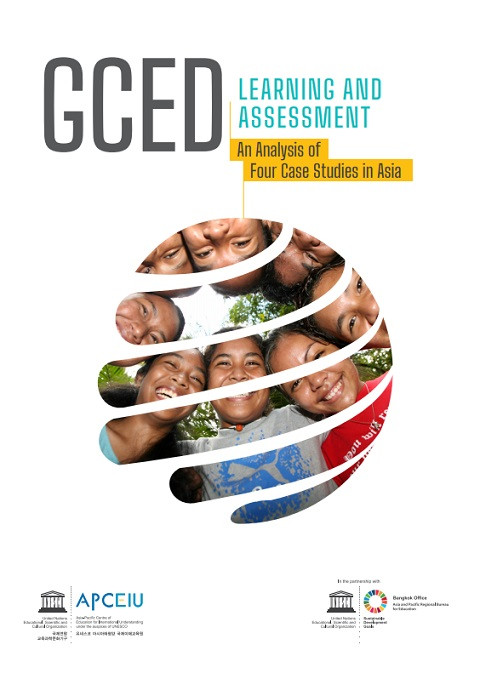 GCED Learning and Assessment: An Analysis of Four Case Studies in Asia Year of publication: 2020 Corporate author: APCEIU | UNESCO Bangkok “GCED Learning and Assessment: An Analysis of Four Case Studies in Asia” is a result report of research jointly led by UNESCO Asia-Pacific Regional Bureau for Education, the Asia-Pacific Centre of Education for International Understanding (APCEIU) and the Asia-Pacific Regional GCED Network. The report encompasses four case studies of GCED Learning in the region and its assessment. Four leading researchers in the field of GCED, Satya Bushan from the National Council of Educational Research and Training (NCERT), India; Sayaka Matsukura of Ageo Oishi Junior High School, Japan; Dawon Kim from Gwangju National University of Education, Republic of Korea; and Le Anh Vinh from the Vietnam National Institute of Educational Science (VNIES), Viet Nam, contributed to this research. Through presenting and sharing the cases of India, Japan, Republic of Korea and Viet Nam, the publication is expected to shed light on the assessment on how GCED is implemented in the region and further inspire and encourage the GCED practitioners on the ground to take another step forward to reflect GCED in their respective educational systems. <List of Contents>ForewordAcknowledgementsAcronymsExecutive summaryChapter 1: IntroductionChapter 2: Schoollevel approaches at integrating GCEDChapter 3: Assessment of GCED learning Chapter 4: Reflections on GCED learning assessment Chapter 5: Conclusions and recommendations References
 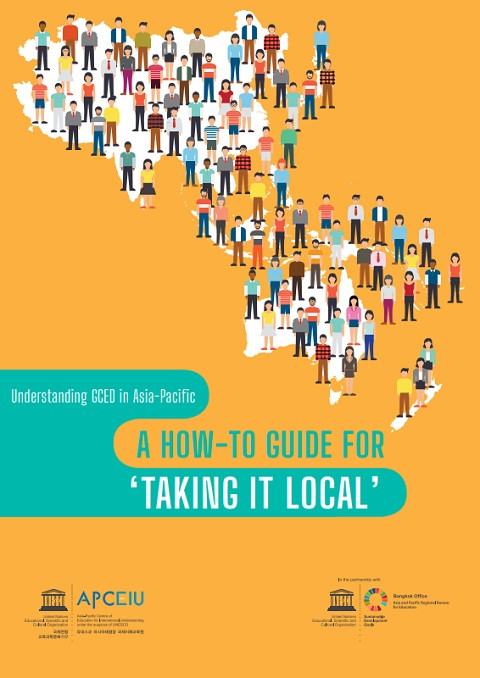 Understanding GCED in Asia-Pacific: A How-to Guide for ‘Taking It Local’ Year of publication: 2020 Corporate author: APCEIU | UNESCO Bangkok The Asia-Pacific Centre of Education for International Understanding (APCEIU), in partnership with UNESCO Bangkok, has published “Understanding GCED in Asia-Pacific: A How-To Guide for ‘Taking It Local’”, a guidebook for GCED-themed workshop organizations in the region. The publication is developed by UNESCO Asia-Pacific Regional Bureau for Education under the framework of the Asia-Pacific Regional GCED Network that is coordinated by UNESCO Bangkok and APCEIU. Taking stock of the key data from the 2019 publication titled “GCED: Taking it Local in Asia-Pacific”, the guidebook presents full-detailed guidelines on preparing and conducting a ‘Taking it Local’ workshop on GCED with particular focuses on the three core notions of GCED – respect for diversity, solidarity and a shared sense of humanity. The purpose of the publication is to promote GCED in local contexts and support active GCED practitioners on the ground to design and carry out GCED workshops that are translated and designed fully within the local context of the Asia-Pacific region. <Contents>Chapter 1: Introduction1.1 What is GCED?1.2 Purpose of the Guidebook1.3 Pedagogical ApproachChapter 2: Preparing a ‘Taking it Local’ Workshop on GCED2.1 Workshop Objectives2.2 Target Audiences2.3 Workshop Preparation2.4 Tips for a Successful Workshop2.5 Sample Agenda for the WorkshopChapter 3: Conducting a ‘Taking it Local’ Workshop on GCED3.1 Welcome, Overview, and Agreements3.2 Introduction Exercise: Story Circles3.3 GCED in AsiaPacific Exercise3.4 Optional Activities for the Workshop 3.5 Application Exercise 3.6 Closing 3.7 Final Reflection and Workshop Evaluation 3.8 Sharing Reflections 3.9 FollowUp of the WorkshopReferences
  Supporting Change in Practice: Case Studies on the Use of the ACER-APCEIU Global Citizenship Education Monitoring Toolkit: Country Case-Republic of Korea Year of publication: 2025 Author: Suyeon Park | Sunmi Ji | Yoonyoung Lee Corporate author: APCEIU APCEIU is pleased to announce the release of its new publications, Supporting Change in Practice: Case Studies on the Use of the ACER-APCEIU Global Citizenship Education Monitoring Toolkit, which shares key findings from the research conducted in Australia and the Republic of Korea. The two reports, based on case studies from two countries, build upon the three-phase Asia-Pacific GCED Monitoring Project (2022–2024) jointly undertaken by ACER and APCEIU to strengthen monitoring and evaluation of GCED and support progress toward SDG 4.7 across the region. The three phases of the initiative identified enabling conditions for GCED, validated the regional GCED Monitoring Framework, and developed the ACER-APCEIU GCED Monitoring Toolkit. The reports for each phase can be found here: Phase I, Phase II, and Phase III. The newly released reports move the project forward by examining how the Toolkit can be practically applied in real educational settings. The study aimed to examine how the Toolkit could be used to support collaboration among key education stakeholders—teachers, school leaders, and education supervisors—in 1) goal setting, 2) planning, 3) implementing, and 4) reflecting on GCED practices. Through this process, the research sought to understand how the Toolkit could help strengthen the connection between policy commitments and everyday educational practice, supporting teachers, school leaders, and system leaders to embed GCED more systematically and sustainably within their existing framework. Both studies conducted in Australia and the Republic of Korea have been guided by the following research questions: 1. How does the GCED Monitoring Toolkit support key stakeholder groups to collaboratively embed GCED in policy and practice? a. What aspects of the Toolkit enable or challenge stakeholders to achieve their GCED goals and objectives? b. How do key stakeholders perceive its usefulness? 2. Are there any aspects of the Toolkit that stakeholders would change to improve its usefulness in supporting the implementation and contextualisation of GCED in policy and practice?The reports demonstrate how a GCED Monitoring Toolkit can be translated into actionable processes within real educational settings. It offers valuable insights for policymakers, school leaders, teachers, and researchers aiming to monitor and strengthen GCED implementation and systematically embed GCED within their educational ecosystems.
  Supporting Change in Practice: Case Studies on the Use of the ACER-APCEIU Global Citizenship Education Monitoring Toolkit; Country Case-Australia Year of publication: 2025 Author: Rachel Parker | Karena Menzie-Ballantyne Corporate author: APCEIU APCEIU published Supporting Change in Practice: Case Studies on the Use of the ACER-APCEIU Global Citizenship Education Monitoring Toolkit, which shares key findings from the research conducted in Australia and the Republic of Korea. The two reports, based on case studies from two countries, build upon the three-phase Asia-Pacific GCED Monitoring Project (2022–2024) jointly undertaken by ACER and APCEIU to strengthen monitoring and evaluation of GCED and support progress toward SDG 4.7 across the region. The three phases of the initiative identified enabling conditions for GCED, validated the regional GCED Monitoring Framework, and developed the ACER-APCEIU GCED Monitoring Toolkit. The reports for each phase can be found here: Phase I, Phase II, and Phase III.The reports move the project forward by examining how the Toolkit can be practically applied in real educational settings. The study aimed to examine how the Toolkit could be used to support collaboration among key education stakeholders—teachers, school leaders, and education supervisors—in 1) goal setting, 2) planning, 3) implementing, and 4) reflecting on GCED practices. Through this process, the research sought to understand how the Toolkit could help strengthen the connection between policy commitments and everyday educational practice, supporting teachers, school leaders, and system leaders to embed GCED more systematically and sustainably within their existing framework. Both studies conducted in Australia and the Republic of Korea have been guided by the following research questions: How does the GCED Monitoring Toolkit support key stakeholder groups to collaboratively embed GCED in policy and practice? a. What aspects of the Toolkit enable or challenge stakeholders to achieve their GCED goals and objectives? b. How do key stakeholders perceive its usefulness?Are there any aspects of the Toolkit that stakeholders would change to improve its usefulness in supporting the implementation and contextualisation of GCED in policy and practice?The reports demonstrate how a GCED Monitoring Toolkit can be translated into actionable processes within real educational settings. It offers valuable insights for policymakers, school leaders, teachers, and researchers aiming to monitor and strengthen GCED implementation and systematically embed GCED within their educational ecosystems.
 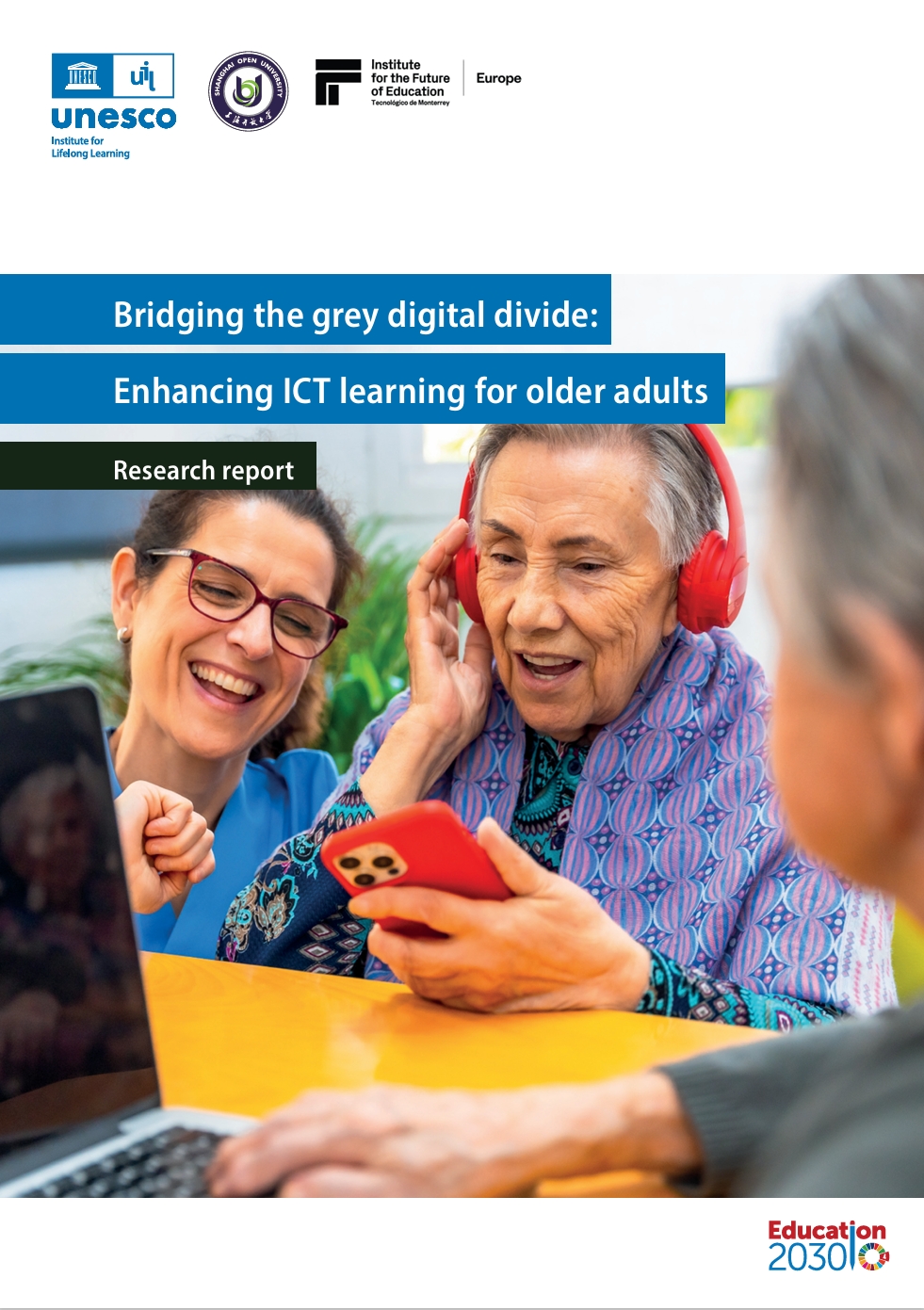 Bridging the Grey Digital Divide: Enhancing ICT Learning for Older Adults; Research Report Year of publication: 2025 Corporate author: UNESCO Institute for Lifelong Learning (UIL) | Shanghai Open University (SOU) | Institute for the Future of Education This research report, Bridging the Grey Digital Divide: Enhancing ICT Learning for Older Adults, explores how organizations across diverse national and regional contexts are supporting digital learning opportunities for older adults. Through six case studies from across five UNESCO regions, it presents a rich array of practices and strategies adopted by independently funded non-profit organizations, community learning centres operating under the auspices of national and local governments, foundations and adult education institutions drawing on a combination of private and public funding sources while maintaining links with universities, and other stakeholders working to close the digital gap for older learners. These examples demonstrate that with the right support structures and pedagogical methods – such as tailored learning programmes, age-friendly technology environments, and intergenerational collaboration – older adults can, and do, engage meaningfully with digital technologies..
 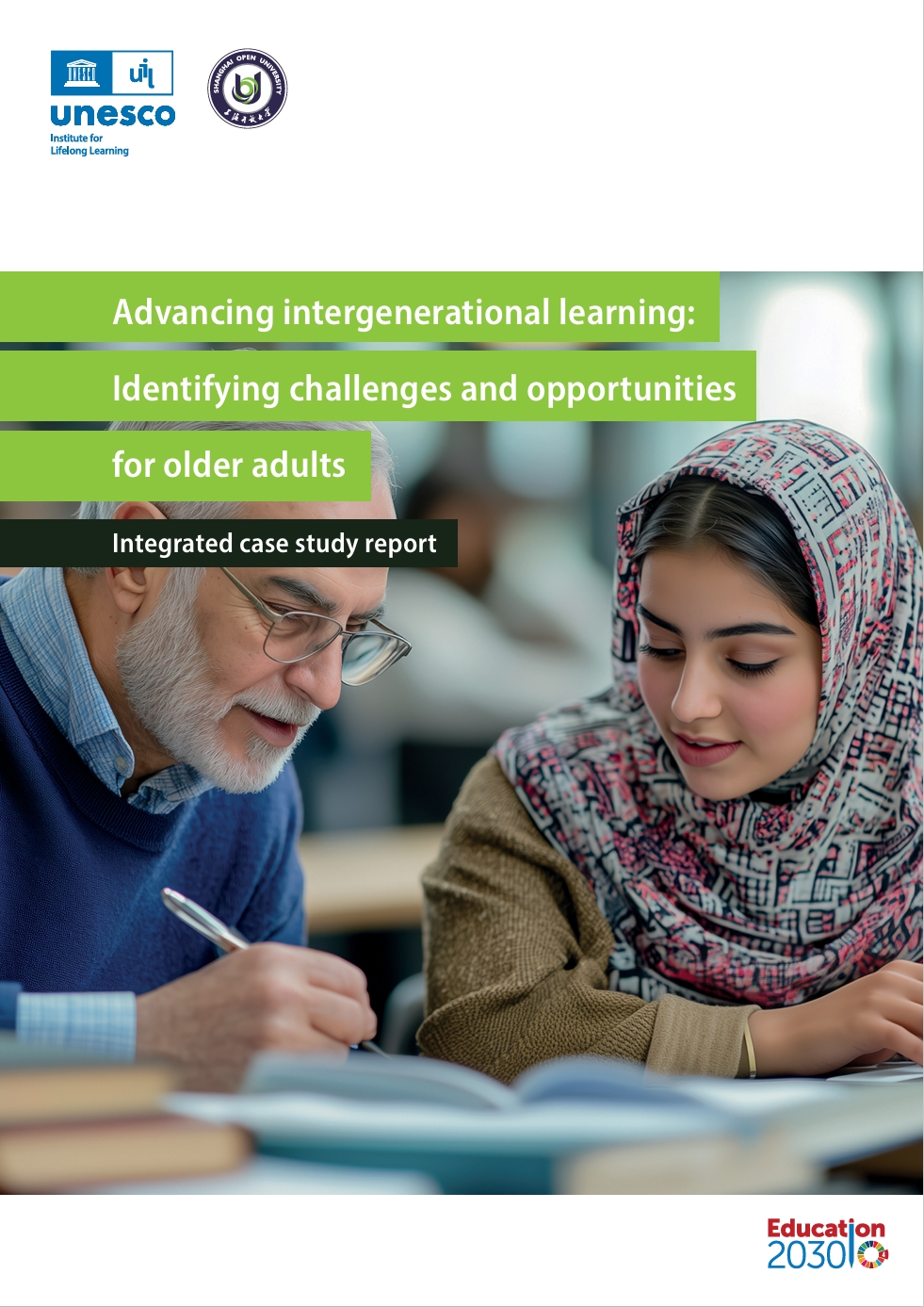 Advancing Intergenerational Learning: Identifying Challenges and Opportunities for Older Adults; Integrated Case Study Report Year of publication: 2025 Corporate author: UNESCO Institute for Lifelong Learning (UIL) | Shanghai Open University (SOU) This research report presents case studies from the UNESCO regions Europe and North America, Africa, and Asia and the Pacific, showcasing various strategies for designing intergenerational learning initiatives. It highlights the diverse policy frameworks and implementation contexts within which these global programmes operate.Using an exploratory multiple case study approach, the report examines the dynamics and potential of intergenerational learning as a catalyst for cultivating a culture of lifelong learning. It assesses the value of such learning in promoting age-friendly environments and addressing ageism. Additionally, the report offers insights into generational learning motivations and identifies barriers to effective intergenerational programming.Finally, the report provides a set of evidence-based guidelines to inform and enhance future efforts in intergenerational learning. The findings and recommendations serve as a valuable resource for educators, policy-makers, and community leaders.These case studies were developed as part of the broader UNESCO Institute for Lifelong Learning research project, Higher Education Institutions – Responses to the Learning Needs of Ageing Societies.
  We Need to Talk: Measuring Intercultural Dialogue for Peace and Inclusion Year of publication: 2022 Corporate author: UNESCO | Institute for Economics and Peace An analysis into the power of intercultural dialogue and the new UNESCO Framework for Enabling Intercultural Dialogue, We Need to Talk presents the first evidence of the link between intercultural dialogue and peace, conflict prevention and non-fragility, and human rights. Using data covering over 160 countries in all regions, the report presents a framework of the structures, processes and values needed to support intercultural dialogue, examining the dynamics and interlinkages between them to reveal substantial policy opportunities with broad spanning benefits. Providing policy support and guidance, the report also includes information on regional trends as well as deep diving case studies.The data, case studies, and think pieces contained in this report highlight key policy and intervention opportunities for intercultural dialogue as an instrument for inclusion, peace and wider societal benefits. Policy makers, development workers, peace and security actors, academics and more are invited to leverage the analysis in this report and findings of the Framework to strengthen intercultural dialogue around the world.
  Consultation Paper on AI Regulation: Emerging Approaches Across the World Year of publication: 2024 Author: Juan David Gutiérrez Corporate author: UNESCO Since 2016, over thirty countries have passed laws explicitly mentioning AI, and in 2024, the discussion about AI bills in legislative bodies has increased globally. This policy brief aims to inform legislators about the different regulatory approaches to artificial intelligence (AI) being considered worldwide by legislative bodies. The brief explains nine emerging regulatory approaches, each illustrated with specific cases worldwide. The order in which the nine AI regulatory approaches are presented is deliberately structured to guide readers from less interventionist, light-touch regulatory measures to more coercive, demanding approaches. These regulatory approaches are not mutually exclusive and AI bills often combine two or more approaches:1. Principles-Based Approach2. Standards-Based Approach3. Agile and Experimentalist Approach4. Facilitating and Enabling Approach5. Adapting Existing Laws Approach6. Access to Information and Transparency Mandates Approach7. Risk-Based Approach8. Rights-Based Approach9. Liability Approach The policy brief suggests parliamentarians how they can address three key questions before adopting AI regulations:1. Why regulate? Determine whether regulation is needed to address public problems, fundamental and collective rights, or desirable futures.2. When to regulate? Reach a consensus on why regulation is needed, map available regulatory instruments, compare them with other policy instruments, and assess the feasibility of adopting the former.3. How to regulate? Identify a combination of AI regulatory approaches that are tailored to specific contexts.
  Enhancing TVET through Digital Transformation in Developing Countries Year of publication: 2023 Corporate author: UNESCO Technological advancements and digitalization are profoundly reshaping our work and lifestyle, business models and operations, and government policy choices. Digital transformation in technical and vocational education and training (TVET) is the planned and structured introduction of automated and streamlined processes within institutions and national technical and vocational education and training (TVET) systems through digital technology, with the goal of enhancing their scope, scale, efficiency and effectiveness and ultimately, driving their more sustainable development. This document provides overall perspective and five country case studies on digital transformation in TVET. Most countries studied face similar enabling factors: the digital infrastructure available; legal and policy frameworks; focused institutional change to improve the acquisition of digital skills; and the promotion of equality and inclusivity. To understand how digital transformation in TVET is occurring, the report analyses it at four levels: technical and technological development; curriculum and qualifications; teaching and learning using technology; and its contribution to the sustainability and resilience of societies.