
Resources
Explore a wide range of valuable resources on GCED to deepen your understanding and enhance your research, advocacy, teaching, and learning.
115 Results found
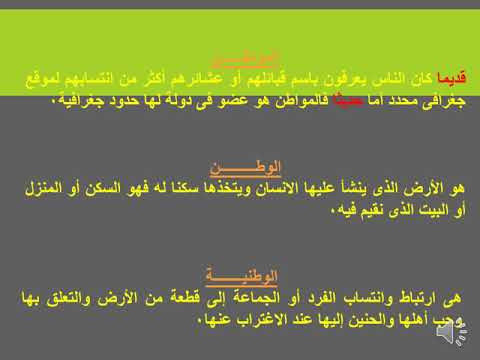 Citizenship Lesson: Social and National Education Year of publication: 2020 Author: Rima Kharis Corporate author: Modern American School The video talks about the first lesson of Social and National Education for the fifth grade at the Modern American School. The lesson focuses on good citizenship and the rights and duties of citizens. The lesson begins with the main concepts of citizenship and progresses to explaining rights and duties.
 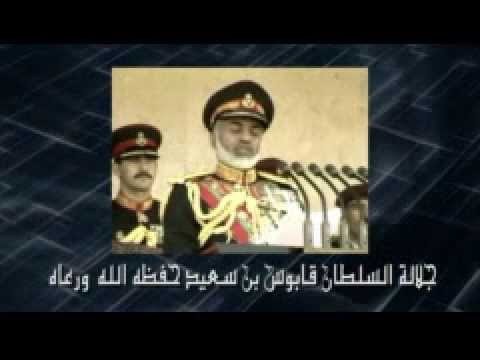 Citizenship Education in the Curriculum Year of publication: 2013 Corporate author: Oman. Ministry of Education The video talks about citizenship education in the school curricula in the Sultanate of Oman. The video describes the development of citizenship education in the Omani curricula since 1970, when the Omani Renaissance began. The video indicates that citizenship education is constantly changing during the past stage based on national, regional and global changes. The video mentions the stages of curriculum development and its review of citizenship education.
  Citizenship Education at Regional Conflict Zones Year of publication: 2020 Author: Nazarii Boiarskyi | Aleksey Telichkin | Nikolay Nazarov | Yuriy Petrushenko | Alexandru Postica | Sasha Delemenchuk | Valery Balaian | Oleksandr Voitenko | Rauf Rajabov Corporate author: Human Rights Vector This publication is prepared by ‘Human Rights Vector’ NGO (Ukraine) as part of ‘Citizenship Education at Regional Conflict Zones’ projects that is being implemented by a ‘Citizenship Education at Regional Conflict Zones’ working group within EENCE network with the support of the Federal Agency for Civic Education (Bundeszentrale für politische Bildung) using funds appropriated by the Federal Foreign Office. This publication is the result of the activities of “Citizenship Education at Regional Conflict Zones” working group within EENCE network in 2020. The manual presents an understanding of conflicts in the modern world, as well as an overview of regional conflicts in the countries of the Eastern Partnership and Russia; it contains the analysis of the condition of formal and non-formal education in the conflict-affected areas; information on the specifics of planning and implementing citizenship education programs in the conflict-affected areas and for people from such areas, examples of the best educational practices. Гражданское образование в зоне региональных конфликтов Year of publication: 2020 Author: Nazarii Boiarskyi | Aleksey Telichkin | Nikolay Nazarov | Yuriy Petrushenko | Alexandru Postica | Sasha Delemenchuk | Valery Balaian | Oleksandr Voitenko | Rauf Rajabov Corporate author: Human Rights Vector Данная публикация — результат деятельности рабочей группы EENCE «Гражданское образование в зоне региональных конфликтов» в 2020 году. Стоит участь, что эксперты, вовлеченные в подготовку данного издания, работали над содержанием конкретных подразделов, где они указаны как авторы материала. Поэтому они могут не разделять мнения, высказанные авторами других подразделов.Эта публикация является едва ли не первой попыткой общественности посмотреть на ситуацию с образованием (и гражданским образованием в частности) в зонах региональных конфликтов, сравнить опыт различных организаций и институций в этой сфере, предоставить практические рекомендации. Поэтому не стоит рассматривать его как исчерпывающий материал. Скорее это приглашение к диалогу и раздумьям о том, как мирным путем через гражданское образование способствовать решению конфликтов.
  الإطار المرجعي للتربية على المواطنة Year of publication: 2021 Corporate author: Educational center for Research and Development (Lebanon) وضع المركز التربوي للبحوث والإنماء، بين أيدي الخبراء العاملين قي القطاع التربوي، إطارًا مرجعيًّا لمفهوم التربية على المواطنة للإسهام في تعزيز قيم التربية المدنية والديمقراطية والمساواة والعدالة والكرامة. ويهدف هذا الإطار إلى توفير خلفية نظرية فضلًا عن أفكار عملية للتنفيذ. Reference Framwork for Citizenship Education Year of publication: 2021 Corporate author: Educational center for Research and Development (Lebanon) The Educational Center for Reseach and Development has come up with this reference framework of Citizenship Education to contribute to promoting the values of civic education, democracy, equality, justice and dignity. This framework aims to provide theoritical background as well as practical ideas for implementation.
 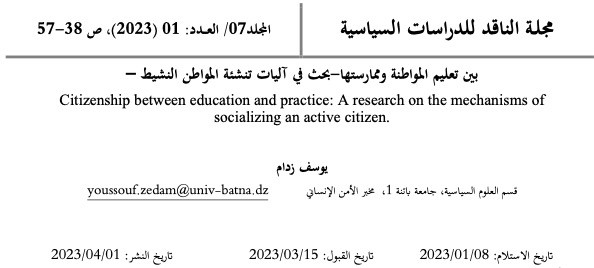 بين تعليم المواطنة وممارستها -بحث في آليات تنشئة المواطن النشيط (vol.7, no.1 مجلة الناقد للدراسات السياسية) Year of publication: 2023 Author: Yusuf Zadam Corporate author: جامعة محمد خيضر بسكرة تقدم الدراسة بحثا في العلاقة بين المواطنة والتعليم، من خلال التساؤل عن الآليات الدقيقة لتنشئة المواطن النشيط. محاججا بأن تعليم المواطنة لا يكفي، بل يجب ممارسة الديمقراطية في مختلف مؤسسات وعمليات وسلوكيات الفاعلين في الوسط المدرسي. لذلك تضمنت الدراسة تدقيقا في طبيعة المواطن المرغوب والمواطنة المنشودة، مؤكدا على أن هناك فرق بين "المواطن النشيط" و"المتلقي السلبي". كما تضمنت آليات الانتقال من تعليم المواطنة إلى فهم الديمقراطية. توصلت الدراسة إلى أن المدرسة هي "مصنع" المواطنين النشطين والمتلقين السلبيين، وبالتالي فإن طبيعة العلاقة التي تحكم مختلف الفاعلين في البيئة المدرسية هي التي تحدد نوع المواطن. Citizenship Between Education and Practice: A Research on the Mechanisms of Training an Active Citizen (vol.7, no.1; Al-Naqid Journal for Political Studies) Year of publication: 2023 Author: Yusuf Zadam Corporate author: Mohamed Khider University of Biskra The study delves into the relationship between citizenship and education, aiming to understand the mechanisms for fostering an engaged citizenry. It argues that merely educating individuals about citizenship is insufficient; rather, democracy must be practiced within the diverse institutions, processes, and behaviors within the school. As such, the study elucidates the characteristics of the ideal citizen and desired citizenship, emphasizing the distinction between an 'active citizen' and a 'passive recipient.' Additionally, it explores the transition from citizenship education to a comprehension of democracy. The findings reveal that the school serves as a crucial arena shaping both active citizens and passive recipients. Therefore, the dynamics among various actors within the school environment significantly influence the type of citizen produced.
  التربية على المواطنة السياسية في المملكة العربية السعودية Year of publication: 2020 Author: Sara Thonian bin Muhammad Al Saud Corporate author: Al Imam Mohammad Ibn Saud Islamic University (IMSIU) هدفت الدراسة الحالية إلى تسليط الضوء على المواطنة السياسية في المملكة العربية السعودية، وذلك عن طريق استخدام المنهجين الوثائقي والنوعي- طريقة النظرية المتجذرة. وتمثل مجتمع الدراسة في أمرين هما: الوثائق المتصلة بالمواطنة السياسية، وعينة من الخبراء والمتخصصين في المواطنة والدراسات الاجتماعية التربوية والجغرافيا السياسية والعلوم السياسية، وعددهم عشرة خبراء. واستخدمت الباحثة أسئلة المقابلة شبه المقننة أداة لرصد آرائهم، وتم التحقق من قيم الصدق والثبات اللازمة للأداة. Education on political citizenship in Saudi Arabia Year of publication: 2020 Author: Sara Thonian bin Muhammad Al Saud Corporate author: Al Imam Mohammad Ibn Saud Islamic University (IMSIU) The study under consideration analyses the political citizenship in the Kingdom of Saudi Arabia by employing documentation and a qualitative methodology: the rooted theory method. Indeed, the survey utilizes documents on political citizenship and the surveys of a number of experts specialized in citizenship, educational social studies, geopolitics and politics (precisely 10 scholars).